
Table of Contents
Strawberry Talk in the Middle of Summer? Yep.
Walk past the summer fruit section at the market, and you’ll spot watermelons, peaches, and plums right away—they’re the season’s stars. But the big news in Korean fruit exports this first half? Strawberries. In a season packed with summer fruits, it’s a winter-spring fruit that stole the show. That alone tells you this isn’t just a seasonal fluke—it’s a trend cutting across the whole year. According to data released by the Korea Customs Service on July 16, Korea’s fruit exports from January to June 2026 hit $95.72 million—about 130 billion won. That’s a 19.7% increase from the same period last year, and the largest ever for a first half. Last year’s annual total ($240.49 million) was already a record, and with this momentum, the Customs Service says we’re likely looking at a second consecutive record-breaking year.
“K-fruit” might sound a bit unfamiliar, but if you think of it as part of K-food, it clicks. Unlike ramen or kimchi—easy to store and ship in bulk—fruit care about freshness, sweetness, packaging, quarantine, and delivery time. So rising export numbers aren’t just about volume. They mean Korean-grown fruit is reaching faraway customers in good shape, tasting good enough that they’ll buy again. That takes both quality and a logistics system working together. The Customs Service credits a premium strategy focused on quality, cold chain infrastructure, and the growing popularity of K-food thanks to K-content. You don’t see that infrastructure investment, but it’s what decides whether a strawberry arrives mushy or perfect.
Strawberries Were the Heart of the Export Boom
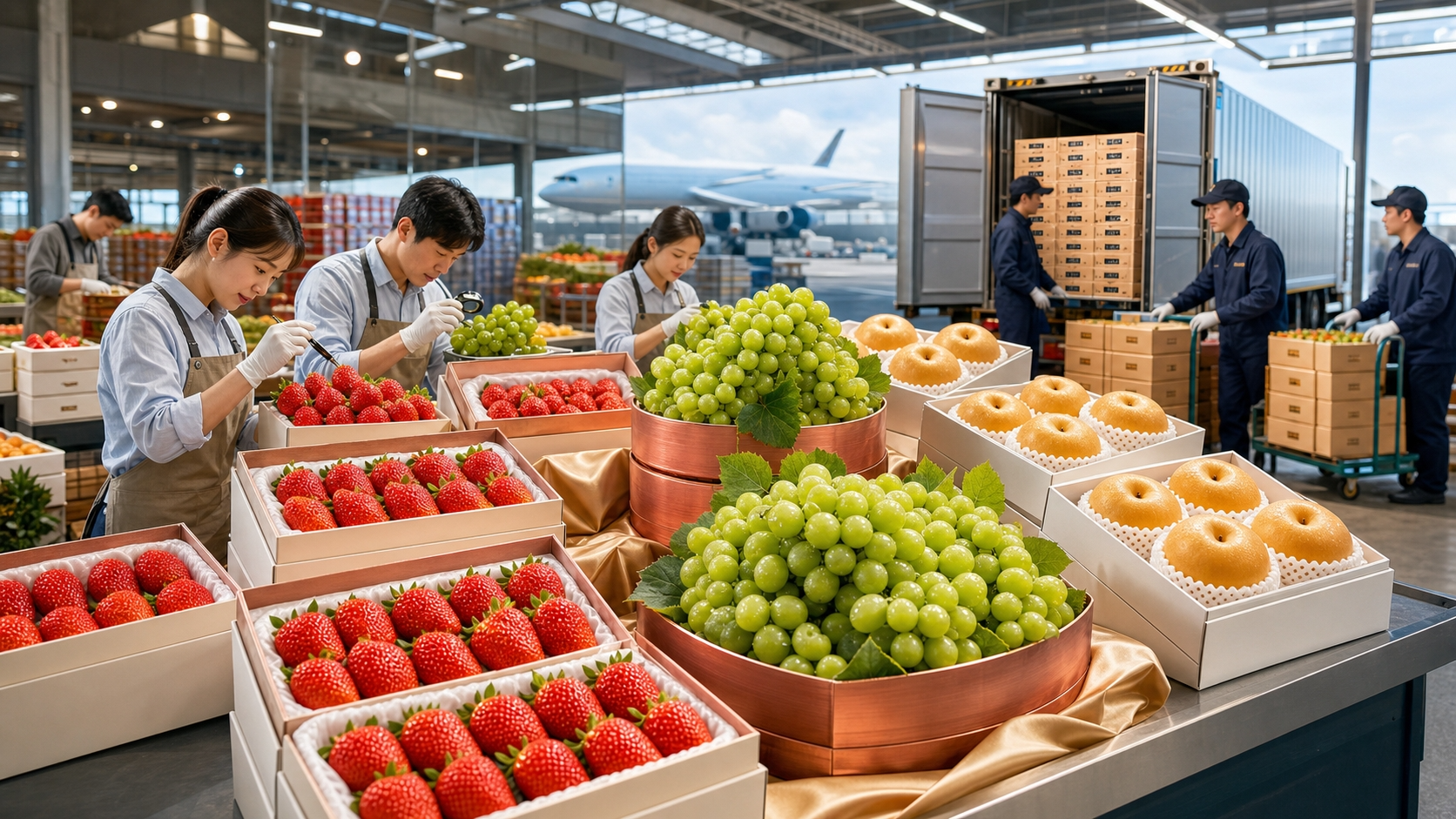
By category, strawberries accounted for $60.49 million—63.2% of all fruit exports. That’s a massive share. Add grapes and pears, and those three fruits make up 90.2% of the total. So basically, Korea’s first-half fruit exports were driven by these three. Korean strawberries hit peak season from winter to spring, which lines up with demand for high-quality berries in Southeast Asia and other key markets. Packed neatly in small boxes to avoid bruising, they work great as gifts. If you’ve tried Korean strawberries, you know why the firm flesh and clear sweetness give them an edge in export markets.
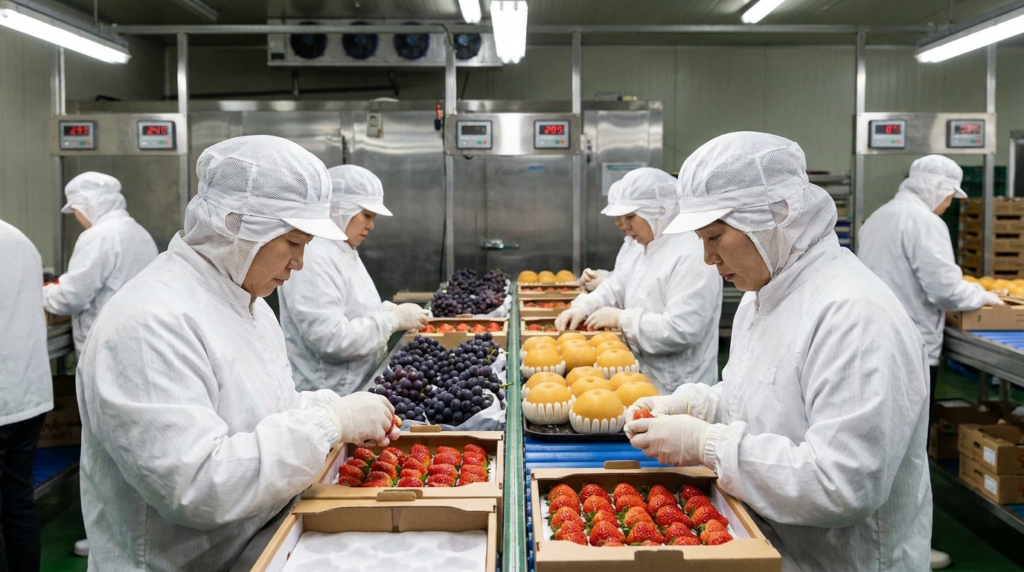
But not all Korean strawberries taste the same. Aroma and acidity vary by region, variety, and harvest time. So in overseas markets, it’s getting more important to explain not just “Made in Korea,” but which variety it is, when it was harvested, and how it was kept cold. The pricier the fruit, the more sensitive customers are to actual condition—not just photos. One mushy strawberry and the next purchase gets hesitant.
Grapes and Pears Quietly Made Their Move Too
It wasn’t just strawberries. Grape exports hit $17.83 million, up 26.5% from last year, and pears reached $8.03 million. For grapes, interest is growing in large, high-sugar varieties. Pears are common in Korean food culture, but overseas, the crunchy texture and juicy bite can feel pretty special. Pears have a strong gift image, so demand spikes around holidays and family events.
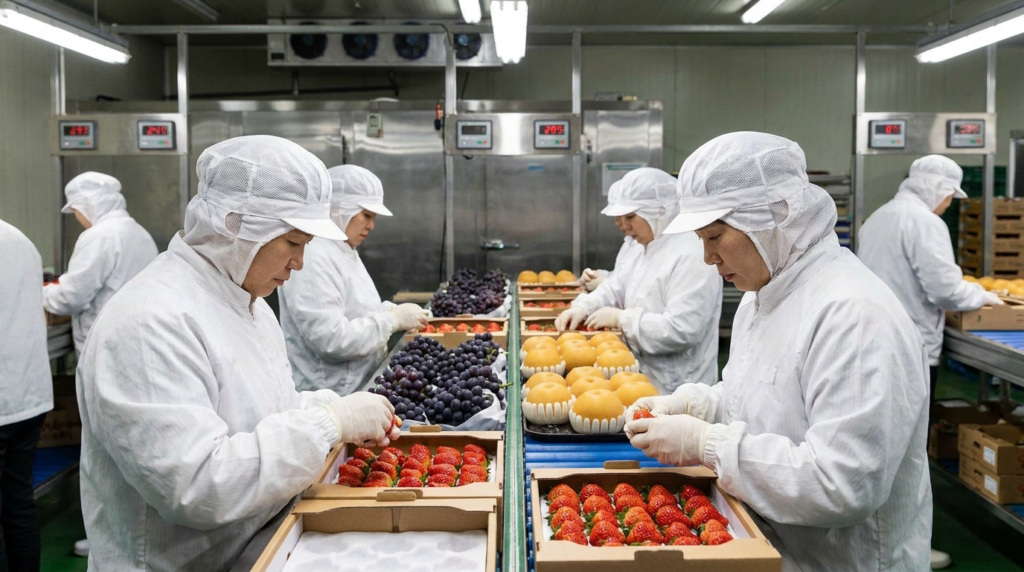
Explaining why Korean fruits get attention overseas with just “they’re really sweet” feels a bit shallow. Sweetness is a big plus, sure, but fruit also gets judged on aroma, texture, size, skin condition, and how easy it is to eat. Korean farms and exporters have refined their sorting standards and packaging over time. Sending only pretty fruit might seem like overdoing appearance standards, but for long-distance exports, reducing quality variation builds trust.
From Singapore to Beyond: The Road Gets Longer
By country, Singapore topped the list at $22.88 million (23.9%), followed by Thailand at $17.71 million (18.5%), and Taiwan at $11.60 million (12.1%). The number of export markets grew to 61 countries in the first half—the most ever. That’s a shift from previous concentration on a few countries. In hot, humid Singapore, fresh fruit is both a daily staple and a premium gift item. How Korean strawberries, grapes, and pears are displayed in local department stores, hypermarkets, or online food platforms isn’t visible in export stats alone. But the growing number of markets signals that Korean fruit is moving beyond curiosity and becoming an actual choice for local consumers.
Still, rising exports don’t mean instant good news for every farm. Stable production of high-quality fruit requires facilities, labor, and energy costs, and changes in overseas quarantine standards mean more prep work. For items that rely heavily on air freight, logistics costs are no joke. Regionally, South Gyeongsang Province accounted for 57.4% of total exports, keeping its top spot for 18 straight first halves. That kind of dominance takes years of accumulated infrastructure and know-how. So when you look at export records, don’t just ask “how much did they sell?”—also ask whether farms can sustain that performance. Good fruit isn’t made only in the field; it’s protected along the long road from packing shed to refrigerated truck to airport to store shelf.
If You Spot Korean Fruits While Traveling, Here’s How to Pick
If you’re visiting Korea and want to buy fruit, start at a big supermarket or department store food hall and check the seasonal labels. Strawberries are best in winter and spring, grapes in summer and fall, and pears from autumn through holiday season. Higher price doesn’t always mean better taste, but gift-packaged fruit tends to be uniform in size and appearance, so it’s a safe bet if you’re trying something new. On the flip side, at traditional markets or neighborhood fruit shops, you’ll find friendlier prices on fruit that might not look perfect but still tastes great.
$95.72 million sounds like a big number, but at the end of it, there’s a hand carefully placing a single strawberry into a box. Korea’s fruit export record isn’t just about the flashy K-food craze. It’s the result of farmers and distributors working hard to send seasonal flavors far away. Next time you come across Korean strawberries, grapes, or pears, go beyond “sweet.” Think about what season they were harvested and how they got to you. That one bite will stick with you a little longer.
Source: Korea Customs Service fruit export data, July 16, 2026; Yonhap News, July 16, 2026.