
Table of Contents
Korean Red Sauce in a Tokyo Alley
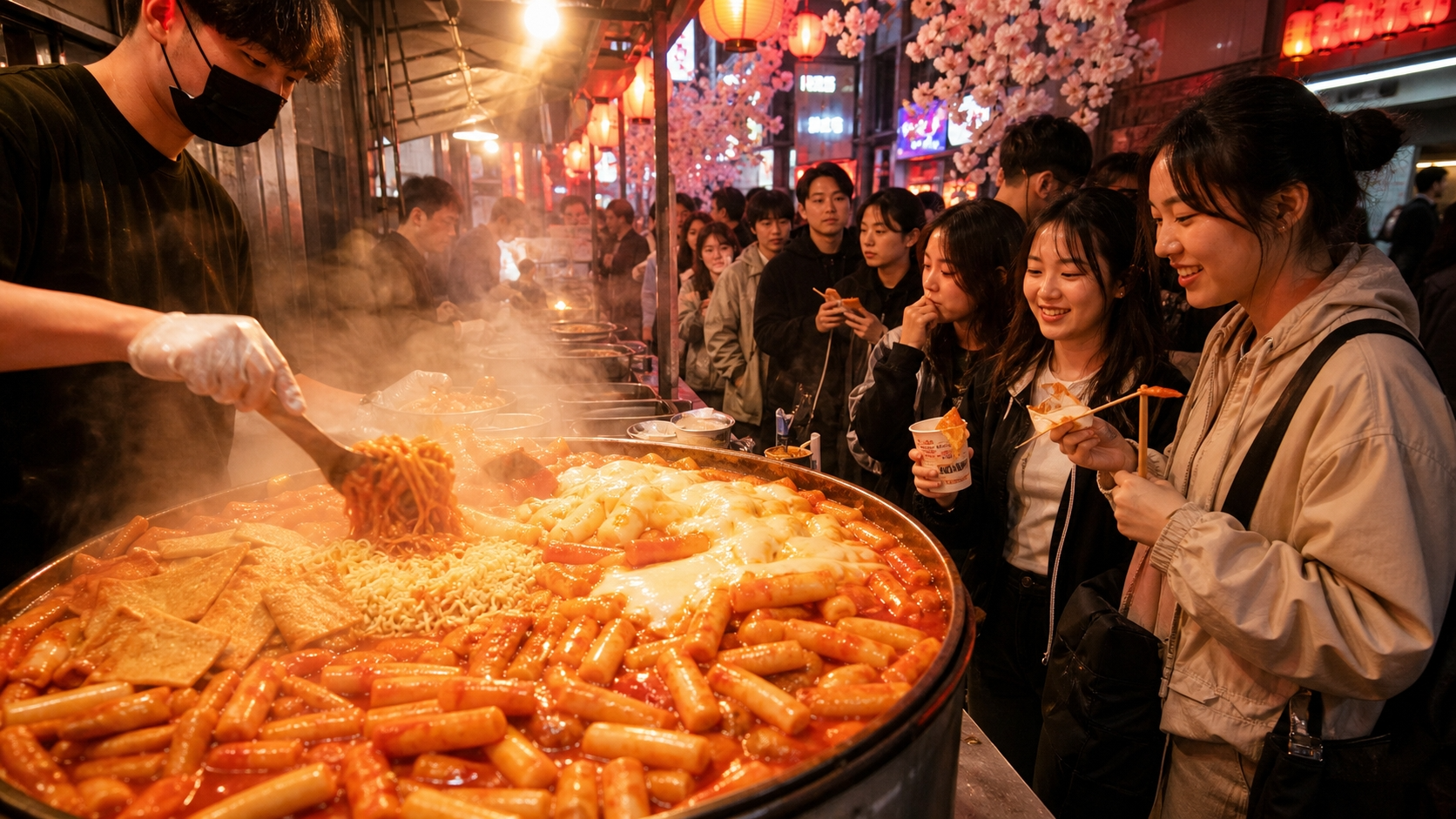
In a narrow alley in Shinjuku, Tokyo, a long line snakes toward a steaming pot of red tteokbokki. Spring 2026, and one of the hottest scenes in Japan’s street food market is the queue in front of Korean rice cakes. The Hallyu wave has spilled beyond dramas and music onto dining tables, and at the center is tteokbokki. Japanese consumers, once unfamiliar with spicy heat, are now craving it again and again, and the power of this dish is coloring all of Tokyo.
K-food’s global expansion started years ago, but tteokbokki’s reception in Japan stands out. Unlike ramen, fried chicken, or samgyeopsal—already well-established—tteokbokki lingered as a foreign street food until recently. That wall began crumbling fast from 2024 onward.
Social Media Ignites the Spicy Craze
The turning point? Social media. As videos of people eating tteokbokki went viral on TikTok and Instagram, a challenge culture—filming reactions to the spice—spread among young Japanese consumers. In an era where eating becomes content, tteokbokki’s vivid red color and intense reactions are perfect material.
Scenes of tteokbokki in Korean dramas and variety shows also stoked appetites. It’s a classic K-drama effect: fictional food sparks real cravings. But tteokbokki is one of the most dramatic examples. People imagine the taste on screen, then end up queuing to eat it—a scene repeating across Japan.
Localization Strategy and Premiumization
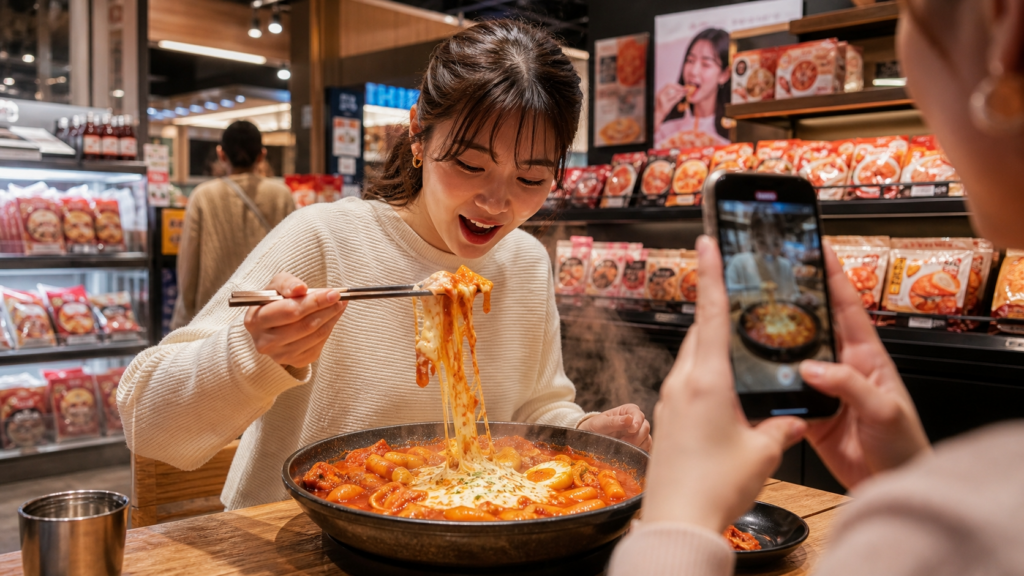
Looking at successful tteokbokki brands in Japan, you see not just export but sophisticated localization. Milder versions for Japanese palates, premium lines with high-end ingredients, and convenient packaged products adapted to local habits line the shelves. A dual strategy: keep the identity, lower the barrier to entry.
At the same time, a premium push highlights ‘authentic Korean taste.’ Serving it with fish cakes, ramen noodles, cheese—just like in Korea—lets customers experience the real deal, and it’s resonating with mid-to-high-end consumers. Between cheap instant meals and upscale dining, tteokbokki fills multiple roles at once.
Franchises Land and Distribution Expands
Korean tteokbokki franchise chains are speeding up their Japan entry. Branded chains are opening direct or franchise stores in major cities like Tokyo, Osaka, and Fukuoka, building a systematic distribution ecosystem beyond the street cart image. Convenience stores and supermarket refrigerators now stock more Korean-style tteokbokki sauces and meal kits, boosting accessibility.
This spread goes beyond a single food trend—it’s driving K-food’s overall penetration into Japan. Consumers who enter Korean food culture through tteokbokki often expand their interest to tteok (rice cakes), sundae (blood sausage), and kimbap. Tteokbokki has become the gateway dish to K-food.
The Spicy Flavor That’s Mapping K-Food’s Next Chapter
The question tteokbokki leaves us with is simple: Will Korean food fade as a passing fad, or settle into Japan’s food culture? The current trend leans toward the latter. If it were just a short-term craze, it would have peaked by now. Instead, the consumer base is thickening, and the distribution network is tightening.
It’s too early to say Japan has fallen in love with spicy food. But as the lines in Tokyo’s alleys prove, at least under the name tteokbokki, Korea’s red sauce is seeping into Japanese daily life. How far that spicy heat will reach—K-food’s next map is being drawn right now.
Sources: Bloomberg, Korea JoongAng Daily, industry reports, 2026.