
Table of Contents
The Era When Secondhand Clothes Became Cool
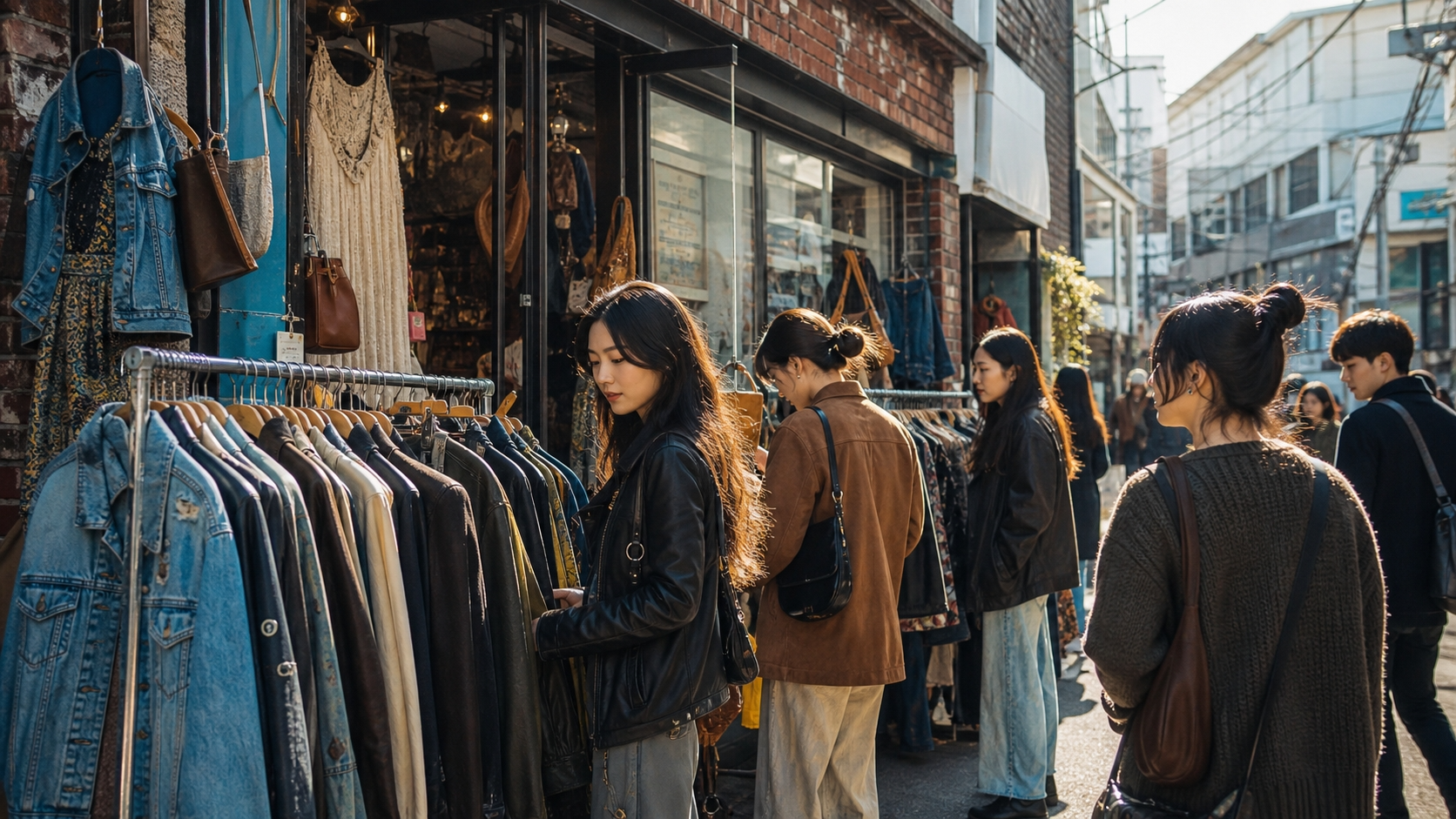
A few years ago, you might have thought vintage shops were only for people with special tastes. But in 2026, Seoul’s landscape has changed. Vintage curated stores now line the alleys of Hongdae, Hannam-dong, and Seongsu-dong. Young people from teens to their thirties—across generations—are digging through secondhand closets in search of ‘the one unique piece they own,’ and this has become a natural consumption behavior. Vintage is no longer an alternative. It has risen to the center of Seoul’s fashion culture.
What’s behind this trend? A mix of factors: environmental sensitivity, your desire for a personal style, and fatigue with overproduced, low-quality fast fashion. Especially Gen Z and the MZ generation prefer expressing their identity through a single piece they discovered themselves rather than through a brand’s seasonal collection.
Digital Platforms Expand the Vintage Stage
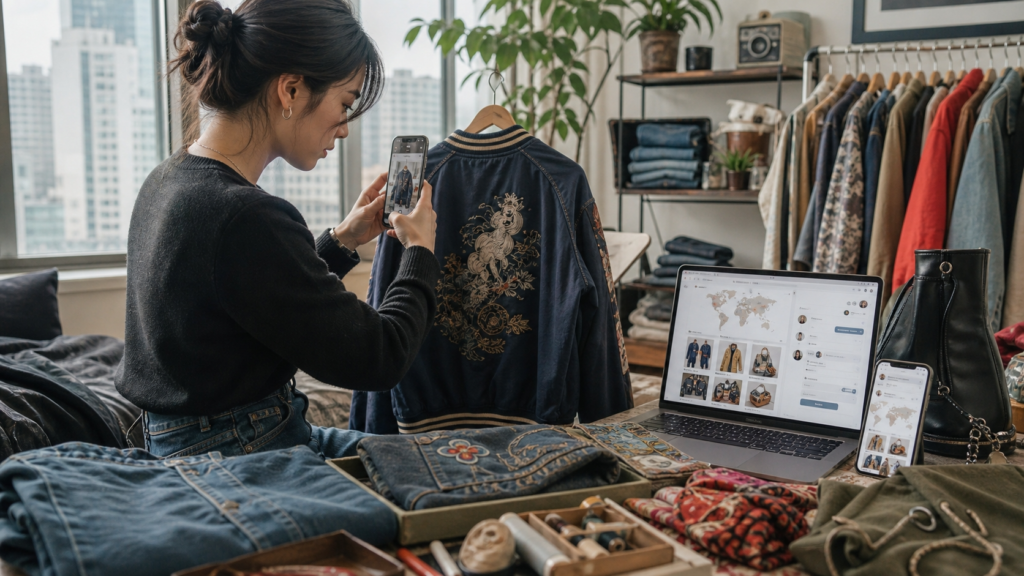
The Seoul vintage boom isn’t limited to offline. Instagram, Karrot Market, and specialized vintage platforms have become new distribution channels for secondhand fashion, building an ecosystem where anyone—including you—can be both a seller and a buyer. Putting your own wardrobe out into the world with a few photos and a short description has become a common side hustle and hobby.
The algorithms on these secondhand platforms connect people with similar tastes and precisely match demand and supply for rare items. This digital infrastructure has pushed the scale and speed of the vintage market beyond the limits of physical space. It’s no longer unusual for a Seoul vintage item to be sold to an overseas buyer.
Structural Pressure on Fast Fashion
The vintage boom is putting direct pressure on the fast fashion industry. Where the old pattern was to quickly consume new clothes and discard them, now a preference for ‘one good piece you can wear for a long time’ has become clear among consumers. As sustainability rises above cost-effectiveness as a selection criterion, the low-quality, high-turnover fast fashion model is losing its legitimacy.
Large fast fashion brands are trying to adapt by emphasizing eco-friendly lines or partnering with secondhand trading platforms—a response to this shift. But accusations of ‘greenwashing’—changing the image without fundamentally changing production methods—are also following. You, as a consumer, are getting sharper.
Vintage Creates a New Fashion Grammar
What makes Seoul’s vintage scene interesting is that it goes beyond simple secondhand consumption to create a creative culture. ‘Restyling’—reinterpreting vintage items with modern styling—and ‘upcycling’—repairing or altering old clothes to give them new life—are now seen as artistic acts among the MZ generation.
Instead of chasing trends, you discover new meaning in the past, crafting a new grammar of fashion. In an era where scarcity and individuality matter more than trends, vintage offers a choice loaded with stories and values that mass-produced fashion cannot provide.
The Next Chapter of Seoul’s Vintage Boom
Whether the growth of Seoul’s vintage scene will remain a temporary trend or become a structural shift in Korean fashion consumption culture is still an open question. But given that three pillars—environment, individuality, and digital infrastructure—are simultaneously supporting this flow, it’s hard to see it as a simple fad.
How much of the territory once dominated by fast fashion can vintage claim, and what new identity Seoul fashion will create in the process—these are the points to watch going forward. This cultural trend of rediscovering the stories in a single garment is quietly rewriting the next chapter of Seoul fashion.
Source: Vogue Korea, Refinery29, industry reports, 2026.