Table of Contents
Before the Shine, Look at Your Skin’s Condition
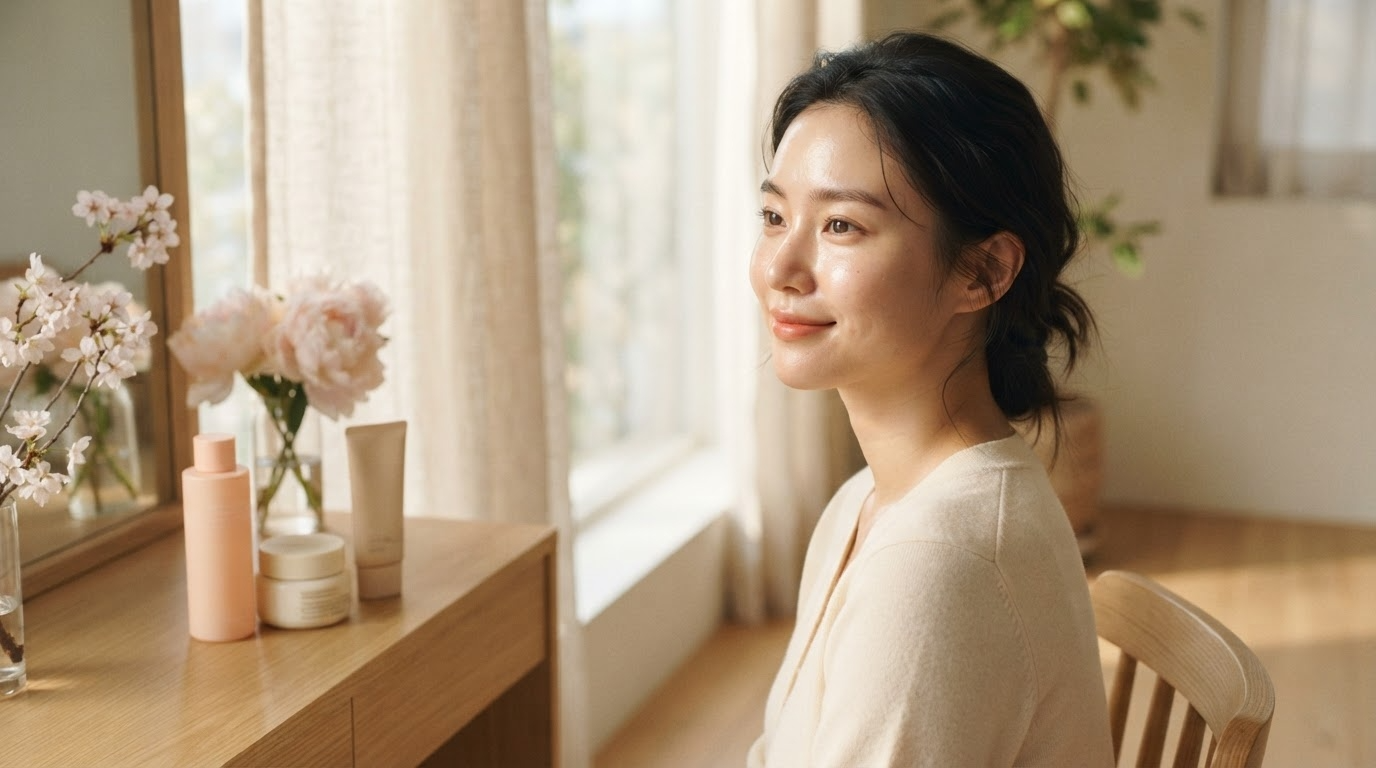
For a while, the easiest word to describe K-beauty was “glass skin”—that smooth, light-reflecting look like a pane of glass. But in 2026, the beauty industry is shifting its tune. Now, the focus is on “bloom skin”: a look where your skin appears naturally plump and hydrated from within, rather than relying on intense surface shine.
Bloom skin isn’t about perfect smoothness or excessive glow. It’s about a stable skin barrier, relatively even tone, and a bounce-back resilience that seems to come from the inside. As the name suggests, it’s a look that emphasizes healthy vitality, like a flower just blooming. You might be thinking, “Doesn’t a lot of glow makeup give me bloom skin?” Not exactly. The key isn’t the shine from your makeup—it’s your skin’s basic ability to tolerate irritation and hold onto moisture.
What’s the Difference Between Glass Skin and Bloom Skin?
If glass skin makes you think of “surface reflection,” bloom skin is more about “skin resilience.” Instead of layering multiple products to create shine, the focus is now on keeping the basics—cleansing, moisturizing, and sunscreen—stable and consistent. K-beauty’s multi-step routine isn’t gone, but the idea that everyone needs ten steps is fading.
This trend is also influenced by growing interest in sensitive skin and barrier damage. It’s easy to think that layering functional ingredients like retinol, acids, or high-concentration vitamin C will make your skin better, but depending on your skin type, it can cause stinging, redness, or dryness. Remember that even good ingredients behave differently based on the order, frequency, and condition of your skin.
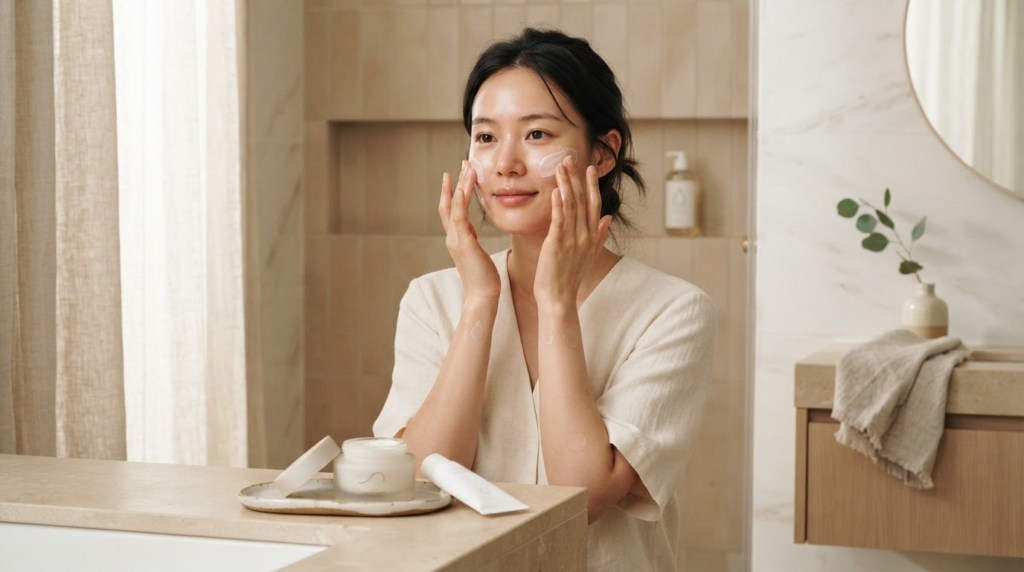
So a bloom skin routine can be surprisingly simple. Start with a gentle cleanser, moisturizer, and daytime sunscreen, then add one functional ingredient at a time. More often than not, it’s more practical to keep a record of how your skin reacts to certain irritants than to buy a ton of products.
“Skin Barrier” in Simple Terms? It’s Your Protective Shield
Your skin barrier is what keeps moisture in and protects against external irritants. When it’s weak, even products you’ve used before might feel stingy, or you might deal with recurring dryness and redness. That’s why ingredients like ceramides, fatty acids, and cholesterol—which are related to skin lipids—are mentioned so often. Sounds complicated, but just think of them as the building blocks your skin needs to keep its own moisture.
But just because a product claims to be for barrier care doesn’t mean it works the same for everyone. Some people are sensitive to fragrances or essential oils, and others find heavy formulas clogging. When you try a new product, test it on a small area first—like your jawline or behind the ear—rather than slathering it all over your face.
And you don’t have to spend a lot. In Korea, drugstores, convenience stores, and online malls have plenty of affordable moisturizers and sunscreens. But if you’re reading this from overseas, note that the price may differ from the Korean retail price, and you’ll need to check for authenticity and expiration dates when ordering. Just because a product is famous doesn’t mean you should rush to buy several at once.
Hair Care Now Starts with the Scalp
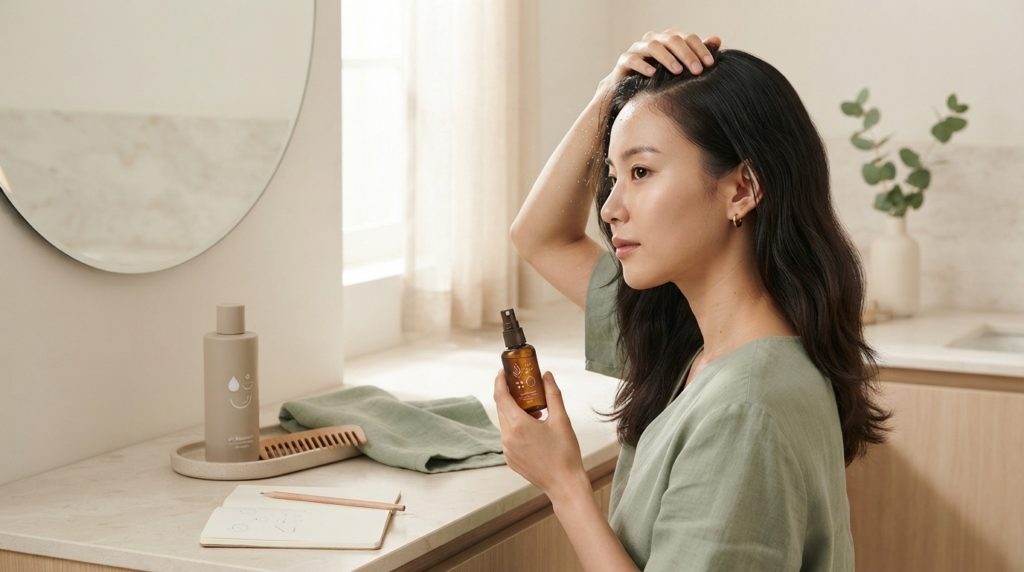
Another change in K-beauty for 2026 is hair care. In the past, people often thought of shampoo and conditioner simply as products for managing hair strands. Now, the trend is to treat the scalp as an extension of your skin, addressing separate concerns like excess oil, flakiness, dryness, and color damage. This is called the “skinification” of hair care.
That’s why you’re seeing more scalp toners, exfoliating products, and pH-balanced shampoos. But you need to be more careful with scalp products than with facial ones. If you’re dealing with hair loss, persistent itching, or severe flakes, it’s safer to consult a dermatologist rather than relying solely on cosmetics. A trend product can’t replace medical advice.
If you frequently color or perm your hair, instead of constantly adding new ingredients, start by checking your heat tool usage and washing habits. Lower your hairdryer temperature, don’t rub wet hair vigorously, and rinse thoroughly to avoid shampoo residue on your scalp. These basic steps can make a bigger difference than you’d think.
Your Routine Can Become Clearer the More You Strip It Down
Bloom skin isn’t a trend to find new flaws. It’s more about moving away from the pressure to have your skin perfectly radiant every day. Some days you might be tired and not shine as much, and your skin might get rough when seasons change. That doesn’t mean your skin has failed.
If you want to start a new routine, change just one product. For example, keep your current cleanser but add a moisturizer, and observe the reaction for two weeks. That way, if something changes, you’ll know the cause, and you’ll avoid unnecessary spending. If you often feel sensitivity, remember that a simpler routine might come before stronger ingredients.
Sources: Hannah Coates, Vogue, January 2026; Refinery29 Australia, 2026 K-Beauty Trends, 2026; Meiyume, H1 2026 K-Beauty Trend Report, 2026.