
Table of Contents
The Title ‘Hope’ and the Shadow of an Unfamiliar Being
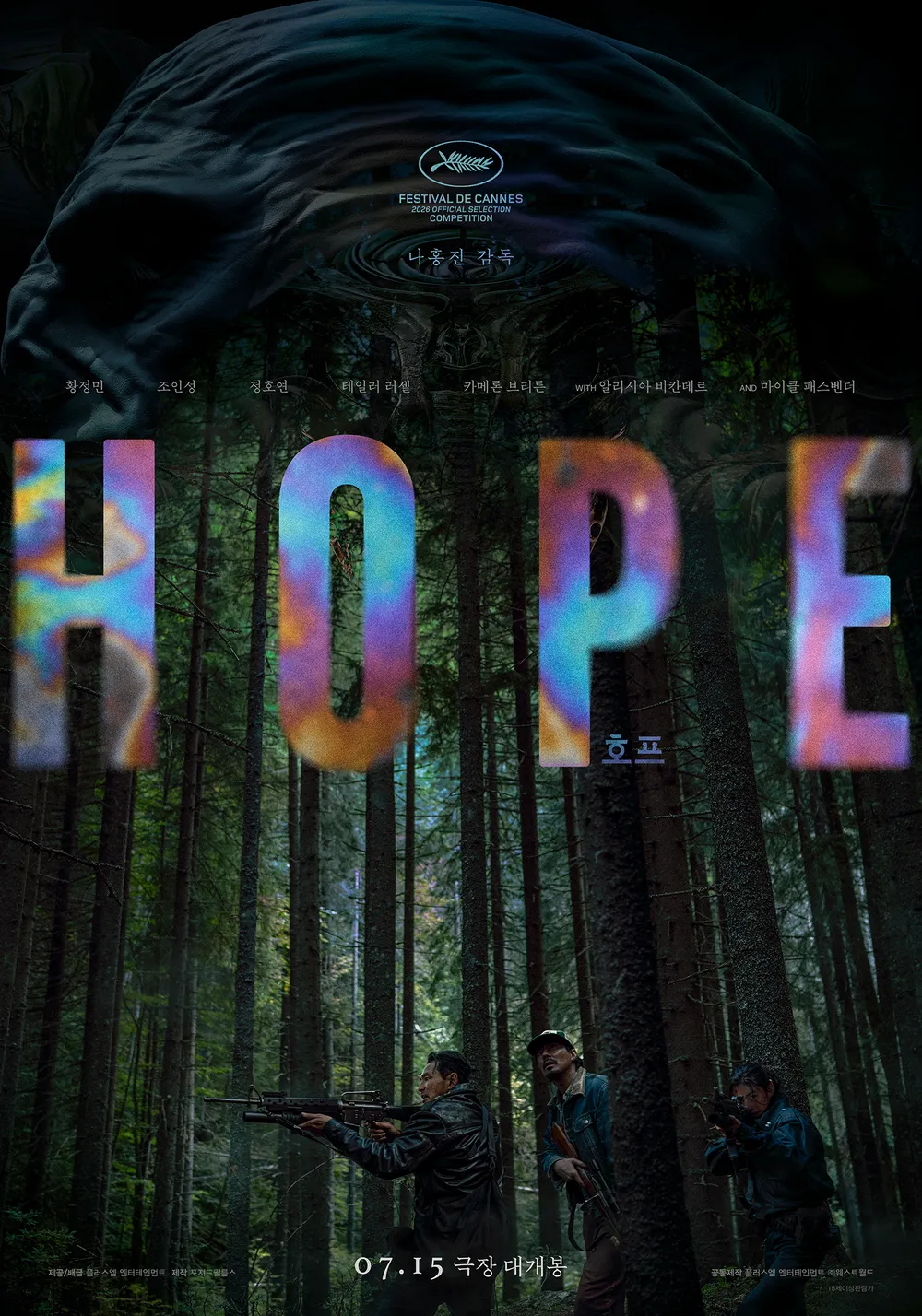
The word ‘huimang’ (hope) usually points to the very last thing that remains. It is the emotion one wants to hold onto even after a disaster has passed, after relationships have crumbled, or after encountering something beyond human comprehension. Director Na Hong-jin’s new film
This film was first unveiled in the Competition section of the 2026 Cannes Film Festival. As of July, it is not yet a film whose theatrical release and box office performance can be discussed. Therefore, calling
In Na Hong-jin’s World, the Unfamiliar Has Always Been Inside Humans
In Na Hong-jin’s films, horror does not come merely from dark screens or sudden sounds.
The alien setup in
It is natural that the word “alien” became the first talking point. But the tension of this film will not be determined solely by the scale of special effects. The power Na Hong-jin showed in his previous works lay in leaving unexplained horror lingering in the expressions of characters and the cracks of the community. Whether

Hwang Jung-min and Zo In-sung Forge the ‘Weight of Reality’
Hwang Jung-min is an actor skilled at piling up emotional weight when an ordinary person is pushed into extreme situations. Zo In-sung, too, has passed through various genres by leaving unease and cracks beneath a cold expression. Na Hong-jin’s films gain strength in moments when characters reveal crisis through actions and glances rather than explanations. Depending on what sense of reality these two actors create at the center of this unfamiliar disaster, the film’s alien setup can become a more convincing human drama.
There is also a question that always follows when Korean cinema collaborates with foreign actors: Do these actors exist naturally within the Korean film, or do they function like signposts aimed at the international market?
The Cannes Competition Is Not a Destination but a First Reading
Selection for the Cannes Competition is not a seal guaranteeing a work’s completeness. But it is meaningful in that it gives the world film community a place to discuss the year’s major works together. Especially for a director like Na Hong-jin, who carries both strong genre sensibility and auteurism, Cannes becomes a place where unfamiliar audiences first interpret his grammar.
Korean audiences are already familiar with the tension and unfriendly questions of Na Hong-jin’s films. For overseas audiences, however,
So it is more appropriate to see the Cannes reaction not as a single conclusion but as the beginning of multiple readings. The applause or debates at the festival tell the audience what to expect when the film is later released, but they do not watch the film in one’s stead. The rhythm and density with which
In September, the Meaning of Hope Will Change Again
Hope in this film may not mean a bright ending. Rather, it could be a question—can we still trust others even when everything has become unfamiliar, can a destroyed community start speaking again? As Na Hong-jin’s films always have been, the answer will not be easily given. But
Sources: Festival de Cannes,