Table of Contents
The Numbers Tell a Story of Concentration
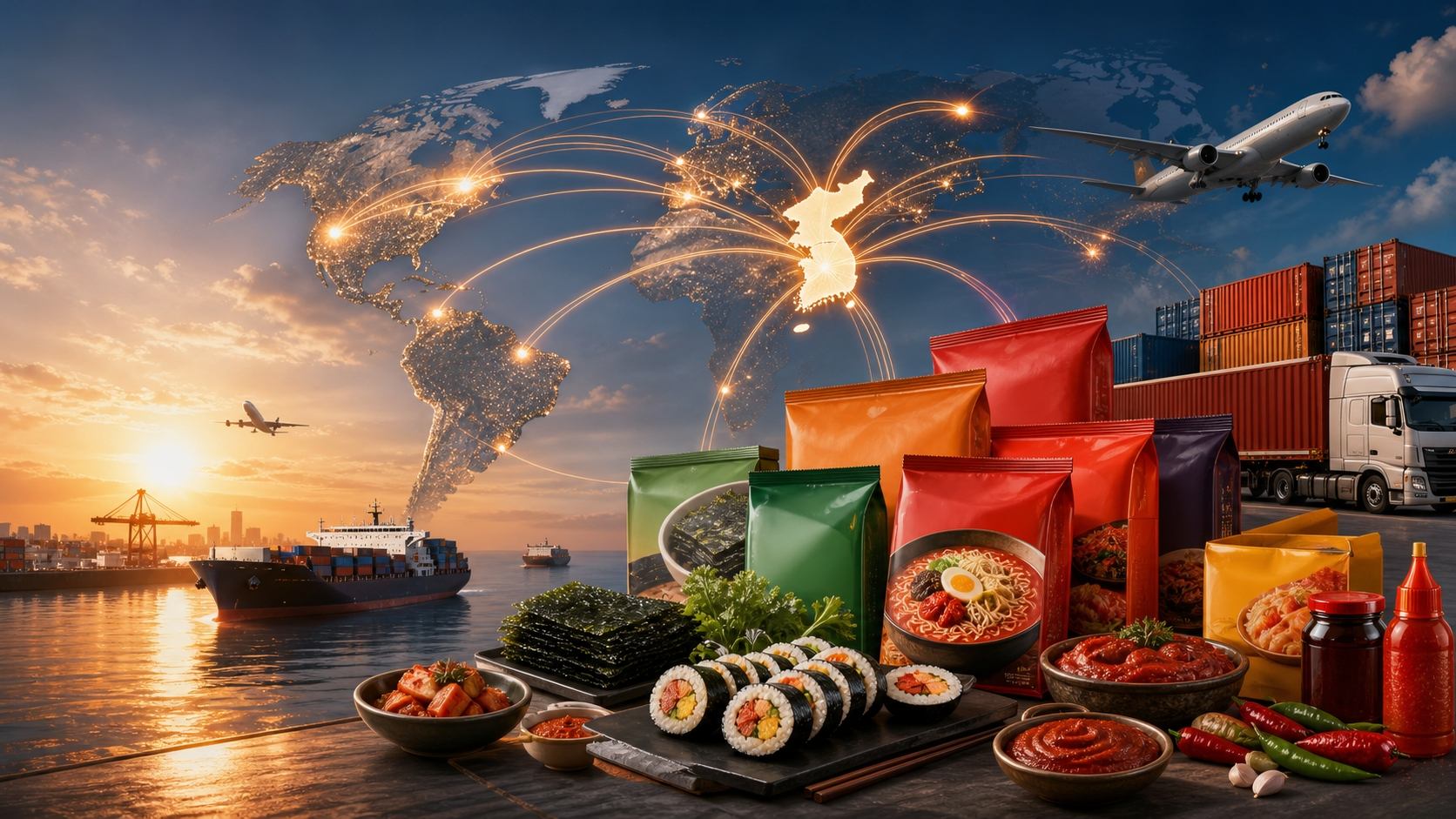
The numbers don’t lie. According to Korea’s Ministry of Agriculture, Food and Rural Affairs, H1 2026 K-Food+ exports hit $7.05 billion—a record for any first half. Food products alone reached $5.38 billion, up 5.0% year-over-year. Agricultural sectors—machinery, fertilizer—added $1.662 billion. By region, the Middle East (+25.2%), Latin America (+19.5%), and Europe (+17.9%) showed the largest gains. Beyond traditional markets of the US and China, sales have penetrated Mongolia and the Middle East.
But One Item Overwhelms the Picture
H1 ramyeon exports surged to $935.4 million—a 27.9% year-over-year jump. A single product category generated a substantial portion of overall agricultural food growth. The Ministry projects Korea will hit $1 billion annual ramyeon exports one month earlier than September 2025’s baseline. Good news carries a caveat: dependency on one item is dangerously high.
The Search for “Post-Ramyeon”
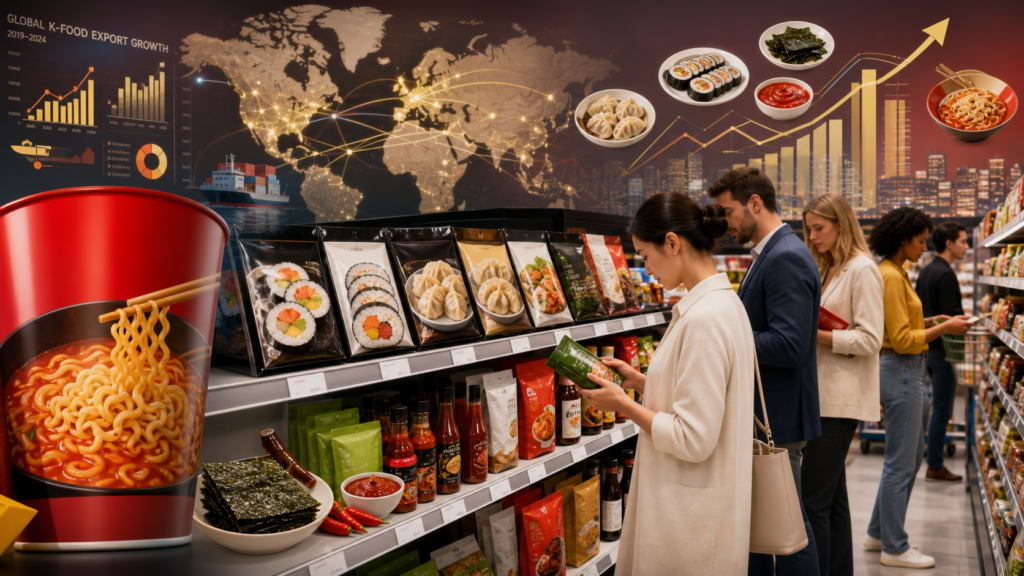
H2’s turning point is finding what comes next. Candidates are emerging. Frozen kimbap leads the pack. Ready-to-eat convenience foods including frozen kimbap surged over 180%, triggering shelf-clearing moments in major US supermarkets and opening a new K-HMR (Korean home meal replacement) category. Dumplings and seaweed hold steady. Sauces grew 15%+. The standout: products that let non-Koreans cook Korean flavors—gochujang, Buldak sauce—punch above their weight. Condiments penetrate local food cultures more powerfully than finished dishes.
The Tariff Question
Variables lurk. US tariff policy shifts hit the largest market directly; H1 2025 saw US-bound exports fall for the first time in 26 months as precedent. Non-tariff barriers—FDA facility inspections, FSVP clearance issues—hit small food companies as hard as tariffs. A July 24 non-tariff barrier briefing reflected this urgency.
Expansion Phase or Testing Phase?
K-food sits between expansion and trial. Momentum is real, but product concentration and trade environment pose twin risks. H2 will show whether other items follow ramyeon through the door it opened.
*Source: Ministry of Agriculture, Food and Rural Affairs / Customs Service, July 2026*
Next time you’re at the grocery store, see if you spot a pack of frozen kimbap next to the ramyeon—that’s the future.