Table of Contents
First Korean Language Textbook for Overseas Korean Preschoolers
It is a quiet but significant turn in the long history of Korean language education abroad: this year, the Ministry of Education, together with the International Korean Language Education Foundation, is distributing its very first set of Korean language textbooks tailored for young children of overseas Koreans. For years, the textbooks available to the diaspora communities were aimed at those already in elementary school or beyond, leaving a gap—a gap that teachers at weekend Hangeul schools have long pointed out, saying that a child’s earliest encounters with language deserve materials that match their developmental stage.
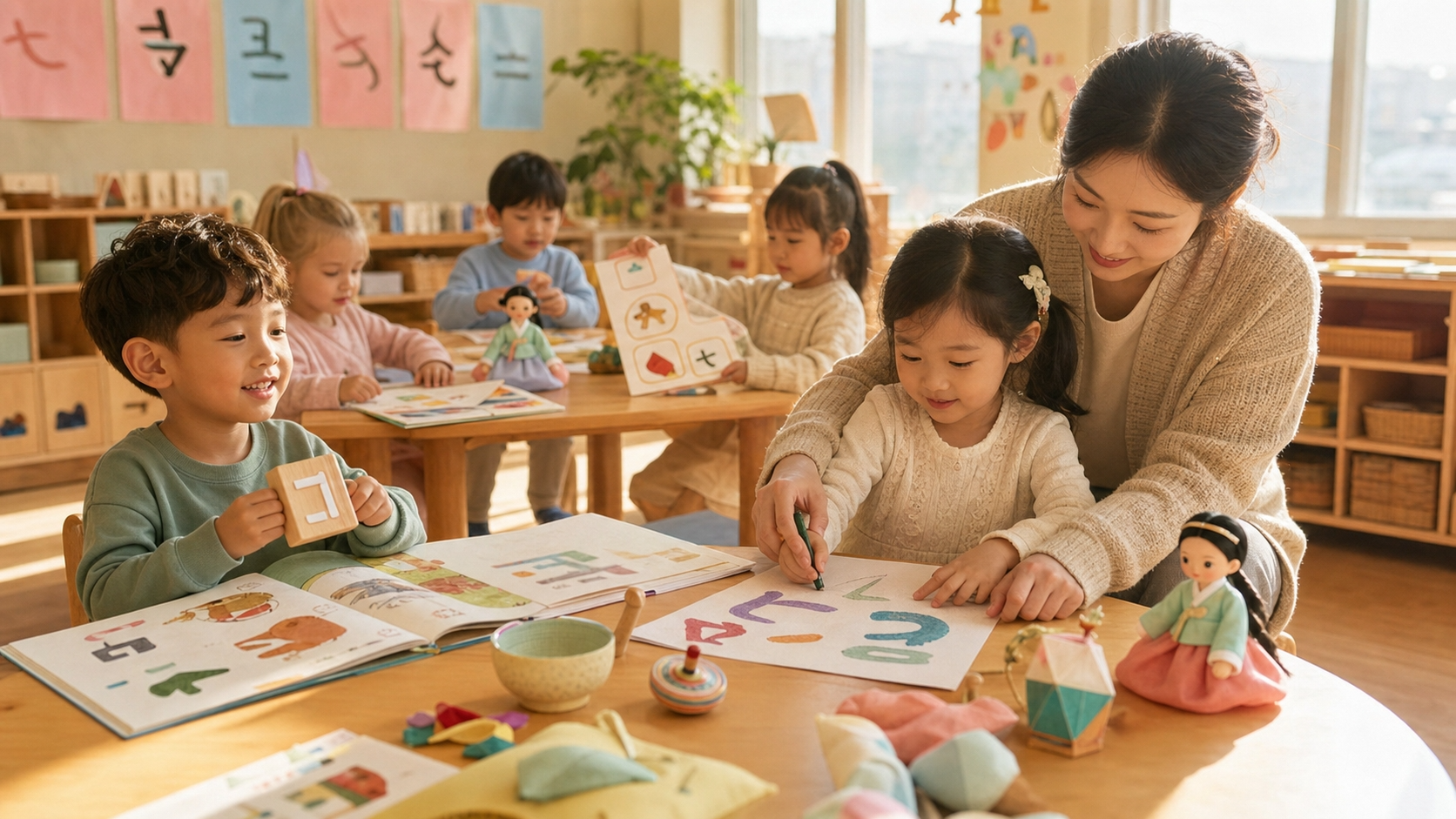
These new textbooks have been crafted with care, letting children who are just beginning to encounter Korean language and culture overseas learn Hangeul through images and engaging activities—not through drills, but through the kind of play that feels natural to a young mind. The government’s vision is clear: by providing these materials, it hopes to strengthen the bridge between the home and the weekend Hangeul school, ensuring that the very first steps in Korean language learning are supported.
Of the 43,000 Copies of Preschool Textbooks, 21,000 Are Headed to the United States
This year, the presses are running for 43,000 copies of these preschool textbooks. Roughly half—21,000 volumes—are bound for Hangeul schools across the United States. It is no surprise: the U.S. hosts one of the most extensive networks of Hangeul schools outside Korea, a living tapestry of community efforts, and the allocation mirrors the real need on the ground.
The total shipment of textbooks and educational materials to U.S. Hangeul schools this year stands at 185,000 copies—a modest but meaningful increase of 6,000 from last year’s 179,000. By March, 156,000 of these had already crossed the Pacific, and the remaining 29,000 are scheduled to arrive by October, in steady waves.
Supporting the Classroom Environment of Over 600 Hangeul Schools
Across the United States, more than 600 Hangeul schools hum with activity every weekend. The Ministry of Education, through its eight Korean Education Centers in the country, orchestrates the supply of textbooks to each school. But it is not a matter of simply shipping boxes—each school has its own rhythm: different numbers of students, different class sizes, different circumstances. A one-size-fits-all approach would not do; the system must be flexible, responsive to the actual needs of each classroom.
When enrollment shifts leave some schools with extra copies, those books are rerouted to smaller schools or to newly established ones. And alongside the textbooks come training sessions for local teachers, because a book, no matter how well designed, only comes alive in the hands of a skilled educator.
From Chalkboard-Centered Lessons to the Use of Audiovisual Materials
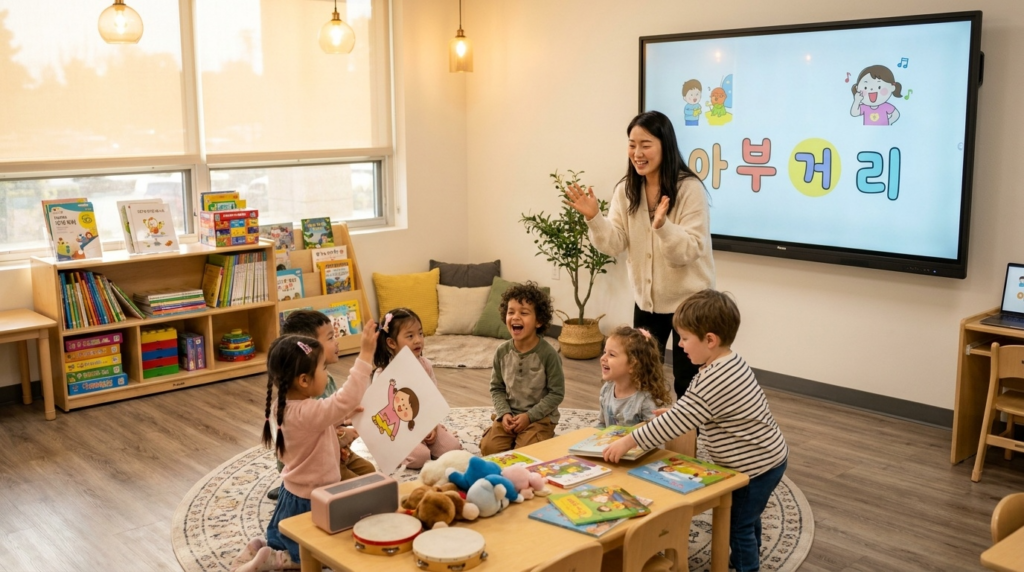
In a nod to the changing face of the classroom, the Ministry and the Foundation have also introduced PPT versions of the existing textbooks—transforming pages into slides, chalkboard notes into screen projections. It is a quiet acknowledgment that Hangeul schools today are no longer places where a teacher stands before a blackboard with a piece of chalk; they are spaces where images, sounds, and digital tools join the lesson.
The push for these PPT materials came from a suggestion by the National Association for Korean Schools (NAKS) last year. It is a move that shows the authorities are listening: not just handing out books, but giving teachers ready-to-use resources that fit the flow of a real lesson.
Support Plans Announced at the NAKS Academic Conference in New Jersey
The announcement came at a gathering of minds—the 44th Academic Conference and General Assembly of NAKS, held in Teaneck, New Jersey, from July 23 to 25, 2026. The theme, ‘Korean Schools Growing Together in the Age of AI,’ spoke to the times, and the room was filled with Hangeul school administrators and dedicated educators, all leaning into the future.
Seol Se-hoon, the Ministry’s Director of Planning and Coordination, put it plainly: ‘The roots of overseas Korean language education are in the Hangeul schools of our overseas compatriots.’ He pledged to listen to the voices of those educators and to ensure that the next generation can keep learning the language and culture. The true measure of this initiative, he suggested, will be seen in the classrooms—how the preschool textbooks and PPT materials are actually used, and whether the supply chain can flex to meet each school’s unique needs.
Sources: Son Hyun-kyung, E-Today, July 22, 2026; Lee Kyung-min, The Korea Times, July 22, 2026; KBS World, July 22, 2026; NAKS 44th Academic Conference Guide.