
Table of Contents
The Next Journey for Fate Readers Who Finished Competing
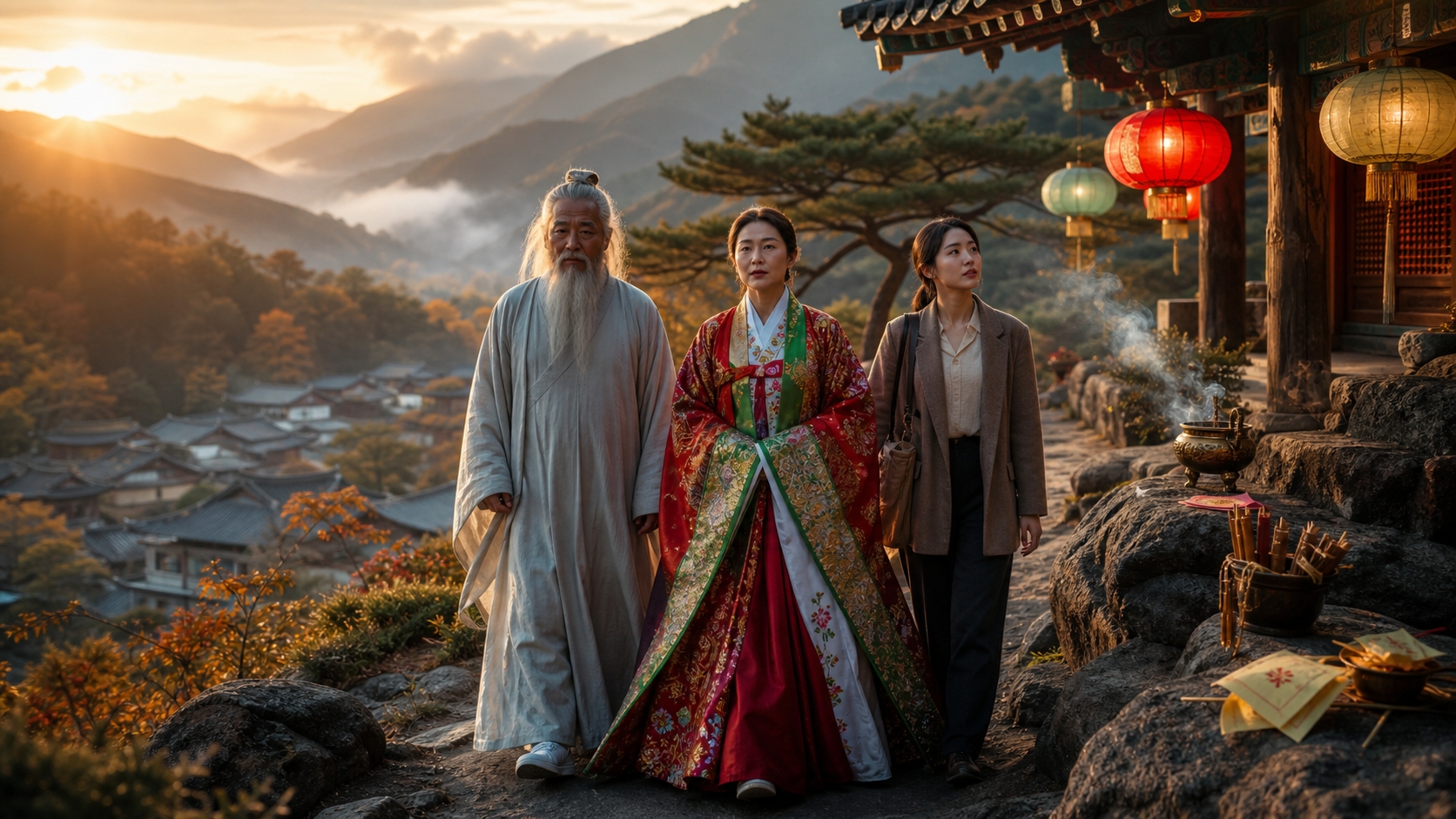
A survival show that brought together Korean shamans, saju masters, face readers and tarot readers to compete against one another is preparing a new chapter. This time, instead of giving correct answers in a confined space to avoid elimination, the cast travels to spiritual sites across Korea. The format centers on encountering rituals and local customs, sharing meals, and examining the beliefs and experiences that have persisted in each place.
That is the premise of “House of Fates,” a spinoff that Disney+ has greenlit for full production. An official Korean title and release date have not yet been announced. At the center of the new show are the top three finishers from the original series, “Battle of Fates” (known in Korean as “Unmyeong Jeonjaeng 49”). Other cast members from the original also join parts of the journey, and the producer and writer behind the original remain on board.
The spinoff exists because “Battle of Fates” became a hit. After the original, which recast Korean fortune-telling and shamanism in the grammar of a survival competition, set a new-title record on Disney+ Korea, the production team and the platform expanded the same cast and subject matter into a travel-style experiential format. “House of Fates” is not simply a follow-up season; it dials back the competitive element and moves closer to the places and culture behind it.
49 Fate Readers, Each With a Different Method
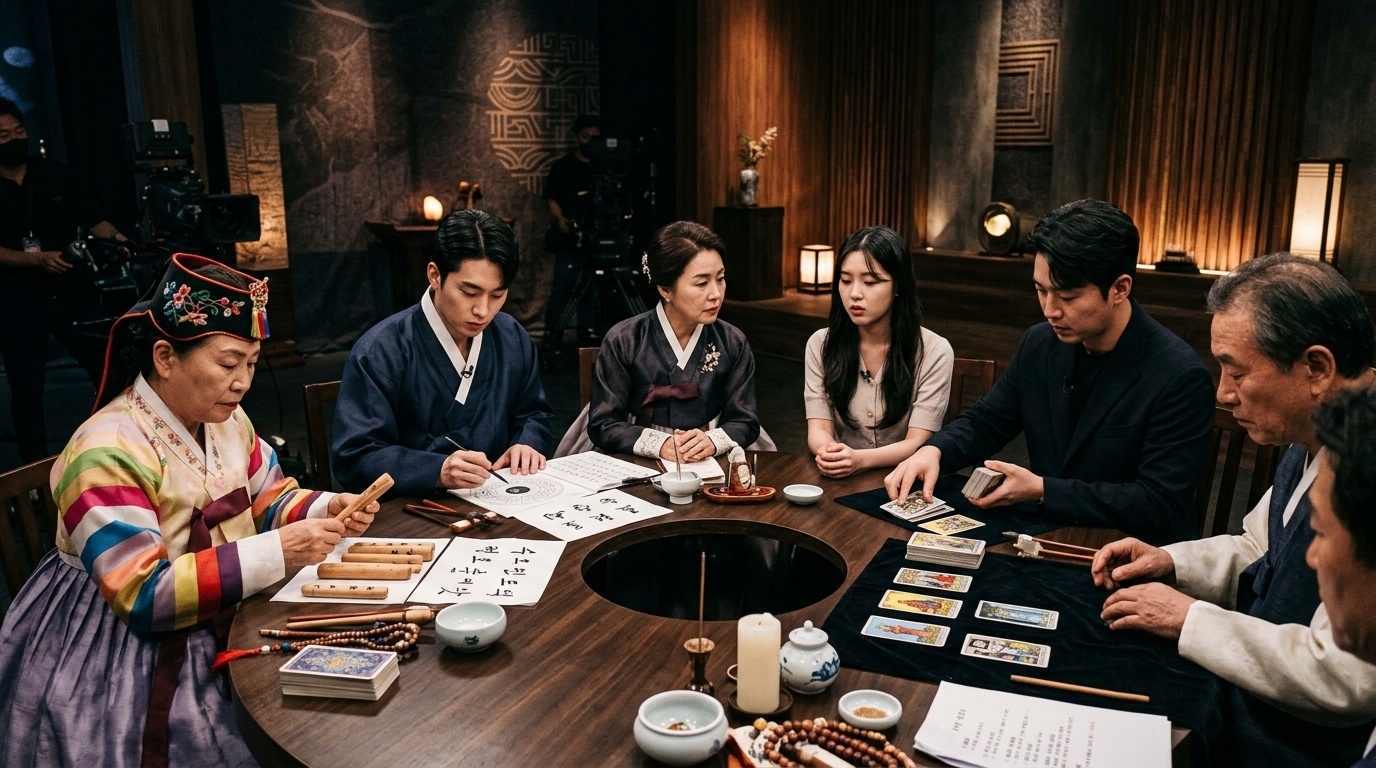
“Battle of Fates” premiered on Disney+ on Feb. 11, 2026. The 10-episode series brought together 49 experts who read fate through different methods, not only Korean shamans but also saju, tarot, face-reading and foot-reading practitioners. They took on a series of challenges to demonstrate their interpretive skills and compete to advance to the next round.
The 49 contestants did not all read fate through the same principles or process. Some emphasized communication with spiritual beings, while others based their readings on a person’s birth date or the features of their face or feet. Contestants who used tarot cards and those who relied on observation and inference competed in the same rounds. Placing such different interpretive systems inside a single challenge is what created the show’s competitive tension.
For viewers outside Korea, it matters not to mistake these fields for a single, uniform tradition. Shamanism is a form of Korean folk belief built around spirits and ritual, while saju is a system that reads the course and tendencies of a life based on the exact date and time of birth. Face-reading interprets facial features, and foot-reading interprets the shape and characteristics of the feet. Tarot, unlike the others, is not a native Korean tradition; it arrived from abroad and has since settled into contemporary fortune-telling and consultation culture.
The original show grouped contestants of very different backgrounds into a single competing class it called “fate readers.” Viewers could compare how contestants from different fields approached the same challenge. The fact that contestants reached different conclusions from the same information, based on different grounds for their readings, generated the tension of a survival show, and the field of 49 became the basis for showing that range of methods in succession.
The Record Set in the First 12 Days
Putting 49 fate readers of such different backgrounds on one competitive stage translated directly into viewership. Based on views in its first 12 days after its Feb. 11 premiere, “Battle of Fates” set the highest opening record for any new Disney+ Korea title. A show built around shamanism, saju, face-reading and tarot rewrote the platform’s record for a new release.
What set the show apart was that its central subject was shamanism and fortune-telling rather than a genre with an already-proven track record of global hits, such as dating, cooking or physical competition. It combined subjects familiar to Korean viewers with ones many found unfamiliar, and the personalities of the contestants and the outcomes of the competition gave even viewers with no particular interest in fortune-telling a storyline to follow.
The show did not stop at judging whether supernatural abilities were genuine. Contestants staked their expertise and reputation on each challenge, and viewers followed both who offered the most convincing reading and who was eliminated. It combined the subject matter of shamanism and fortune-telling with the familiar survival-show devices of rankings, competition, twists and elimination. All 10 episodes are currently streaming on Disney+.
The record set in the first 12 days became more than an early sign of interest; it became the basis for a follow-up project. It confirmed enough viewer interest to justify reusing the original cast and subject matter, and as a result, rather than repeating the competition, a spinoff that expands the world in a different format was approved. The original’s success became the starting point for producing a new show.
The First Spinoff Greenlit After the Hit
After the original’s record was confirmed, Disney+ gave “House of Fates” a full production order. It is the first spinoff approved since “Battle of Fates” premiered. The top three finishers from the original take the lead in the new show, and other contestants join along the way. Because the original’s producer and writer are returning, the relationships between cast members and the storylines built in the original can carry over into the new show.
The filming approach, however, differs from the original. Rather than gathering in one place to compete, the cast travels across Korea, visiting sites tied to shamanism and other spiritual practices. After finishing an experience in one region, they move on to another, taking in rituals and customs that vary from place to place. The nationwide journey itself becomes the central device driving the show forward.
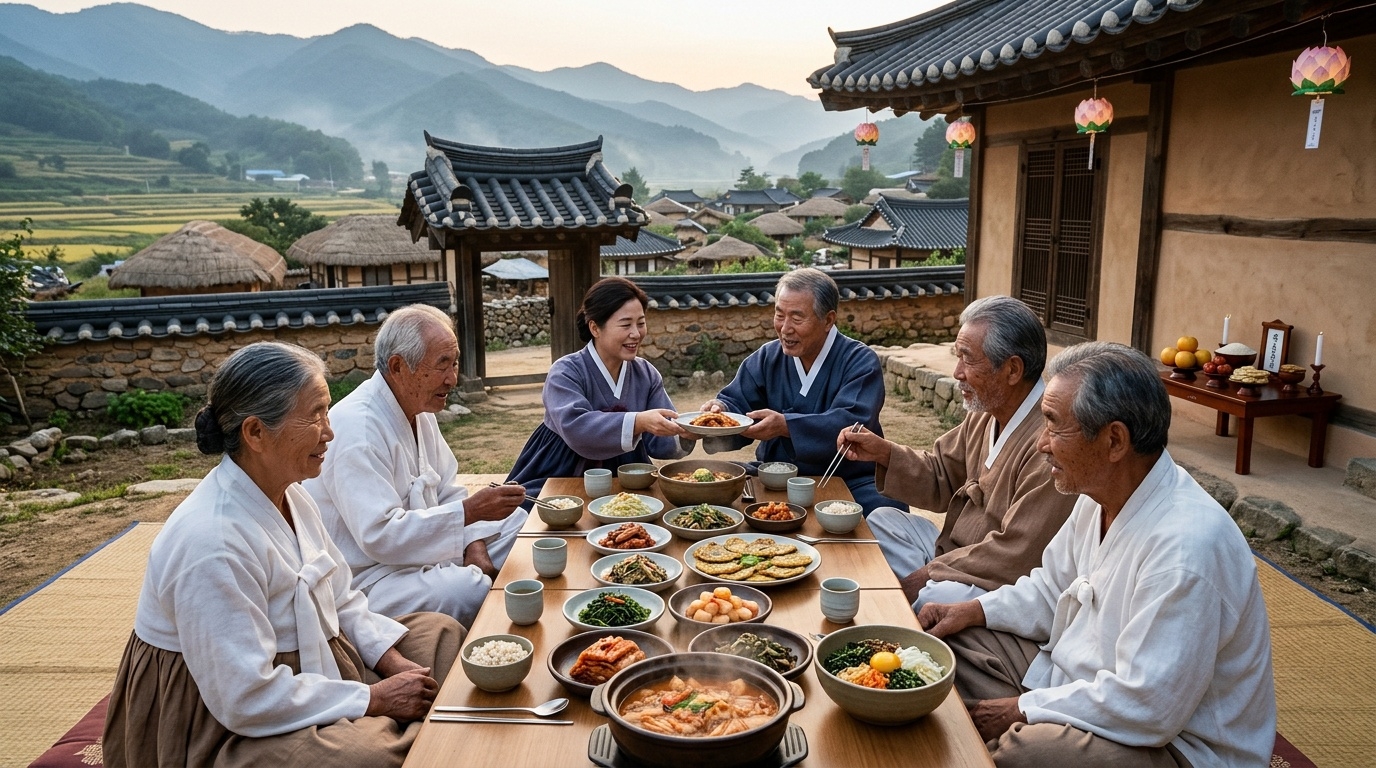
At each location, the cast either watches or takes part in local rituals and looks into customs passed down there. Sharing a communal meal with people at each destination is also a core part of the format. Rather than showing only the moment a ritual takes place, the format aims to capture the process of people gathering in one place, sharing food and exchanging experience.
Along the journey, the cast receives personal fate readings and talks about their own experiences with relationships and loss, before moving into direct contact with local shamanic rituals. Where contestants read other people’s fates and competed against each other in the original, in the new show those same contestants are sometimes the ones being read. It is a way of casting new light on figures from the original by revealing the personal experience behind the strong personalities and expertise they showed as competitors.
Local customs and shared meals can serve as a device for not explaining Korean spiritual culture through spectacular ritual scenes alone. As the cast moves from place to place, they encounter different rituals and different regional ways of life. The nationwide format leaves room to show that Korea’s spiritual culture does not exist in one fixed form, but appears differently depending on the place and the customs tied to it.
From Survival Competition to Cultural Journey
The biggest difference between “Battle of Fates” and “House of Fates” lies in the order in which they present Korean traditional belief. In the original, the challenge and its outcome came first, and shamanism and fortune-telling were presented as the contestants’ abilities that determined winners and losers. In the spinoff, place, ritual, custom and shared meals come to the fore instead. Rather than asking who reads fate most accurately, the show moves toward examining where and how people carry on these rituals and customs.
That does not mean shamanism can be generalized as a single belief shared by Korean society as a whole. Koreans’ attitudes toward religion and fortune-telling vary by individual and generation. Some people accept shamanic rituals as faith, while others approach them as a cultural custom or a form of personal counseling. There are also those who use saju and tarot regularly while considering them separate from religious belief.
The task facing the new show, then, is not simply to repeat the popularity of the original. If strong characters and mysterious scenes are what draw viewers in, how specifically the show explains the differences among the places and rituals across the country will determine the spinoff’s cultural depth. Having the original production team return has the advantage of keeping a familiar cast and narrative, but a competition show and a travel-style cultural journey call for different kinds of storytelling.
A release date for “House of Fates” has not yet been set. But it is clear that the record “Battle of Fates” set in its first 12 days led directly to the spinoff’s production. After a survival show built around Korean shamanism and fortune-telling became a hit, its creators are now widening the lens to the places and rituals behind it. Whether the new show can preserve its entertainment value while carefully portraying the complexity of Korean spiritual culture is the next thing to watch.
Source: Variety, July 29, 2026.