
Table of Contents
Korean products making the journey back in travelers’ suitcases
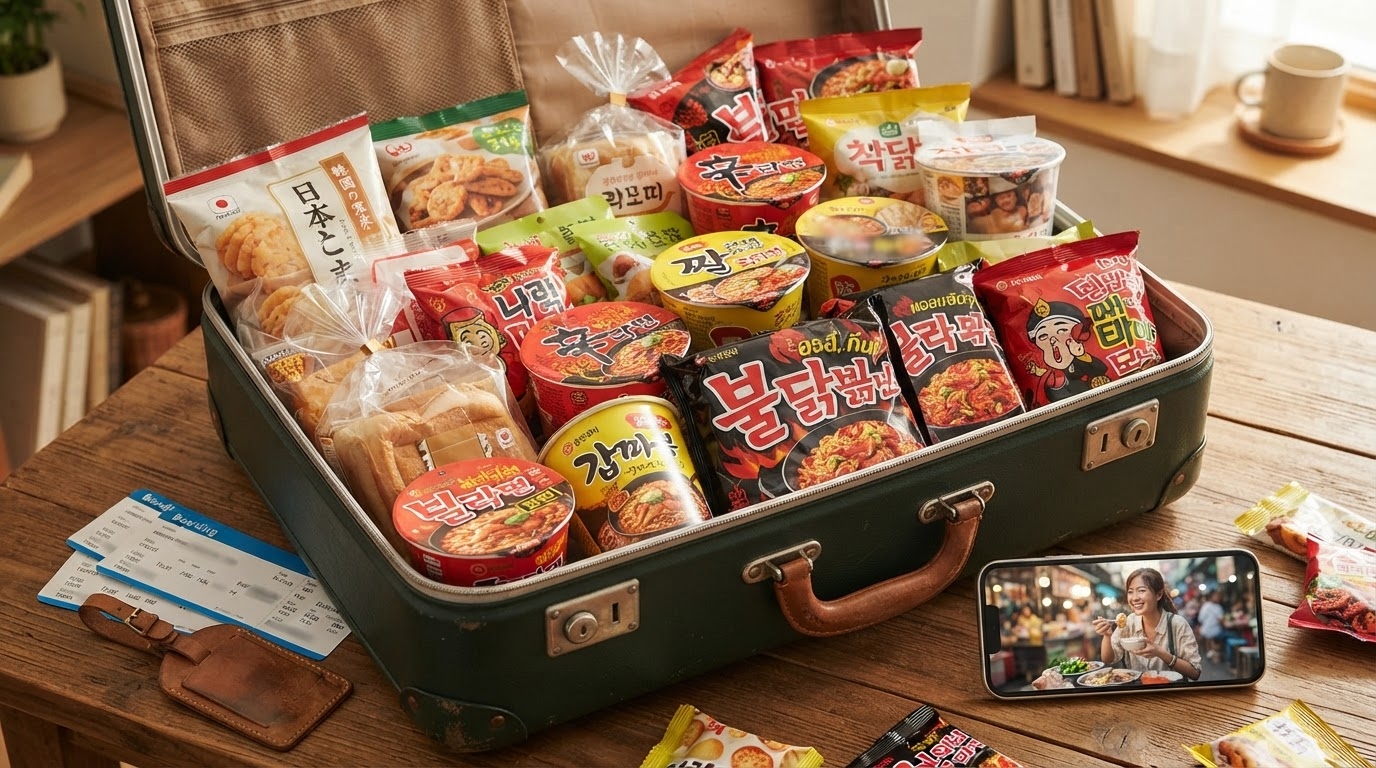
Travelers returning from Vietnam are increasingly packing their bags with Orion’s “An” rice crackers and “C’est Bon” packaged bread. Meanwhile, reviews of Japanese getaways are flooded with comments asking where to track down Nongshim’s “Samgyetang Bowl Noodle.” The shared irony here is that while these are proudly made by Korean companies, you’ll have a hard time finding them on local supermarket shelves. Snacks originally developed exclusively for overseas markets have unexpectedly morphed into the ultimate “return-trip must-haves” for Korean tourists heading home.
This is far more than a simple cross-border shopping fad. These products are carefully tailored to the culinary cultures of foreign consumers, discovered by traveling Koreans, and then broadcast back home via social media. Once local interest reaches a boiling point, companies often respond with limited-edition domestic drops or full official launches. The lifecycle of these goods doesn’t end with an outbound shipment from Korea; instead, through a loop of localization, travel discovery, and digital word-of-mouth, they find their way back home.
For the modern traveler, a homecoming souvenir is both a tangible memory of their trip and a way to share that experience with friends. Items sporting familiar Korean brand logos, yet carrying flavors and packaging entirely unseen in Korea, fit the bill perfectly. The friends who receive these treats inevitably look them up, hunt for other travelers’ reviews, and share tips on where to buy them. What begins in a single suitcase quickly ripples across the internet, turning into a collective consumer craving.
Born from Vietnamese food culture: “An” and “C’est Bon”
Back in 2019, Orion launched the rice cracker “An” and the packaged bread “C’est Bon,” tailoring both closely to Vietnamese palates and daily routines. “An” was designed for a culture with high rice consumption. Beyond the original flavor, the lineup expanded to include local favorites like seaweed and meat floss, pushing annual sales past the 80-billion-won mark last year.
“C’est Bon” drew its inspiration from bánh mì chà bông, a popular Vietnamese sandwich topped with savory pork floss. Recognizing the growing demand for quick, on-the-go breakfasts driven by rapid urbanization and a rise in dual-income households, Orion developed a soft cake filled with shredded chicken. It’s a clear example of a snack company studying local dietary habits closely enough to create a product that bridges the gap between a casual treat and a morning meal replacement.
These aren’t just standard Korean snacks slapped with translated labels. They were engineered from the ground up for the Vietnamese market, factoring in local ingredients, eating habits, and retail environments. Yet, when Korean tourists stumbled upon them, realizing they were made by Orion but unavailable back home, they eagerly shared their discoveries online, and the narrative flipped. What is an everyday pantry staple for a consumer in Vietnam becomes an elusive, prized find for a shopper in Korea.
This sharp contrast creates entirely different consumer contexts for the exact same item. In Vietnam, repeat purchases are driven by taste, price, and convenience. For the Korean tourist, the appeal is heavily fueled by the novelty of buying a familiar brand’s “hidden” creation. Ironically, a product that achieves its ultimate success through localization, blending seamlessly into daily life abroad, is reborn as an exotic novelty the moment it crosses back over the Korean border.

How a Japan-exclusive cup noodle sold out in Korea
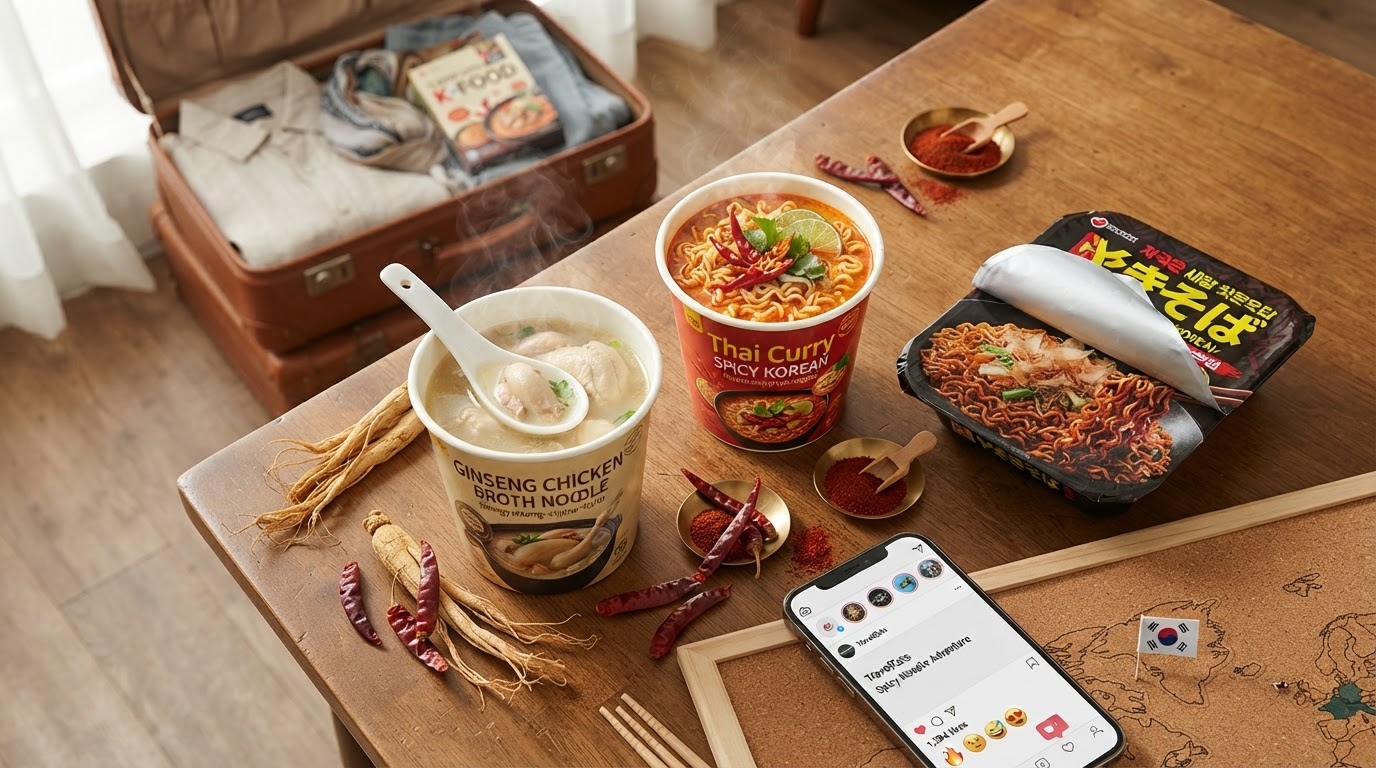
In June, Nongshim released the “Samgyetang Bowl Noodle” specifically targeting the Japanese market. By infusing a rich chicken broth with the distinct aroma of ginseng, the company translated Korea’s iconic summer health dish into a convenient cup noodle. Despite leaning heavily on Korean culinary heritage, it was sold strictly in Japan. However, as Korean tourists began posting taste tests and shopping tips online, domestic demand quickly caught fire.
Bowing to the pressure, Nongshim launched a limited domestic run of the noodles in August through its own online store and platforms like Coupang. The initial inventory vanished instantly. When restocks sold out just as fast, the company had no choice but to ramp up production. At one point, the noodles were even surfacing on secondhand marketplaces for three to four times their retail price. This is a textbook example of a foreign-exclusive product being willed into the domestic market purely through the enthusiasm of traveling consumers.
Throughout this frenzy, the “unavailable in Korea” label acted less as a barrier and more as an accidental marketing hook. The sheer irony of a Korean food, made by a Korean company, being sold exclusively abroad sparked real curiosity. Paired with the thrill of hunting it down on vacation, the product transcended being a mere instant noodle, becoming a souvenir with a compelling backstory.
A limited domestic release is also a useful test for companies to see if online hype translates into actual spending. Views and comments on travel blogs aren’t enough to project long-term demand. Brands need to see if shoppers are willing to open their wallets once the initial novelty wears off before they commit to full-scale domestic distribution. The fact that the Samgyetang noodles repeatedly sold out proved that, at the very least, the digital buzz had real purchasing power behind it.
Buldak folds regional flavors into its brand DNA
Samyang Foods has played a similar game, developing spin-offs like Pu Phat Pong Curry Buldak, Yakisoba Buldak, and Habanero Lime Buldak specifically for international shelves. By merging the core Buldak identity with regional staples, including Thai dishes, Japanese stir-fried noodles, and the zesty heat profiles popular in the US, the brand caters directly to local tastes. As traveling Koreans and savvy cross-border shoppers started bringing these variations home, domestic hype built up enough to trigger official Korean releases for select flavors.
The “Buldak” name offers an immediate sense of comfort to Korean consumers, yet these export-only flavors deliver a notably different culinary experience. By anchoring the product in its signature fiery heat while weaving in distinct regional notes, Samyang makes these exotic noodles far more approachable than completely foreign brands. Meanwhile, the sheer difficulty of finding them in Korea turns eating them into a fun challenge, sparking a culture of collecting and comparative taste-testing.
These cases show that the playbook for K-food’s global expansion has evolved far beyond simply exporting tried-and-true domestic hits. Companies are actively engineering new flavors and formats tailored to foreign palates, folding them into their global brand portfolios. The corporate passport might say South Korea, but the true culinary origins of these products are rooted in the breakfast habits of Vietnam, the convenience store ramen aisles of Japan, and the daily consumption routines of local neighborhoods worldwide.
Social media has flipped the distribution script
In the past, export-only products quietly lived out their days between overseas subsidiaries and foreign shoppers. Domestic consumers usually had no idea they even existed. Today, tourists diligently document product names, packaging, flavor profiles, store locations, and prices through photos and short-form videos. A quick travel vlog now functions as a highly effective, organic advertisement, introducing overseas exclusives directly to the Korean public.
A food culture survey released earlier this year by CJ CheilJedang found that 56% of respondents in their 30s actively seek out foods in Korea that they first tried while traveling abroad. The culinary memories made on vacation don’t fade at the baggage claim; they spark an ongoing desire to purchase. Because social media effortlessly connects people chasing these same flavors, it has never been easier for companies to gauge domestic demand.
For the consumer, these export exclusives offer a mix of the familiar and the fresh. Heavyweight names like Orion, Nongshim, and Samyang provide a comforting baseline of trust regarding quality and safety. At the same time, the previously unseen flavors and packaging provide the thrill of a new experience. They feel like a safer bet than an entirely obscure foreign brand, yet carry a level of rarity that standard domestic snacks simply cannot match.
Social media does more than display these products; it standardizes the playbook for buying them. Users eagerly share which specific local marts stock them, whether the boxes fit easily into checked luggage, and exactly how the flavor profiles compare to the domestic versions. Even people with no immediate travel plans stumble upon these posts, joining the chorus of consumers demanding a local release.
Localized products become the ultimate test for the Korean market
The grassroots hype that begins when a tourist discovers an overseas exclusive provides genuinely useful intelligence for corporate R&D teams. Companies can test the waters, gauging flavor preferences, price tolerance, and the longevity of demand after a limited drop, with relatively low risk. The fact that the manufacturing and sales logistics have already been ironed out abroad makes a domestic launch that much easier to evaluate.
Of course, not every overseas hit is destined for success back home. The cultural quirks that made a product popular abroad might not resonate with Korean palates, and the appeal of rarity often vanishes the moment a product hits local convenience store shelves permanently. Since social media hype tends to burn bright and fast, viral fame does not guarantee long-term repeat purchases. Companies face the delicate task of distinguishing a fleeting digital trend from sustainable market demand.
Brands must also weigh the strategic value of keeping a product exclusive versus bringing it home. Domestic sales open up fresh revenue streams, but they inevitably dilute the appeal of a “travel-only” item. Conversely, ignoring domestic demand can lead to price gouging in gray markets and import platforms. For many companies, a limited-edition domestic release is the middle ground that lets them test the waters without fully abandoning the product’s exclusive allure.
The trend pioneered by “An,” “C’est Bon,” Samgyetang Bowl Noodle, and the global Buldak variants is unmistakable. K-food is no longer a one-way street of domestic products being exported abroad. Goods re-engineered for foreign tastes are making the round trip back to Korea, carried by travelers and propelled by social media. Moving forward, these sought-after souvenirs will be more than vacation mementos: unofficial focus groups testing the domestic viability of the world’s localized hits.
Sources: Maeil Business Newspaper, September 6, 2026; Asia Economy, August 23, 2026.