

Table of Contents
A Family Noir that Opened at Number Four
When the film ‘Bigwang’ premiered on September 2, it drew around 16,000 moviegoers on its opening day. Landing in fourth place at the box office with an initial cumulative audience of 17,833, it wasn’t exactly a grand, market-dominating debut. At the time, Korean theaters were heavily saturated with massive Hollywood releases pulling in huge crowds. Looking purely at the opening day numbers, ‘Bigwang’ kicked off its theatrical run rather quietly in the shadow of giants.
Judging solely by that first day, it was hard to predict how long the film would survive. But the real story of its box office journey lies not in its opening rank, but in the momentum that followed. Driven by high audience ratings and strong word-of-mouth, the film saw a steady, continuous increase in its cumulative viewership over time. This shift from a quiet start to sustained growth is the core of the film’s success. The gradual accumulation of audience praise mattered far more here than an explosive opening weekend.
This trajectory reflects the reality mid-sized Korean films face when squaring off against big-budget tentpoles. A modest opening day ranking and viewer count can easily cause a film to fade into obscurity. Yet, if genuine audience enthusiasm follows, there is room to rewrite that initial narrative. ‘Bigwang’ is exactly the kind of film that makes you wait and watch to see if that potential actually translates into real ticket sales.
A Story Sparked by the Ruin of a Top Star Couple
Directed by Lee Ji-won, known for ‘Miss Baek’, ‘Bigwang’ features a heavyweight cast including Ryu Seung-ryong, Ha Ji-won, and Kim Si-a in the lead roles, supported by veterans like Kim Hae-sook, Kim Sun-young, Kim Young-min, and Yoo Jae-myung. With a roster built on seasoned character actors, the film relies heavily on their performances to carry the tension of its familial drama and criminal undertones. This emphasis on acting over massive visual spectacle aligns perfectly with its identity as a family noir, where emotional depth and interpersonal dynamics take center stage.
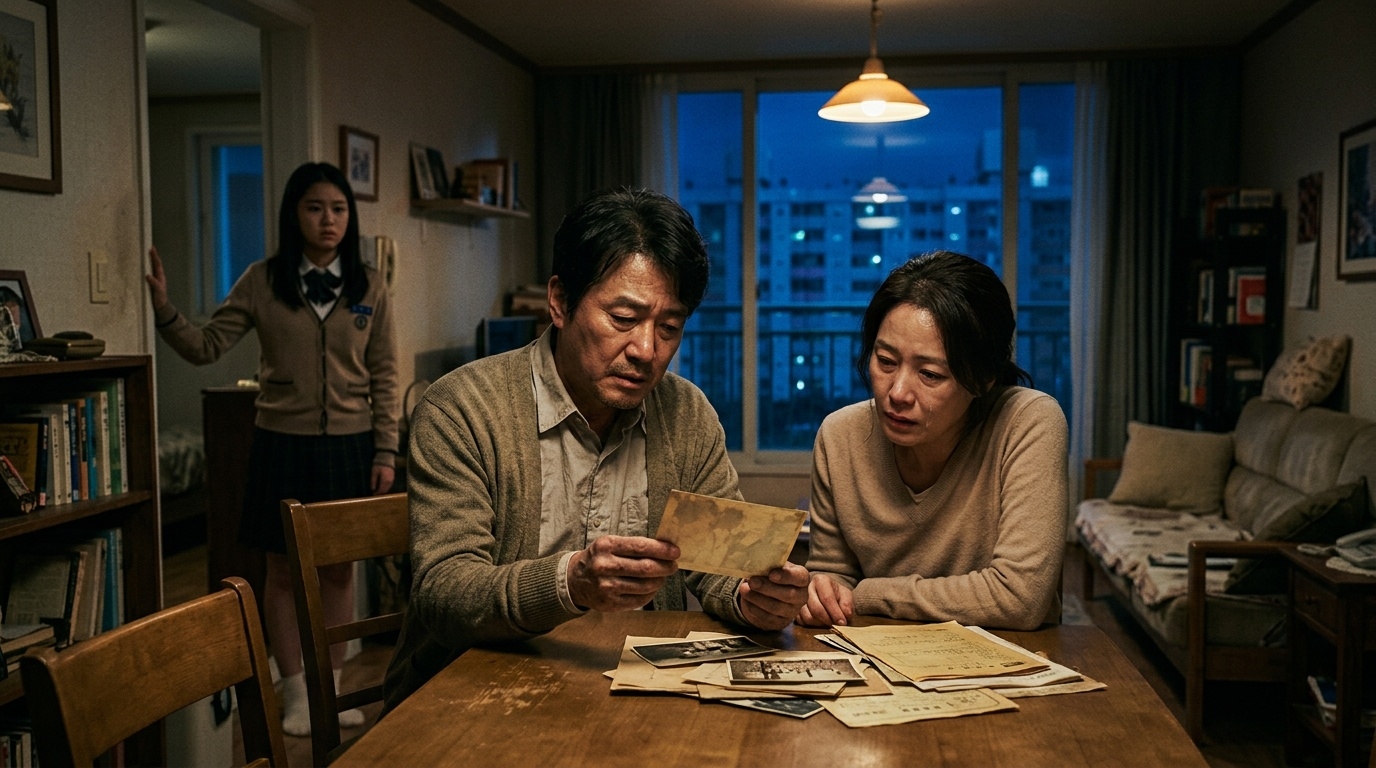
At the heart of the narrative are Jung-gu and Nam-mi, a former top-tier celebrity couple played by Ryu Seung-ryong and Ha Ji-won. Their marriage falls apart with the sudden appearance of Jung-gu’s daughter, Dong-ju. Played by Kim Si-a, Dong-ju is both the catalyst for their breakup and, years later, the very reason they are forced into action again. The intricate ties binding these three characters push the audience to examine the family’s fractured past and tense present, rather than just focusing on solving a mystery.
The plot jumps forward eight years after their bitter split. When Dong-ju becomes entangled in a dangerous incident, Jung-gu and Nam-mi are drawn back together, digging for the truth to save her. This is where the film earns its family noir label, seamlessly blending the deep scars of broken familial bonds with a gritty investigative thriller. Rather than letting crime or mystery overpower the plot, the true driving force is watching a shattered family confront the same crisis. For the audience, the appeal lies not just in uncovering the truth, but in witnessing how these deeply estranged individuals navigate their reunited dynamic after so much time has passed.
The Power of Word-of-Mouth Outshining Opening Day
After a modest opening of 16,000 viewers, ‘Bigwang’ steadily expanded its reach, eventually pulling in approximately 84,920 moviegoers and grossing around 768 million won. This wasn’t a case of front-loading an audience on opening weekend; it was the result of a slow, organic influx of viewers as the theatrical run continued. The gap between that initial opening figure and the final tally perfectly maps the film’s unique box office curve. More than the final 85,000 figure itself, the journey to get there is what truly defines the film’s standing.
This steady momentum was fueled by incredibly strong viewer reception, with audience scores consistently hitting the 9 out of 10 range. While high ratings don’t guarantee a massive box office sweep, for a film without an overwhelming release scale, positive reviews from actual ticket buyers become a key signal for future audiences. It gave hesitant moviegoers a solid reason to head to the theater, proving the film was worth their time regardless of its opening day rank.
If the star-studded cast was the initial hook for ‘Bigwang’, it was the compelling family noir narrative and powerhouse acting that actually sustained its theatrical lifespan. The first day’s box office ranking wasn’t a definitive verdict, but merely a starting point to pass the baton to the next wave of viewers. The film demonstrates a structure where an audience’s post-viewing praise, rather than marketing muscle or a massive opening, builds the next phase of box office success.

Caught Between 10 Million and 8.8 Million Blockbusters
A turnout of roughly 84,920 might seem minuscule when stacked against the Hollywood juggernauts playing alongside it. Christopher Nolan’s ‘Odyssey’ raked in an astounding 10.26 million viewers, while ‘Spider-Man: Brand New Day’ secured about 8.83 million. The sheer scale of these audiences makes a direct comparison with ‘Bigwang’ almost impossible. The fact that audience attention and theater selections were heavily skewed toward these massive franchises entirely defined the harsh environment ‘Bigwang’ had to navigate.
Yet, it is precisely because of this stark contrast that the box office curve of ‘Bigwang’ carries such weight. This isn’t a story about a mid-budget Korean family drama going toe-to-toe with Hollywood blockbusters and stealing the number one spot. Instead, it’s a story of pure survival. In a landscape where major releases monopolized both screens and public attention, the film managed to steadily add viewers throughout its run by leaning on its strong genre identity, stellar cast, and glowing audience reviews. The measure of success here isn’t topping the overall market; it’s growing an audience under distinctly disadvantageous conditions.
When theater options are dominated by blockbusters, smaller films can rarely hope for an explosive opening week. Under these constraints, genuine audience satisfaction and organic recommendations become what keeps the projectors running. The fact that ‘Bigwang’ managed to multiply its opening day crowd of 16,000 into a cumulative 85,000 viewers highlights exactly how word-of-mouth can compensate for a limited debut. It didn’t push the blockbusters out of the way, but it successfully carved out and secured its own dedicated audience amidst a sea of giant alternatives.
The Survival Playbook for Mid-Sized Korean Films
If we measure the performance of ‘Bigwang’ against massive blockbuster standards, all we see is a gap in the numbers. But not every film is designed to pull in ten million viewers. The real takeaway here is that a fourth-place box office start wasn’t the final word on the film’s fate. The undeniable chemistry of Ryu Seung-ryong, Ha Ji-won, and Kim Si-a sparked the initial intrigue, while the narrative of a broken family reuniting after eight years to uncover the truth created a compelling intersection of family drama and noir.
Following its release, stellar 9-point viewer ratings provided the ultimate justification for new audiences to give it a chance. When behemoths dominate the multiplex, the survival strategy for mid-sized Korean films isn’t to obliterate the competition overnight. Instead, it’s about slowly building an audience and proving the film’s theatrical worth through a clear genre vision, exceptional acting, and high audience satisfaction. ‘Bigwang’ wrapping up with 85,000 viewers represents a different scale of triumph than a ten-million-ticket hit, proving that a quiet beginning absolutely does not equate to failure.
The metric to watch moving forward is how long this high viewer praise can continue to draw in fresh audiences. ‘Bigwang’ built its presence not on its opening day ranking, but through the upward climb that followed. The secret to a Korean film surviving amidst Hollywood giants isn’t found in overwhelming opening records, but in a virtuous cycle where satisfied viewers actively bring in the next wave. While not every movie can conquer the entire market, steadily accumulating an audience that fits a film’s specific genre and scale remains a proven path for mid-level hits to hold their ground in theaters.
Source: ‘Bigwang’ Box Office and Audience Data, September 2–11, 2026.