
On the morning of June 23, ambassadors from 13 countries filed into a briefing room at Korea’s Ministry of Foreign Affairs in Seoul, there for an update on a meeting most of them won’t actually attend in their home capitals this year. Diplomats from Peru, the Czech Republic, Kenya and Mongolia listened as Korean officials walked through logistics, then took turns pledging support for what’s coming to Busan next month: the 48th session of the UNESCO World Heritage Committee, the first time Korea has hosted the gathering since it joined the World Heritage Convention in 1988.
The numbers behind that single sentence are larger than they might sound. The session runs July 19 to 29 at Busan’s BEXCO convention center, drawing roughly 3,000 participants — delegations from all 196 World Heritage Convention member states, plus heritage experts, international-organization staff and civil-society observers — to spend 11 days deciding which sites around the world get added to, or flagged for trouble on, UNESCO’s World Heritage List. Former Korean Ambassador to UNESCO Lee Byong-hyun will chair the session, putting a Korean diplomat in the chair for a meeting that has never once sat on Korean soil before.
What Korea is asking the other 195 countries for isn’t just attendance. At the June 23 briefing, the foreign ministry introduced a proposal to adopt a “Busan Declaration,” aimed at strengthening international cooperation on cultural heritage preservation, and asked member states to engage with the drafting rather than simply show up to vote on agenda items. Czech Ambassador to Korea Ivan Jančárek, whose country counts numerous UNESCO-listed sites of its own, told The Korea Times on June 24 that the stakes go beyond any one country’s turn to host: “It is important that the governments pay attention to their countries’ history and take care of its heritage for next generations.” Anna J. Park reported the same day that ambassadors from Peru, Kenya and Mongolia echoed that support and committed to helping the session succeed.
Behind the diplomacy, the Korea Heritage Service has been building toward this for over a year. At a December 2025 press briefing, administrator Huh Min laid out three priorities: running the meeting itself without a hitch, using the spotlight to promote Korean heritage abroad, and turning the session into policy outcomes that outlast the 11 days of meetings. “K-heritage is the foundation of the global K-culture wave,” Huh said, framing the committee session as a chance to connect Korea’s 17 existing World Heritage sites to the same cultural momentum that’s already carried K-pop and K-dramas worldwide. The agency secured 17.9 billion won in its 2026 budget for the meeting, money going toward a “K-Heritage House” exhibition at BEXCO, media-art installations, intangible-heritage performances and international seminars timed to run alongside the formal sessions.
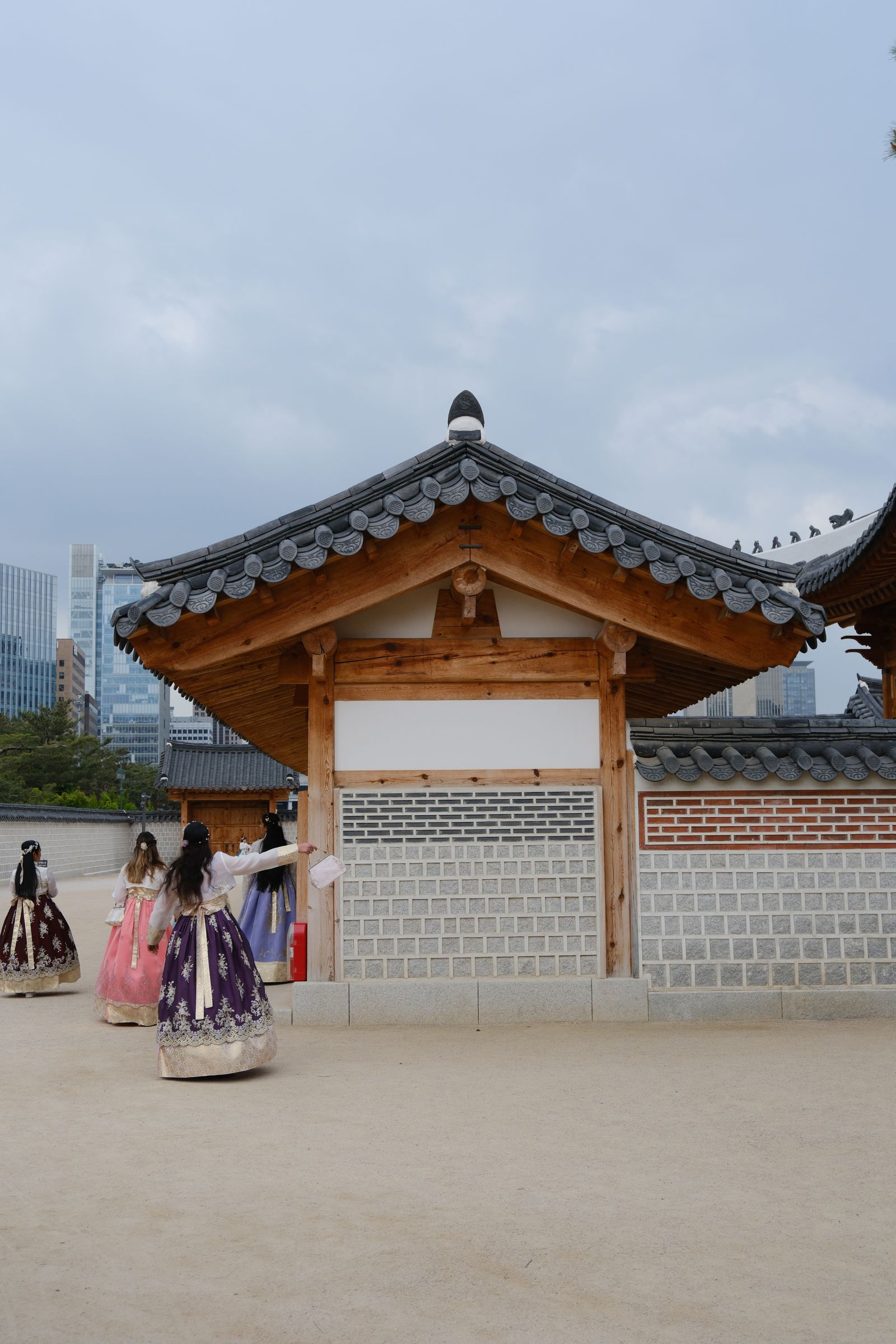
The image Korea chose to represent all of it, unveiled back in March, is deliberately old rather than flashy: an emblem built from the shape and color of the tiled roof of Jongmyo Shrine’s main hall, the Seoul site where the ancestral tablets of Joseon Dynasty kings and queens have been enshrined since the 14th century and which became Korea’s first UNESCO World Heritage listing in 1995. The Korea Heritage Service said the design was meant to express “the 600-year heritage of royal rituals and traditional architecture preserved in the heart of Seoul” — a roofline standing in for the entire pitch Korea is making to the other 195 countries arriving in Busan.
Whether any of this lands the way Korea wants depends on what’s harder to script than a logo or a welcome briefing: 11 days of often-contentious deliberation over which sites get listed, which get warnings, and whose heritage claims get recognized on a stage with this much international attention on it. A clean, well-received session would hand Korea a rare kind of soft-power proof point — host the world’s heritage diplomats, get a declaration with your city’s name on it, and walk away having linked K-culture’s global reach to something older and harder to dismiss than a chart-topping single. A messy one would be a different story entirely, playing out in front of the same 3,000 people. Either way, the countdown is no longer measured in budget cycles or press briefings; as of this week, it’s three weeks.
Sources: Anna J. Park, “Foreign diplomats voice support for UNESCO World Heritage session in Busan,” The Korea Times, June 24, 2026. Hwang Dong-hee, “Korea to spotlight Korean heritage as foundation of hallyu at 2026 UNESCO Session,” The Korea Herald, Dec. 10, 2025. Yonhap, “Jongmyo chosen as official symbol for 2026 UNESCO World Heritage Committee session in Busan,” The Korea Times, March 25, 2026.