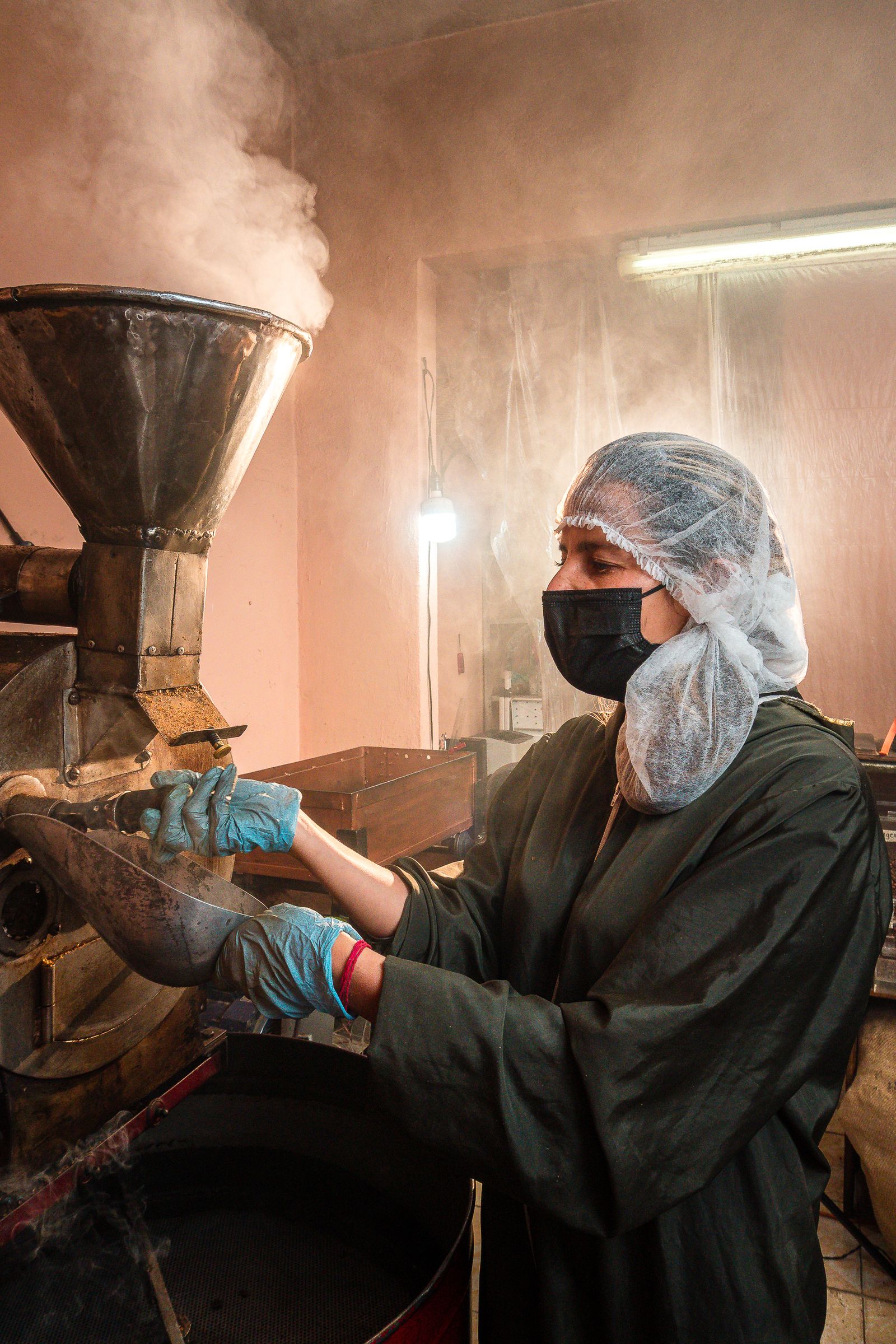
While Korea’s biggest cafe brands battle over store count and price in an increasingly saturated market, a distinct segment has continued finding room to grow: independently owned specialty coffee roasters positioning themselves explicitly against the franchise model, appealing to customers seeking single-origin beans, house roasting, and a level of craft attention that budget chains structurally cannot offer at their price point.
Specialty roasters occupy a different competitive lane than the low-price franchise wars playing out among Mega Coffee, Ediya, and Compose Coffee — rather than competing on speed and price, independent shops lean into slower service, direct-trade sourcing narratives, and often a single flagship location or small handful of shops rather than nationwide franchise networks, a scale difference that shapes their entire business model.
The segment has benefited indirectly from the broader Cafe Show 2026 “B.E.Y.O.N.D” trend framework circulating in the industry this year, particularly its “Original Local” sub-keyword emphasizing regional identity and ingredient sourcing — values that align naturally with specialty roasters’ existing positioning even though most independent operators aren’t explicitly marketing themselves using the Cafe Show’s official terminology.
Specialty coffee’s growth also reflects a customer base increasingly willing to pay a meaningful premium over both budget-chain and even standard Starbucks pricing for what they perceive as genuinely differentiated quality, a willingness that has allowed some independent roasters to expand into multi-location mini-chains without abandoning their craft positioning.
Industry watchers note that specialty coffee’s continued viability amid broader market saturation suggests Korea’s cafe industry isn’t simply consolidating toward either budget franchises or premium chains, but fragmenting into multiple distinct value propositions that can coexist within the same oversaturated overall market.
Source: Korean specialty coffee industry coverage and Cafe Show 2026 trend context.