Table of Contents
Here’s How to Read the Numbers on Korea’s Shrinking Fashion Market
A forecast suggests Korea’s fashion market could shrink for three consecutive years. According to Trend Research’s ‘2026 Preview Korea Fashion Industry Big Data Trend,’ this year’s domestic fashion market is expected to be around 44.4955 trillion won. After peaking at 48.4167 trillion won in 2023, it fell to 47.9019 trillion won in 2024, and 46.6998 trillion won in 2025, continuing the downward trend. The 2026 forecast is 4.7% lower than the previous year. Compared to the peak, that’s a drop of over 3.9 trillion won.
Looking at just the numbers, you might think, ‘Koreans aren’t buying clothes anymore.’ But it’s actually a bit more complicated. Rather than disappearing, the money consumers spend on fashion is shifting to buying only what they need, waiting for sales, and moving to consumption outside the survey scope, like overseas direct purchases, secondhand trading, and shopping during overseas trips.
Another thing to keep in mind: the 2025 figure is an estimate, and the 2026 figure is a forecast. They’re not finalized results, so the outcome could change depending on second-half consumer sentiment, weather, exchange rates, and retail competition. A shrinking overall market doesn’t necessarily mean individual brands will see sales decline. On the contrary, brands with price competitiveness or a strong design identity can seize even more noticeable opportunities.
When the Market Shrinks, You Pick ‘Fewer, More Reliable’ Pieces
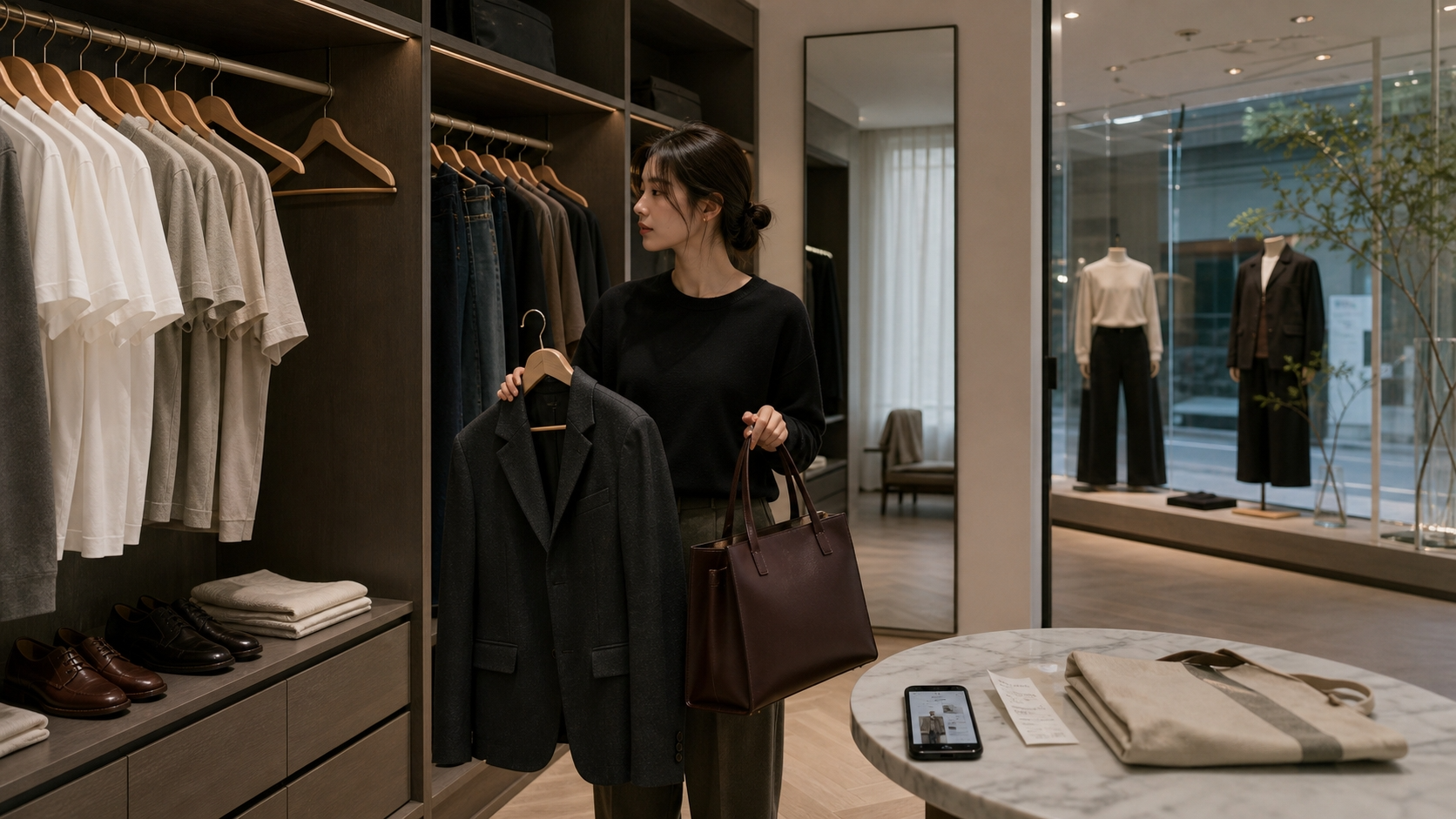
Fashion isn’t a daily necessity like food or transportation. If you already have enough clothes, you can put off buying a new shirt or bag until next month. That’s why fashion spending is the first to get cautious when high interest rates, cost of living pressures, and slowing real purchasing power persist. Instead of buying multiple trendy pieces, you look for low-risk items like a timeless outerwear piece or a bag that goes with multiple outfits.
Mid-priced brands in particular may struggle. Very cheap items have price as their advantage, while luxury brands can tout scarcity, materials, and brand experience. But brands that aren’t cheap yet don’t immediately show a difference in design or quality can easily get pushed out of your shopping cart.
That’s why platforms and brands are using words like ‘exclusive,’ ‘limited,’ and ‘collaboration’ more often these days. Just selling the same thing cheaper isn’t enough anymore.
For you as a consumer, this change is a pretty practical signal. Instead of buying multiple basic tees just because they’re on sale, first check how many similar colors and fits you already have in your closet. Also think about whether you can style it at least three ways with your go-to jeans or shirts. Even if it’s cheap, if you wear it once and leave it, it ends up being the most expensive piece.
Why Casual Wear, Sportswear, and Shoes Are All Shrinking at Once
What stands out in this forecast is that it’s not just one category, but several large markets adjusting at the same time. The casual wear market is expected to shrink from 18.8407 trillion won in 2024 to 16.6399 trillion won in 2026. Sportswear is forecast to go from 6.7524 trillion won to 6.3410 trillion won, and shoes from 7.4390 trillion won to 6.9531 trillion won over the same period.
The casual market is also seeing a backlash from the post-COVID surge in demand for comfortable clothes. Items like jogger pants, hoodies, and basic sneakers—that everyone already has at least one of—can have longer repurchase cycles.
As for sportswear, it’s not that workout culture is fading; rather, consumers are comparing prices and features across brands more carefully, which is slowing growth.
On the flip side, men’s formal wear is expected to grow slightly. Just because remote work and casual office attire have increased doesn’t mean everyone only wants comfortable clothes. With more important meetings, weddings, interviews, and formal events, there’s still demand for neat jackets and suits. However, it’s become more natural to style them with a t-shirt instead of a dress shirt or mix them with sneakers, rather than the traditional suit-and-tie approach.
W Concept’s ‘W.only’ Is the Platform’s Way of Selling Exclusive Products
In this market, fashion platform W Concept has bundled its previously individual exclusive brands and products into one integrated brand called ‘W.only’.
W.only is literally the name for products you can only find at W Concept. Instead of searching for the same item on other shopping malls and comparing only the lowest price, the strategy is to get you looking for colors, sets, and designs available only on that platform.
According to W Concept, transaction value for exclusive products in the first half of 2026 increased 110% year-on-year. Fashion exclusive products rose 102%, and beauty exclusive products surged 986%. These figures are based on W Concept’s internal transactions, so they shouldn’t be directly compared to the overall Korean fashion market growth rate. Still, the rapid growth of the platform’s exclusive products while the overall market slows signals that consumers are looking for items with a clear reason to choose them over ‘products you can buy anywhere.’
For example, designer brand Ivana Helsinki launched a blouse exclusively on W Concept, reflecting the ceremonywear trend that can be styled as a set or as separates. As a result, the brand’s sales from April to June this year increased 41% year-on-year. The key here isn’t the ‘exclusive’ label, but that the product reflects how consumers actually want to use it. If you can buy it as a wedding guest outfit and also wear it to work, that gives you more reasons to buy.
A Second-Half Rebound Is Possible—Here’s How to Apply It to Your Cart
Some financial sector analyses see the possibility of a gradual recovery in domestic consumption in the second half of 2026. If asset market conditions and consumer sentiment improve, fashion spending could revive. But that doesn’t mean a sharp rebound for all brands and categories like in the past. The market outlook reported by Fashionbiz also views this year as a transition period where consumption structure is finding a new balance, rather than a year of massive growth.
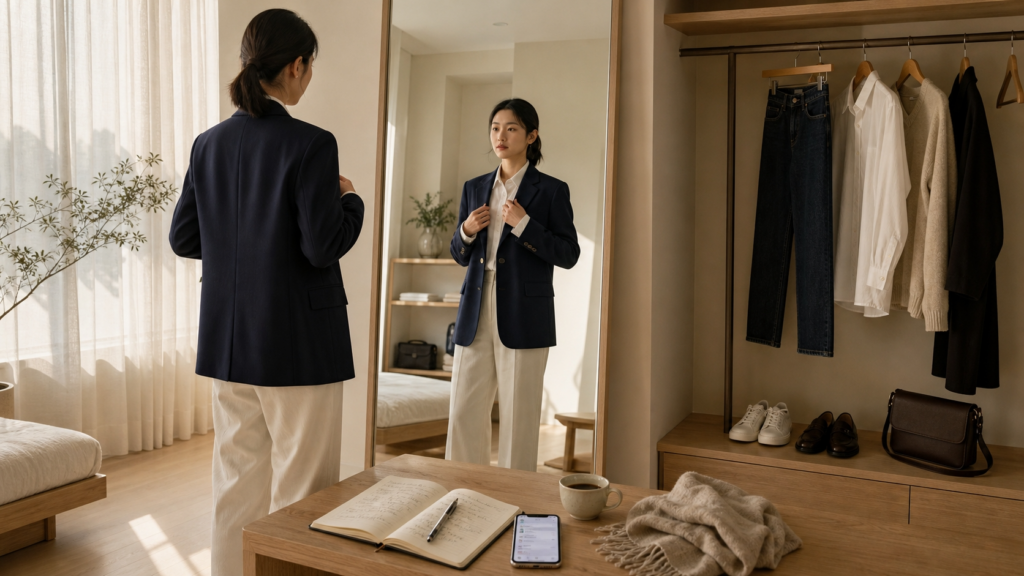
When planning your second-half shopping, instead of asking ‘Should I buy before the rebound?’, first ask ‘Will I still wear this next year?’ Check if it’s a color or silhouette you don’t already have in your closet, if the material allows for alterations and washing, and if you can use it across seasons. Platform exclusives have the advantage of scarcity, but you need to read the exchange/return policies and actual measurements more carefully. With exclusive products, it can be hard to find the same item elsewhere to compare.
W Concept held its first special promotion from July 6 to 12 to celebrate the launch of W.only, featuring about 120 brand products. It plans to run these as regular bi-monthly events going forward. If you’re a consumer waiting for sales, this schedule can help, but don’t decide based solely on the discount rate. If you set one or two items you need by purpose—like wedding guest looks, office wear, or travel outfits—the platform’s curation becomes much more useful.
Even in a year when the fashion market shrinks to 44.5 trillion won, you don’t have to enjoy clothes any less. It’s enough to wear fewer pieces more often and discover brands that fit your style and life. On your next shopping trip, rather than focusing on the ‘exclusive’ label like W.only, check whether that item truly adds a new role to your wardrobe. That standard is the most lasting styling tip in an uncertain market.
Sources: Trend Research ‘2026 Preview Korea Fashion Industry Big Data Trend,’ Fashionbiz, and Shinsegae Group Newsroom, July 2026.