
Table of Contents
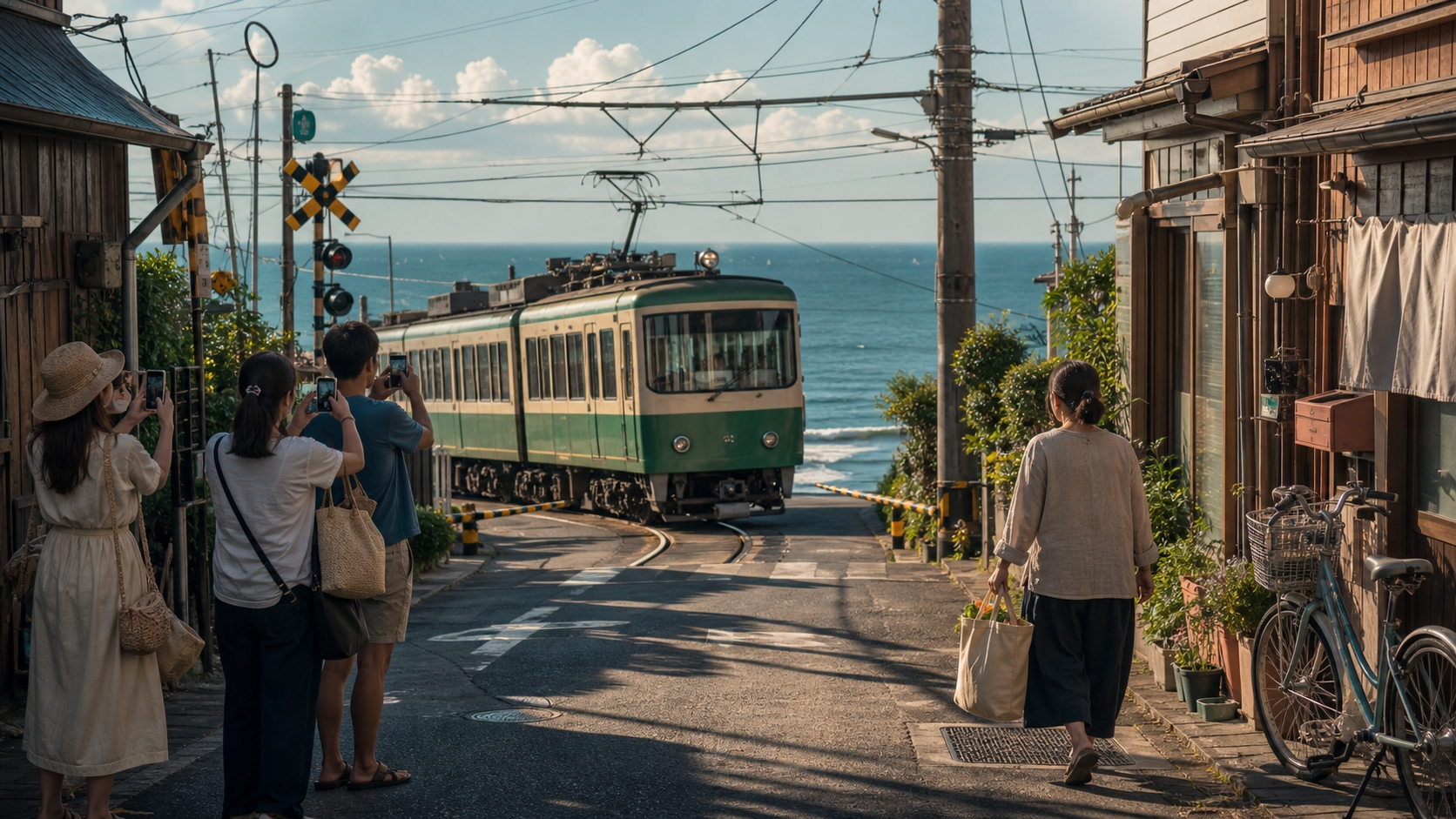
The click of camera shutters mixes with the distant rumble of the Enoden train. I’m standing at a narrow railroad crossing in Kamakura—not a tourist plaza, but a residential lane where locals commute and shop. Yet today, it’s packed with visitors holding up phones, waiting to capture the same frame from the Netflix rom-com Love Is Lost in Translation. The romance on screen is beautiful. Off-screen, it’s a different story.
Kamakura’s Romance Tells a Different Story Off-Screen
The landscapes Netflix’s romantic comedy Love Is Lost in Translation showed global viewers are dreamy. The romance between a translator played by Kim Seon-ho and a global star played by Go Yoon-jung unfolds against the sea of Kamakura and Enoshima, old stations, and alleys where the Enoden tram runs. But as a single scene became a ‘must-visit pilgrimage spot’ on social media, it brought daily chaos back to residents near the filming location.
The drama follows Kim Seon-ho as a multilingual interpreter and Go Yoon-jung as a global top star, building love across cities worldwide. The story centers on their relationship crossing language and cultural boundaries, but what truly captured viewers’ hearts was the Japanese small-town scenery where the two reunite. After the Netflix release, it topped non-English TV series charts globally, putting Kamakura and Enoshima in the spotlight too.
The One Railroad Crossing That Had to Handle All Those Visitors
One spot became particularly problematic: a residential railroad crossing on the Enoshima Electric Railway in Kamakura. A scene where the leads talk across the tracks and a tram briefly obscures one of them went viral, drawing tourists. This isn’t a wide tourist square—it’s a narrow living road barely wide enough for one car. As people lingered to take photos and videos, traffic got blocked, and complaints piled up about honking, noise, illegal parking, trash, and unauthorized filming or entry onto private property.
A trending scene attracting crowds isn’t new. The issue is that this crossing was never meant for tourism. It sits beside a narrow residential road used daily by neighbors commuting and shopping. The longer visitors stand in the middle of the road waiting for that perfect shot, the more residents’ routines get delayed and disrupted.
Kamakura City reportedly produced signs in Korean, English, and Japanese reading ‘Do not photograph this building’ and distributed them to residents, also notifying filming coordination companies of the damage. With ‘NO PHOTO’ signs not enough, they shifted to directly informing tourists that snapping a picture could invade someone’s home and life.
Pilgrimage Is Nothing New in Fandom Culture, But…
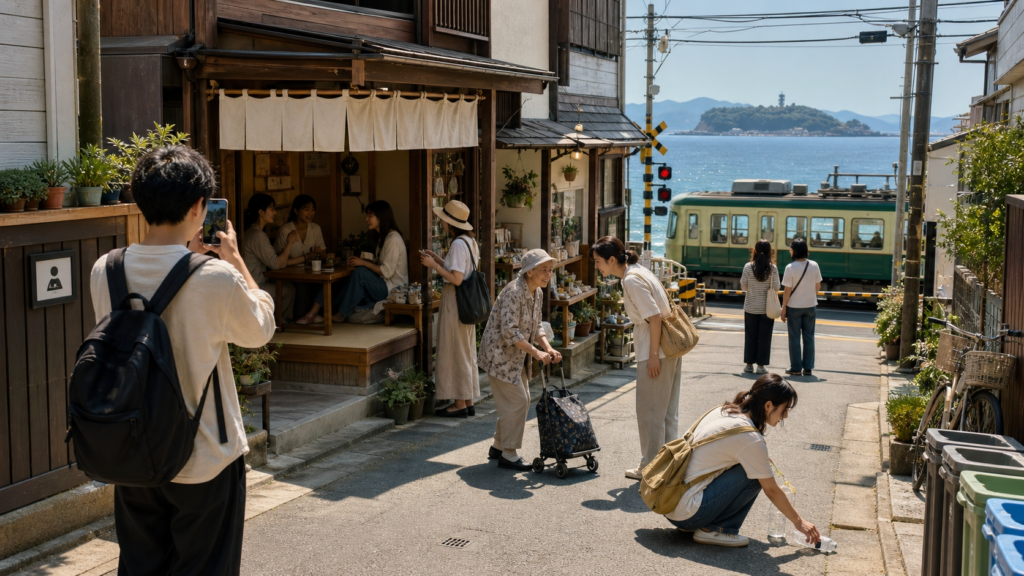
The idea of a ‘must-visit pilgrimage spot’ is familiar in fandom culture. The urge to step into a beloved work’s setting is universal. But when that place isn’t a tourist-friendly square or landmark but someone’s front door, a school route, or a commute alley, the story changes. Big fandom doesn’t automatically translate into respectful visiting behavior, as Kamakura’s case shows again.
That’s why Kamakura City made multilingual signs. It wasn’t just banning filming—it was an attempt to tell visitors that this is a real place where people live. Language barriers cause some issues, but plenty of visitors know the rules yet think ‘this much is fine,’ so we’ll have to see how effective this approach is.
Of course, film-location tourism brings economic benefits—cafes, restaurants, and souvenir shops welcome visitors. The problem is that the benefits and burdens aren’t evenly distributed; noise and congestion concentrate on residential areas.
Kamakura Already Endured the ‘Slam Dunk Crossing’
This isn’t a unique side effect of Korean dramas—it’s an old dilemma of content tourism. Kamakura already experienced overtourism centered on the crossing near Kamakura High School Station, famous as a backdrop for the anime Slam Dunk. The more exactly a symbolic scene overlaps with a real location, the stronger the immersion for fans—but when that place is someone’s living space, the cost of tourism hits locals hard.
The Kamakura High School Station crossing is often cited as a precedent. A single anime frame matched a real railroad crossing, drawing global fans to recreate the same composition, long causing inconvenience for residents and students. That a similar pattern repeats with different content in the same city shows this isn’t about one show’s popularity—it’s a structural challenge of content tourism itself.
For Sustainable Pilgrimage, and Korea Is No Exception
For ‘pilgrimage’ to become sustainable, visitor behavior and preparations by producers, platforms, and local governments must change together. Fans should avoid photographing house exteriors or residents without permission, not block roads or crossings, and refrain from tripods or long shoots. Especially near railways, safety comes first—following on-site instructions and traffic rules matters more than recreating a scene.
If you’re planning a film-location trip, get in the habit of checking whether that place is a tourist spot or a residential area before you go. If a map app shows a residential zone or narrow alley, adopt the mindset of a passerby passing through the neighborhood, not a photographer planting gear. A quick snap and stepping aside can greatly reduce residents’ discomfort.
Producers and platforms, when introducing locations, should include responsible info like public transit access, visiting hours, bans on filming residences, and alternative spots—not just ‘photo spot’ lists. Local governments shouldn’t just restrict tourists or ask residents to endure; they need crowd management, guides, dispersed routes, and visit models linked to local businesses.
Korea is no exception. Cafes, alleys, and small towns turned famous by K-dramas have seen sudden visitor surges, with residents complaining about noise and privacy invasion—reported multiple times here too. Whether overseas fans visit Korea or Korean fans visit overseas locations, we need to remember that the backdrop of our favorite scenes is someone’s real life. I totally get the desire to see your favorite drama’s setting in person. But a good film-location trip doesn’t end with getting the exact same photo. Returning without disturbing the peace of the people living there—that’s the most mature support fandom can send to its beloved content.
Sources: Netflix official introduction, Netflix Tudum, Seoul Shinmun report.