
Table of Contents
That Alley in the Drama? It’s Someone’s Real Neighborhood
Ever caught yourself Googling a spot while watching a Korean drama? A beach scene comes on, and you open the map. The café the main character walks into—you bookmark it. That’s screen tourism. It’s the whole flow of visiting places you first saw on film, TV shows, variety programs, streaming series.
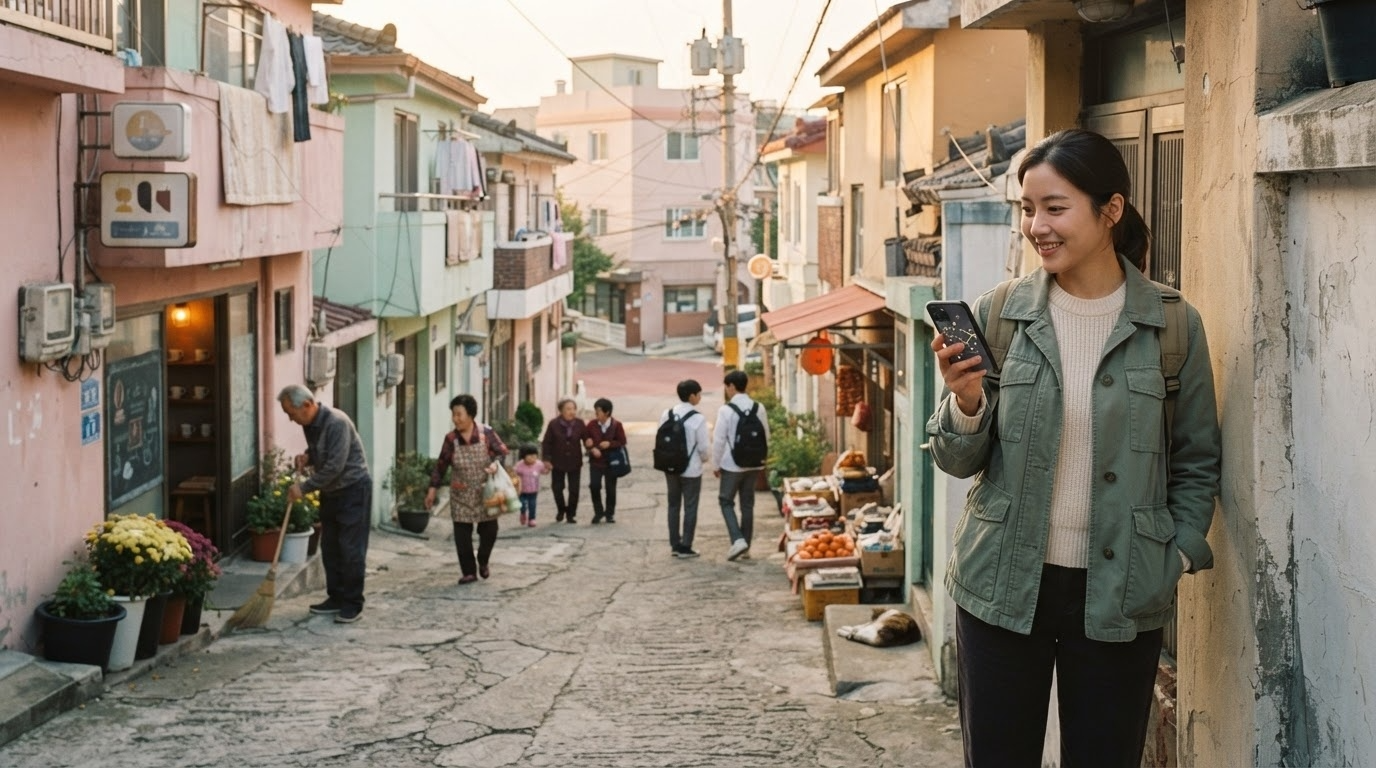
Screen tourism doesn’t just focus on big cities. It shifts attention to smaller towns and regions too. The landscape on screen doesn’t have to be a famous tourist spot. Sometimes it’s the old market signs, a narrow alley a bus passes through, a quiet beach, or plastic chairs outside a neighborhood restaurant that stick with you. For international viewers, these everyday scenes make Korea feel like a place where real people live, not just a set far away.
Calling a Place ‘Holy Ground’ Has a Good Side and a Tricky Side
Fans calling filming locations “holy ground” is a way of showing love. It means they want to relive their favorite scenes, take the same shot, and share the experience with other fans. Local shops and cafés might get new customers, and neighborhoods that weren’t on the map before can become travel destinations.
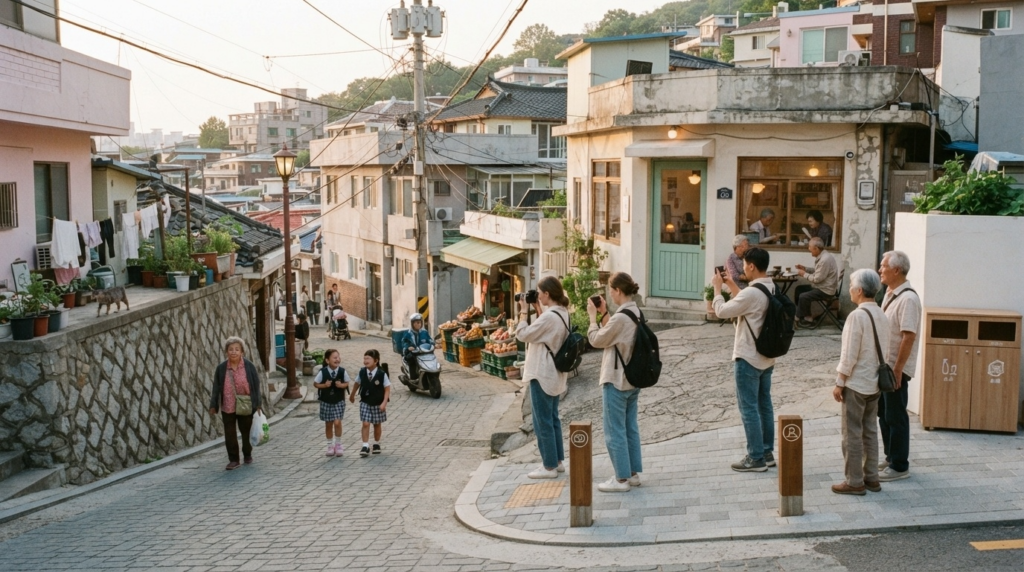
But when a filming spot suddenly gets famous, real problems follow. Crowds flood residential areas, people block narrow streets to take photos, trash piles up, and quiet shops get overwhelmed with orders they can’t handle. A place that appeared for just a few seconds in a drama might be someone’s front door or commute route.
So a good fan trip comes down to how you behave, not how well you capture the shot. Don’t invade residents’ privacy, don’t block traffic, and if you’re at a shop that’s open, act like a respectful customer. The most important rule at a filming location is surprisingly simple: see the place you love from the show as someone’s living space too.
Busan’s World Heritage Committee Threw a Different Question
Busan hosted the 48th UNESCO World Heritage Committee in July 2026. This event wasn’t about film location tourism. The World Heritage Committee is an international meeting where new sites get listed and existing ones get reviewed for conservation. So it’s careful to tie Busan’s committee and screen tourism together as one big achievement.
But the two stories meet in how we look at tourism. Screen tourism shows the power of people following content to places, while heritage discussions ask how to protect those places for the next generation. One creates a reason to visit, the other makes you think about responsibility after you visit.
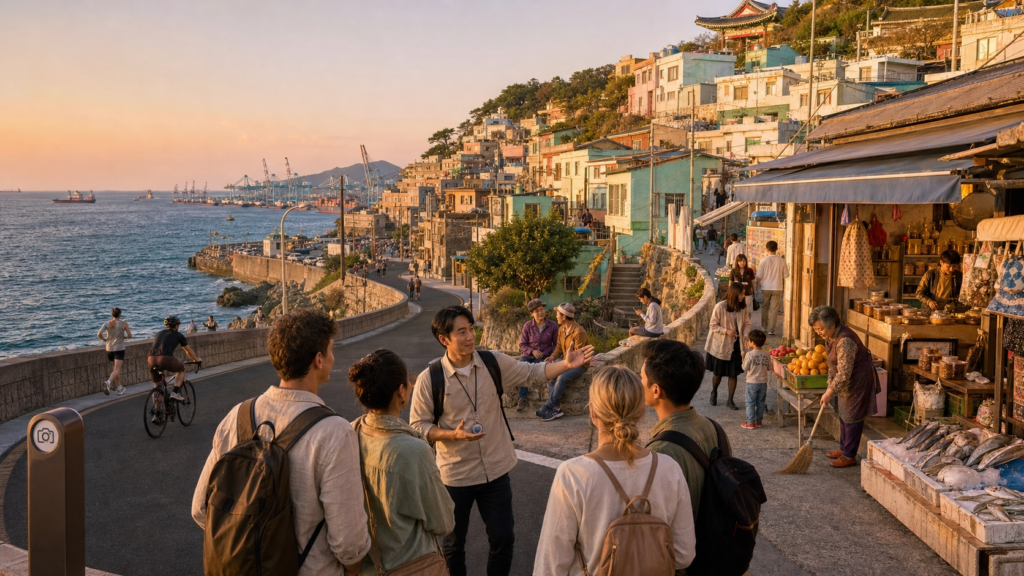
Busan is a city that feels both of these things. It’s known as a film city, with scenery that photographs well—the sea, the port, the hillside roads, the markets. At the same time, it’s layered with modern history, like the refugee capital heritage from the Korean War, and a port city’s living culture. If you want travelers to remember Busan as more than just one scene, you have to tell both the image from the content and the real city’s story together.
Tourism Can Be a Relationship, Not Just Something You Buy
When you plan a filming location trip, don’t just pin the spots from the show. Check the context around them. Is it a residential area? What day does the market close? Can you get there by public transit? Where do you throw away trash? Official info channels like the Korea Tourism Organization’s VISITKOREA, plus local government guides, can help you avoid mistakes with hours or transportation.
If you stop by a local shop, try ordering a small drink or meal instead of just taking a photo and leaving. But keep in mind that the question “This is where it appeared in the drama, right?” might be repeated to the owner every single day. If you want to talk about the show, avoid busy times, and only bring it up naturally if the other person seems open to it.
You don’t have to recreate the exact famous scene at the tourist spot. Instead, make time for what’s off-screen. Slowly walk the nearby alleys, visit a local museum or market, find a park where residents hang out. That way, you enter through the door the show opened, but you finish the trip your own way.
Next Trip, Ask ‘Why This Place?’
The idea that screen tourism can save a region is only half true. Just because people visit doesn’t automatically make local life better. As visitors increase, you need better transportation, toilets, trash management, and safety info. Local residents should have a say in decisions too. Only then can tourism become an opportunity instead of a burden.
Busan’s World Heritage Committee showed that protecting heritage is about more than preserving old buildings. Screen tourism is the same. Going to see a scene from a drama is fun, but the trip sticks longer when you also understand the city and the people behind that scene.
Next time you add a Korean content location to your travel list, ask not just “What should I shoot here?” but also “What kind of neighborhood is this?” That one question can turn a fan trip into a better trip.
Sources: UNESCO World Heritage Centre, 48th World Heritage Committee in Busan, July 2026; Korea Tourism Organization VISITKOREA, Korea Travel Information, 2026.