
Table of Contents
Flattened Bamboo Discovered at the Royal Palace Site
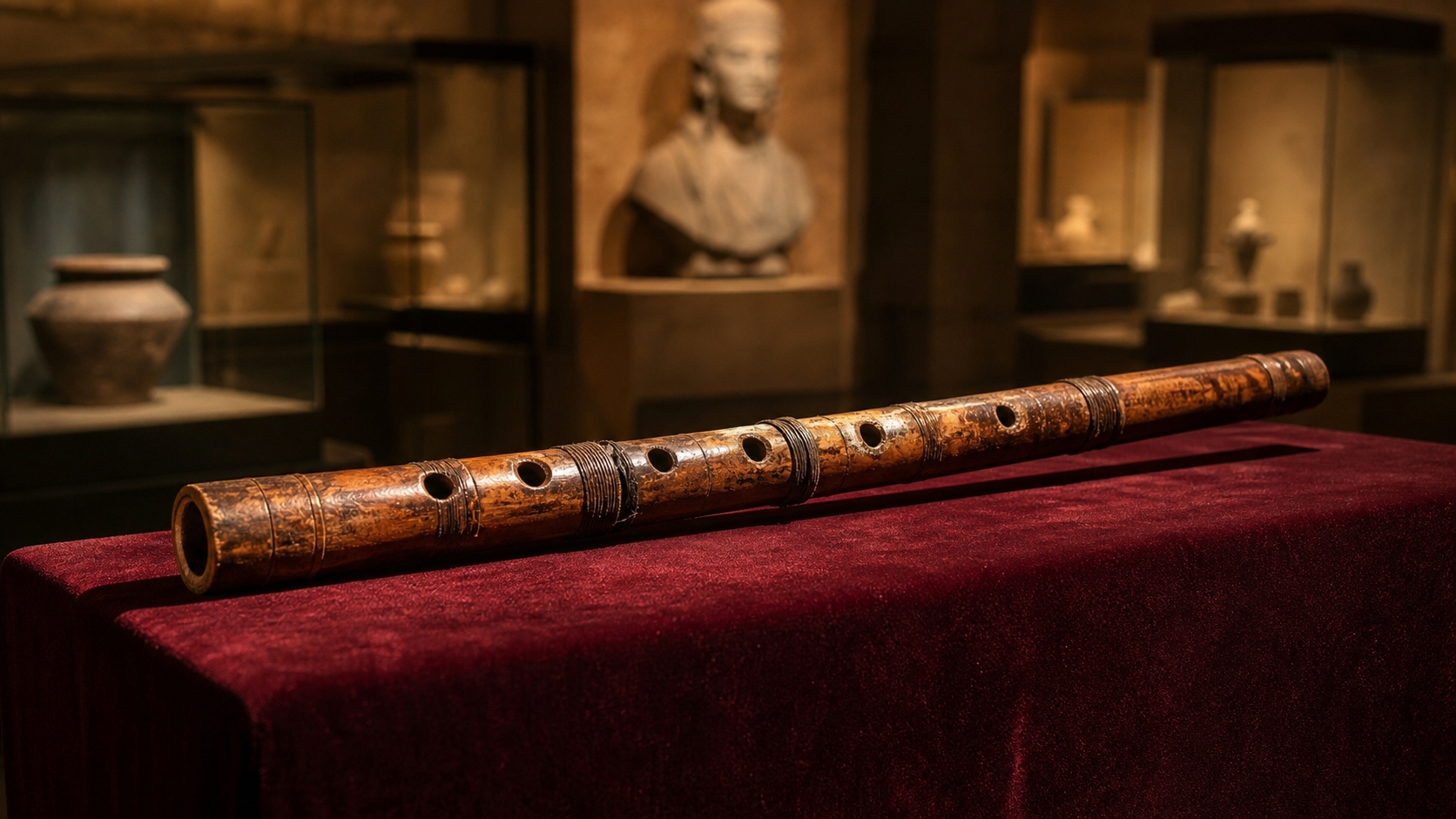
When the bamboo artifact was first unearthed at the Gwanbuk-ri site in Buyeo, Chungcheongnam-do, it barely resembled a musical instrument. One end and a portion of its main body were missing, and centuries buried beneath the earth had pressed it completely flat. Only a single blowing hole and three finger holes for pitch control remained intact. This fragmented piece turned out to be a hoengjeok, a transverse flute played by the people of Baekje some 1,400 years ago. With no surviving sheet music or performance records from that era, this damaged artifact instantly became the most direct clue we have for imagining the ancient sounds of Baekje.
The Gwanbuk-ri site is widely known as the royal palace grounds used after Baekje relocated its capital to Sabi (the historical name for the Buyeo area). During the 16th excavation conducted by the Buyeo National Research Institute of Cultural Heritage between 2022 and 2025, archaeologists unearthed the flute alongside 329 wooden slips, known as mokgan. These wooden records represent the largest number ever found at a single site in Korea and are the earliest written materials from Baekje’s Sabi period. Discovering administrative records and a musical instrument in the same dig provided a rare, unified glimpse into both the bureaucratic workings of the palace and the cultural life enjoyed by its people.
Looking Inside the Artifact Through Science
The first step in bringing the instrument back to life wasn’t physically unrolling the surviving piece. Attempting to force the flattened bamboo back into its original shape would have inevitably caused further damage. Instead, researchers used 3D scanning to carefully map the surface contours and hole placements, followed by X-ray radiography to peer into the internal structure hidden from the naked eye. They opted for non-destructive methods that allowed them to analyze the flute’s shape from multiple angles without altering the fragile original.
The 3D data proved crucial in deducing what the original cylindrical structure looked like before it was crushed. The sizes and spacing of the remaining holes offered vital clues for reconstructing the instrument’s overall length and vocal range. By weaving archaeological findings with acoustic research, the team set out to create more than just a visual prop—they wanted a flute that could actually be played. This connected the study of its physical form directly with the study of its sound, testing what notes the reconstructed shape would produce in a real performance.
From Three Holes to Six
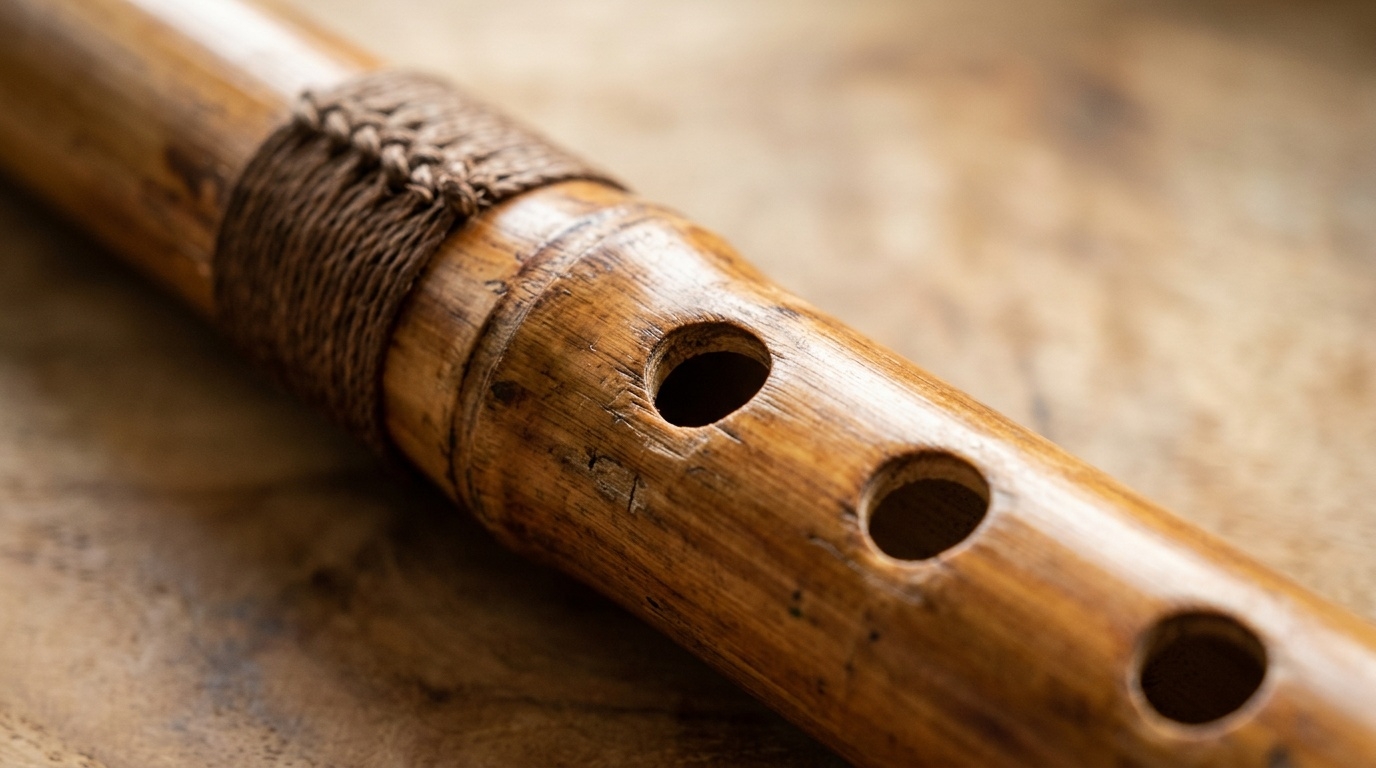
Although only three finger holes survived on the excavated piece, researchers cross-referenced related historical data and acoustic models to recreate the flute with a full set of six finger holes. The finished replica features one blowing hole and six finger holes, deliberately omitting the decorative chilseonggong (tuning holes) often found at the end of later instruments. It measures exactly 31 centimeters long. Rather than arbitrarily filling in the missing sections, the team synthesized the verified structure of the artifact with academic research to present a genuinely playable instrument.
The blowing hole on the replica is notably small, roughly the same size as the finger holes. Its pitch sits about a tone and a half higher than the sogeum, a traditional small transverse bamboo flute still used in Korean classical music today. Comparing the recreated Baekje flute to the familiar sogeum helps modern listeners intuitively grasp its tonal range. By anchoring the elusive characteristics of a historical artifact to an instrument actively played today, researchers made the nuances of its ancient sound much more tangible for both musicians and the general public.
Choosing Bamboo Grown on Baekje Soil
The research team also wove a sense of local heritage into the very materials of the replica. They sourced the bamboo from the vicinity of the Wangheungsa temple site, a royal temple from the Baekje era. While this doesn’t guarantee it is the exact same species or lineage as the ancient bamboo, crafting the instrument from materials grown so close to the original excavation site holds deep symbolic weight. Rather than simply churning out a modern clone, this choice rooted the recreation process in the historical and natural landscape where the artifact was first played.
The ultimate goal was never just to manufacture a flawless duplicate of an old object. It was a rigorous process of scientifically documenting the surviving artifact and making educated, reasonable estimates for the missing parts through comparative data and acoustic testing. As a result, the replica isn’t claimed to be an exact, definitive duplicate; rather, it is a highly informed iteration of a Baekje hoengjeok based on the best research available today. This approach perfectly balances preservation and exploration, keeping the original safe while actively testing its form and musical potential.
From Museum Exhibit to Playable Instrument
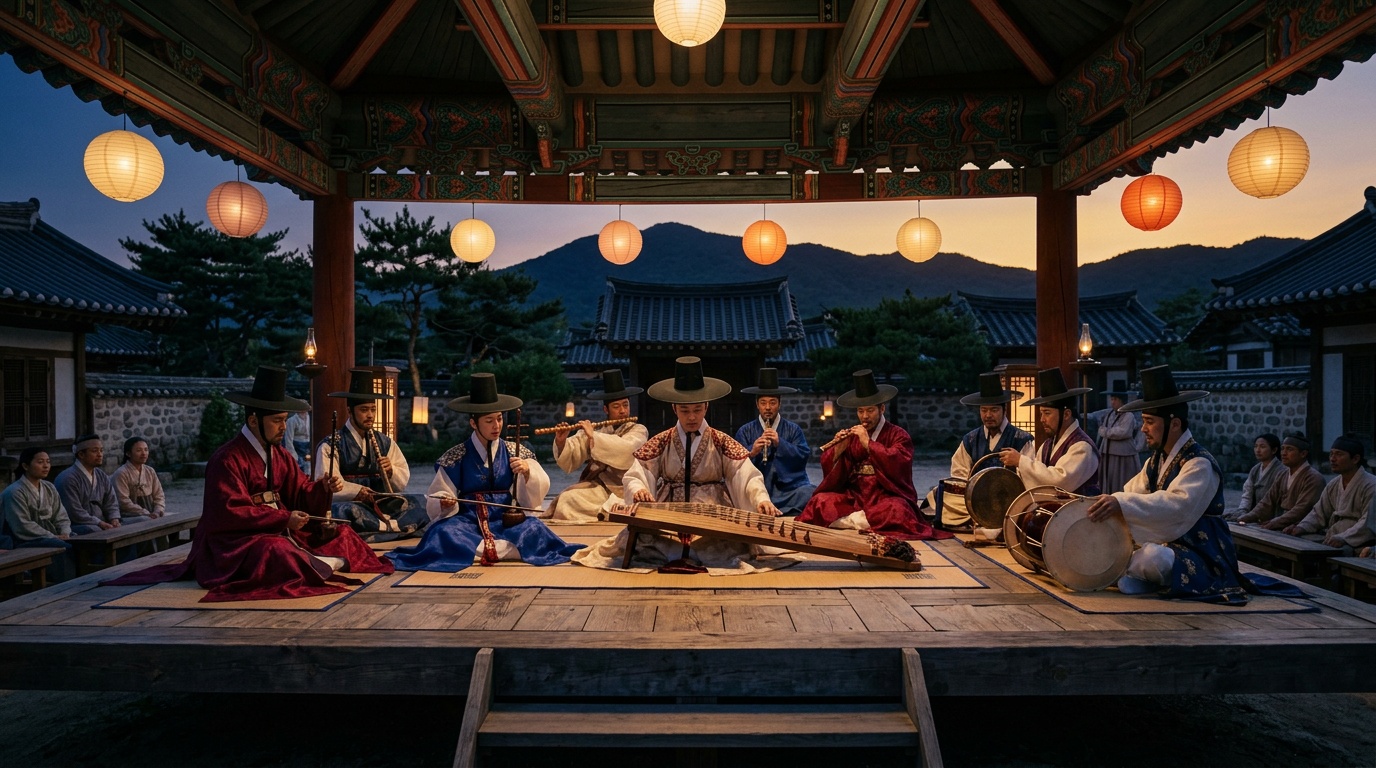
The Buyeo National Research Institute of Cultural Heritage crafted three fully playable replicas of the flute. These instruments made their public debut during two special performances titled “The Five Musicians of the Baekje Court and the Hoengjeok,” held at BEXCO and the Busan Museum on July 22, 2026. The concerts were organized in tandem with the 48th session of the UNESCO World Heritage Committee, hosted in Busan from July 19 to 29. It was a beautiful moment where the fruits of painstaking excavation and research bypassed the academic journals to resonate directly as live music for a global audience.
The name “Five Musicians” is a nod to the five figures sculpted onto the top of the Gilt-bronze Incense Burner of Baekje, who are depicted playing a lute, a vertical flute, panpipes, a drum, and a stringed instrument. On this stage, the hoengjeok stepped out of the museum display case and became a living instrument responding to the breath and fingertips of a modern musician. The audience got to do more than just look at its shape; they heard the pitches and timbres that researchers had worked so hard to recover. While we can’t know for certain the exact melodies or playing techniques of the time, the performance served as a compelling, experimental stage to explore the long-lost soundscape of Baekje.
A Journey from the Excavation Trench to the Local Stage
To ensure the music lives on, the Buyeo National Research Institute of Cultural Heritage (under the Korea National Heritage Agency) donated the three replica instruments to the Buyeo-gun Chungnam Traditional Music Orchestra. The orchestra plans to feature the flute in its future “Five Musicians” performances. This handover marks a meaningful transition: an archaeological institute passing the results of its restoration work directly to a local arts group for continuous use. By keeping the researcher-crafted replicas in the very region they were unearthed, a lasting foundation has been laid for locals and visitors to continually experience the musical heritage of Baekje.
This entire restoration project maps the remarkable journey of a single piece of bamboo—from the Gwanbuk-ri excavation site to the laboratory, onto an international stage, and finally back into the vibrant performance culture of Buyeo. If the wooden mokgan slips reveal the administrative routines of the Baekje people, the hoengjeok offers a rare whisper of their sound culture, something far harder to capture in writing. Though the original melodies are lost to time, restoring the instrument’s structure and range has given us the physical means to explore the notes that once echoed through the royal palace. It is a shining example of moving beyond simply preserving a flattened artifact, using science and performance to bridge the music of the past with the auditory experience of today.
Source: Press Release, Buyeo National Research Institute of Cultural Heritage, Korea National Heritage Agency, August 28, 2026.