
Table of Contents
Myung-ca Drive Returns to the Gyeongju Night
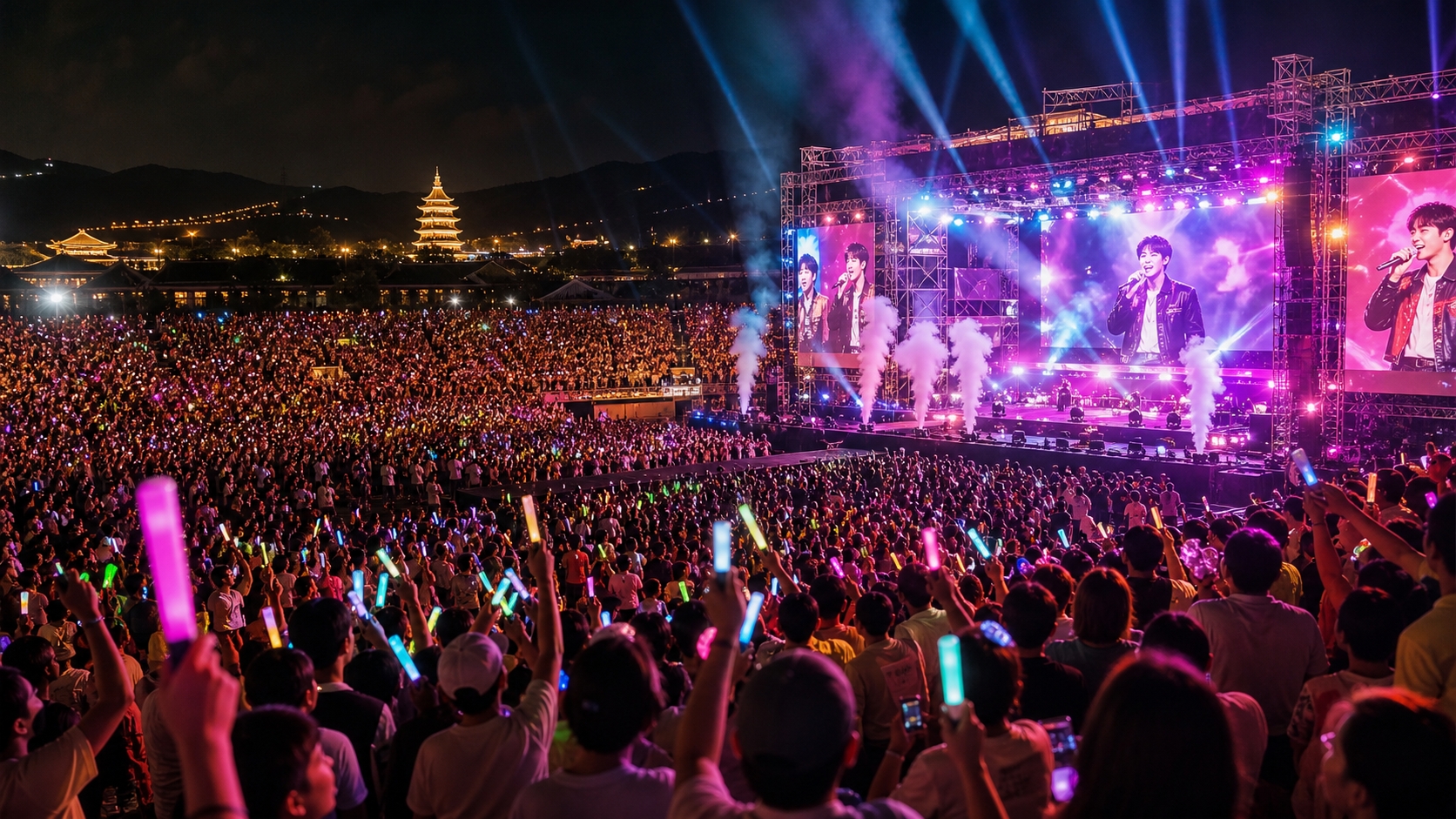
As Jessica appeared next to Park Myung-soo and the familiar intro of “Naengmyeon” started playing, the Gyeongju Civic Stadium felt like the summer of 2009 again. At the special concert for the ‘2026 Infinite Challenge Run in Gyeongju’ held on September 19, the two brought back their project duo, ‘Myung-ca Drive,’ for the first time in 17 years. Footage of the crowd singing along spread across online communities and social media that evening and into the next day. The reaction wasn’t about a brand-new song reveal. It was a reunion the crowd already knew by heart, chorus and all, and a short clip from the venue was enough to bring the original broadcast rushing back.
The performance also marked a rare return for Jessica. She debuted with Girls’ Generation in 2007, left the group in 2014, and has mostly worked abroad since, particularly in China. Appearances on domestic stages have been uncommon. That her long-awaited return to a Korean stage wasn’t for a solo track or a new collaboration, but for “Naengmyeon,” a song born on ‘Infinite Challenge,’ only sharpened the nostalgia. Rather than explaining what they’d each been doing since, Park Myung-soo and Jessica used a scene straight from the past as their bridge, and the audience filled in the 17-year gap without needing any extra context.
Layering Variety Show Rules onto a Marathon
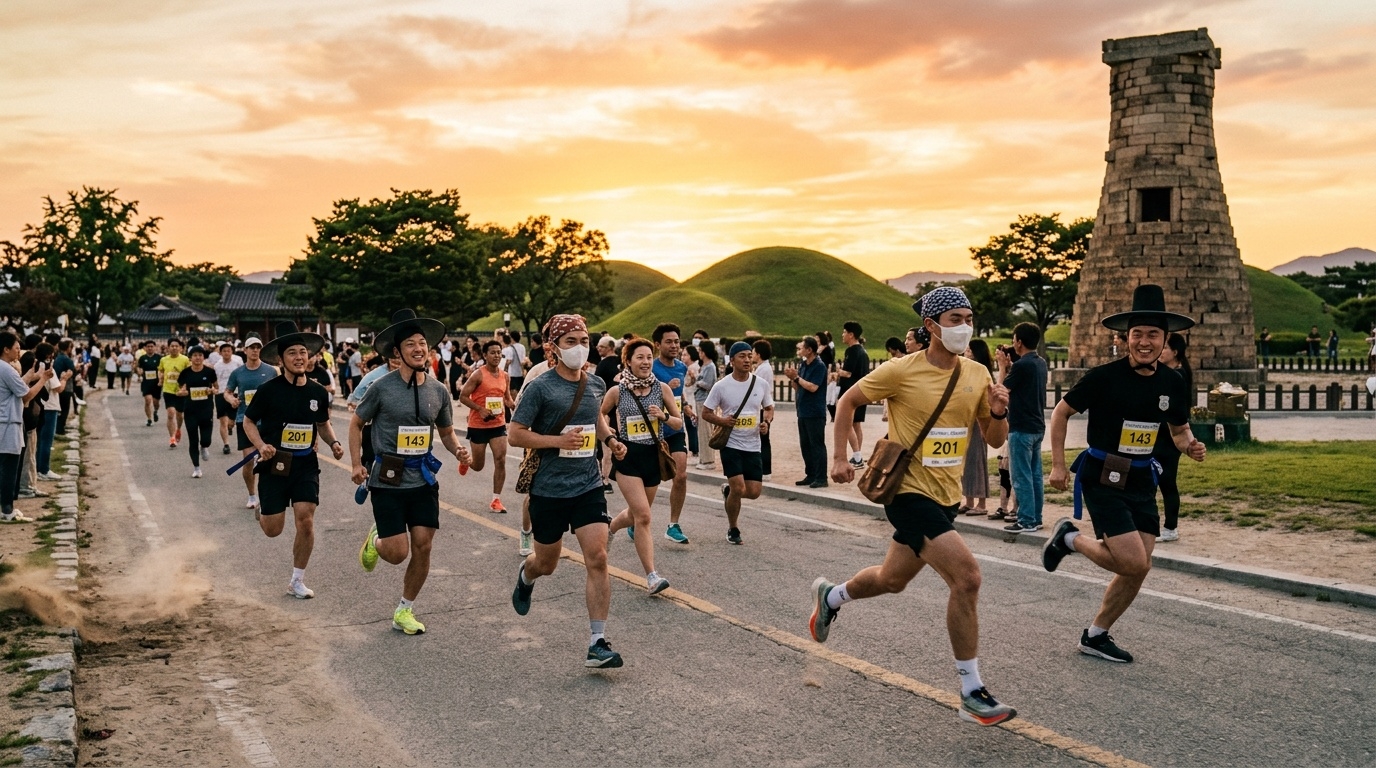
‘Infinite Challenge Run’ isn’t a typical, record-focused marathon. It combines running, chase games, missions, and live performances, all built on the world of the MBC show ‘Infinite Challenge.’ The Gyeongju event started at 4:30 p.m. at the Civic Stadium, with runners moving through the city as the sun went down. Runners split into two teams, the ‘Pojol’ (Joseon-era police) and the ‘Thieves’ after treasure. Depending on which team they landed on, participants weren’t just covering distance; they had a role in the story. The event stacked the tension of a chase and the play of a variety show on top of the ordinary goal of finishing a race.
The courses ran a 10-kilometer route and a roughly 21-kilometer half marathon, the half introduced here for the first time. Runners passed through Gyeongju’s historical sites, the thousand-year capital of Silla, including Donggung Palace and Wolji Pond, Cheomseongdae, Daereungwon and Cheonmachong, and the Bomun tourist area. The premise of protecting or stealing the city’s treasure turned Gyeongju’s heritage from backdrop into part of the game itself. For international visitors, Gyeongju sits on a different timeline than Seoul, and watching modern runners in police-and-thief costumes move past ancient Silla ruins put place, history, and pop culture in the same frame. Instead of touring the heritage sites one by one, participants strung them together into a running route, with the terrain setting the direction and the treasure-hunt premise supplying the reason to visit each stop.
A Universe Living on After the Show Ends
This was the second race in the 2026 series, following the first one in Sangam, Seoul, in June. The Sangam event ran a modern “Cops and Robbers” chase; Gyeongju used the same rules under “Pojol and Thieves.” Rather than copying the format outright, organizers adjusted the lore to fit the region’s history. Cops and Pojol, or modern robbers and historical thieves, play similar roles from different eras, and that small swap let participants use familiar chase mechanics while getting a story built specifically for Gyeongju.
Former ‘Infinite Challenge’ cast members, including Park Myung-soo, Jung Jun-ha, Haha, and Kwanghee, took part alongside runners, which tied the show and the live event together. Instead of standing in as VIPs who fire the starting gun, they recreated the chaotic energy of their old TV chases on the field itself, and that shifted participants from viewers into players. It’s the kind of setup that lets fans physically run the rules they once watched. Having those familiar faces there made the event feel like an extension of ‘Infinite Challenge’ rather than a marathon that simply borrowed the name. For longtime fans, sharing the same course and the same absurd situations as the cast was its own reward, separate from any finishing time.
When the ‘Mudo Kids’ Grow Up
‘Infinite Challenge’ (Mudo) was MBC’s flagship variety show, running from 2005 to 2018. Rather than sticking to one format, it moved between sports challenges, elaborate chases, music festivals, and social experiments depending on the week. The generation that grew up watching it during childhood or the teenage years is often called the “Mudo Kids” in Korea, a term for an audience that came of age alongside a specific broadcast. For them, the show wasn’t just something watched weekly and forgotten. It was a shared reference, with scenes and quotes traded constantly in classrooms and online, and the songs and catchphrases it produced are tangled up with memories of everyday life from that era.
Even eight years after the finale, the show’s moments and dialogue still circulate through short-form clips, reruns, and internet memes. But the Mudo Kids are adults now. They’ve moved from watching a screen to paying entry fees, dressing up, and running the games themselves. That’s the real force behind ‘Infinite Challenge Run’: it pulls memories out of digital archives and turns them into real-world leisure and spending. The people who once sat back and watched the cast take on ridiculous challenges now have the time and the money to run the race in person, and the brand grew up alongside them into a festival that fits an adult lifestyle.
The Shared Anthems Left by the Music Festivals
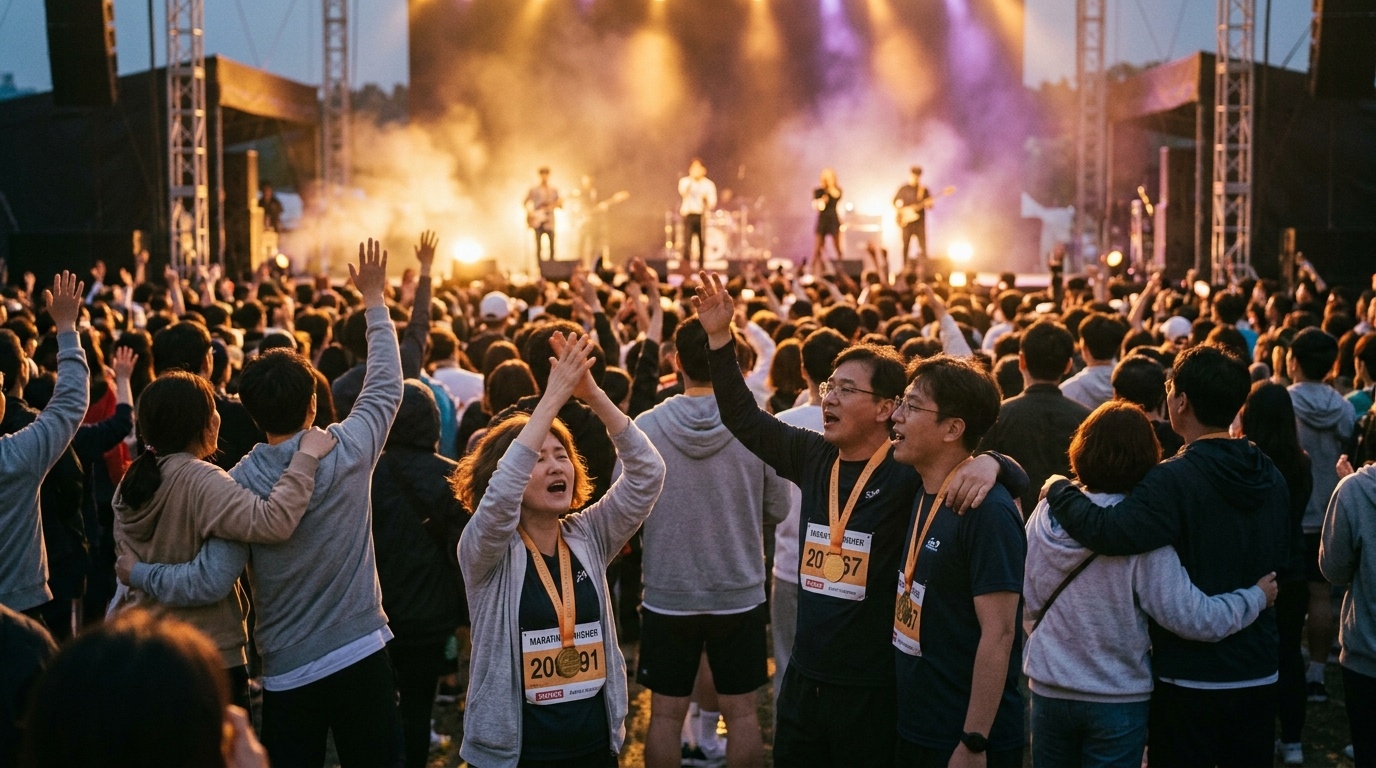
After the race, a special concert took the stage. Artists tied to past ‘Infinite Challenge’ music projects, including Skull & Haha, Zion.T, Yoon Mi-rae & Tiger JK, and Lee Juck, performed. Songs that started as one-off television bits still worked as a setlist an entire stadium could sing along to, years later. Runners walked straight into the audience for the concert, so there was no real gap between the sporting event and the music. It’s a pairing that fits the physical effort of the race with the comfort of familiar songs. The ‘Infinite Challenge’ music festivals were known for putting professional musicians and comedians together in odd combinations, and turning the messy songwriting process itself into television. Viewers ended up remembering not just the final track but the whole process: forming a team, arguing through the creative differences, and finally getting to the stage.
Among those songs, “Naengmyeon” carries a particularly generational weight. Park Myung-soo and Jessica, then a member of Girls’ Generation, debuted it in 2009 as Myung-ca Drive at the ‘Olympic Expressway Duet Song Festival.’ A breezy song about cold noodles, paired with the two performers’ odd chemistry, landed as comedy, and the track went on to have a life well beyond the broadcast. The name Myung-ca Drive and each performer’s role became part of the song itself, which is why the 17-year reunion read less like a cover and more like the return of a whole TV relationship and a specific moment in time.
The Moment a 17-Year-Old Broadcast Meets the Present
The September 19 performance spread online not just because it recreated the past well. Two performers, both changed by 17 years, reunited over the same song, and viewers who remembered the original broadcast and younger fans who found the clip online ended up sharing the same excitement. Jessica’s overdue return to a domestic stage lined up with a deep well of nostalgia for ‘Infinite Challenge.’ For people who lived through the original run, it closed a loop; for people who hadn’t, it showed exactly why this duo still gets talked about. The clip’s spread pulled two very different kinds of viewing history into one moment.
The Gyeongju race shows that a finished variety show can still grow without a new season. By taking old footage, the original cast, chase rules, and festival music and mapping them onto a marathon and a local tourism route, a broadcast turns into a festival people can walk through. The crowd singing “Naengmyeon” made the point plainly: ‘Infinite Challenge’ isn’t just an old show anymore. It’s a living memory the whole Mudo Kids generation still shares. The point isn’t putting old highlights behind glass, but giving today’s fans a way to run, sing, and take part. How long ‘Infinite Challenge Run’ lasts will depend on how well it keeps finding new places and experiences to carry these memories forward.
Source: Coupang Play ‘2026 Infinite Challenge Run in Gyeongju’ Event Guide, September 19, 2026; Edaily, September 20, 2026; Newsis, July 31, 2026.