Table of Contents
A Surge of 610,000 in Just One Year: South Korea’s Super-Aged Society is Already Here
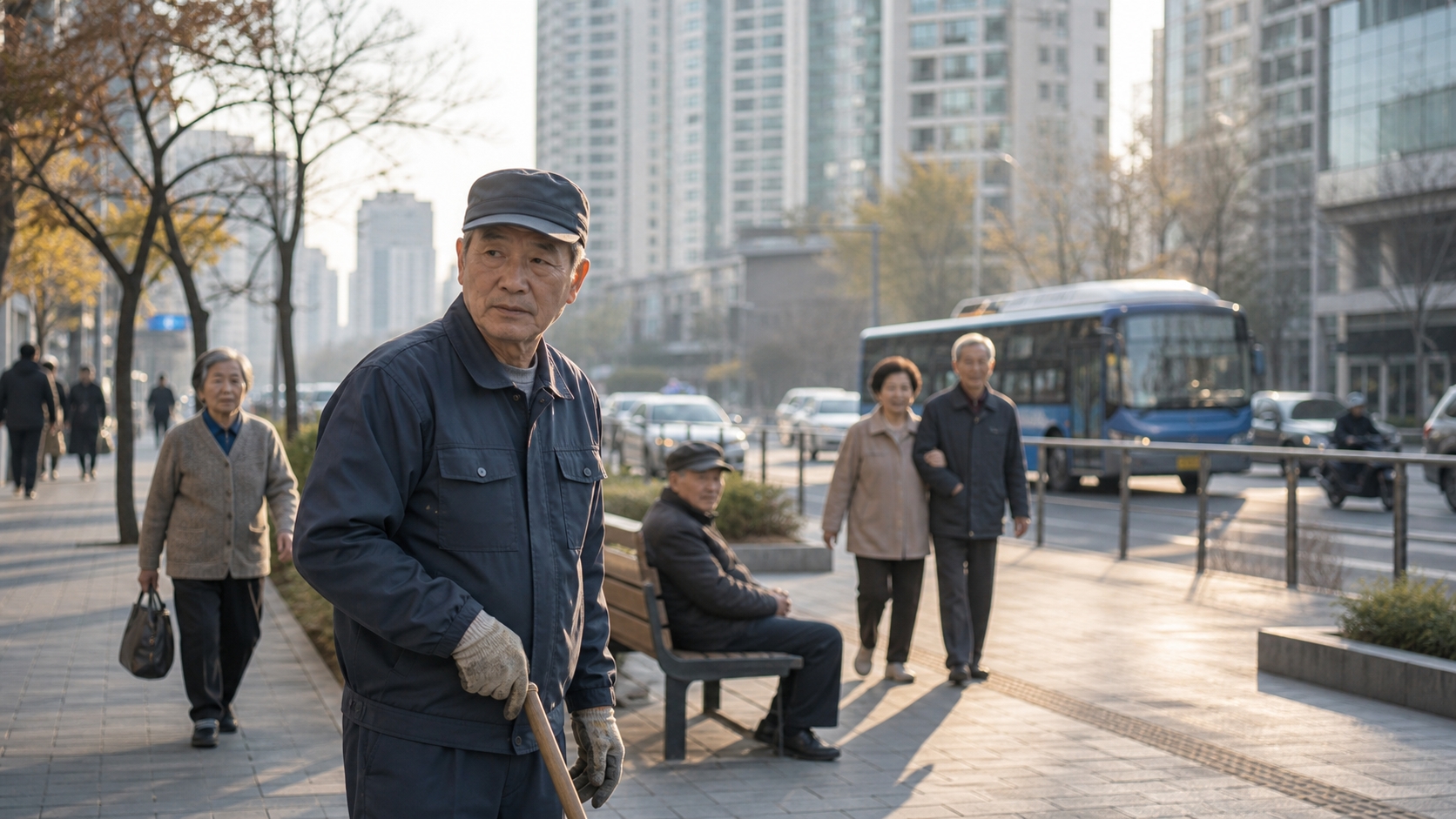
South Korea’s population of those aged 65 and older has reached 11.125 million this year, making up 21.6% of the total population. According to the “2026 Senior Citizen Statistics” released by the National Data Agency on October 1, this is a jump of roughly 610,000 people from the previous year. The elderly share of the population also climbed by 1.3 percentage points from 20.3%. Even after crossing the 20% threshold into a super-aged society, the country’s age structure continues to shift at a striking pace.
Labor participation in later years has also expanded. Last year, the employment rate for those 65 and older rose 1.3 percentage points from the previous year to 39.5%. That means nearly four out of ten seniors are currently employed. However, the relative poverty rate for the retirement-age group hovered in the late 30% range, landing at 37.7% in 2024. While that is a 2.1 percentage point drop from the previous year’s 39.8%, a significant number of seniors still live well below the median income level of society.
The reality of aging in South Korea is that even as the elderly population grows and works more, poverty remains high. The employment rate was calculated for those 65 and older in 2025, while the poverty rate covers those 66 and older in 2024. Together the two numbers point to both an expanding workforce and the fragility of post-retirement income. It has become hard to picture life after retirement without factoring in work, yet having a job clearly isn’t enough on its own to erase economic insecurity.
Since 2020: A Generation Aging Within the Workforce
In 2020, South Korea’s employment rate for those 65 and over stood at 34.1%. Even then, slightly more than one in three seniors was working. Over the next five years, the employment rate climbed 5.4 percentage points, reaching 39.5% in 2025. Contrary to the traditional image of old age as a quiet time after career life ends, a substantial number of seniors have long been part of the labor market, and their presence keeps growing.
This shift means work now takes up a much larger part of daily life for the elderly. The employment rate measures the share of working people across the entire age group, not just those looking for jobs. The proportion of older people who work has risen. Retirement and employment increasingly overlap rather than following cleanly after each other as separate life stages. Labor is no longer a side issue when discussing later life in Korea.
A job in later life is both a source of income and a way to stay connected socially. But how much employment stabilizes a person’s life depends on wages, working hours, and job security. The income earned while still able to work and the financial safety net needed after stepping down are two different issues. Rising employment among older adults shows workforce participation is expanding, but it leaves open how their livelihoods will be supported once they can no longer work.
A Drop in Poverty for 2024, Yet Nearly 38 out of 100 Still Struggle
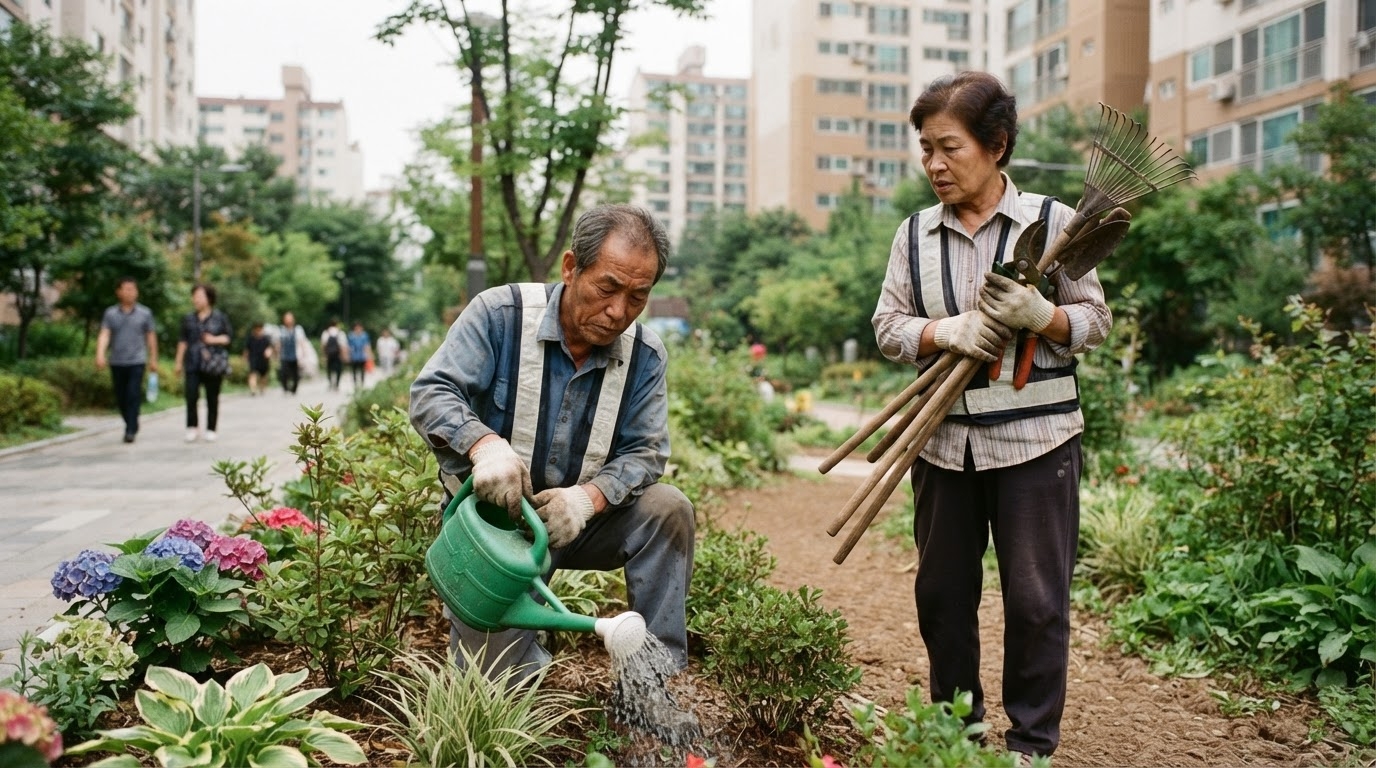
The relative poverty rate for the retirement-age population (66 and older) dropped in 2024 compared to the previous year. The dip from 39.8% to 37.7% suggests an improvement in the distribution of post-retirement income. Relative poverty is defined as living on less than half of the median income of the overall population. Even with this positive trend, nearly 38 out of every 100 people in the retirement age bracket still fall below this threshold. Poverty reduction and persistently high poverty levels exist side by side.
A poverty rate in the upper 30s shows that financial hardship in old age is far from an isolated issue affecting only a few. If post-retirement life lacks adequate financial backing, the act of stepping away from work becomes a heavy economic burden. When health or caregiving responsibilities make it difficult to keep working, other income streams have to fill the void left by lost wages. A solid financial safety net for the elderly matters regardless of whether they are currently employed.
In South Korea, senior workforce participation is expanding at the same time the poverty rate among the retirement-age population is improving. But a downward trend in poverty doesn’t automatically mean stable livelihoods for the elderly. The 37.7% figure shows these gains haven’t yet turned into broad economic security. A society where more people are working also needs ways to support those who cannot work or have already stopped.
Crossing the Threshold in 2025, and Growing Even Larger in 2026
Last year, South Korea’s population aged 65 and older stood at roughly 10.514 million, or 20.3% of the total population, crossing the threshold into a super-aged society under this annual estimate. The country has become a society where one in five people is a senior citizen. At this stage, issues around elder income and labor are no longer confined to one age group; they’re tied to how the whole society lives.
This year, that number grew to 11.125 million. The addition of roughly 610,000 people in a single year amounts to a 5.8% increase in the elderly population. A group that had already passed ten million grew further in a short span of time. The share of seniors rose to 21.6%. Entering a super-aged society wasn’t the end point of this demographic shift. It was the starting line for a stage where the elderly population keeps getting larger.
This pace of change puts pressure on both individual retirement planning and the broader social response. As the elderly population grows, post-retirement income, healthcare, and caregiving become a daily reality for more people. Hiring seniors can no longer be treated as an exception in the job market. What jobs are available to those who can still work, and how life is sustained for those who have stopped working, are connected questions. The scale of both challenges is growing together.
One in Three by 2040, Two in Five by 2050
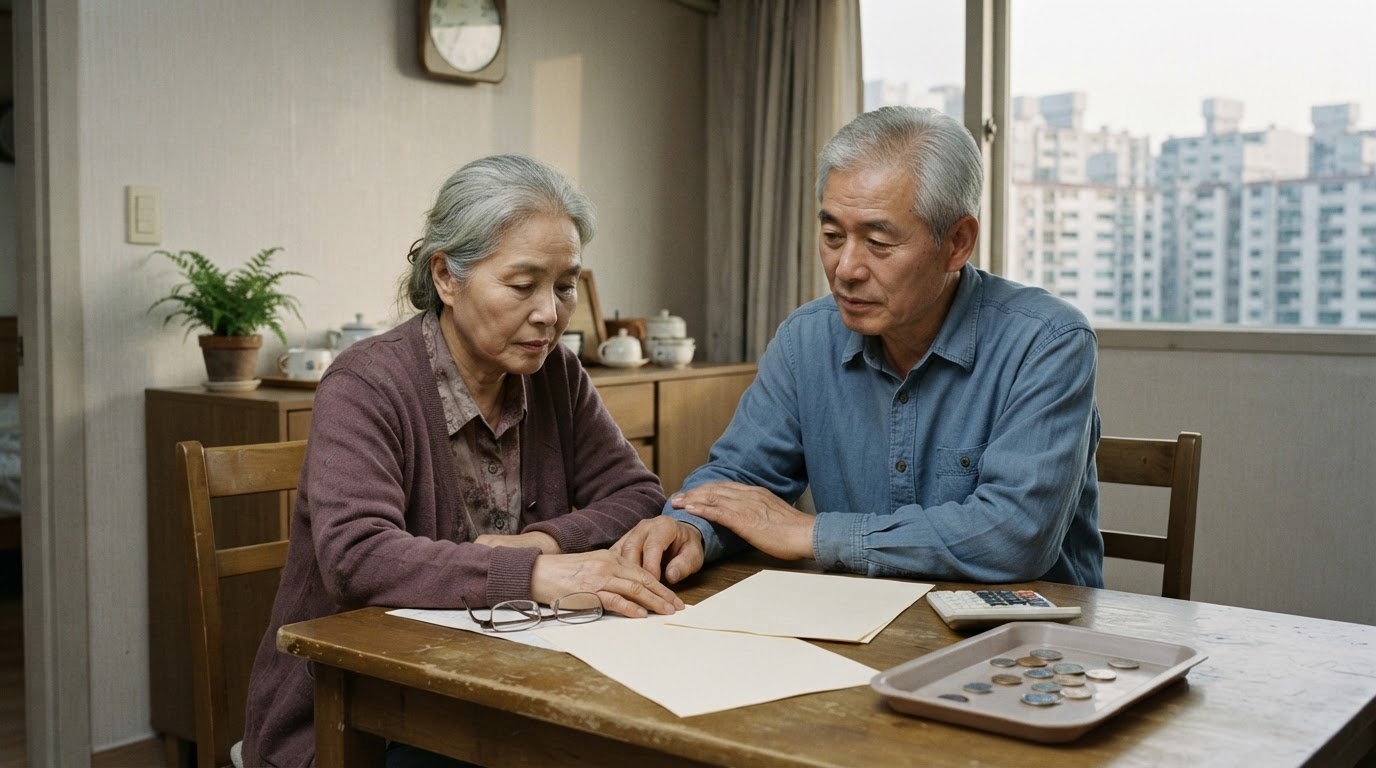
Long-term projections from the National Data Agency put the elderly share at 34.3% by 2040, a 12.7 percentage point jump from this year, meaning roughly one in three people will be 65 or older. Seniors will make up a much larger share than they do in the current super-aged society. South Korea’s demographic story is moving past the question of crossing thresholds and toward the scale of what comes next.
By 2050, the elderly share of the population is projected to reach 40.1%, meaning two out of every five people will be a senior citizen. By 2072, that forecast hits 47.7%, nearly half of the entire population. These projections show that treating old age as a small slice of society is less and less realistic. Stable livelihoods for the elderly aren’t an issue limited to a handful of households anymore; it’s becoming a basic condition for South Korean society as a whole.
Even if labor participation keeps expanding, relying only on employment to support life after retirement won’t work. Later years include both a period when a person can still work and one when they simply cannot. In a society with a growing elderly population, policies that support employment need to go together with income guarantees for people who step back from work. These long-term forecasts show why this can’t be put off. Lowering today’s high poverty rate is tied to securing people’s living standards down the road.
Walking the Line Between Working More and Retiring Well
The jump in the senior employment rate from 34.1% to 39.5% over five years shows that labor participation among older South Koreans is expanding. The dip in the retirement-age poverty rate from 39.8% to 37.7% matters too. But a poverty rate still in the upper 30s shows that economic vulnerability remains widespread in later life. Getting from higher labor participation and better income security to genuinely stable living conditions is still a work in progress.
The challenges ahead go beyond simply creating more jobs for seniors. What matters is whether the income from those jobs actually covers their living costs, and whether they can still cover necessary expenses once they can no longer work. Expanding access to work and ensuring a decent standard of living when work is no longer an option can both be pursued at once. A rapidly aging society needs both.
Even as it adjusts to its new status as a super-aged society, South Korea continues to age quickly. This year’s 11.125 million seniors mark an increase of about 610,000 from a year ago, and the elderly share of the population is projected to keep growing. What’s worth watching next isn’t just how high the employment rate climbs. It’s also how much further the improving poverty rate falls, and whether daily life becomes stable for both seniors who are still working and those who have stopped.
Sources: National Data Agency “2026 Senior Citizen Statistics” Press Release, October 1, 2026, https://mods.go.kr/board.es?mid=a10301010000&bid=10820&list_no=447294&act=view&mainXml=Y ; Maeil Business Newspaper, October 1, 2026, https://stock.mk.co.kr/news/view/1168380