
Table of Contents
Bangsongdae-gil and part of Yeonmujang-gil join the list in December
Starting in December, Seoul’s Seongdong District will restrict new restaurants, cafes and bakeries run by large corporations and franchises on 232 land parcels along Bangsongdae-gil and part of Yeonmujang-gil in Seongsu-dong. The district announced on October 6 that it is extending a rule it has already applied on Seoul Forest-gil. The restriction covers three business types: general restaurants, cafes and snack shops (classified in Korea as “rest restaurants”), and bakeries. It does not ban every chain store across Seongsu-dong, and it does not push out existing shops. It governs which new businesses in certain categories can move in.
There are exceptions. Even in those categories, small franchise outlets below the legal size threshold can open, as can stores approved after review by a local resident cooperation council, a body where community members discuss which businesses come into the area. So being a chain does not automatically mean every new store gets the same answer. Which street a business picks, what kind and size it is, and whether it has local approval decide how the rule applies.
The district says the goal is to protect Seongsu-dong’s character and the variety of its shops. Rents have climbed sharply, especially around Yeonmujang-gil, raising doubts about whether the existing mix of businesses can survive. The concern is that the very traits that drew visitors could fade after commercial success. To understand the move, it helps to look beyond the rules for new cafes and back at how a manufacturing neighborhood turned into a popular destination.
From shoemaking workshops to a place people visit
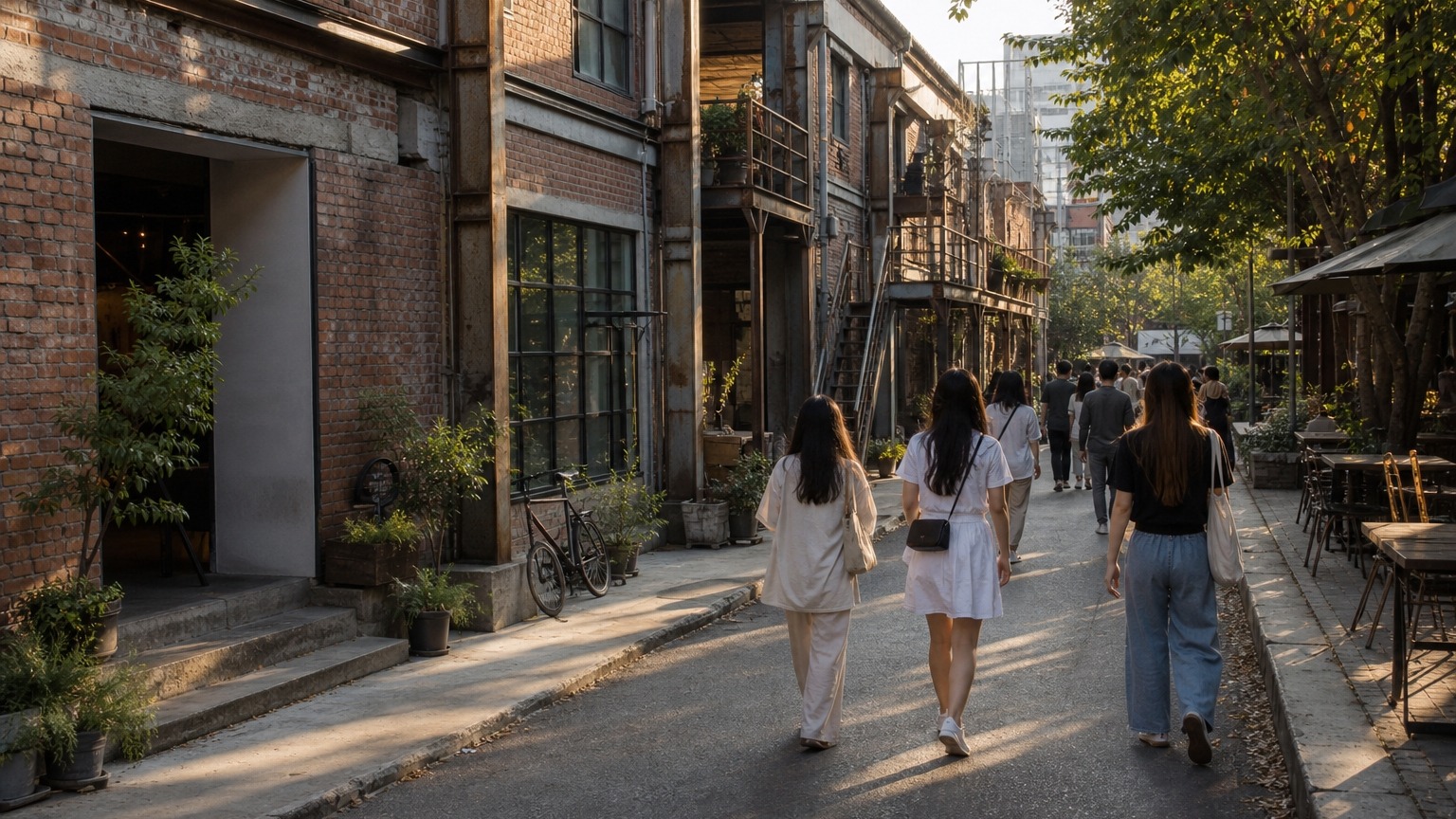
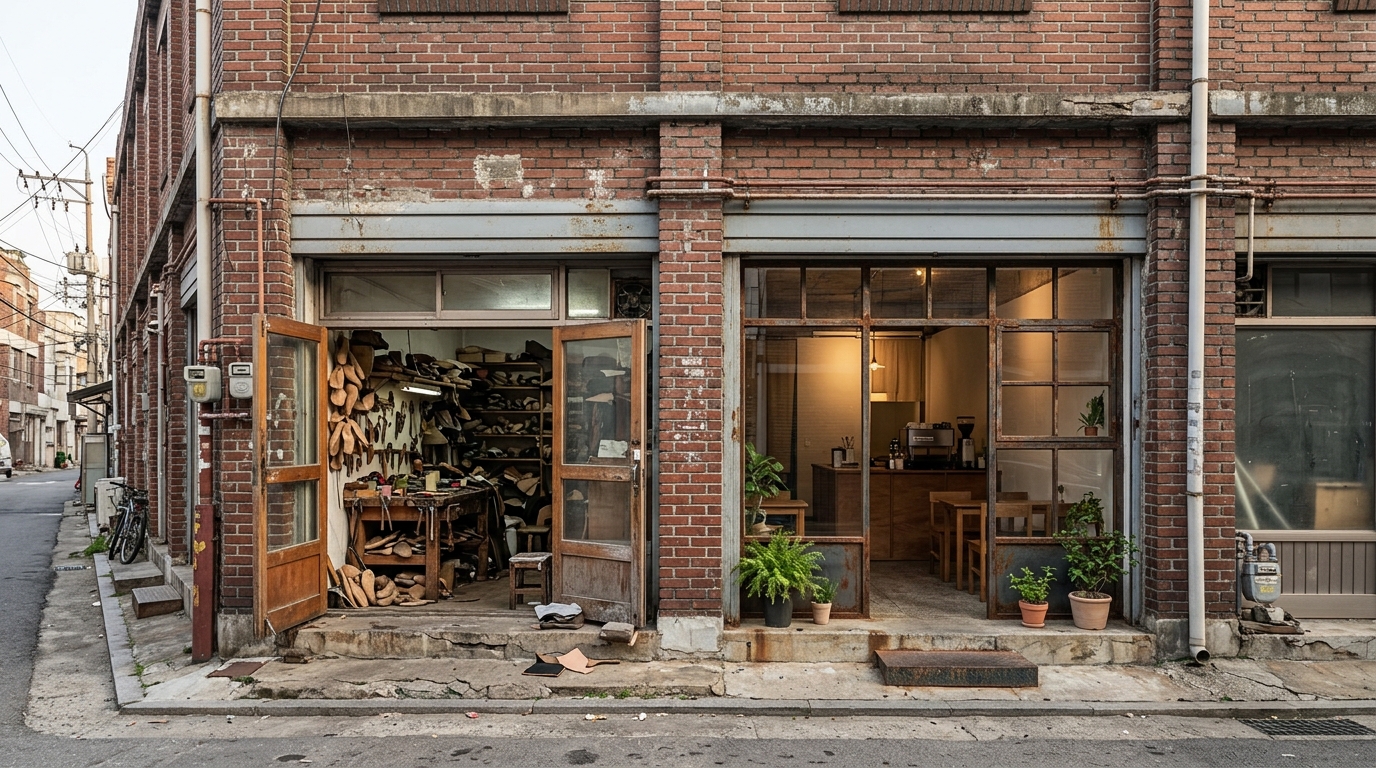
Seongsu-dong grew up around manufacturing, including handmade shoe workshops and factories. Its red-brick buildings and workspaces are traces of that industrial past. Over time, cafes and independent shops moved into those spaces and changed how the neighborhood was used. Streets once centered on making and repairing things became places to drink coffee and browse. Any description of Seongsu mentions its industrial remains because today’s streetscape was built on top of them.
The Korea Times, in an October 10 report, described Seongsu as the “Brooklyn of Seoul” for its mix of repurposed factory spaces and youth culture. The nickname is less a direct comparison with another city than shorthand for an industrial backdrop meeting a new retail culture. Independent cafes, local brands and short-term pop-up stores became the reasons people came. The neighborhood’s appeal came not only from what each shop sold but from the street atmosphere created by many spaces that do not look alike.
As visitors and commercial interest grew, though, rents rose with them. Concern about whether the existing commercial scene could last centered on Yeonmujang-gil. The small business owners who made the neighborhood famous are finding it harder to stay there. This is what is called gentrification. The term focuses less on a commercial area growing and more on how that growth pushes out existing residents and businesses and changes the character of a place.
Started on Seoul Forest-gil, now covering more ground
Seongdong District responded to these changes by first restricting new large-corporate and franchise stores on Seoul Forest-gil. This announcement is not a new type of regulation but a wider application of an existing one. An approach meant to protect independent shops on a few streets is being extended to other major commercial streets. The move from Seoul Forest-gil to Bangsongdae-gil and part of Yeonmujang-gil shows the district adjusting where it applies the rule as the commercial map shifts.
The expansion is tied to the “Seongsu Semi-Industrial Area District Unit Plan,” which was officially announced on September 3. A district unit plan is an urban plan that sets how land in a specific area is used and built on. It treats changes in a popular commercial area as a neighborhood-level matter rather than a problem for individual shops. The fact that the rule targets 232 specific parcels on Bangsongdae-gil and part of Yeonmujang-gil also matters. It applies to defined plots of land, not to everything that carries the Seongsu name.
Behind this is the district’s “Community Sustainable Development Plan,” revised for the first time in about ten years. The district updated the plan to reflect changes in local businesses and in how people visit. It then announced the expansion on October 6 and set the December start date. The sequence keeps the existing zone in place while extending the rule to streets where change is most visible now. The policy’s focus is on what kind of commercial area the neighborhood keeps, rather than on attracting or blocking any single store.
Protecting more than which shops can open
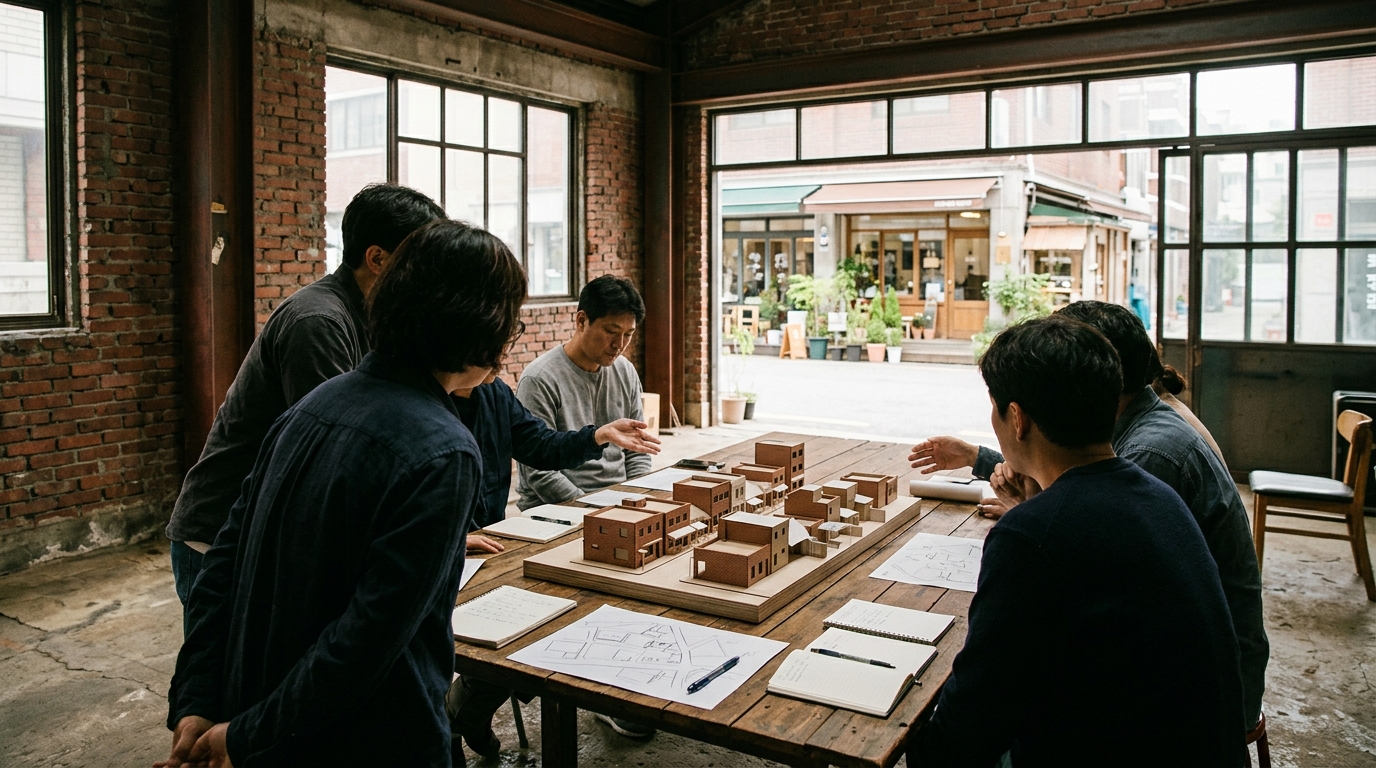
Within the expanded zone, 82 parcels will also follow architectural and streetscape guidelines for red-brick facades. The aim is to manage how the street looks as well as what kind of businesses move in. Red brick is the most visible reminder of Seongsu-dong’s manufacturing roots. Preserving how buildings look and keeping small businesses operating inside them are separate tasks, which is why the district is pursuing streetscape management and shop protection together.
Pop-up stores, which open and close quickly, are also covered. The district plans to run public pop-up spaces, set operating guidelines for pop-up stores and carry out weekly on-site monitoring. Pop-ups are temporary stores or experience spaces that run for a set period. They are a big part of Seongsu’s visitor culture, but they are handled separately from the limits on new permanent restaurants. The plan extends management to the fast-changing ways the streets are used.
The district will also keep managing the area through “Seongsu Town Management,” a privately led system that brings residents, merchants and other community members into running the neighborhood. Beyond the government setting rules for new stores, the idea is to give a bigger role to the people who keep the local business scene going on the ground. Seongdong District Mayor Ryoo Bo-hwa also described the character and diversity built by the local community as the source of Seongsu’s competitiveness. What the district wants to protect is not one building or one business type, but the relationships and mix that make up the area.
Exceptions and rents will decide whether it works
Other popular commercial streets offer lessons behind this policy. The Korea Times pointed to Garosu-gil and Samcheong-dong, where rising rents pushed out independent creators, local charm faded and vacancies climbed. Nothing says Seongsu will follow the same path. The policy’s core worry is that if a well-known neighborhood fills up with the same stores found everywhere, the reasons visitors came may disappear too.
In practice, the exceptions will be a key test. Allowing small franchise outlets and chains approved by the resident council lets the district accept a variety of businesses while still judging how well they fit the area. How those standards are applied could also change what the streets end up looking like. The number of businesses restricted will not show the full effect. What to watch is which stores get approved and how they relate to existing local shops.
Limiting new chain stores does not by itself stabilize rents. This announcement focuses on what kinds of new businesses can open and how the area is managed, while rising rents remain a separate underlying problem. Costs can become too high for existing shops even when the newcomers are not franchises. Whether the policy works will depend not only on whether a store carries a chain name but on whether businesses that grew up in the neighborhood can afford to stay.
What changes for international visitors
The first thing for international visitors to know is that chain cafes will not vanish from Seongsu in December. The rule applies to new businesses in three categories on the 232 designated parcels. It does not close existing stores, and it does not restrict every type of commercial space the same way. Visitors are more likely to notice change gradually, in which restaurants and cafes open over time, than in any sudden makeover of the streets.
The look of the streets and the way experience spaces are run are also worth watching. Red-brick streetscapes will be preserved in some blocks, and pop-ups will follow operating guidelines and on-site checks. The Seongsu that visitors see is a layered mix of permanent cafes and shops and temporary event spaces. Since each layer is managed differently, the policy is better understood as an effort to adjust how the streets are composed and run than as a simple stand against big business.
Seongdong District’s challenge is to keep Seongsu commercially lively while holding on to the differences that made people want to come. New-store limits, exception reviews, streetscape rules, pop-up management and private participation are the tools it has laid out. After December, the measure of success will go beyond how many fewer chain stores there are. The real test for Seongsu’s next chapter is whether longtime merchants and new businesses can share the streets, and whether visitors can still find spaces they will not see anywhere else.
Source: Yonhap News Agency, October 6, 2026, https://www.yna.co.kr/view/AKR20261006089000004 ; The Kyunghyang Shinmun, October 6, 2026, https://www.khan.co.kr/article/202610061615001 ; Simin Ilbo, October 7, 2026, https://siminilbo.co.kr/news/newsview.php?ncode=1160287947558409 ; The Korea Times, October 10, 2026, https://www.koreatimes.co.kr/lifestyle/travel-food/20261010/in-seouls-trendiest-district-local-leaders-push-back-against-corporate-chain-stores .