Table of Contents
What the Numbers Tell Us About a Changing South Korea
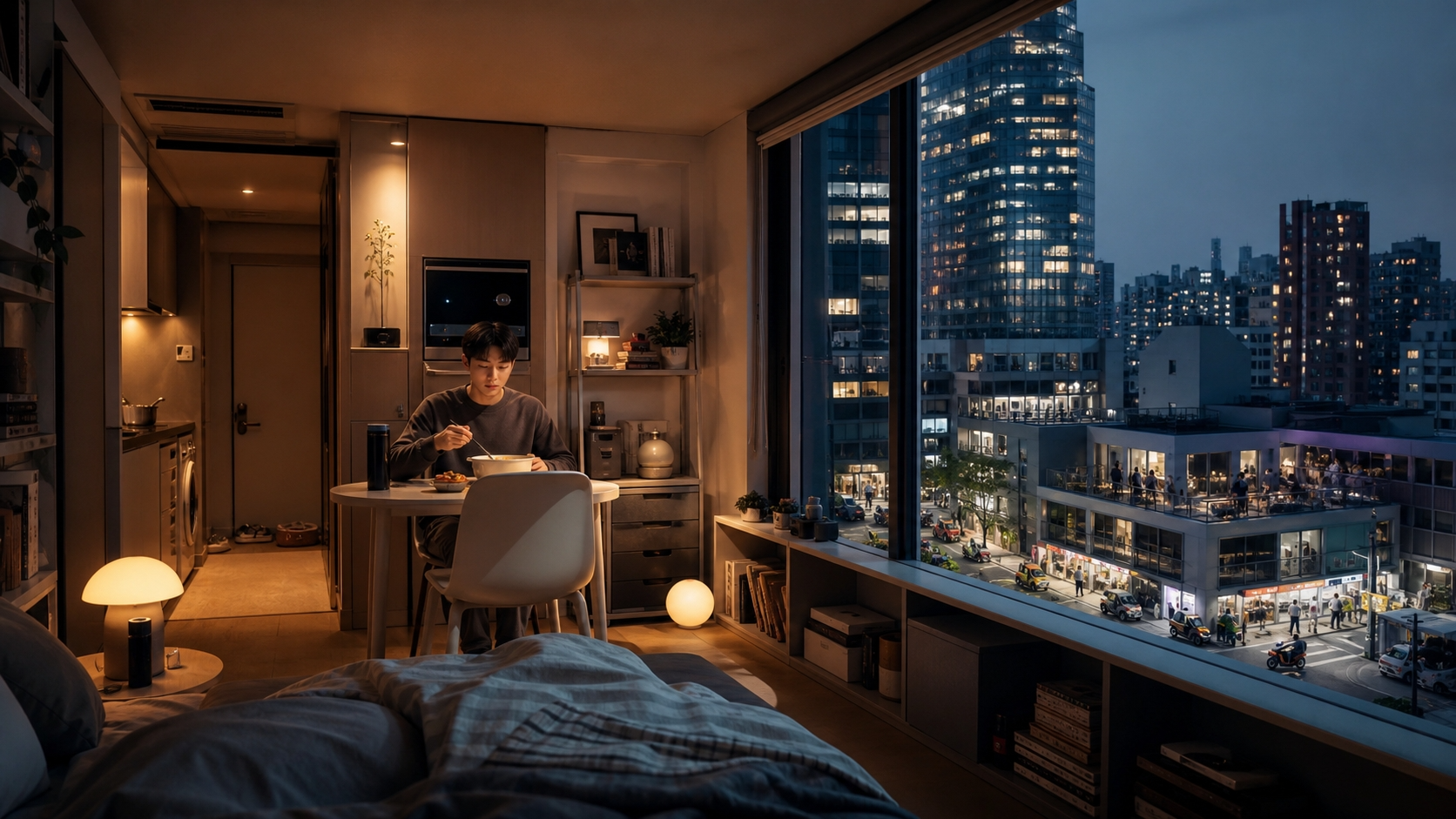
In 2026, the number of single-person households in South Korea surpassed 10 million, according to Statistics Korea. That means more than one-third of all households now consist of people living alone. This is not merely a statistic—it signals a fundamental shift in how people live, consume, and envision cities. The rise of single-person households is not new; it has been building for decades through rising rates of late marriage, non-marriage, elderly individuals living independently, and the separation of work and residence. But the pace accelerated through the mid-2020s, and the 10 million mark confirms that this is now a structural feature of Korean society.
The Solo Economy: A New Consumer Force
The era of 10 million single-person households has created a new set of consumption patterns—what I call the solo economy. Eating alone, traveling alone, dining out alone, and enjoying leisure activities alone are no longer exceptions but have become mainstream. Meal kits for one, small-capacity home appliances, solo travel packages, and restaurants with single-person seating optimized for eating alone are now standard market offerings. The retail sector has already adapted: demand for small-portion convenience store products has grown over bulk purchases at large supermarkets, and single-portion orders have become a major trend in the food delivery market. The furniture and interior design market has also seen a surge in demand for space-efficient items. Across the board, consumer markets are being redesigned with the single-person household as the basic unit.
Cities in Transition: Redesigning Physical Space
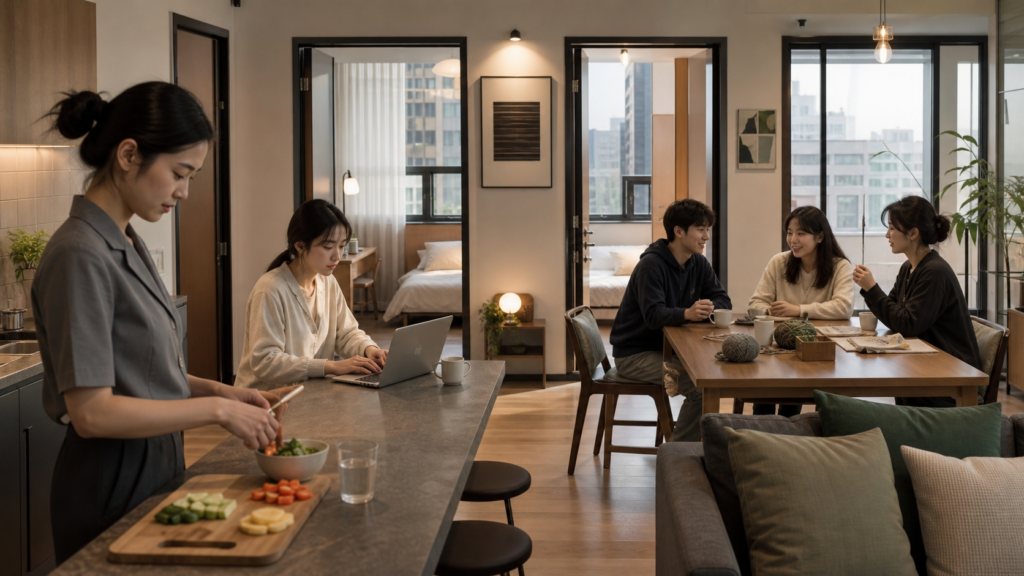
The impact of the solo economy on cities goes beyond consumption patterns—spurring a physical redesign of urban space. Residential, commercial, and cultural spaces that were designed for large families are being transformed to fit the lifestyles of single-person households. Demand for small apartments and studio units is rising, and urban redevelopment projects are increasingly allocating a higher proportion of housing for one- or two-person households. The sharing economy model is also growing in tandem with the rise of single-person households. Co-living—where residents maintain private spaces while sharing common facilities—is gaining attention, particularly among single-person households. Facilities with community spaces, shared kitchens, and shared laundry rooms are appearing in central Seoul. Compared to US cities, which have long offered studio apartments and co-living options, Seoul’s transformation is happening more rapidly and at a larger scale, driven by the sheer demographic weight of this shift.
The Paradox of Living Alone Yet Wanting Connection
Among the most striking social challenges of the surge in single-person households is the issue of loneliness and isolation. Many who choose to live alone still feel a paradoxical desire for connection—a sentiment that runs across generations of single-person households. This desire is fueling new forms of social interaction: social salons, hobby-based communities, and platforms for regular meetups. But there is a darker side. The problem of solitary death among elderly single-person households is becoming more severe. The government and local municipalities have begun offering welfare services and building social networks for single-person households, but the infrastructure is still far from adequate given the scale of 10 million people.
Redesigning Society for an Individual-Based Era
The era of 10 million single-person households is reshaping the economy and cities, while also demanding a fundamental redesign of how South Korean society treats individuals. The tax system, housing policies, and medical welfare framework were built around the four-person family as the default—and these systems are increasingly out of sync with reality. When single-person households are no longer an exception but the norm, failing to redesign social institutions and urban spaces accordingly will only increase individual inconvenience and social costs. The message from the number 10 million is simple: the basic unit of Korean society has changed. If that is true, what new standards are needed to match it?
Sources: Statistics Korea, Korea JoongAng Daily, and industry reports, 2026.