Table of Contents
From Subcontracting to Creative Agency
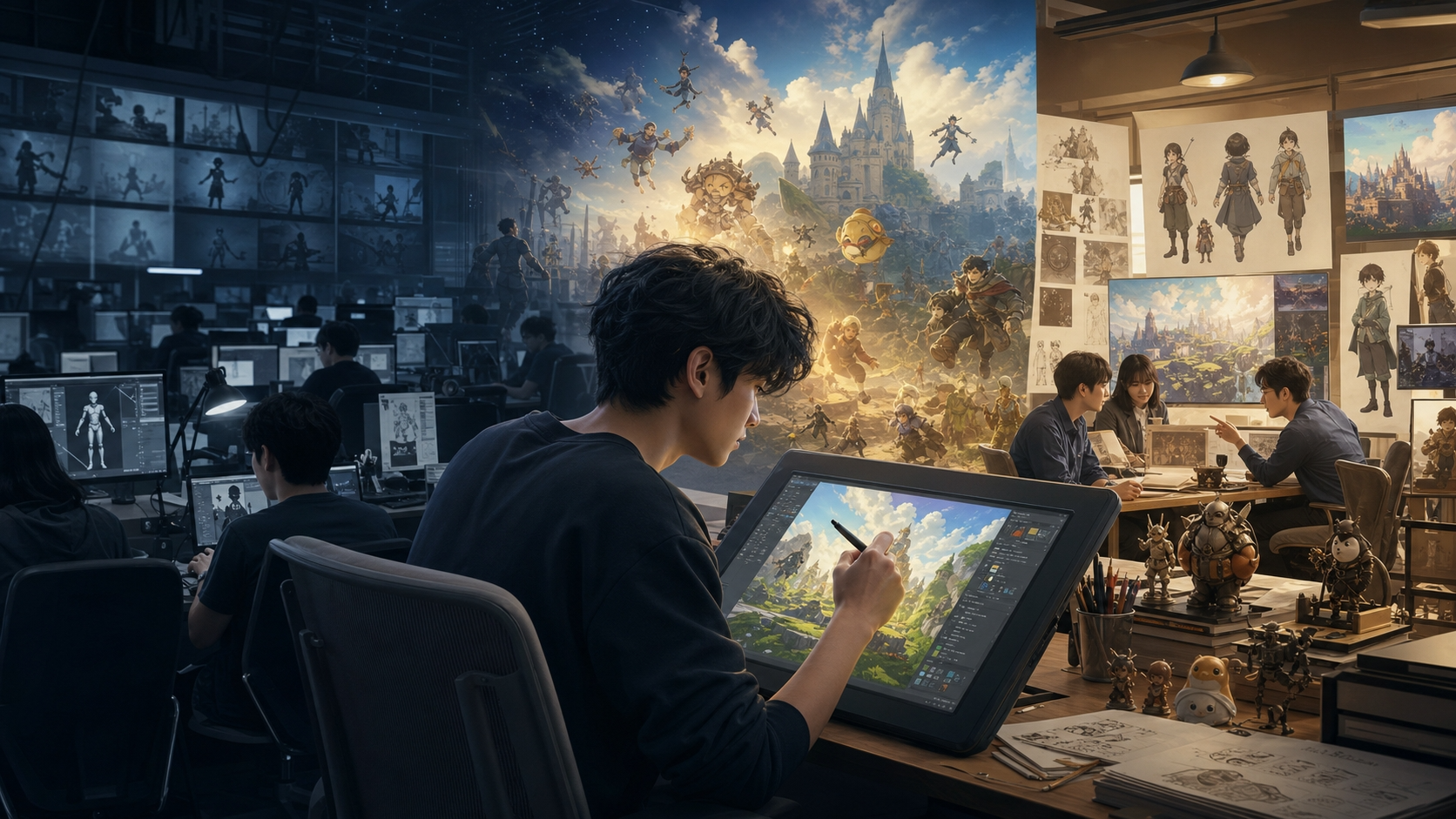
For decades, the Korean animation industry inhabited a peculiar irony—while possessing world-class production skills, it lacked any work it could truly call its own. The paradox was encoded in the very word that described its role: 하청 (hacheong), subcontracting. Many animations from global studios like Disney, Warner Bros., and Marvel were completed by Korean hands, yet the credits rarely featured a Korean name prominently. The skill was global-standard, but the IP—intellectual property—was absent. However, as the mid-2020s passed, this landscape began to shift. Korean animation studios are now striving to shed their role as contractors and transform into creative entities that plan and own their own intellectual property. The very technology once used for outsourcing is now being deployed to craft original worlds and characters.
The Door Opened by OTT for Direct Distribution
One key enabler of this transition is the proliferation of OTT platforms. In the past, to introduce a work to the global market, studios had to knock on the doors of major distributors and broadcasters, often relinquishing IP or ceding creative control under the guise of co-production. But as platforms like Netflix, Disney+, and Apple TV+ dramatically increased content demand, opportunities arose for Korean studios to sit directly at the negotiation table. Platforms now seek not just finished works but original IP themselves—a shift that has allowed Korean animation to position itself as an IP-holding studio rather than a mere production partner. Indeed, several Korean studios have spearheaded this trend by signing contracts to supply their own original works directly to OTT platforms.
Synergy with Webtoons, Expansion of the IP Ecosystem
Another axis of Korea’s animation IP strategy is synergy with webtoons. Adapting webtoon IP—already possessing proven fandoms and worlds—into animation has become a strategy to reduce risk while rapidly boosting global recognition. If webtoons are the seeds of IP, animation serves as the medium to bloom them in the global market. This structure is also significant from the perspective of the Korean content industry ecosystem: the multi-platform IP expansion chain—webtoon to web novel to animation to drama to film—is increasingly becoming systematic. Rather than the success of a single work, a long-term strategy of building an IP universe is permeating the industry.
From Technical Skill to Creative Planning: A Shift in Talent Landscape
The recovery of creative sovereignty also demands changes in the talent landscape. Under the existing subcontracting structure, apprenticeship-style skill transfer was key. But in the era of proprietary IP development, planning capabilities for building worlds and designing characters, along with an eye for global market sensibilities, are also required. Demand is rising for writers, scriptwriters, and concept designers, beyond purely technical talent. Universities and educational institutions are responding to this change; there is a discernible shift in the curricula of animation departments from a technology focus toward creative capability. Seeds of a virtuous cycle are sprouting: industry demands reshaping education, and new talent transforming the industry in turn.
The Future Opened by Creative Sovereignty
Of course, much remains to be done. Developing proprietary IP requires far greater risk and investment than subcontracting. Studios must handle the entire process—from planning to production, marketing, and distribution—and also resolve the challenge of balancing global appeal with Korean distinctiveness. The solid technical foundation built through subcontracting will become an asset enhancing the quality of proprietary IP, but it alone is insufficient. Nevertheless, Korean animation’s move from subcontracting to IP ownership is a sincere step toward a qualitative leap in the industry. From selling technology to selling worlds—if this transition succeeds, Korean animation could become the next pillar of Hallyu, following K-pop and K-drama. The journey to reclaim creative sovereignty has just begun in earnest.
Source: Korea JoongAng Daily and industry reports, 2026.