
Table of Contents
The Busan Meeting Is Not an Intangible Heritage Conference
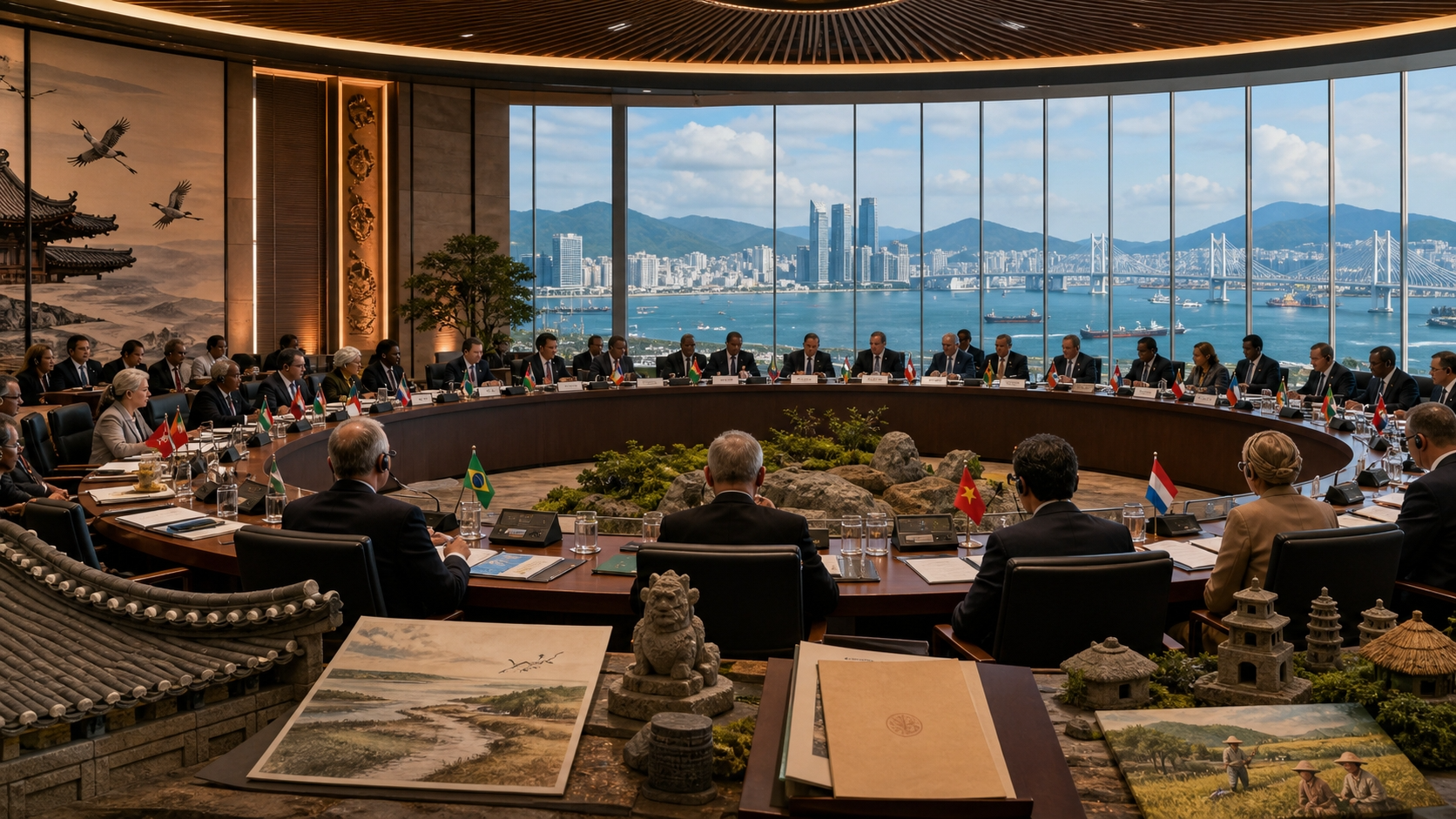
Many might assume the UNESCO gathering in Busan next July is about intangible heritage—the living traditions of performance, food, and craft. But the 48th session of the World Heritage Committee, convening from July 19 to 29, 2026, operates under a different mandate. It is an international body that decides on inscriptions to the World Heritage List, monitors the conservation of listed properties, and addresses heritage at risk. This is institutionally distinct from the intangible heritage framework, which centers on living cultural practices like Korea’s traditional performances, cuisine, and craftsmanship.
Far from narrowing the event’s significance, this distinction actually expands how Korea views heritage. World Heritage encompasses not just ancient palaces, temples, and tombs, but also natural sites, urban landscapes, collective memory, and the tensions that come with preservation. By hosting the committee, Korea gains a platform to introduce its own heritage while simultaneously sitting in judgment on the conservation challenges faced by other nations.
What Does the World Heritage Committee Decide?
Each year, the World Heritage Committee evaluates new nominations and assesses the state of conservation of sites already on the List. The inscription process may grab headlines, but the committee’s mandate is broader: it deliberates on how the international community should respond when heritage faces threats from tourism development, armed conflict, climate crisis, urban sprawl, or natural disasters.
This is why World Heritage listing is far more than a branding exercise. Once a site gains the designation, expectations surge for tourist numbers and economic benefits. Yet the conservation burden also intensifies. More visitors can degrade the surrounding environment, reorient local livelihoods around tourism, and restrict development. Heritage may be a point of pride, but it is also a public good demanding ongoing investment and societal agreement.
Korea is home to a diverse array of World Heritage sites—from Seokguram Grotto and Bulguksa Temple to Jongmyo Shrine, Changdeokgung Palace, Hwaseong Fortress, Jeju’s volcanic island and lava tubes, the Joseon royal tombs, the seowon Confucian academies, and the Getbol tidal flats. Each carries its own preservation challenges: urban palaces must balance daily civic life with tourism, while natural sites contend with ecosystem shifts and development pressures. The number of listings matters less than how these varied conditions are managed.
Why Busan Matters as a Host City
Busan, Korea’s second city and a major international port, brings a unique set of assets: its history as the wartime capital during the Korean conflict, a landscape where mountains meet the sea, and a strong film and convention industry. But the choice of host city for the World Heritage Committee isn’t just about providing a meeting hall; it’s a place where delegates, journalists, and specialists will firsthand encounter the city’s cultural offerings and how easily they can be accessed.
Choosing Busan could help diversify Korea’s image beyond the Seoul-centric narrative that foreign visitors often encounter—K-pop, shopping, and palaces in the capital. Busan offers a different Korea: a port city’s way of life, layers of modern history, and regional culture intertwined. But the meeting shouldn’t be reduced to a city marketing exercise. A host city’s allure is more persuasive when conservation, accessibility, and local engagement persist long after the conference ends.
The World Heritage conversation is inseparable from tourism. As more travelers discover Busan through Korean cultural content, the potential for heritage tourism grows. Yet popularity on screen doesn’t automatically translate into on-site preservation. Improvements in visitor circulation, multilingual signage, public transit, waste disposal, and accessibility for all need to move in step.
Living Heritage Remains a Separate Conversation
Although this gathering is the World Heritage Committee, any conversation about Korea’s cultural heritage inevitably touches on the intangible. Elements like the Jongmyo royal ancestral ritual and its music, Pansori epic chanting, and the Kimjang tradition of making and sharing kimchi are kept alive through human practice. The work of conserving a structure and the work of passing down a skill, a ritual, or a community’s memory may differ in method, but they converge on the same question: what do we hand over to the next generation?
A caution here: tradition should not be embalmed. Intangible heritage cannot be stored behind museum glass. It requires someone to actually sing, craft, instruct, and take part. Creating avenues for younger people to connect with tradition and ensuring that practitioners can work under stable conditions is essential. Should any intangible heritage events be organized around the Busan committee session, they must be clearly distinguished from the official conference agenda.
International audiences often encounter Korean heritage as a picture of the past. Yet heritage is not just about yesterday. It intersects with the most pressing issues of today: climate change, overtourism, rural depopulation, and urban redevelopment. That’s precisely why the Busan session matters.
What the Conference Should Leave Behind
The World Heritage Committee session will wrap up after roughly ten days. But heritage conservation work starts when the meeting adjourns. New inscriptions generate hopes for local areas, yet managing those hopes is a task that spans years, even decades. Korea, for its part, should demonstrate not just an interest in adding more sites to the list, but also transparency in how it budgets for existing ones, involves local communities, and responds to environmental shifts.
The 48th session in Busan offers Korea a platform to present its culture to the world. But it also puts Korea in the hot seat: will the country treat heritage as merely a tourism asset, or as a shared environment that communities must safeguard together? The conference’s true outcome will be measured not by the glitter of the event, but by the long-term response Korea offers to that question.
Sources: UNESCO World Heritage Centre, Guide to the 48th Session of the World Heritage Committee in Busan, July 2026; Korea Heritage Service, World Heritage Status Data, 2026.