
Table of Contents
The unfamiliar scene I spotted in front of Cheongnyangni Station
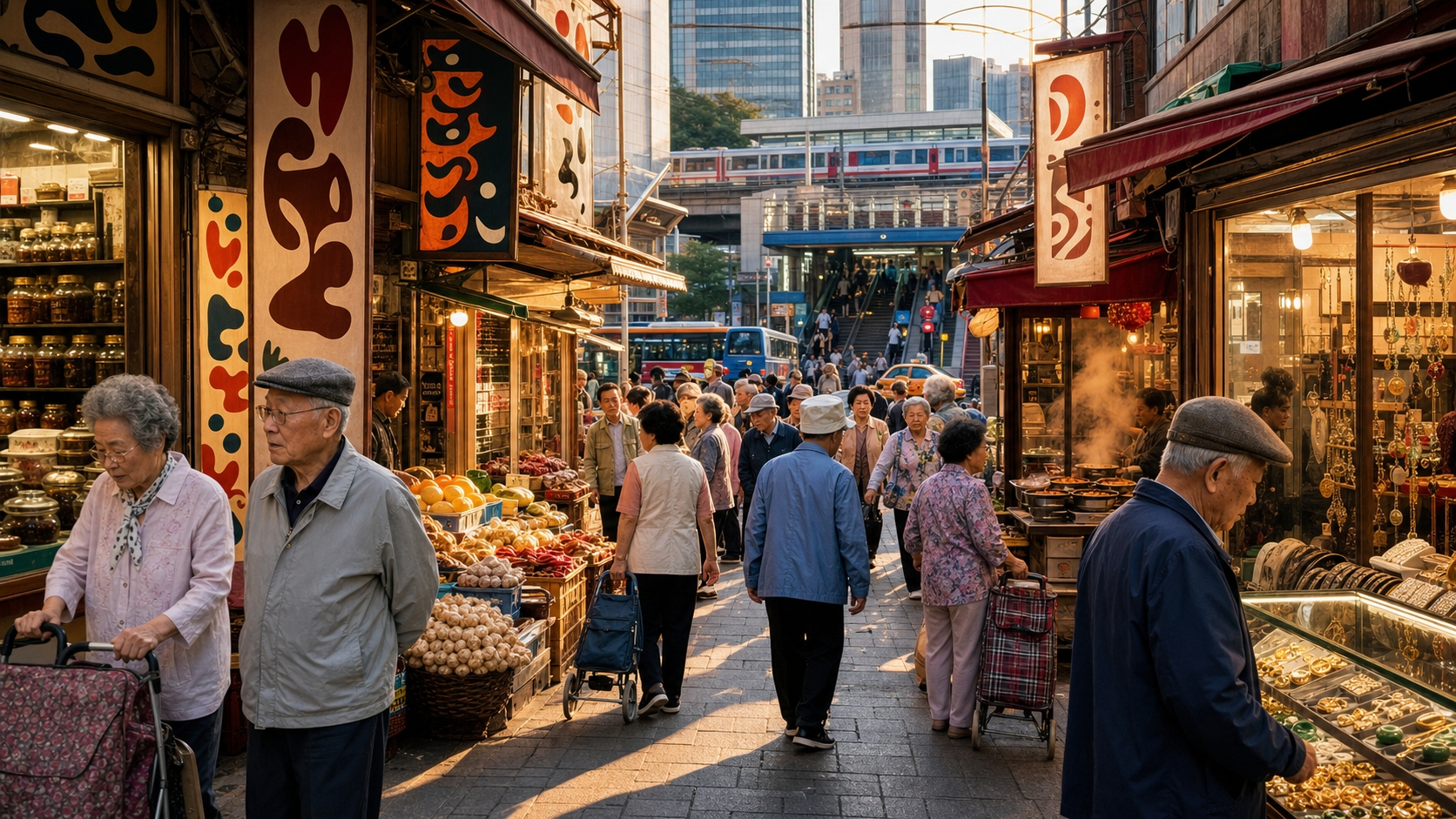
I was walking past Cheongnyangni Station and I saw it. It was so crowded that I wondered if it was always this busy on a weekday afternoon. But what caught my eye wasn’t the crowd itself—it was who was making it. Not the usual 20- and 30-somethings, but older folks who looked 60-plus, moving through the market alleys, past the pharmacies and herbal medicine clinics. And it wasn’t just my imagination—the Seoul Commercial District Analysis Service stats confirm it’s a real trend.
According to an analysis from Aju Economy published on May 18, consumers aged 60 and over account for 34.1% of spending in the Cheongnyangni Station area—one of the highest rates among major Seoul commercial districts. And over the same period, commercial sales there surged by 228%. Cheongnyangni has always been a neighborhood with a high proportion of middle-aged and elderly consumers, but lately, residential-commercial development and expanded transit networks have turned it into a key hub for Seoul’s northeastern districts.
Jongno 3-ga grew 71% in five years
Jongno 3-ga is riding the same wave. Sales have jumped 71% over the past five years—just picture it. Jewelry shops, herbal medicine clinics, old-school eateries packed into one neighborhood. Suyu Traditional Market is even more dramatic: sales shot up 302% in the same period. Looking at these three commercial districts together, one thing stands out. They all have an unusually high concentration of businesses that cater to middle-aged and older shoppers—jewelry, traditional medicine, markets, hospitals.
Meanwhile, Hongdae and Sinchon—once the symbols of youth—tell a different story. Over the same period, sales at Hongdae Station only grew 16%, and Sinchon actually dropped 8%. They still attract plenty of 20- and 30-somethings, but the explosive sales power of the past? Definitely faded.
So what’s behind this shift?
Let’s start with the demographics. Over the past five years, Seoul’s population in their 20s dropped from 1.63 million to 1.49 million—a decline of 8.6%. And as spending shifts from offline to online, the younger generation’s power to drive offline card spending isn’t what it used to be. Meanwhile, the 60-plus consumer base is growing fast. As the baby boomers enter full retirement, so-called ‘active seniors’ are opening their wallets for dining out, healthcare, and leisure.
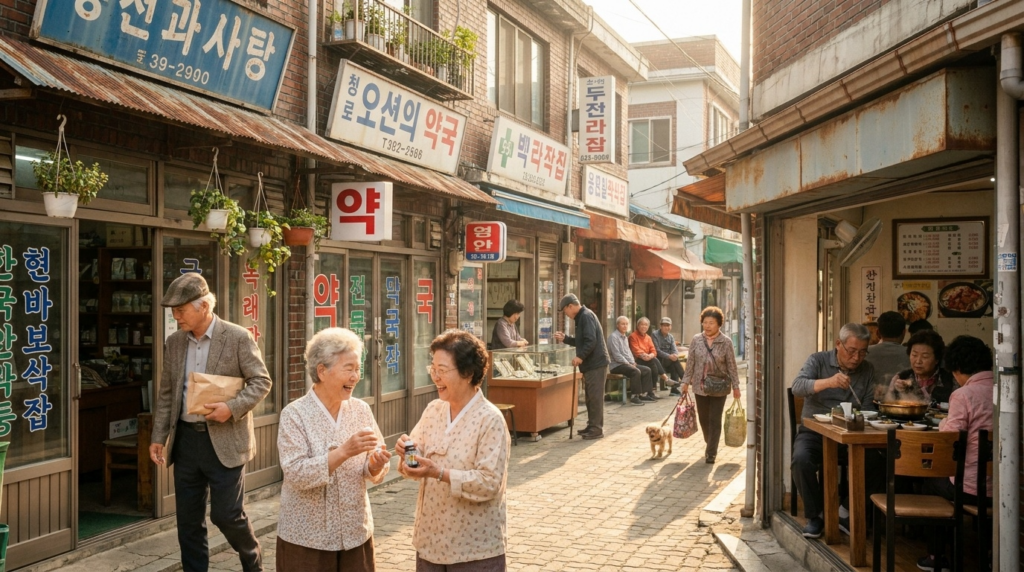
Song Seung-hyun, CEO of Urban and Economy, put it this way: ‘Seniors aged 60 and above have accumulated years of experience using traditional offline commercial districts, so they still maintain a consumption pattern of going out to buy, eat, and enjoy things in person.’ He added, ‘Older commercial districts like Cheongnyangni and Jongno aren’t just about retail—they still have functions that evoke nostalgia for seniors, like fruit and vegetable markets, seafood, jewelry, and Oriental medicine.’ And honestly, he’s right. In these neighborhoods, hospitals, pharmacies, traditional markets, and restaurants are all within walking distance. You can get a checkup, do your grocery shopping, and grab a meal all in one trip.
And here’s a fun twist: younger generations’ retro consumption is also chipping in
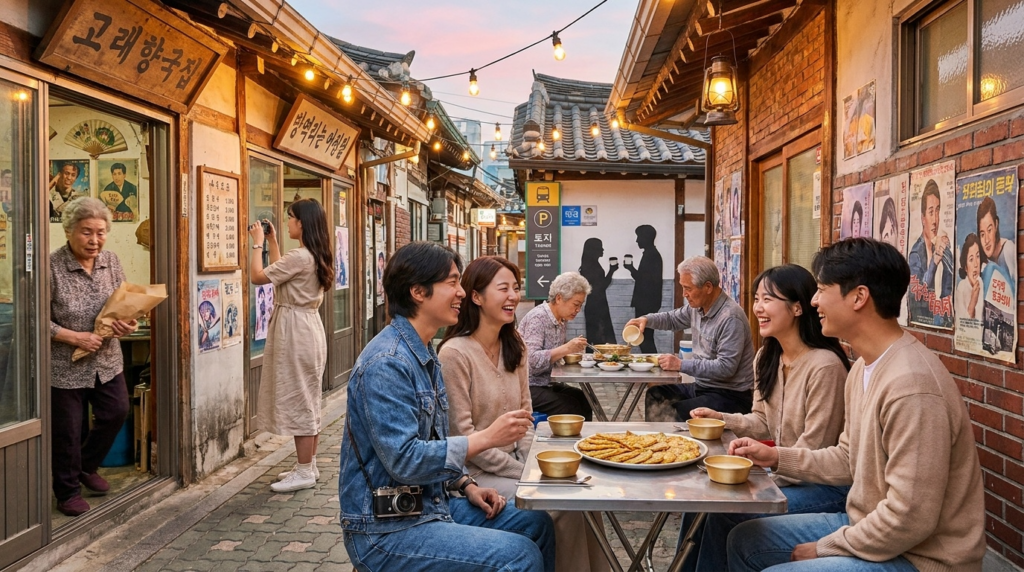
Here’s an interesting twist. While senior spending keeps these districts going, younger generations are adding their own boost with ‘retro consumption.’ Traditional markets, old eateries, and aged alleyways that used to be considered outdated and uncool are now being reinterpreted as ‘hip spaces’ among 20- and 30-somethings. I’ve seen it myself at Gwangjang Market—groups of young friends hanging out over mung bean pancakes and makgeolli. That’s exactly this trend in action.
But not every old commercial district revives on its own. For senior spending to translate into growth, you need a combination of factors: transit accessibility, business diversity, density of everyday services, and residential demand nearby. Cheongnyangni succeeded because of station-area development and transit expansion; Jongno 3-ga still has specialized clusters like jewelry, medical, and dining; Suyu Traditional Market retains its strength as a traditional market that holds onto neighborhood consumption.
Go ahead, take a walk yourself
If you’ve been chasing only the ‘hot new neighborhoods’ in Seoul, try switching it up. Walk through an old commercial district like Cheongnyangni Market or Gwangjang Market, where wholesale and retail coexist—you’ll feel a different kind of energy than the flashy new café streets. Personally, I’d recommend sitting down at a gukbap (rice soup) place in Jongno 3-ga’s old eatery alley, shoulder to shoulder with the seniors. Because a ‘senior district’ basically means a cluster of restaurants that have survived for decades—and they’re the real deal.
Source: Lee Eun-byul, Aju Economy, May 18, 2026.