
Table of Contents
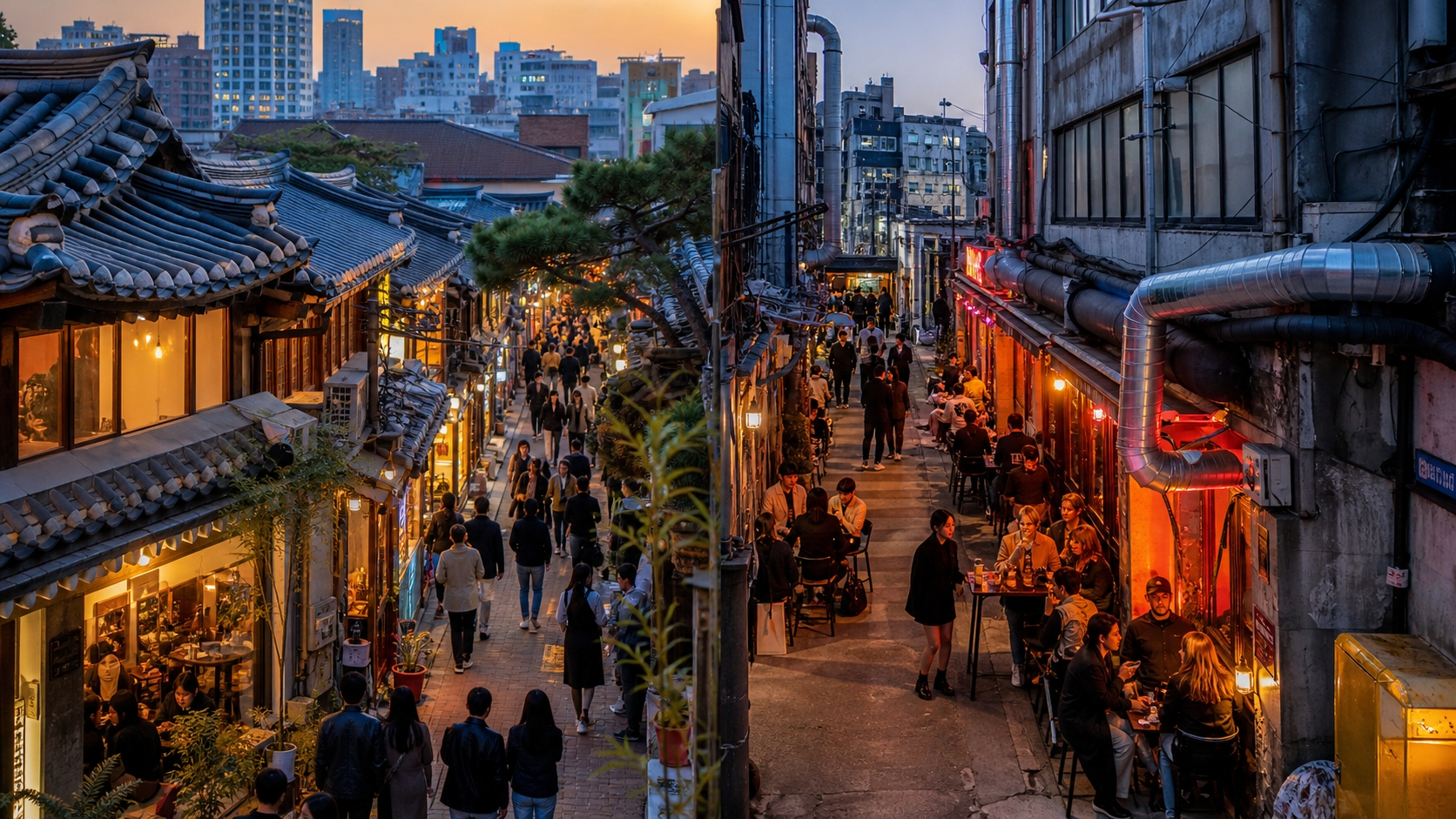
By Day It’s Hanok Roofs, By Night It’s Neon
Walk out of Jongno 3-ga Station into the Ikseon-dong alleys and you’ll see cafés and small restaurant signs lined up under hanok eaves. A few stops away in Euljiro, metal workshops and print shops give way in the evening to bars and restaurants gearing up for the night. The two neighborhoods feel pretty different. Ikseon-dong is all about the fun of wandering narrow hanok lanes, while Euljiro still carries the texture of old arcades, neon, and its industrial past. But right now, the crowd moving through both places looks a lot alike — 20- and 30-somethings and foreign visitors hunting for a new space to photograph, grab a meal, and share a drink.
This shift isn’t just a “this neighborhood is trending now” kind of statement — the numbers back it up too. According to Financial News’s analysis of Seoul’s commercial district analysis service data, the number of restaurants in Ikseon-dong and Euljiro combined grew by about 200 over the past five years — 115 in Ikseon-dong and 85 in Euljiro. The old alleys still look the same from the outside, but the way businesses meet customers inside them has been changing fast.
Ikseon-dong Grew to 804 Spots, Euljiro to 512
As of the first quarter of 2026, Ikseon-dong’s restaurant count came to 804, up 115 from 689 in 2022. Euljiro grew over the same period too, from 427 to 512. Ikseon-dong in particular jumped from 773 in the first quarter of last year to 804 this year — 31 more in just one year. That packed, wall-to-wall feeling of restaurants and cafés crammed into a narrow alley turns out not to be just an impression.
For a foreign visitor, these numbers might read a little differently. Ikseon-dong and Euljiro aren’t places where you compare options inside one big building like a shopping mall. They’re neighborhoods where you walk down an alley, spot the place with a line out front, check the menu, and then pick a different vibe one block over. So instead of locking in on the one spot you bookmarked before your trip, it’s smarter to show up a little earlier than your planned mealtime and do a full loop of the alley first. Even the same menu item can feel completely different depending on whether you’re eating it inside a hanok or at a bar tucked into an old arcade building.
Over Half the Sales Now Come From People in Their 20s and 30s — and That’s Reshaping the Menus
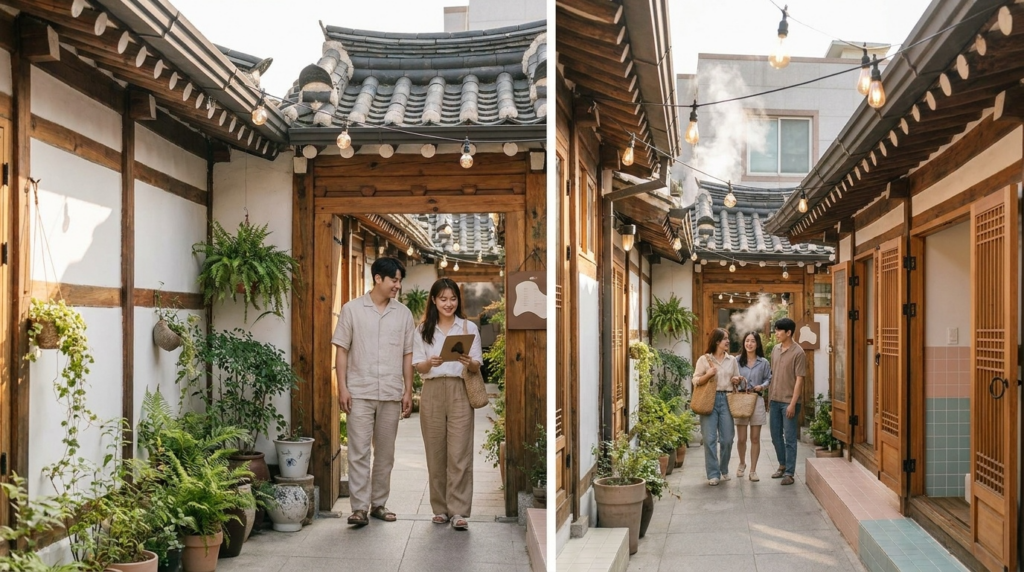
The core customer base in both districts is clear. In the first quarter of this year, people in their 30s made up 32.5% of sales in the Euljiro commercial district, and people in their 20s made up 21.1% — 53.6% combined. Ikseon-dong looked similar: 29.9% from people in their 30s and 19.5% from people in their 20s, adding up to 49.4% of sales. When roughly half a neighborhood’s sales come from customers in their 20s and 30s, that changes the whole standard for what a commercial district looks like — the menu, the pricing, how reservations work, even how photogenic the lighting needs to be.
People used to think of Jongno and Euljiro mainly as office-worker lunch spots or old-school noodle-shop territory. Those places are still an important part of the scenery. But now, small wine bars, distinctive dessert shops, restaurants reworking Korean food, and casual spots serving international dishes have moved in next door, and customers are sticking around longer. There’s a pattern now of having dinner early, then moving to another spot in the alley for dessert or one more drink. The growth in these districts seems to come less from any single restaurant’s long line and more from this kind of chained, sequential spending.
Foreign Visitors Aren’t Just Coming Because It Feels “Korean”
Ikseon-dong is easy to explain to foreign visitors because of the scenery its hanok houses provide. But its appeal isn’t just about looking at traditional architecture. It’s about encountering today’s café culture, international food, and Korean-style drinking culture all at once, inside the structure of an old hanok. Euljiro feels a bit rougher and more spontaneous. By day it’s an alley where printing, lighting, and metal shops are hard at work; once the sun goes down, young bars and their customers move into the same gaps. Neither place plays like a museum of frozen tradition — both show Seoul as something still in progress, happening right now.
That said, popularity brings its own headaches. Weekend evenings mean long waits, and the alleys are narrow enough that dragging a suitcase through them isn’t easy. Some smaller places don’t take online reservations at all and only run on walk-in waits. If you’re a foreign visitor, it’s worth double-checking a restaurant’s hours on a map app or its official social media the same day you plan to go — days off and break times vary a lot from place to place. The most disappointing thing is showing up thinking “it’s a hot spot, it’s probably always open” and getting turned away at the door.
To Enjoy Both, Don’t Walk Them the Same Way
Ikseon-dong suits a slow itinerary from daytime into early evening. Start at Jongno 3-ga Station, wander the hanok alleys, and it’s easy to extend the walk to Insadong or around Jongmyo Shrine before or after a meal. If you’re aiming for a popular restaurant, an early weekday lunch or a late afternoon slot works best. Just because the alley looks pretty doesn’t mean every space inside is roomy, so if you’re pushing a stroller or hauling a lot of luggage, it helps to keep your route short. When you’re taking photos, basic courtesy matters too — try not to block the path for residents or other customers.
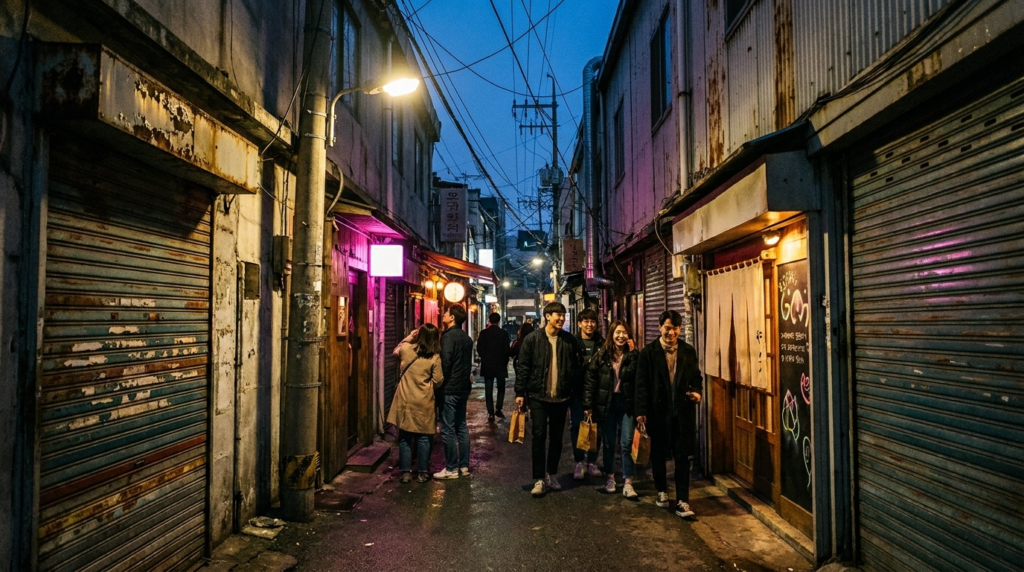
Euljiro is more fun split into day and night. See the old scenery around Sewoon Plaza and the printing and hardware alleys during the day, then head to a restaurant or bar in the evening and you’ll get why the neighborhood earned the nickname “Hipjiro.” Still, fast growth alone doesn’t automatically make either place a good neighborhood. Rising rents, longtime shops being pushed out, and friction between residents’ daily lives and tourist spending are all real issues that remain. Next time you’re in Ikseon-dong or Euljiro, try stopping by one newly opened spot and one place that’s been holding its ground for years. That combination is probably the most interesting part of how this commercial map looks right now.
Source: Park Kyung-ho and Kim Seo-yeon, Financial News, July 23, 2026; Seoul Commercial District Analysis Service.