Table of Contents
Hip Alleys Always Look Packed, Right?
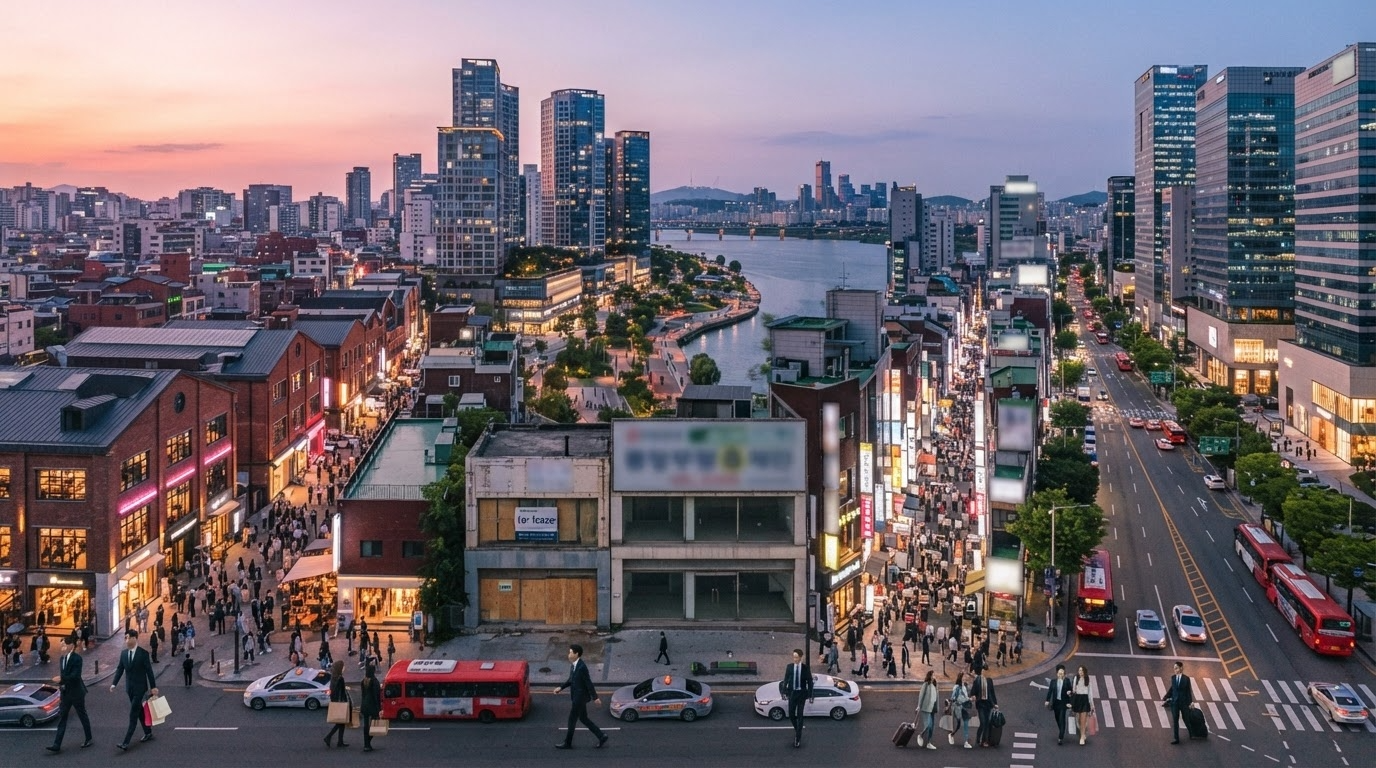
On a weekend in Seongsu-dong, you’ll spot long lines snaking out of pop-up stores, and the alleys buzz with people hunting for new cafes. It’s the same in Yongsan. With mega-complexes, housing, and offices all meshing together, the place is transforming at a pace I’ve never seen before. That might make you think, ‘Isn’t every corner of Seoul thriving?’ But once you peek at the rent prices and vacancy rates, the story gets way more tangled. The neighborhoods drawing big crowds aren’t always the ones where shops can stick around for the long haul.
CBRE Korea’s outlook for the 2026 market hits a similar note. They say up-and-comers like Seongsu and Yongsan, after seeing rent hikes above Seoul’s average, are now shifting from a rapid growth phase into calmer, leveling-out territory. Meanwhile, traditional hot spots like Myeongdong and Gangnam are seeing vacancy rates drop and rents bounce back. Even though they’re all on the same Seoul map, Seongsu and Myeongdong are sketching out opposite curves right now. One’s catching its breath at the top of a climb, while the other’s hit rock bottom and is climbing back up. In this city, one area is dialing back its growth speed, and another’s filling in the gaps left by recovery.
Why Did Seongsu and Yongsan Get So Pricey?
Seongsu has morphed from a neighborhood of factories and warehouses into a hub where fashion, design, cafes, exhibits, and brand pop-ups mix it up. It’s got loads of old buildings repurposed as-is, giving it a vibe totally different from newer commercial zones. For brands, it’s less about just selling stuff and more about crafting a spot to swing by, snap photos, try products, and hang with friends. CBRE also notes that retail spaces are ditching the plain sales floor vibe and morphing into experience-driven destination stores, and Seongsu is the clearest example of that trend.
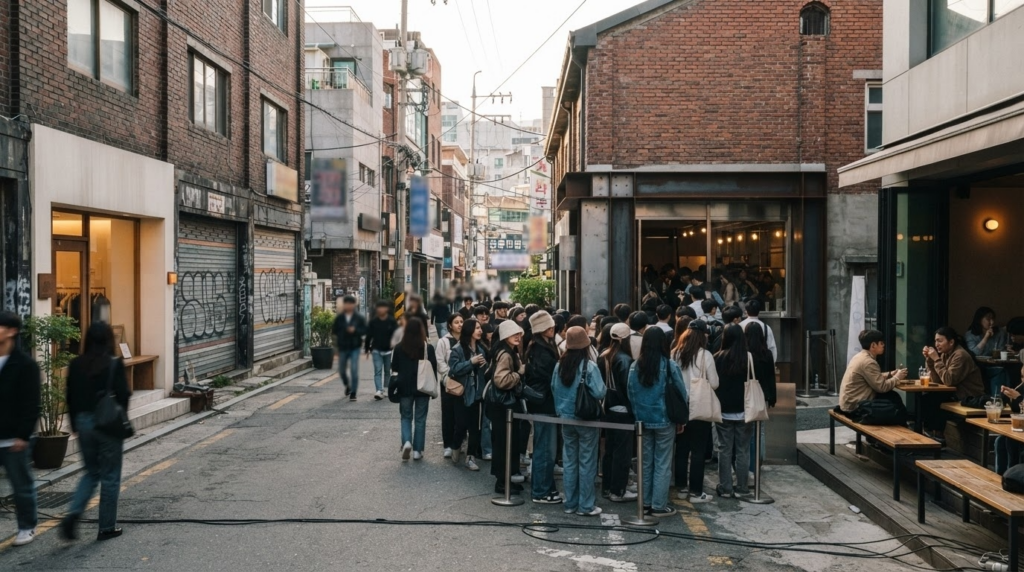
Here’s the catch: trouble brews when attention comes on too fast. More visitors mean landlords and lessors start expecting fatter rent checks, which can squeeze small shops or indie brands out of staying. The very stores that gave the neighborhood its unique character might leave, leaving behind only brands you’d see anywhere. That long line in Seongsu and a local business owner making a stable living? Completely different ballgames. Judging a district’s health just by the crowds can make you miss a lot.
Myeongdong and Gangnam Are Bouncing Back Differently
Myeongdong saw its empty storefronts skyrocket during the pandemic as foreign tourists vanished. So, the dip in vacancy rates now says more than just a stat change. Tourists are filtering back, and industries like cosmetics, fashion, currency exchange, and food-and-drink are reclaiming spots, reshaping the street’s face. As you walk through Myeongdong, you’ll pick up signs in multiple languages, duty-free shops, and beauty stores. This area leans more on tourist flows, exchange rates, and international flights—outside factors—than on locals’ everyday spending.
Gangnam holds its own in a different way. It’s a tight knot of business districts, homes, hospitals, hagwons, restaurants, and shopping spots, so foot traffic keeps steady even on weekdays. It’s not just brand stores: medical services, beauty, education, and professional offerings bolster the scene. CBRE credits the uptick in foreign tourists and the spread of medical and experiential spending for boosting key commercial areas. So, Gangnam’s rent rebound isn’t just about shopping demand—it’s a mix of people coming to work, get treated, and meet up for plans.
Low Vacancy Rates Aren’t Always a Win
The vacancy rate tells you the share of empty storefronts. A dip usually signals the area is recovering, but you can’t jump to saying business is booming. Those empty spots might have filled up because new tenants are raking in sales, but it could also be thanks to short-term pop-ups, big corporations aggressively expanding, or changing lease terms. On the flip side, some empty spaces don’t mean the neighborhood’s doomed. Sometimes places sit vacant temporarily during industry shifts or building renovations. So, sizing up a district’s health off just one vacancy number is a shaky bet. You’ve got to look at rent levels, the type of foot traffic, and the mix of businesses to get a real feel for the scene.
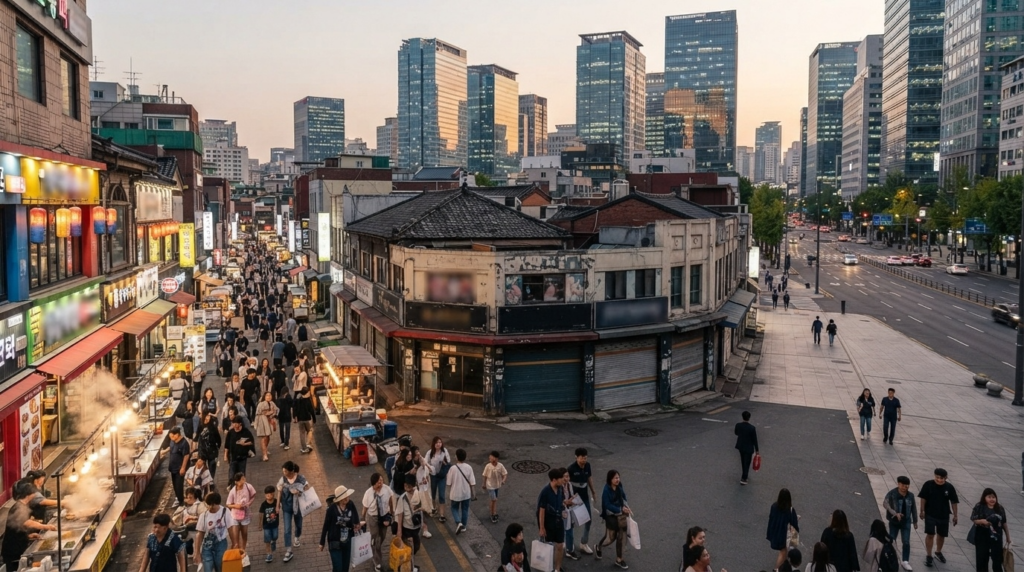
For travelers or locals exploring, gut feelings will probably hit them before these stats. In Seongsu, you might see a popular cafe and an empty first-floor space in the same block. In Myeongdong, step one alley off the tourist-packed main street, and the whole vibe shifts. A commercial area isn’t a single color on a map—it’s like a living thing that changes with time of day, street, and industry. Lunchtime Gangnam feels different from nighttime Gangnam, and weekday Seongsu is pretty distinct from its weekend self. A few photos on social media won’t catch those temperature swings. Screens tend to show only the moments when places are buzzing with people.
Keep This in Mind When Exploring Seoul’s Hoods
If it’s your first time in Seongsu, don’t just snap a photo of the famous pop-up and call it a day. Take a slow stroll through the alleys connecting Seoul Forest and Ttukseom Station to compare. Look past the long-line stores, and everything seems pricey and flashy, but step just a block or two off, and you’ll spot workshops, tiny restaurants, and old factories mixed in. In Yongsan, massive commercial spots, the Han River, the electronics market area, and old residential alleys coexist, so pick one destination and plan your route to avoid getting worn out. Just walking between Seoul Forest and Ttukseom Station, you’ll practically feel the rent gap with your own eyes. Catching those tiny differences makes your next visit way more interesting.
Myeongdong shines when you’re after tourist shopping, while Gangnam is your pick for beauty spots, hospitals, meals, and late-night plans all rolled into one. But remember, wherever rents climb, menu prices and experience costs can go up too—that’s just reality. In the end, knowing what phase a neighborhood is going through right now beats hearing that it’s ‘blowing up.’ Seoul’s commercial districts aren’t all chasing one single answer. In Seongsu and Yongsan, you can read the pace of growth; in Myeongdong and Gangnam, the density of recovery. Next time you’re walking through a hood, don’t just glance at the packed stores—check out the empty spaces and the shops that’ve held on for ages. That’ll give you a better read on which way Seoul is tilting. These shifts could keep changing fast. No guarantee that a trendy spot today will hold onto that buzz in a year or two, so it looks like Seoul’s commercial map will keep getting redrawn for a while.
Source: CBRE Korea ‘2026 Domestic Commercial Real Estate Market Outlook,’ January 22, 2026.