Table of Contents
20 Food Companies Discount 4,765 Products Ahead of Chuseok
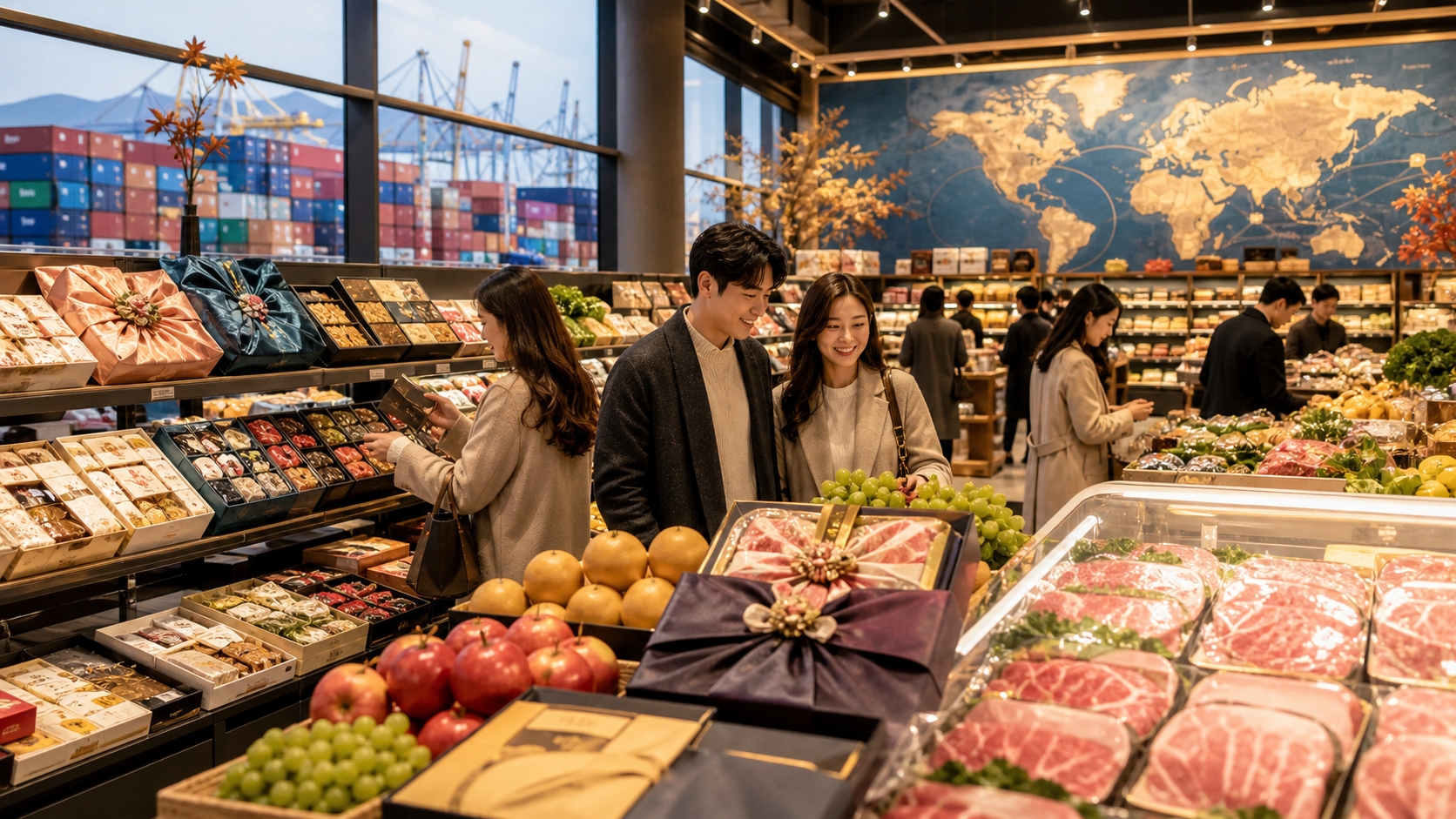
On September 8, the Ministry of Agriculture, Food and Rural Affairs gathered key food industry figures at the Korea Food Industry Association for a meeting focused on stabilizing Chuseok living costs and boosting K-food exports. The 20 participating food companies agreed to offer discounts of up to 64% on 4,765 items, including processed foods and holiday gift sets. This initiative aims to ease the financial burden of food shopping just ahead of the 2026 Chuseok holiday period, which runs from September 24 to 27. For shoppers gearing up for the festivities, the most pressing question is naturally which products will be discounted and by how much.
This announcement went beyond simple holiday promotions. The government and corporate leaders simultaneously explored ways to ease the domestic food prices consumers face daily while outlining strategies to expand K-food’s footprint in overseas markets. It captures the dual reality of the Korean food industry: a cost-of-living factor at home, and a growth engine abroad. The meeting placed two different policy goals, easing consumer strain and driving industrial growth, side by side.
This dual approach reveals how the government views the food industry. Processed foods are essential everyday items, making consumers highly sensitive to price shifts. Yet, these same products act as cultural ambassadors, capable of spreading interest in Korean food culture across the globe. The meeting highlighted that managing domestic prices and expanding international sales aren’t isolated issues, but rather interconnected challenges that rely on the very same production and distribution foundations.
Balancing Holiday Food Demand with the Burden of High Inflation
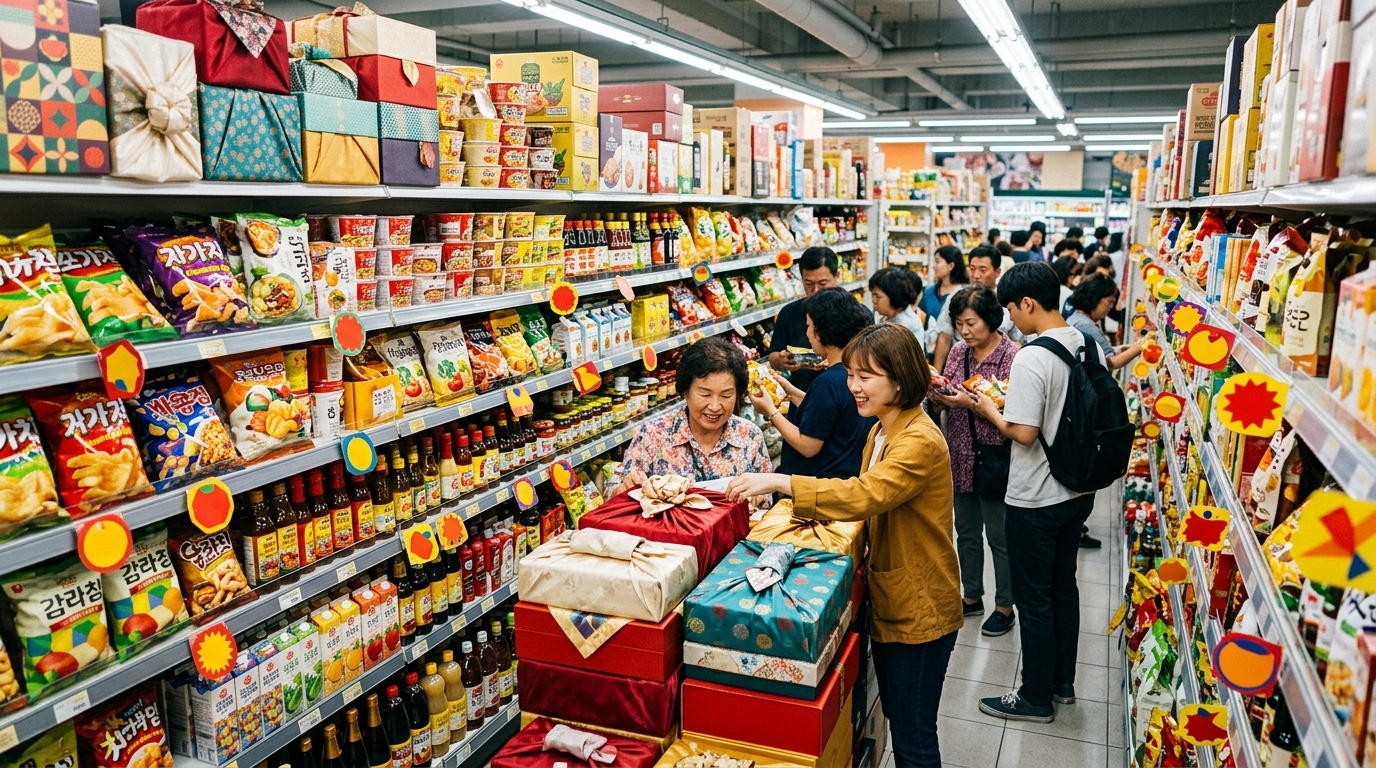
Chuseok brings a massive surge in the purchase of processed foods and gift sets. Since food expenses naturally spike during this season, product prices and the depth of discounts directly impact how much consumers spend on the holiday. Seeing 20 companies apply discounts across 4,765 products suggests a shift toward offering consumers broader choices, rather than limiting promotions to just a few select items. The coordinated participation of multiple companies also strengthens the collaborative effort to lighten the financial load of holiday grocery shopping.
While discount rates vary by product, they reach as high as 64%. For shoppers, the maximum percentage matters less than whether their desired items are actually on sale, how long the promotion runs, and where the deals apply. For expats and international readers living in Korea, this announcement is a practical heads-up: major discounts on processed goods and Chuseok gift sets are officially rolling out. Because Korean holiday spending goes well beyond simple meal prep to include extensive gift-giving, the broad scope of these discounts is especially meaningful.
Beyond corporate promotions, the government plans to closely monitor the supply chain during the peak Chuseok season. The goal is to ensure a smooth flow of products even when demand skyrockets. This approach goes beyond lowering prices on paper; it means actively managing conditions so the right quantities hit the market when needed. If discounted items run out of stock, those impressive discount rates mean little to the actual shopper, making it essential to keep an eye on both price tags and inventory levels at the same time.
Targeting Raw Material Costs and Corporate Burdens
Price stabilization measures don’t stop at tweaking retail prices. The Ministry of Agriculture, Food and Rural Affairs plans to ease upward price pressures by applying tariff quotas on raw materials, providing financial support for raw material purchases, and streamlining regulations. These tools are designed to alleviate the financial and operational strains companies face during production. The idea is to tackle the hurdles of sourcing materials and manufacturing long before consumers ever check a price tag in the store.
Tariff quotas apply lower import duties to specific volumes of goods under certain conditions, effectively cutting down the cost of imported raw materials. Meanwhile, financial support for raw material purchases directly eases the cash flow struggles companies encounter when stocking up for production. Regulatory improvements were also introduced to cut out inefficiencies that bog down the food production and distribution process. Though the methods differ, they share a unified goal: improving the cost structure for businesses to encourage a steady, reliable supply of products.
These policies point to a chain behind every discounted price tag on a supermarket shelf: raw material sourcing, production, and distribution. Corporate promotions alone aren’t enough; combining supply checks with cost relief is what sustains price management after the holiday passes. While the short-term discounts focus on easing immediate Chuseok expenses, the material and financial support represent a more structural, long-term approach to improving the manufacturing landscape for food companies.
The Second Pillar: Expanding K-Food Exports
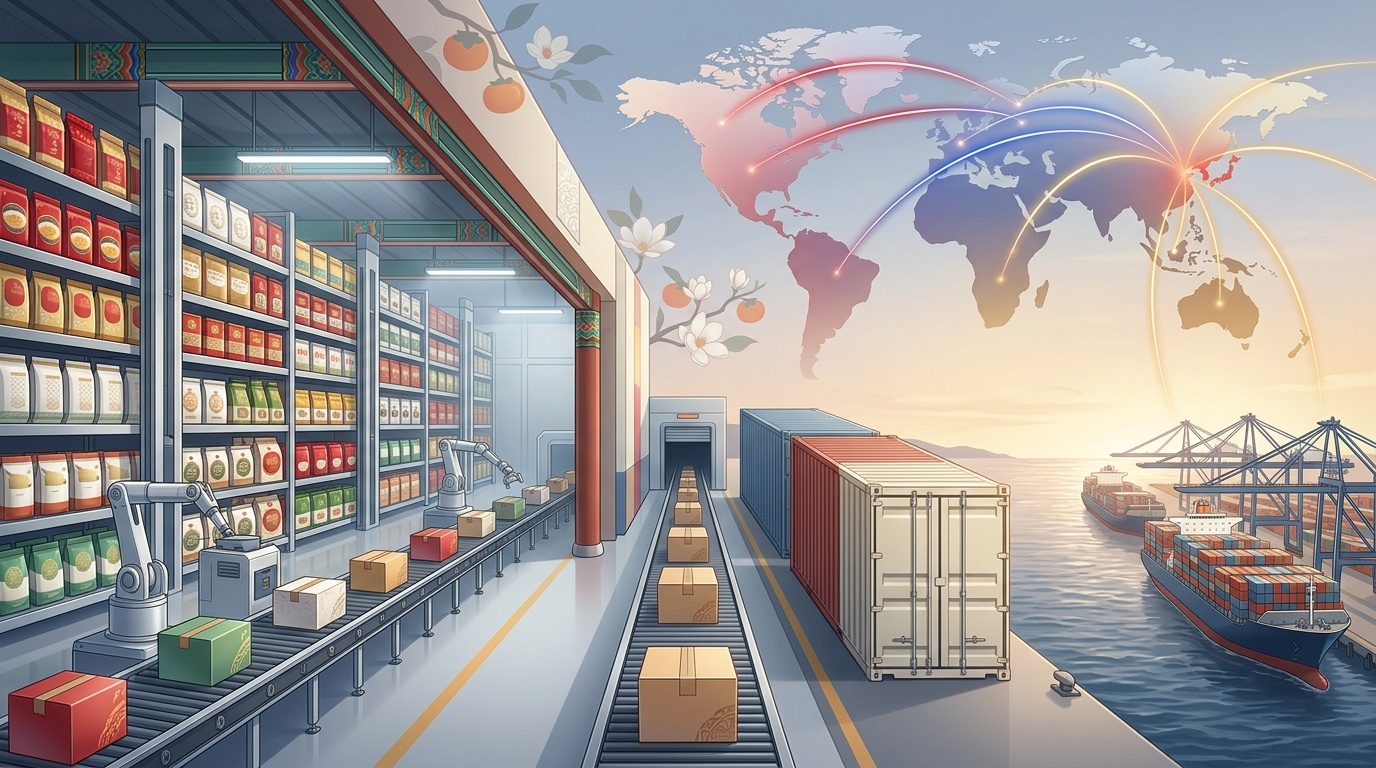
Moving beyond domestic cost-of-living concerns, the meeting pivoted to strategies for revitalizing K-food exports. Government and industry leaders hashed out plans to hit their export targets for the second half of the year and scale up their global presence next year. The same companies managing prices and supply at home must simultaneously carve out new demand and distribution channels abroad. In one sitting, the conversation expanded from the immediate challenge of Chuseok inflation to the mid-to-long-term mission of capturing overseas markets.
A key strategy for export growth involves developing new products specifically tailored to local markets. Rather than just exporting what sells well in Korea, the focus is on adapting product lineups to match the unique tastes and shopping habits of international consumers, making Korean food more accessible region by region. Even under the unified banner of K-food, actual retail products have to match local preferences for market expansion to hold up.
Expanding global distribution networks and tying marketing efforts to the Korean Wave (Hallyu) were also major talking points. Developing a great product only goes so far if the distribution channels aren’t robust enough for consumers to easily buy it. Linking marketing to Hallyu leverages the surging global interest in Korean culture, naturally translating it into food sales. Instead of treating product development, distribution, and promotion as separate tasks, this strategy weaves them into a single, cohesive export journey. New products grab attention, solid distribution networks make purchases possible, and marketing spreads the word, each piece reinforcing the others.
A Cost-of-Living Metric and an Export Growth Engine
What made this meeting stand out was the deliberate choice not to treat domestic price stabilization and global export expansion as separate agendas. The government asked food companies for Chuseok discounts and stable supplies, while simultaneously discussing raw material support, regulatory tweaks, and distribution expansions to help those same companies thrive overseas. It’s a balancing act within a single industrial policy, attempting to harmonize the contrasting goals of protecting consumers and driving corporate growth. Since domestic shoppers demand reasonable prices while foreign markets require aggressive investment and innovation, food companies are tasked with answering both calls at once.
Naturally, there is some tension in this process. Domestic consumers navigating a high-inflation economy want lower prices and abundant supply, while companies must keep raw material and production costs in check to free up capital for international investments. The real test moving forward will be whether the government’s policies successfully translate into actual discounts and stable shelves at home, and whether the export strategies build a foundation for lasting corporate growth abroad. The true impact of the holiday promotions, in particular, won’t be judged by the maximum discount rate, but by whether the everyday items consumers actually want are well-stocked and noticeably cheaper.
For consumers preparing for Chuseok, the most visible shift is the sweeping discount across 4,765 products. Yet, woven behind that effort is a much broader food industry strategy that stretches from securing raw materials and ensuring domestic supply to developing localized products and building global distribution networks. This meeting clearly highlighted the dual nature of K-food: a crucial component of the local grocery bill at home, and an ambitious export product seeking expansion abroad. Ultimately, holiday discounts and export growth were discussed at the same table because both domestic and global markets rely on the exact same production capabilities and cost structures of the Korean food industry.
Source: Ministry of Agriculture, Food and Rural Affairs, ‘Meeting on Stabilizing Chuseok Living Costs and Expanding K-Food Exports’, September 8, 2026.