Table of Contents
The 24 cases are China’s domestic designations
In China’s three northeastern provinces, 24 cases have been counted in which traditions of the Joseonjok, the ethnic Korean community in China, were designated as national-level intangible cultural heritage. According to reports on a Korea Heritage Service research report, “A Comprehensive Study on Responding to China’s Cultural Project Concerning Korean Traditions,” Jilin Province accounts for 19 of them, Liaoning for 4 and Heilongjiang for 1. The count includes the same item designated in more than one region, so it does not mean 24 different traditions were newly listed.
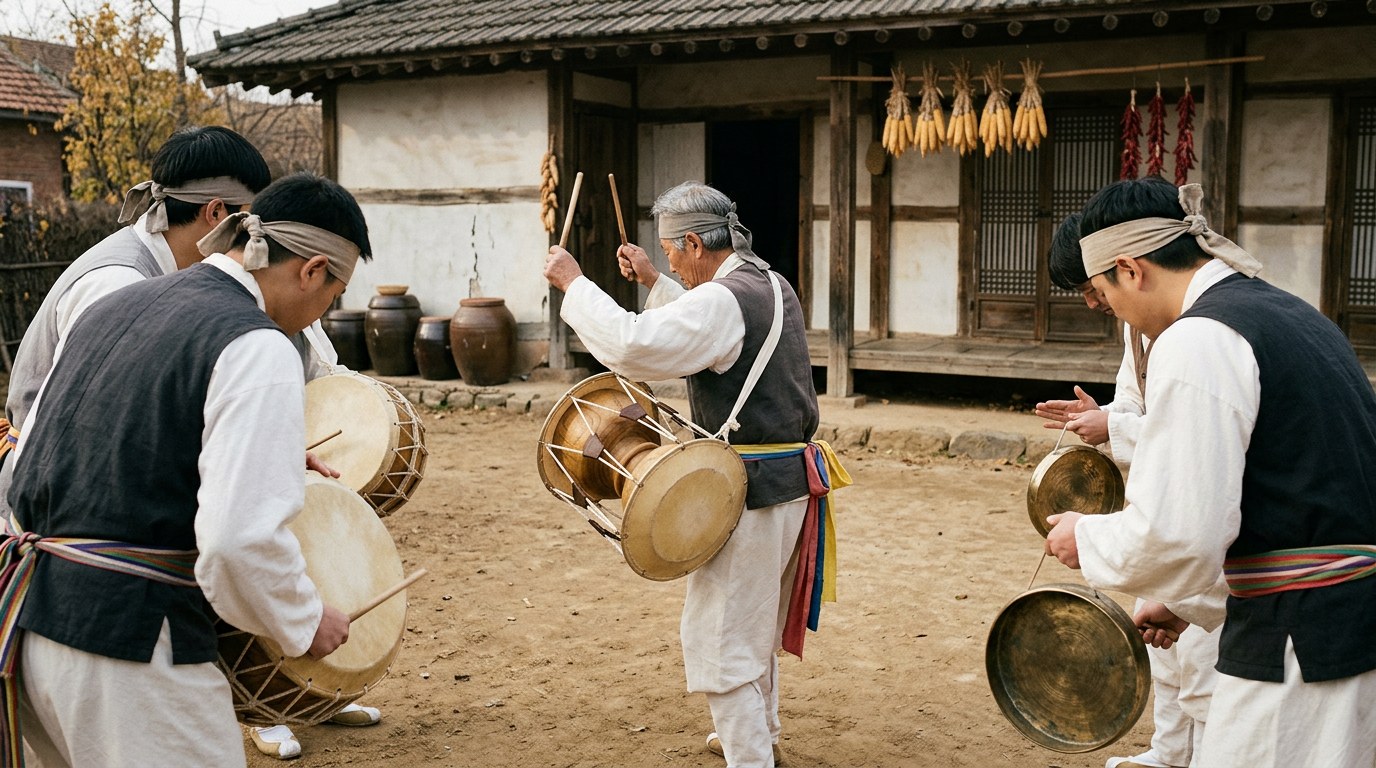
On October 12, Seo Kyoung-duk, a professor at Sungshin Women’s University, presented the report’s findings and called on the government to respond actively. The designated items reported include Arirang, pansori, Chuseok, kimchi making, ssireum wrestling, the janggu drum dance, the crane dance, nongak dance, the gayageum, traditional dress and hoegap, the 60th birthday ceremony. The controversy starts with familiar names of Korean traditions appearing on a Chinese national list.
To read the number correctly, though, three things need to be kept apart: a country designating a tradition under its own system, a listing on UNESCO’s Representative List of the Intangible Cultural Heritage of Humanity, and exclusive ownership of a culture. This count concerns only the first. Reading it as proof of the other two changes the scope of the issue.
How the designations built up since 2006
According to Edaily’s report on the study, China placed nongak dance, neolttwigi (seesaw jumping) and swinging on its national list in 2006, and the janggu dance and crane dance in 2008. Arirang and pansori followed in 2011, and haegeum performance and the Baekjung festival in 2021, among others. The 24 cases are a collection of designations made over many years, not the result of one recent decision. When each item was designated and when the tally became public are two different questions.
The Chinese term for intangible cultural heritage, feiwuzhi wenhua yichan, corresponds to the Korean concept of intangible heritage. It focuses less on objects such as buildings and artifacts and more on the performances, skills, rituals and customs that people keep alive. So when reading the list, it helps to look past the names and ask which community passes down what, and how.
The fact that the tally counts some items more than once across regions matters here. The number tells you how many acts of designation there were, but it cannot explain the full scope or historical origin of the traditions involved. Turning “24 designations” into “the world has confirmed that 24 cultures originated in China” mixes two different judgments into one sentence.
The 2009 UNESCO listing of nongak dance was a separate process
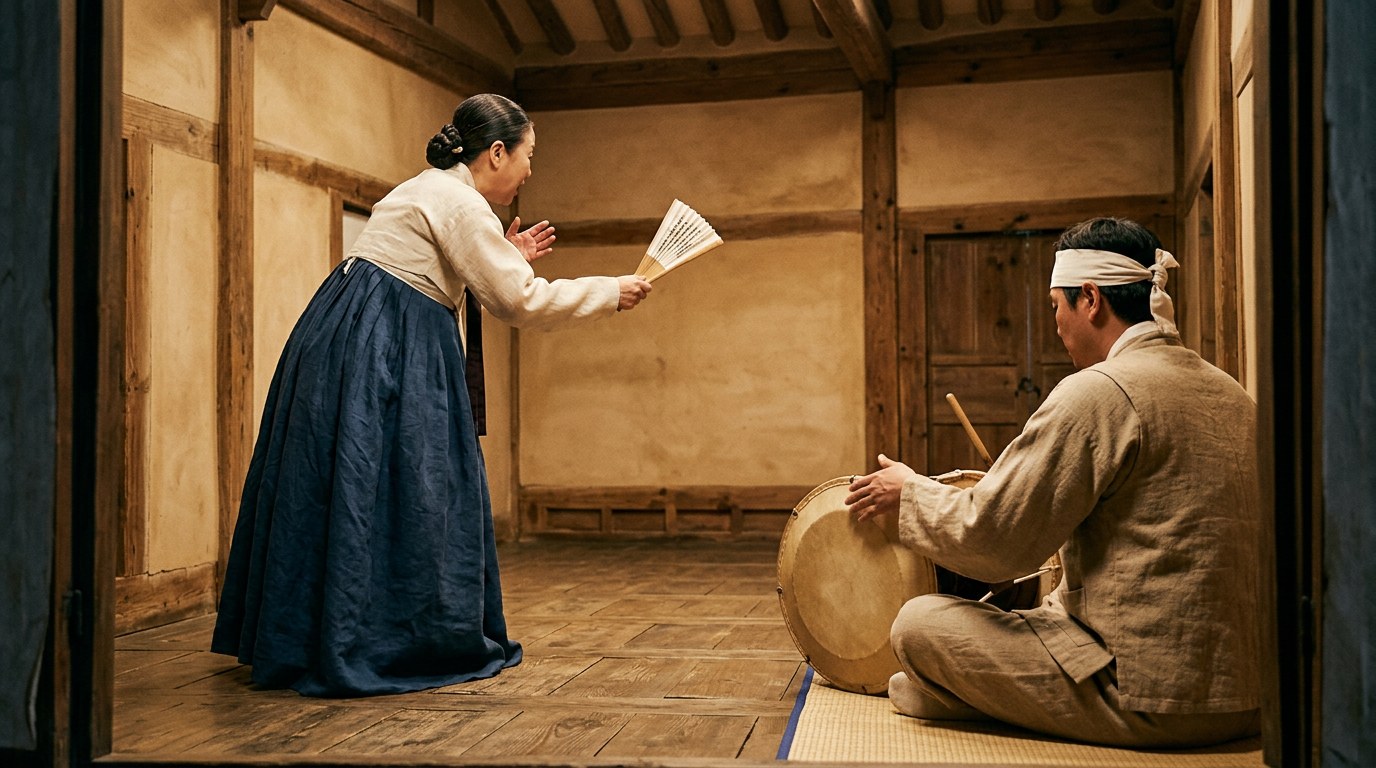
Among China’s domestic designations, one that went on to UNESCO’s Representative List is the Farmers’ dance of China’s Korean ethnic group, inscribed in 2009. UNESCO’s official description covers Korean ethnic communities in northeastern China performing the dance at festivals and passing it down between generations. The entry describes the heritage of a minority community within China. It does not assign an owner to everything called nongak.
Korea’s pansori was first proclaimed a Masterpiece of the Oral and Intangible Heritage of Humanity in 2003 and was incorporated into the Representative List in 2008. UNESCO describes it as a performance tradition in which a singer and a drummer tell a story together. China’s domestic designation of pansori and Korea’s listing of pansori are separate facts, each with its own system and description to check. One country’s domestic designation does not cancel another country’s listing.
Korea’s Arirang joined the Representative List in 2012. The official description presents it as a folk song created collectively by generations of Koreans and handed down by local communities and individuals. A listing records what a culture is and who carries it on, in addition to the name of the country that applied. Checking only which country an entry sits under misses most of what the list is describing.
Separating living communities from origin stories
A separate issue in this controversy is an Arirang signboard in Zhongxing Village in Mudanjiang, Heilongjiang Province. According to Asia Economy, the sign describes the prototype of Arirang as a song sung by people who migrated from the Chinese mainland to the Korean Peninsula and longed for home, after Emperor Wu of Han set up the Four Commanderies. Professor Seo criticized this as a distortion of history and culture. The sign’s account is what was reported, not a historical fact this article has verified.
Two questions need to be kept apart here. One is whether Korean ethnic communities in China have actually carried on Arirang and other traditions. The other is how the origin of those traditions is explained. A community’s living practice does not automatically prove a particular origin story. Criticizing an inaccurate origin story does not require denying that practice, either.
Joseonjok refers to the ethnic Korean community living in China. Looking at the songs and dances they have kept alive is not the same as erasing their link to Korean culture. What matters is whose practice is being described, and on what evidence. A local community preserving its culture and a signboard or promotional material describing historical origins can each be examined on their own terms.
Inscription does not grant exclusive rights to a culture
UNESCO states that inscription on its intangible heritage lists does not imply exclusivity or ownership of the heritage concerned. Getting an element onto the Representative List is not a way of having exclusive ownership of a culture recognized. A country having inscribed an element and a claim that only that country can hold or practice it are on entirely different levels.
A domestic designation is a country selecting items within its own protection system. A UNESCO inscription is a separate process that addresses the meaning of a culture and its transmission on an international list. Neither, on its own, is a ruling that settles every dispute over a culture’s origins and ownership. So China’s domestic designations should not be presented as if they were a UNESCO verdict on history.
Making this distinction does not mean the controversy is unimportant. Inaccurate accounts of a culture’s origin or identity can be examined on the basis of facts and records. But it has to be clear whether a criticism targets the scope of a domestic designation, the description in an international listing or the wording on a particular sign. The more specific the target, the clearer it becomes what needs correcting.
Calls for action and the government’s official position
Professor Seo said he is concerned that China may use its domestic designations as a basis for further international inscriptions, and called for a response. That is his assessment of what might come next. It is not an announcement that the whole list is already on UNESCO’s registers, nor confirmation of China’s future intentions. When reporting his view, the confirmed designations and the forecast need to be kept apart.
On its official social media, the Korea Heritage Service said that China’s domestic national-level intangible heritage designations, UNESCO Representative List inscription and exclusive ownership of a culture are different things. As its response, it listed expanding UNESCO inscriptions, strengthening the system for passing on Korean intangible heritage and promoting it overseas through government and private-sector cooperation. Rather than reading another country’s designation as a transfer of ownership, the agency says it will protect the identity of this heritage and the base for handing it down.
The thing to watch is not only whether the number of designations grows. It also matters whether each entry accurately describes the community that carries it and its historical background, whether Korea’s relevant records reach the international community, and whether the base for actual transmission gets stronger. Before asking who took whose culture, it helps to check what was designated and which descriptions are actually the problem.
Sources: Star News and Asia Economy, October 12, 2026; Edaily report citing the Korea Heritage Service research report; UNESCO official inscription records and its statement on ownership of intangible heritage; Korea Heritage Service official social media, accessed October 18, 2026.