
Table of Contents
What the Word ‘Possible’ Points To: Two Diverging Paths
The word “possible” carries within it two paths not yet decided. Director Lee Chang-dong’s new film, “Love, Possible” — his first since “Burning” eight years ago — sat on that same kind of fork in the road for a while. Because it was produced as a Netflix original, it was widely assumed the film would skip theatrical release entirely. Then, on July 28, Netflix reversed that expectation and confirmed a limited domestic theatrical run beginning September 23.
The film will have its world premiere in competition at the 83rd Venice International Film Festival, then travel through the 51st Toronto International Film Festival before reaching Korean audiences. Once its theatrical run ends, it will open worldwide on Netflix starting November 6. Beyond Korea, theatrical releases are also set for Australia on October 22 and the U.S., Canada, U.K., Ireland, and Japan on October 23. It is a streaming title that, at the same time, travels a dual path across multiple countries’ screens.
Two Very Different Couples Meet in Front of a Camera
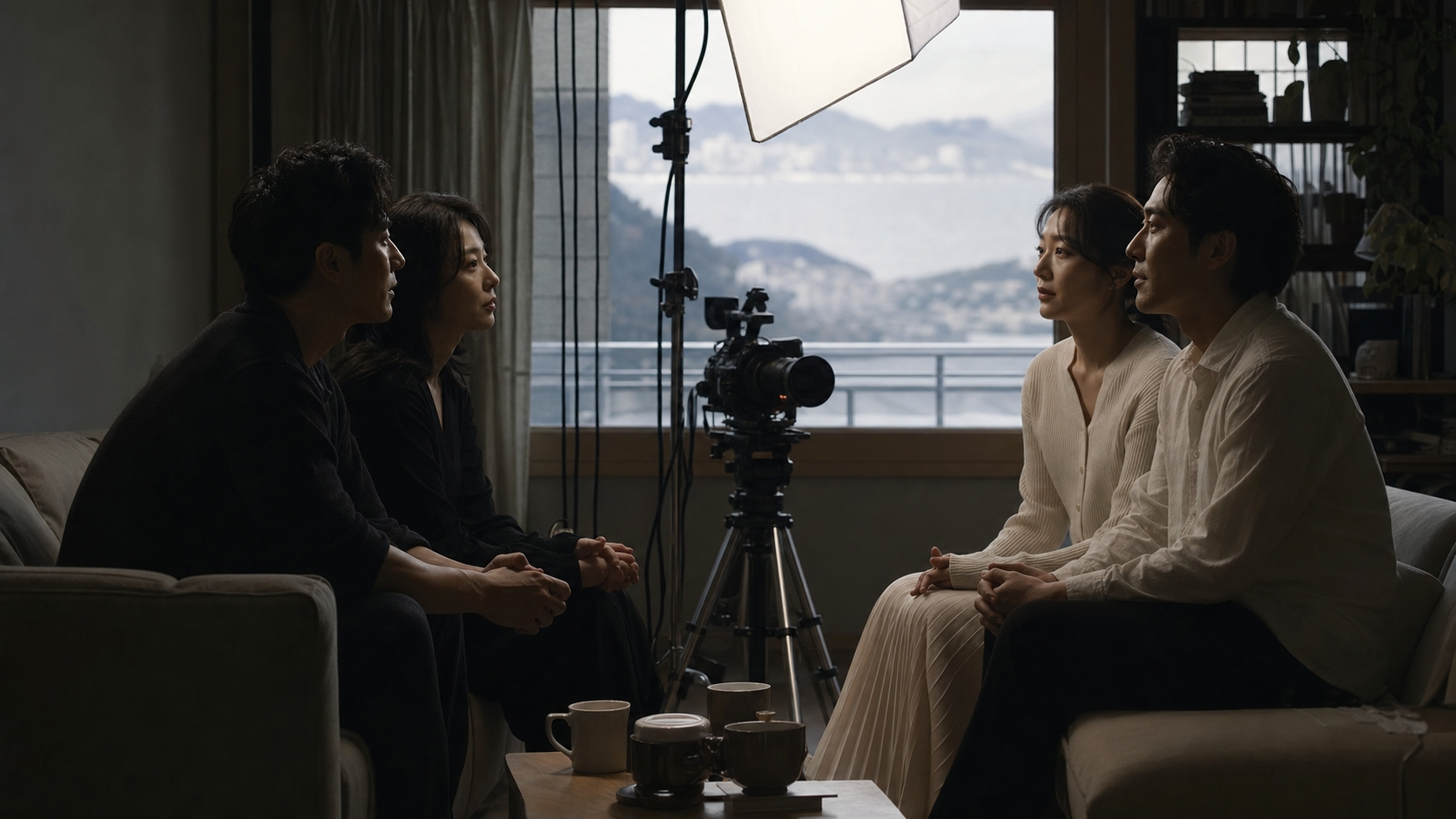
“Love, Possible” follows two couples living entirely different lives whose paths cross through a documentary shoot. Jeon Do-yeon plays Miok; Sol Kyung-gu plays her husband Ho-seok, a laid-off worker. Jo Yeo-jeong plays documentary director Ye-ji; Jo In-sung plays her husband Sang-woo. The moment one couple sets out to capture the other on camera, the line between the one observing and the one being observed begins to blur as well.
The device of the documentary reads as particularly meaningful within a Lee Chang-dong film. A camera is assumed to record reality, yet what it chooses to film and what it cuts away can construct an entirely different reality. According to the synopsis Netflix has released, the two couples confront each other’s different lives and hidden desires over the course of filming. It is a structure in which the private emotion of love meets class, labor, and the ethics of observation.
164 Minutes, From Venice to the Multiplex
The Venice Film Festival has invited “Love, Possible” into its main competition, a lineup of roughly twenty films. Its running time is 164 minutes, the longest of any film Lee Chang-dong has directed. Unlike a streaming environment where a viewer can pause at home, a theater requires the audience to remain in the same darkness for nearly three hours straight. For a Lee Chang-dong film — one that lingers over a character’s silence, gaze, and the uncomfortable space between scenes — that difference may not be a matter of venue alone.
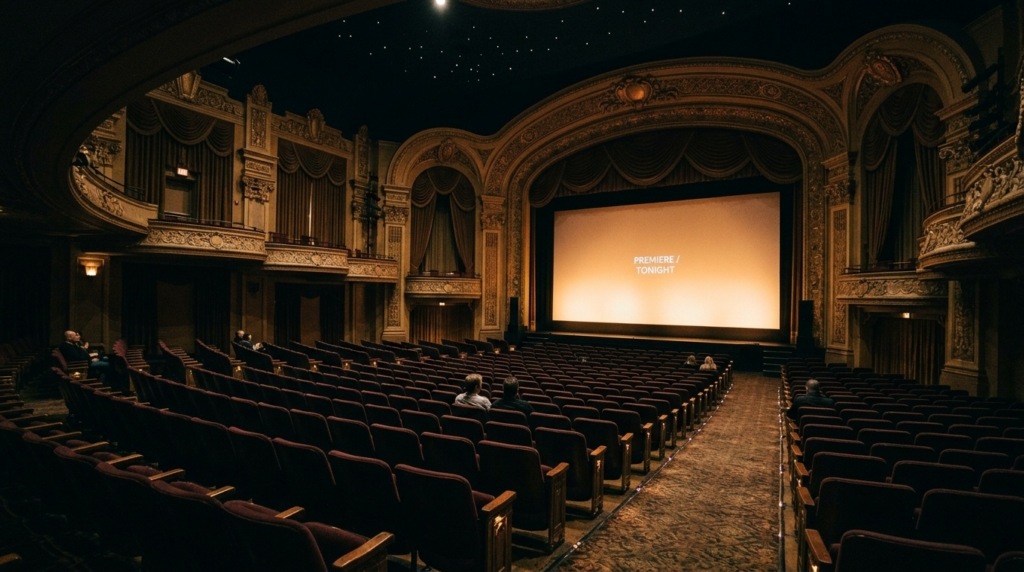
Through “Oasis,” “Secret Sunshine,” “Poetry,” and “Burning,” Lee Chang-dong has drawn the fractures in Korean society up out of the expressions on individual faces. His films have asked audiences to endure the time a character inhabits, rather than consume events quickly. Choosing to unveil such a work first at a world-premiere festival and in theaters reads as a decision to establish the film’s first impression as a cinematic experience, rather than as content recommended by an algorithm.
The Formula That Said Netflix Originals Skip Theaters
The label “Netflix original” has long conjured the living room before the theater. “Love, Possible” itself was initially reported as a film likely to head straight to streaming without a domestic theatrical run. This release schedule, however, shows that theaters and streaming need not be two camps that exclude each other — they can instead serve as different windows that expand a single work’s life in stages.
About six weeks separate September 23 and November 6. During that window, audiences can see the film in theaters first, then revisit it on Netflix afterward or exchange interpretations with viewers around the world. The theatrical release connects the critical attention built at festivals to domestic audiences, while the streaming release crosses beyond the boundaries of a limited number of theaters. It is a distribution approach that gives up neither side.
A Question Posed to Theaters on the Eve of Chuseok
“Love, Possible” opens on September 23, the day before the Chuseok holiday begins. That a film centered on two different couples and the desires they conceal opens during a holiday built around family gatherings makes for an interesting contrast. With several other Korean films also awaiting audiences around the same period, the fact that a 164-minute auteur work — rather than a large-scale entertainment picture — is entering the Chuseok theatrical season is itself a signal.
This choice will not change how every Netflix film is distributed. Still, it appears to reflect a judgment that, for a master director’s new work and a film competing at an international festival, the theater remains the place that builds a work’s stature and organizes an audience’s attention. Just as much as “Love, Possible” asks about the possibility of love, the possibility that theaters and streaming can coexist within a single work has also been put to the test. Its first answer will come from a dark seat in September.
Source: Netflix official announcement, July 27, 2026; La Biennale di Venezia official program, 2026; Moon Ki-hoon, The Korea Herald, August 7, 2026.