Table of Contents
Soju and the Toad Take Center Stage at a California Festival
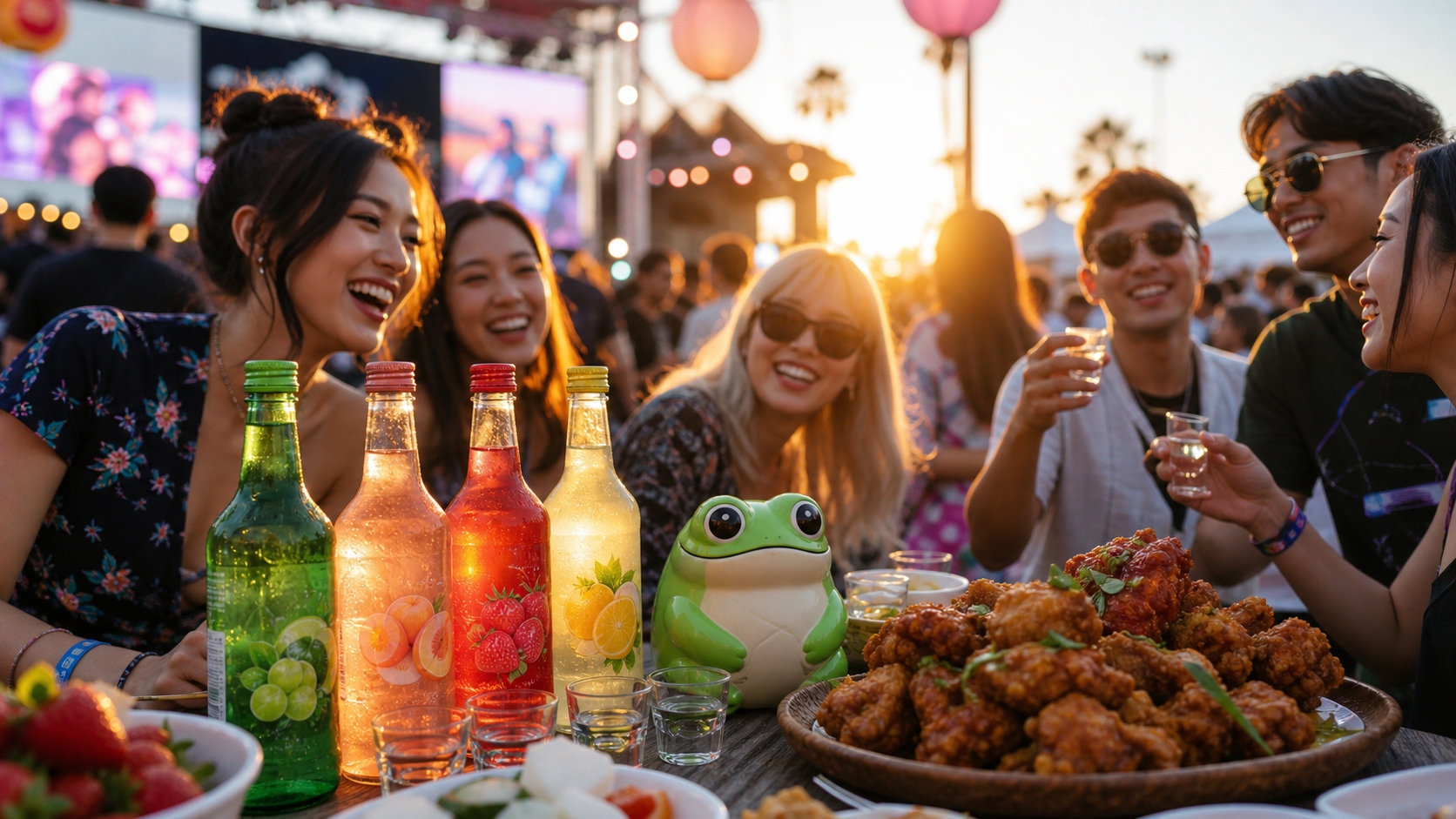
At the ‘Jinro Chimaek Fest’ in California, various types of soju were lined up right next to Korean-style fried chicken. While ‘chimaek’ is a portmanteau capturing the beloved Korean dining culture of pairing chicken and beer, the event also introduced soju as an essential alcoholic beverage for experiencing Korean culture. HiteJinro joined the festival as the title sponsor, running a tasting and sales booth featuring Chamisul Fresh and seven fruit-flavored sojus. The event drew an impressive crowd of around 30,000 visitors.
The venue was decked out with Jinro’s signature toad mascot and advertisements featuring BTS member V. Soju served in toad-figurine glasses was sold as a limited daily run of 200 cups, while limited-edition merch styling the mascot like a K-pop star and bottle-shaped microphones easily captured the attention of local consumers. It was a scene that vividly showed how soju—long an everyday staple in Korea—is being reintroduced to the US as a cultural product blending fruit flavors, character merch, and K-pop imagery.
Three Major Players Converge on the US Soju Market
The competitive landscape of the Korean soju industry is expanding within the US market. HiteJinro has been broadening its local distribution network with its global Jinro brand, as has Lotte Chilsung Beverage with its Soonhari line. Adding to the mix, OB Beer entered the US market late last year with its export-only soju brand, Challang. OB Beer is steadily increasing its distribution touchpoints, focusing on Korean restaurants frequented by locals familiar with the drink. Rather than immediately targeting the massive general liquor market, they are tapping into spaces where Korean food and soju naturally go hand in hand.
OB Beer, traditionally focused on its brewing business, joined the soju race as a move to diversify its portfolio. Acquiring Jeju Soju allowed them to expand their soju operations, and their experience launching the ‘Geonbaejjan’ brand last year served as a stepping stone for their US entry. While the absolute size of the US soju market is still modest, the participation of three major liquor companies underscores the industry’s strong belief in the market’s long-term growth potential. A shared strategy among these companies is the drive to offset shrinking domestic demand with a fresh consumer base overseas.
HiteJinro is weaving K-pop and cultural events into the existing brand awareness of Jinro. By featuring the globally renowned V as their brand ambassador and stepping up as the title sponsor for the Chimaek festival, they are ensuring that their product is experienced within the context of Korean food and pop culture. Rather than merely explaining the taste and alcohol content of soju, this approach uses the toad mascot, video ads, and limited-edition merchandise to make the brand itself memorable.
Lotte Chilsung Beverage highlights Soonhari’s extensive lineup of fruit flavors. They have segmented their offerings so consumers can pick their first bottle based on familiar fruits. Meanwhile, OB Beer’s Challang is expanding its reach primarily through Korean restaurants, approaching consumers who either already know soju or are eager to try it alongside Korean cuisine. Though all three companies view fruit-flavored soju as a key product, their starting points differ: Jinro leans into cultural marketing, Soonhari emphasizes flavor variety, and Challang banks on the Korean restaurant network.
Fruit Soju Lowers the Barrier to Entry for Beginners
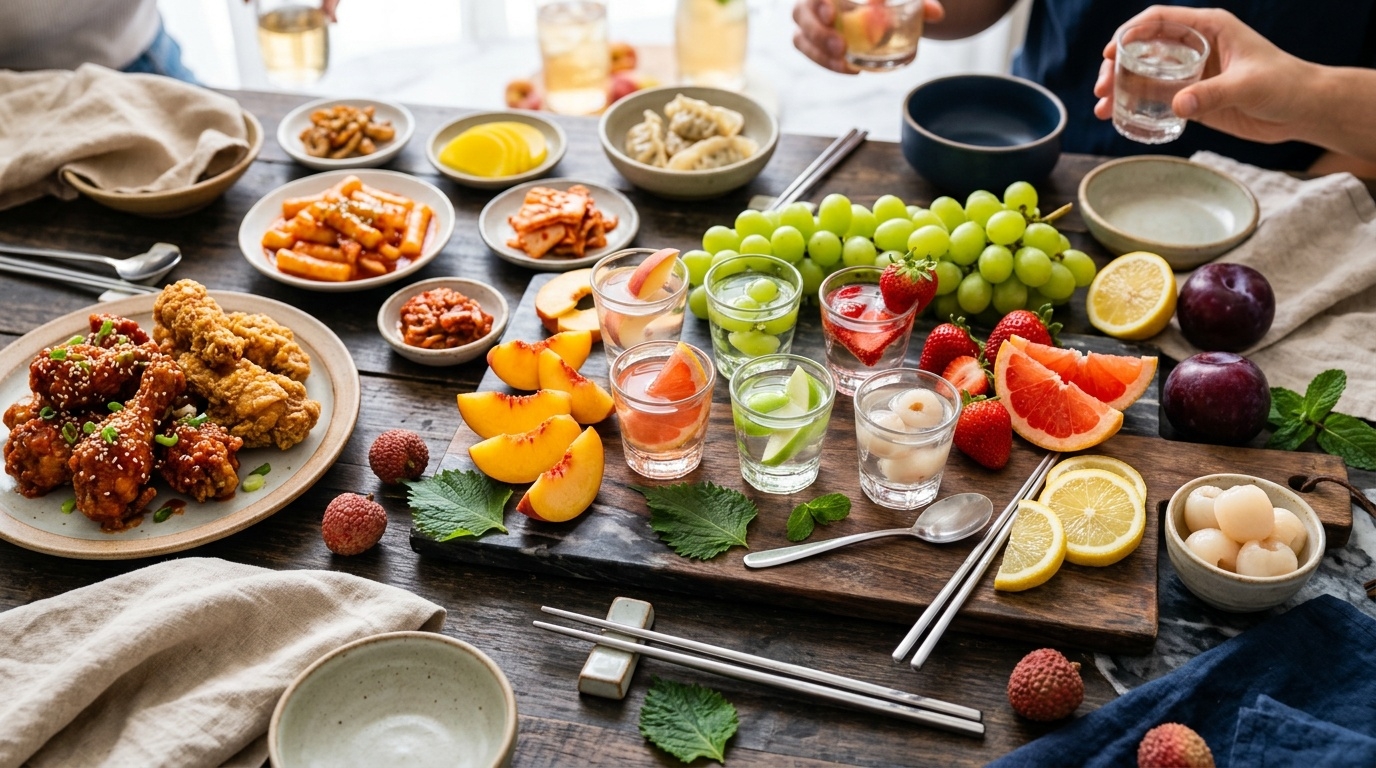
The common language these three companies speak to US consumers is fruit flavor. They lead with sweet, familiar tastes to make the drink highly accessible to those unaccustomed to the traditional aroma and alcohol bite of diluted soju. Jinro offers grapefruit, green grape, plum, strawberry, peach, and lemon. Soonhari has expanded its choices to include apple, apple mango, citron, green grape, peach, strawberry, yogurt, plum, and lychee.
This wide array of flavors isn’t just about padding the product count. It’s about creating multiple entry points so that US consumers don’t judge the unfamiliar beverage of ‘soju’ by a single flavor, but can instead choose a product that fits their personal palate. Familiar tastes like grapefruit or peach lower the hesitation for first-time drinkers. On the other hand, flavors frequently associated with Korean liquors, like green grape or citron, add a distinct layer of brand differentiation.
Fruit soju also plays a crucial role in transitioning soju from a drink exclusively paired with Korean food to an easygoing, party-friendly beverage. The uniquely Korean drinking culture of sharing a single bottle among friends in small shot glasses is being naturally transmitted through movies, K-dramas, and social media. Local consumers encounter the product through a familiar fruit aroma and then go on to experience the soju toast culture and its pairing with Korean cuisine. Product localization and cultural export effectively meet in a single bottle.
US Exports Surge 28.4% Over Five Years
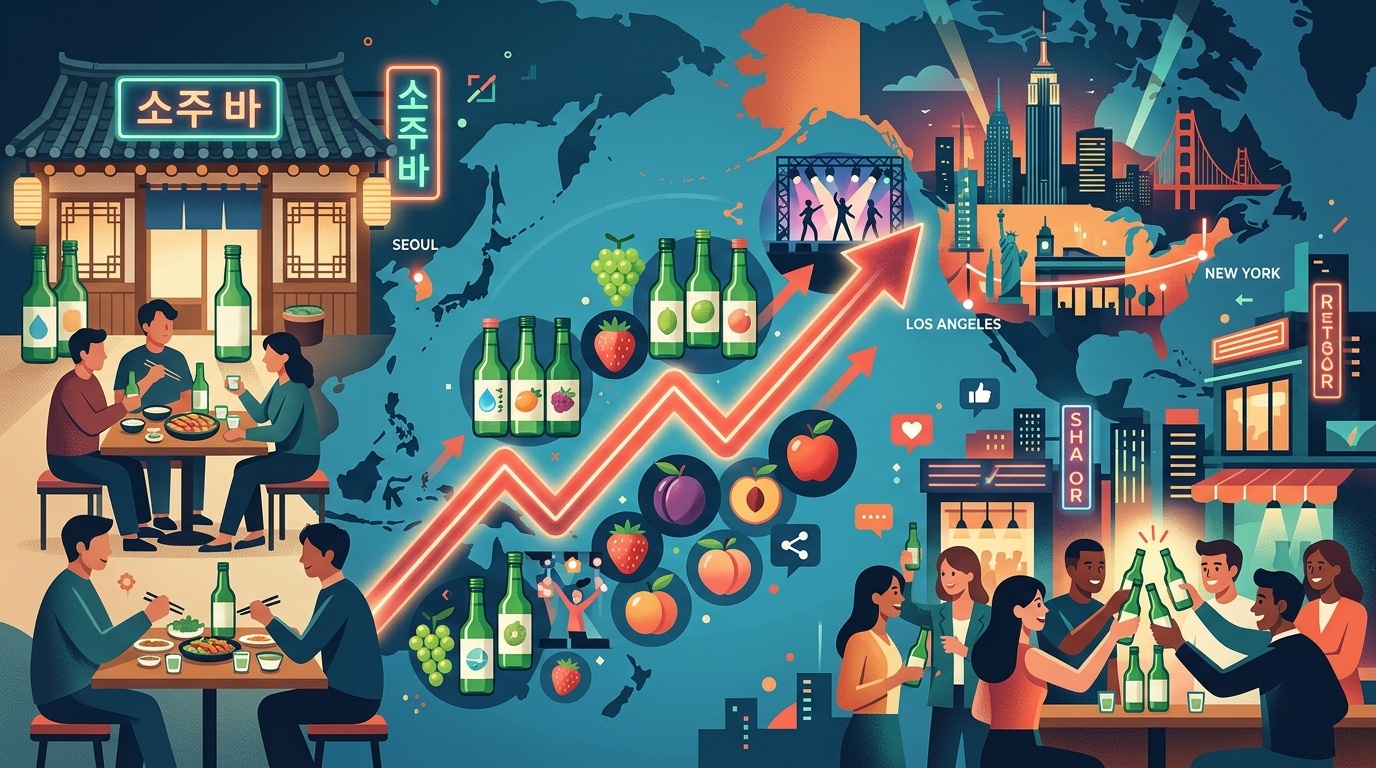
According to the Korea Customs Service’s import and export trade statistics, South Korea’s soju export volume to the US grew from 7,165 tons in 2021 to 9,201 tons in 2025. This marks a 28.4% increase over just five years. During the same period, the growth rate for total global soju exports was only 9.1%. Volume heading to the US expanded much faster than overall exports. The 2025 US export volume represents the largest figure since relevant statistics began being compiled in 2000.
These numbers capture a dual reality: the industry’s assessment that the US market is still relatively niche, alongside its undeniably rapid growth rate. In a market with a small overall sales base, volume increases can naturally yield high percentage growth. However, a consistent upward trend over five years is hard to write off as a passing fad. Demand that initially sprouted in Korean restaurants and immigrant communities is steadily branching out to local consumers, fueled by K-pop, Korean dramas, and social media.
The pivotal role of fruit soju is also evident in individual company trends. HiteJinro’s fruit soju exports to the US grew at an annual average of about 25% from 2020 to 2025. The company notes that while Korean-American consumers were the primary customer base in the past, their sales foundation is now broadening to include local consumers interested in Korean culture. The official US Instagram accounts for Jinro and Soonhari have grown to approximately 56,000 and 26,000 followers respectively, illustrating the organic interest brewing in the digital space.
Merging K-Pop and K-Food with V at the Forefront
In July, HiteJinro appointed BTS member V as their brand ambassador. The strategy is to rapidly elevate the name and image of soju through a K-pop star with a massive global fandom, embedding the product seamlessly as part of a broader Korean cultural experience. At the California festival, they actively leveraged ads featuring V and set up dedicated product displays and experiential zones. Pop culture provides a sense of familiarity that simply explaining the ingredients or taste of a beverage could never easily achieve.
K-pop marketing puts the brand in front of consumers who might not otherwise have any interest in soju. Fans memorize the product name through commercials and limited-edition merchandise featuring their favorite artist, which leads to brand recognition later at Korean restaurants or liquor stores. Even if this doesn’t translate immediately into a liquor purchase, sharing photos and videos on social media creates secondary exposure. The spontaneous enthusiasm of a fandom carries the brand to consumer demographics that traditional liquor advertising struggles to reach.
The toad mascot plays a surprisingly similar role. While it stands as a nostalgic symbol of vintage soju ads for Korean consumers, in the US, it functions as a novel character to take photos with and collect as merchandise. The limited-edition K-pop styled toads, figurines, and bottle-shaped microphones create touchpoints that extend far beyond the alcohol itself. These immersive experiences tapping into festivals, characters, and music ensure that the name Jinro sticks with visitors, even if they didn’t take a sip.
Shrinking Domestic Shipments Contrast with US Growth
The aggressive push by liquor companies into overseas markets is largely driven by a decline in soju consumption back home in South Korea. According to National Tax Service data, domestic shipments of diluted soju bounced back to 862,000 kiloliters in 2022 as COVID-19 restrictions eased, but have since dropped for three consecutive years. The volume slid to 844,000 kiloliters in 2023, 816,000 in 2024, and 793,000 in 2025. Compared to 2022, the downward trend is unmistakable.
A key factor behind this decline is a growing culture of health consciousness and moderate drinking, especially prevalent among younger generations. As more consumers cut back on the frequency of drinking outings and total alcohol intake, or opt for beverages tailored to their specific tastes, the traditional diluted soju market struggles to grow purely on domestic volume. This places mounting pressure on companies to maintain their fierce domestic market share battles while urgently seeking out new demand overseas.
While domestic shipments are shrinking, fruit soju is successfully drawing in fresh consumers in the US. The very same shifts in consumer culture that lead to reduced demand for legacy products in Korea serve as the catalyst for developing sweet, approachable products abroad. Liquor companies aren’t merely exporting the established reputation of soju as it exists in Korea. Instead, they are actively recombining flavors and cultural imagery to create something entirely palatable for the local consumer.
From a Korean Drink to a Global Cultural Commodity
The avenues through which US consumers encounter soju have significantly diversified. Drinking scenes in Korean movies and dramas, commercials featuring K-pop idols, foodie videos on social media, Korean restaurants, and cultural festivals are all beautifully interconnected. Consumers who were previously unaware of soju first get a feel for the distinctive green bottles and pouring etiquette through pop culture, before eventually transitioning to actual purchases via fruit-flavored options or tasting events. The growth of soju in the US is driven not just by exporting a product, but by conveying the rich cultural context that surrounds it.
Despite the high growth rate in US exports, it would be premature to declare that soju has reached the mainstream core of the American liquor market. The industry itself acknowledges that while current volumes are modest, the potential is vast. The next phase will require expanding the consumer base beyond Korean commercial districts and K-culture fan bases into the broader dining and retail sectors. Whether the initial curiosity sparked by sweet fruit flavors can mature into long-term brand loyalty, and whether growth can be sustained beyond the initial K-pop marketing push, will serve as the crucial next indicators for the future of K-soju in the US.
Source: Herald Economy, August 27, 2026; HiteJinro & Money Today, August 19, 2026; Korea Customs Service Import/Export Trade Statistics and National Tax Service data.