
Table of Contents
A Question Sparked by a Bottle Leads to a Government Review
The creator behind the YouTube channel “Sulikneunjip” (House of Ripening Liquor) bought “On The Lamp,” a rice wine co-created by BTS’s Jin, and noticed something odd on the label: “Other Liquors.” He asked the producer why a drink brewed like a traditional yakju wasn’t classified as one. The video, released on October 2, 2026, has since passed 3.22 million views. A single consumer checking a label turned into a national debate over shelf-life rules for Korean traditional alcohol, and it eventually prompted an official review from the Ministry of Food and Drug Safety (MFDS).
The answer centered on Vitamin C. The producer said they added Vitamin C and pasteurized the drink to keep quality stable during overseas distribution, and that classifying it as “Other Liquors” also meant it wouldn’t need shelf-life labeling. The flavor and brewing method match Korean yakju closely, but one ingredient added for preservation changed its legal identity. The video used this to question why labeling rules differ so sharply between similar categories of alcohol.
On October 7, eToday reported on the fairness debate around the On The Lamp case and the MFDS’s response. The ministry said it plans to review date-labeling rules, taking consumer feedback, industry input, and food safety into account. A product review by one YouTuber turned into a regulatory talking point. A promise to review isn’t the same as a finalized change, though, and what exactly will shift remains open.
How Vitamin C Split the Recipe from Its Legal Name
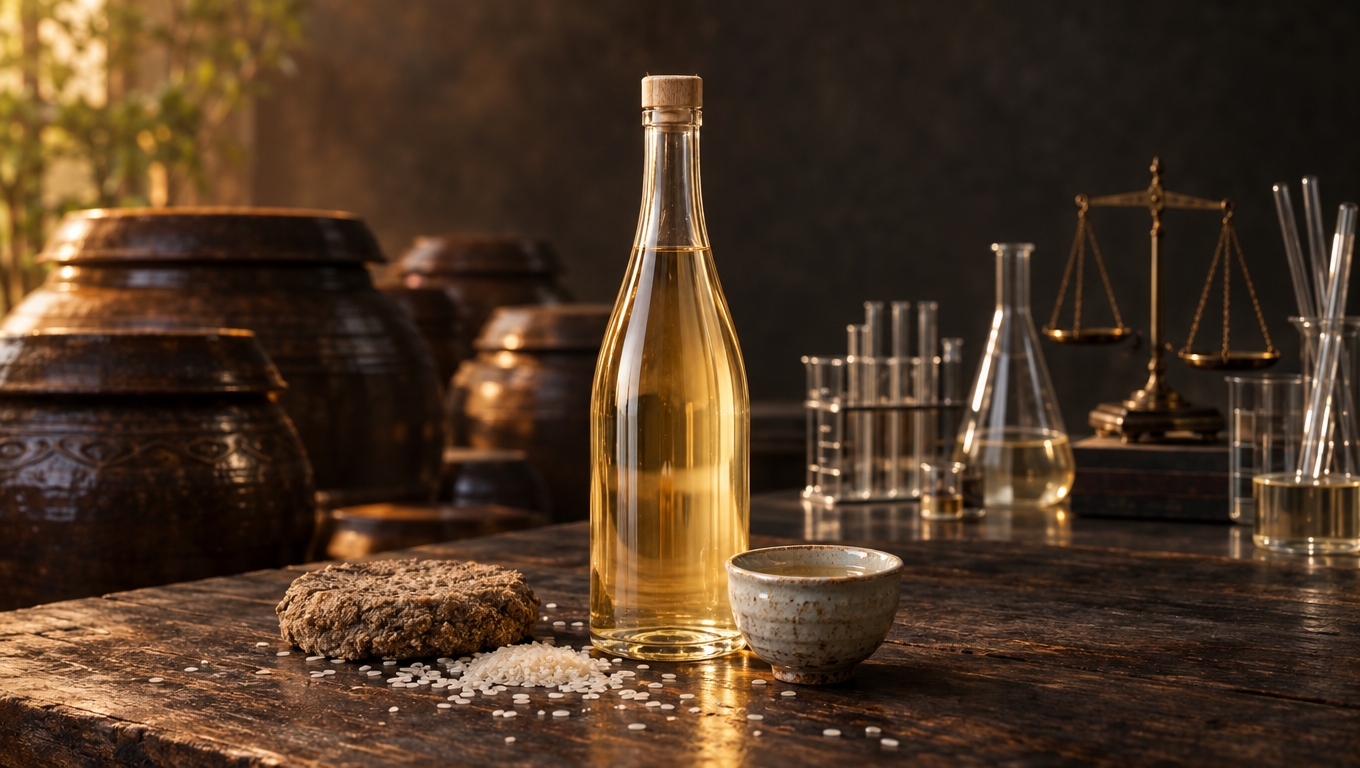
On The Lamp, produced by Jinny’s Lamp, is made from purified water, domestic sweet and regular rice, nuruk (a traditional fermentation starter), and Vitamin C. It has an ABV of 12.4%, and a 375ml bottle sells for 85,000 won. The product is marketed as a “sweet rice wine.” That description translates the drink’s character for international buyers, but it doesn’t match the legal classification of “yakju” under Korean liquor tax law. There’s a gap between how consumers understand the drink and how the law defines it.
“Yakju” is often used casually in Korean to mean liquor in general, but under tax law it refers to a beverage made under specific conditions. According to the MFDS’s Food Safety Korea portal, it’s defined as alcohol made by fermenting starch-based grains with water and “guk,” then filtering the mash. Guk refers to starters like nuruk that convert grain starch into sugar. The name doesn’t imply medicinal properties; it’s a legal definition based on ingredients and method.
The additives allowed in yakju are listed explicitly. Aspartame, lactic acid, and citric acid are permitted; Vitamin C is not. That’s why On The Lamp, brewed like a yakju in every other respect, was classified as “Other Liquors” instead. The category covers drinks that don’t fit the standard definitions; it isn’t a quality downgrade. But it creates an awkward situation for producers who want to present a Korean-style rice wine abroad: they use the traditional method but can’t use the traditional legal name.
Does Classification Matter More Than Preservation?
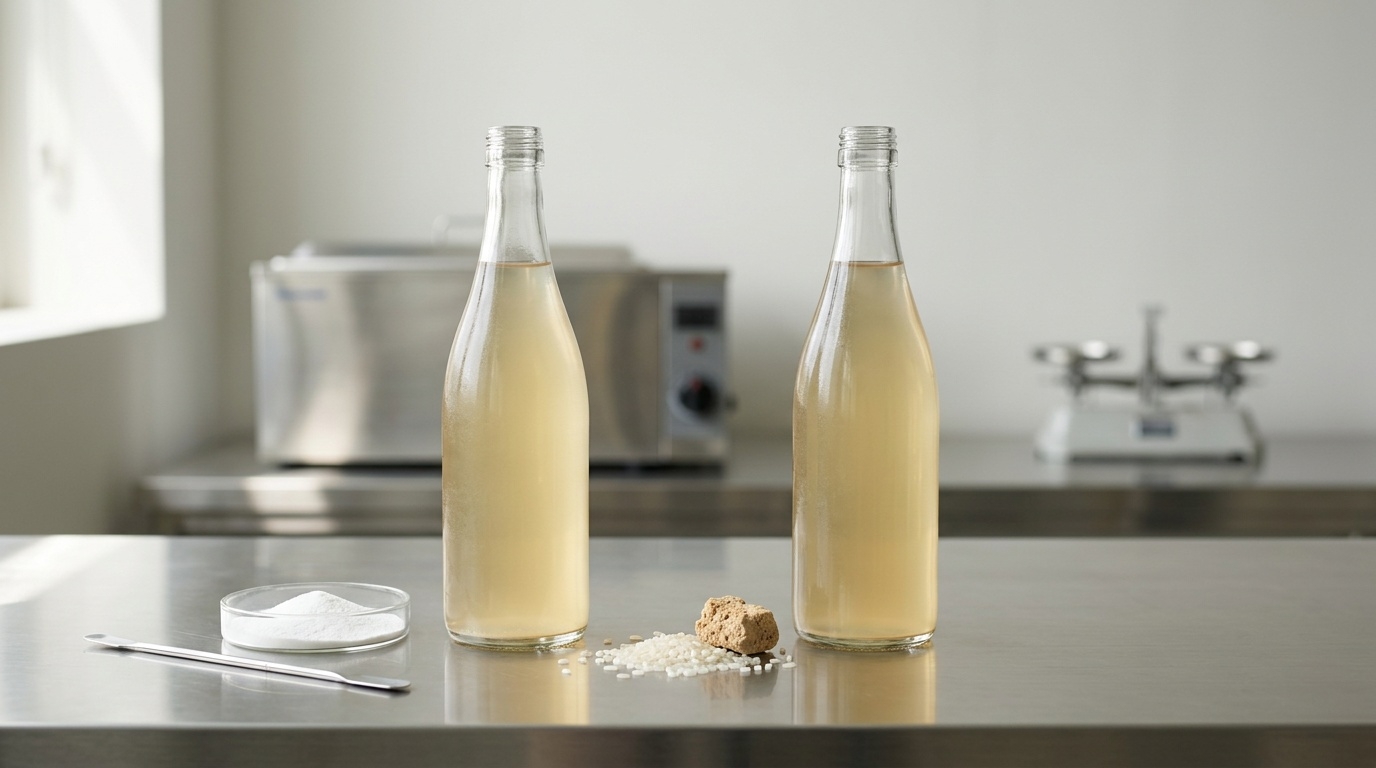
Current labeling rules require takju (cloudy rice wine) and yakju to carry a shelf-life date, but cheongju (refined rice wine), fruit wines, and “Other Liquors” are exempt. A shelf-life date tells consumers how long a product stays safe under proper storage. The issue the On The Lamp case raises is that two similarly fermented rice beverages face different labeling requirements based purely on legal category. Classification decides the obligation, not whether a producer actually pasteurized or stabilized the product.
Grape wine falls under fruit wines, and cheongju, which generally covers drinks made like Japanese sake, follows different labeling rules than yakju. Whisky and soju, as distilled spirits, are exempt from shelf-life labeling entirely. Not every type of alcohol carries the same risk profile; ABV, the chance of continued fermentation, and pasteurization all factor in. The real question is whether products with comparable preservation already in place should face different requirements simply because they sit in different legal categories.
The producer’s explanation shows how this gap shapes manufacturing decisions. On The Lamp added Vitamin C for its antioxidant effect and pasteurized the drink, and that combination pushed it into “Other Liquors.” Avoiding shelf-life labeling was part of the calculation. Instead of rewarding safety improvements, the system can turn a category switch into the more practical choice. That points to a problem with the framework, not just the producer’s decision.
Does the Old Safety Logic Still Fit Today’s Products?
The standards trace back to changes in how alcohol safety has been managed over time. According to the MFDS, a 2010 National Tax Service regulation required expiration or quality-maintenance dates on unpasteurized takju and yakju. When the MFDS took over safety management in 2013, it applied expiration-date labeling to all takju and yakju regardless of pasteurization. The agency cited ongoing fermentation risk and packaging safety as reasons. A 2016 study and industry feedback both supported keeping the requirement, according to the MFDS.
That history shows the rules started with real safety concerns. Whether the same approach still fits every product made today is a separate question. The current debate centers on whether a blanket, category-based rule should apply to a product that’s pasteurized and uses antioxidants specifically for export. Criticizing outdated standards isn’t a call to drop safety measures; it’s a call to update the rules so they reflect how products are actually preserved and made now.
The YouTuber’s simple act of reading a label and asking a question brought this gap into view through a concrete example. The fairness debate caught on with the industry and the press, and the MFDS announced an official review in response. The ministry also noted that exported products follow the destination country’s rules. Fixing domestic labeling won’t remove every hurdle in international trade, but that’s not a reason to leave the imbalance at home untouched.
The Identity of Korean Rice Wine Starts With Nuruk
On The Lamp’s resemblance to yakju comes from its fermentation process as much as its ingredients. The YouTuber described a classic traditional yakju aroma, a sweet and smooth flavor, mild acidity, and lingering sweetness. That’s one taster’s impression rather than a formal quality rating, but it points to a mismatch between what consumers taste and what the label says. The idea that this drink is a Korean yakju in everything but name, minus the Vitamin C, comes from that same impression.
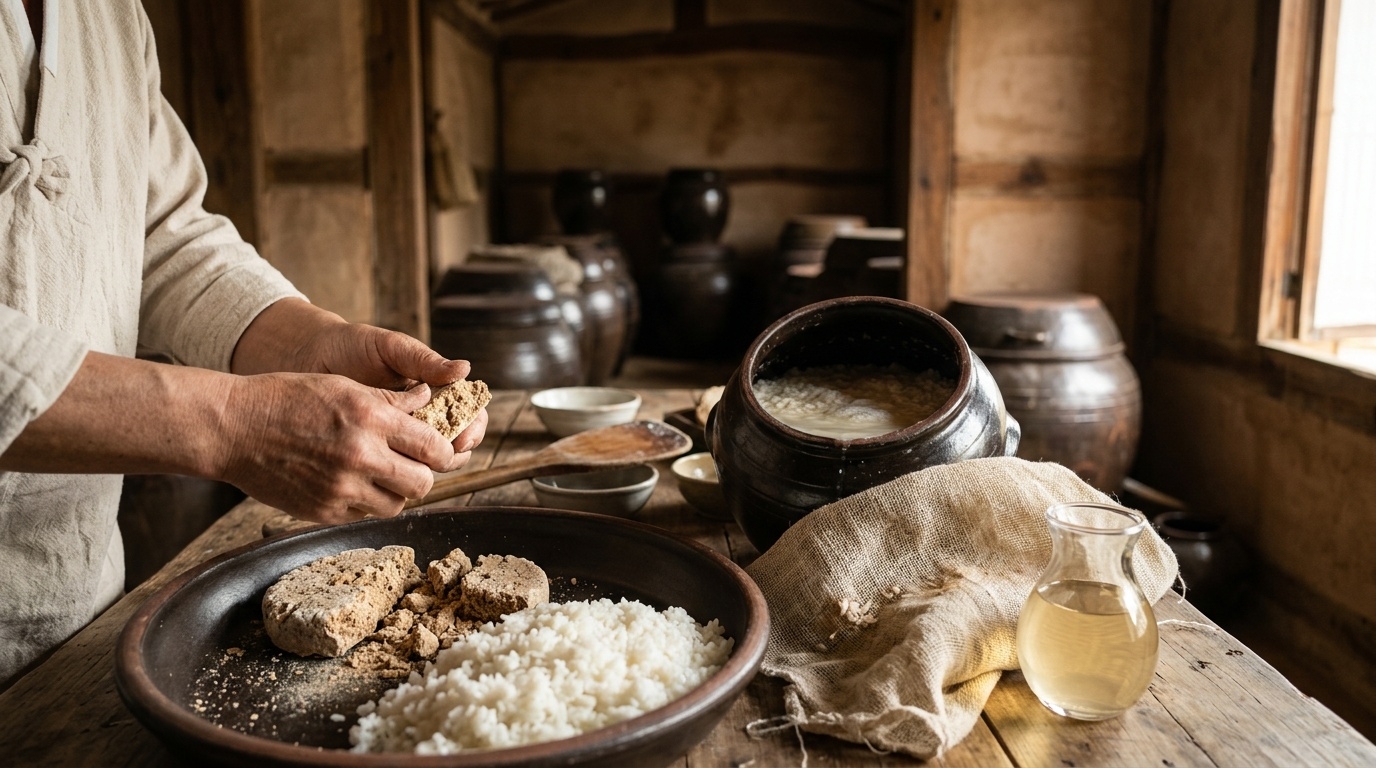
Traditional nuruk is a mixed fermentation starter: various molds, yeasts, and lactic acid bacteria grow together on a base of wheat, rice, or barley. Enzymes from the molds convert starch into sugar, and yeast ferments that sugar into alcohol at the same time. According to Sommelier Times, this overlap between saccharification and fermentation is a defining feature of Korean brewing. The mix of microbes shapes the drink’s flavor directly, so the conditions under which nuruk is made affect the final result.
Japanese koji, by contrast, typically involves inoculating grain with a single selected mold to trigger saccharification, a method used for sake, shochu, miso, and soy sauce. Chinese qu relies on a mix of several microbes and is used for baijiu and huangjiu. Western whiskies generally rely on the enzymes in malted barley, and bourbon follows a similar malt-based process. None of these methods is better than the others; they’re different technical starting points. That difference is exactly why Korean nuruk-based alcohol needs its own explanation rather than being folded into categories built for other spirits.
Korean Liquor on the Global Stage, and the Names the System Assigns
Korean alcohol’s international potential is also visible in the success of Ki One whisky. The International Wine & Spirit Competition (IWSC) gave Ki One its Worldwide Whisky Trophy in 2025. According to the Korea Economic Daily, Ki One followed that September win with “Best of Class,” the top honor in its category, at the San Francisco World Spirits Competition in November. These are wins within specific competitive categories, not a single combined victory across every type of whisky.
Ki One is a single malt whisky made with malted barley. It shows that liquor made in Korea can earn international respect, but it’s a different case from On The Lamp, which carries Korea’s own nuruk fermentation method. Korean whisky can win recognition under a globally familiar name, while a Korean-style rice wine with traditional brewing elements can’t legally be called yakju. The contrast says something about Korean alcohol’s potential, and about the regulatory language that defines and manages its identity.
It started with a YouTuber noticing the words “Other Liquors” on a bottle. A question that drew over 3.22 million views grew into a broader debate about fairness in regulation and eventually drew a promise of review from the government. What happens next depends on whether that attention leads to an actual change in the rules. The goal is to make sure labeling reflects real preservation conditions and manufacturing practices, without assuming that skipping shelf-life labeling means indefinite safety. Along the way, the industry still has to work through the paradox of traditional Korean liquors needing to sidestep their own legal names just to describe what they are.
Sources: “A Problem Someone Has to Talk About” via YouTube channel Sulikneunjip, October 2, 2026 (views confirmed October 13, 2026); eToday, October 7, 2026; MFDS Food Safety Korea liquor classification guide and Sommelier Times “The Difference Between Nuruk and Koji,” accessed October 13, 2026; IWSC official award announcement, accessed October 13, 2026; Korea Economic Daily, December 25, 2025.


