
Table of Contents
Deals in India and Saudi Arabia, promotion across the US and Europe
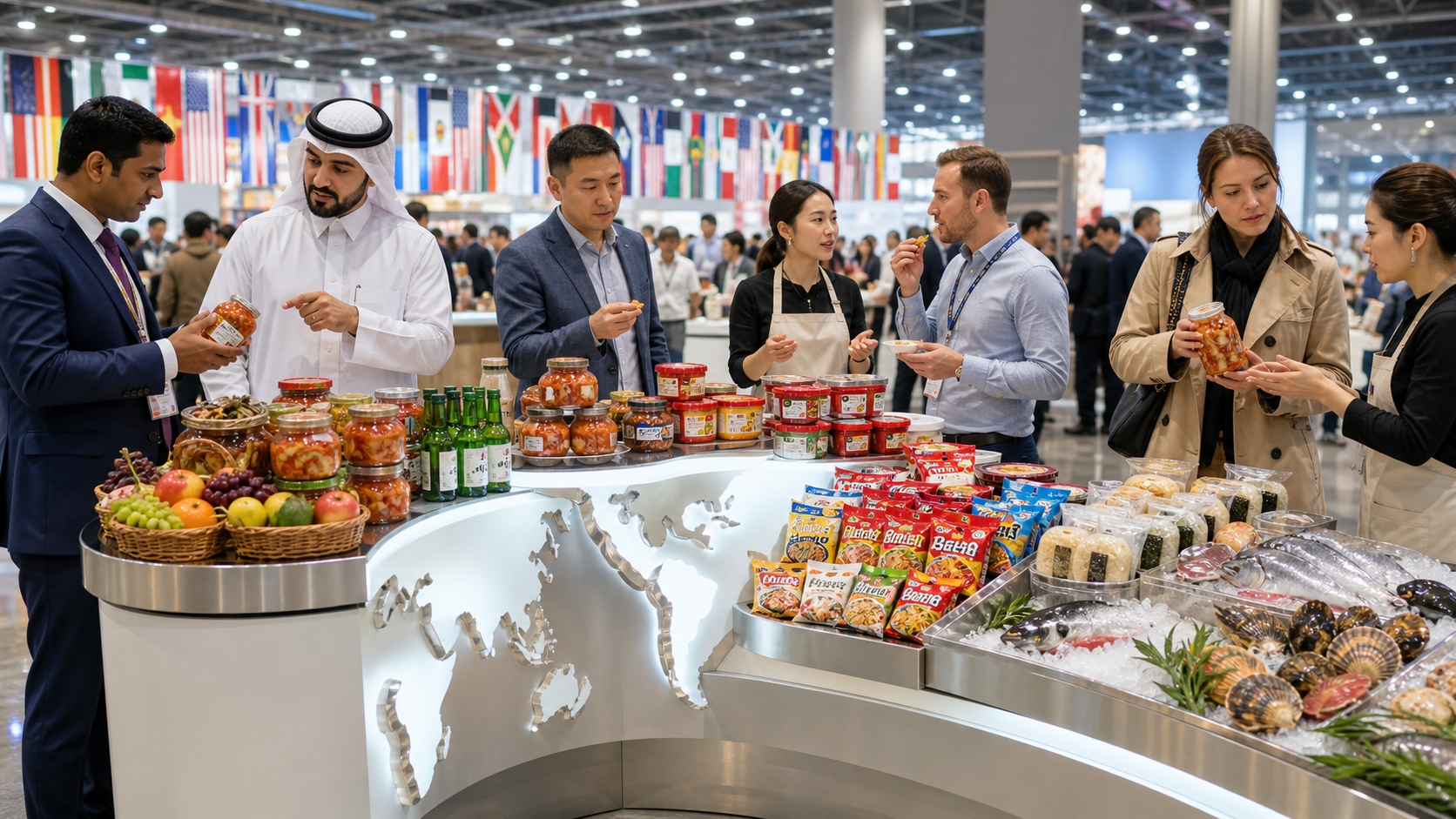
South Korea has announced $24.2 million in export deals discussed with buyers in India and $11 million in Saudi Arabia, the results of government-backed participation in overseas food trade shows. Between October 1 and 7, news also surfaced of rice-based food promotion in Kazakhstan and an outreach push into the US food-service market. Add in US and French seafood promotion run jointly by the Ministry of Oceans and Fisheries, and Korean food’s market-expansion efforts show up across five countries.
The announcement dates and the event dates, however, are not the same thing. The actual activity ran from late September into early October, and none of it amounts to a single trade-consultation push held in the first week of October. India and Saudi Arabia centered on business-to-business deal discussions between companies and buyers, while Kazakhstan and the US and France involved consumer tastings, ingredient promotion, or seafood outreach. What stands out is not a single event format repeated across markets, but a different approach tailored to each one.
The dollar figures from these trade consultations also need to be distinguished from actual export revenue. A consultation marks the stage where a deal’s feasibility is discussed, not a confirmed order or shipment for that amount. A memorandum of understanding, likewise, is an agreement to build a framework for future cooperation, not the same as a purchase contract. The announced results point to the potential for new sales channels, but whether they turn into sustained trade is something to be confirmed separately.
What caught Indian buyers’ eye: soju and localization
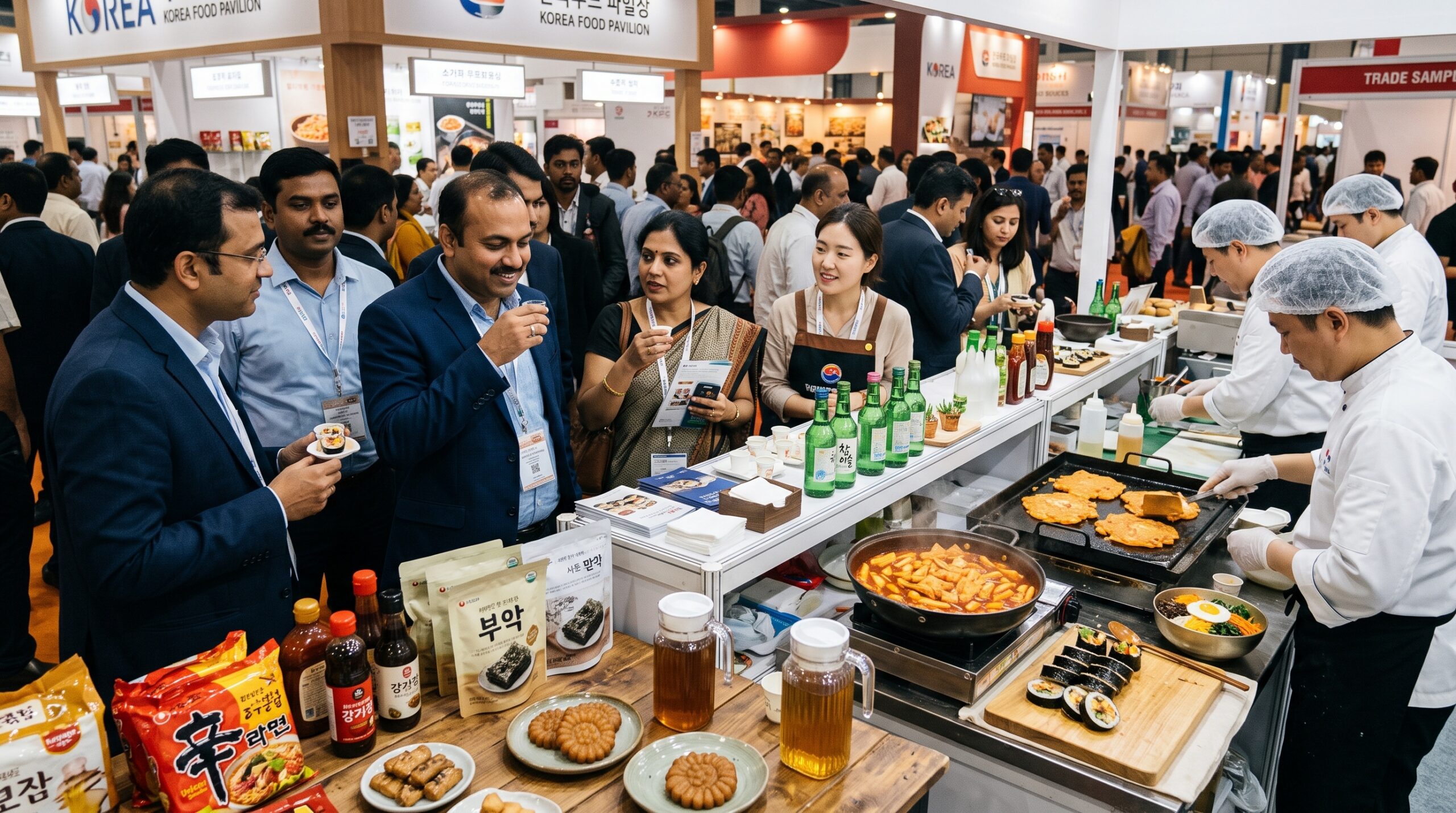
In India, ten domestic agri-food companies took part in an international food exhibition held at the Bombay Exhibition Centre in Mumbai from September 29 to October 1. The Korean pavilion displayed fresh fruit, snacks such as bugak and yakgwa, liquor, sauces, instant noodles, and misutgaru. Bugak is a dish made by coating ingredients in glutinous rice paste, drying them, and then frying them, while misutgaru is a food made from roasted grain powder. Both were introduced alongside the more familiar instant noodles.
According to Newsis, the participating companies secured a combined $24.2 million in trade consultation results, and interest in soju led to a memorandum of understanding. Citing an aT official, the Financial News reported that soju could become a new option in India, where whiskey consumption is strong. That reflects local buyer interest, not market-share data showing soju is already displacing whiskey.
Local buyers also proposed developing products that incorporate flavors familiar to Indian consumers, such as masala, a blend of spices used to add flavor to food. The Korean pavilion also held cooking demonstrations for tteokbokki, bibimbap, gimbap, and kimchi pancakes. The effort combined introducing a product’s Korean origins with showing local consumers how to eat and use it.
A food fair in the Middle East, rice products in Central Asia
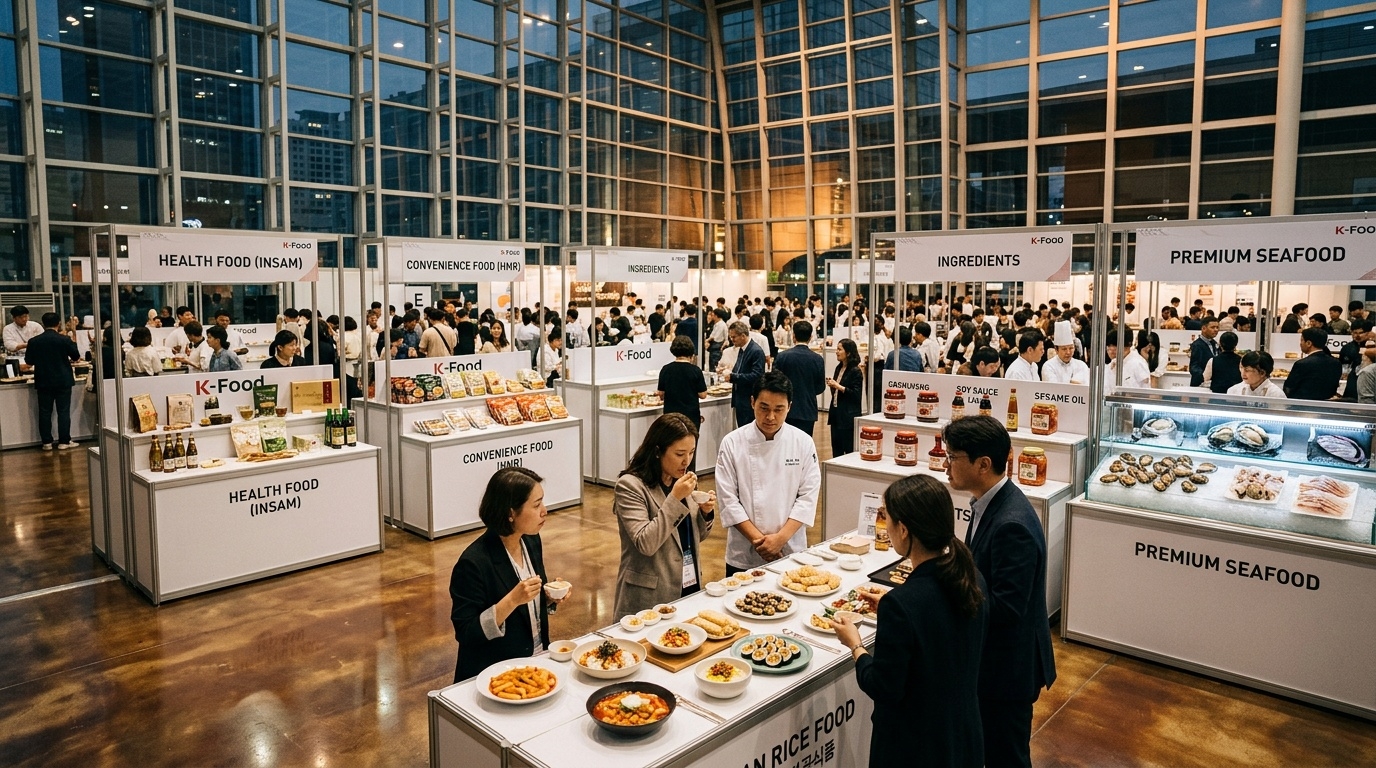
The Saudi Arabia results were announced on October 1, but the exhibition itself was held in Jeddah from September 27 to 29. The agriculture ministry and aT ran an integrated Korean pavilion and conducted $11 million worth of consultations. According to BBS, the pavilion introduced health foods and convenience foods alongside signature items like kimchi and gochujang sauce, an approach that leans on the recognition of iconic Korean dishes while widening the range of products buyers might purchase.
The Kazakhstan activity should likewise not be read as an event held on October 7. What was disclosed that day were the results of rice-based food promotion conducted earlier in the country. Foodtoday reported that the event itself took place in Almaty on September 26. Letting local consumers directly sample rice-based processed foods is a different kind of consumer touchpoint than the buyer consultations held at a trade fair.
Taken together, these two markets show that export diversification does not simply mean adding more countries. Health foods, convenience foods, and rice-based products are each being introduced on the ground, widening both the range of items and the contexts in which they’re used. Still, a single promotional event alone cannot establish that a product has taken hold in a market. What matters is whether the interest generated turns into actual purchases and whether the resulting trade continues through the distribution chain.
US ingredients and French seafood, two different points of entry
The US food-service activity took place on October 3 local time and was announced on the 6th. The approach here is to get Korean ingredients used in local restaurant menus: not just selling finished Korean dishes, but finding outlets for ingredients that local kitchens can use. With the US having emerged as Korean agri-food’s largest export market in 2024, this is an effort to widen consumption channels even within an already-established market.
Seafood promotion was carried out not by the agriculture ministry but jointly by the Ministry of Oceans and Fisheries and aT. The Washington event was held on September 29 and the Paris event on October 1, with results announced on the 2nd. This was a promotional activity introducing seafood products, not the same kind of trade-consultation result as the figures from India and Saudi Arabia. Even when the same agency is involved, the responsible ministry, the purpose of the event, and the nature of the outcome need to be read separately.
It is more accurate to see this round of activity not as abandoning the US market but as widening how an established market is used while simultaneously exploring sales channels in India, the Middle East, and Central Asia. Beyond instant noodles and snacks, the range of products being introduced now extends to fermented foods, convenience foods, health foods, and fresh produce and seafood. Whether the results of country-by-country consultations and tastings turn into repeat orders and stable distribution will be the standard for judging what comes next.
Sources: Newsis, October 6, 2026; Financial News, October 7, 2026; BBS, October 1, 2026; Foodtoday, October 2, 6 and 7, 2026; Money Today, October 7, 2026; Korea JoongAng Daily (US edition) KOCHAM column, July 16, 2024.


