
Table of Contents
Brands focus on products, platforms handle the complex logistics of expansion
“Small and medium-sized brands preparing to expand overseas often lack information and experience about local markets, and the burden of handling the various practical issues in the distribution process is heavy.” In a release from Musinsa, a representative from RSSC, a brand participating in the pop-up, described the reality facing small fashion brands trying to enter the Chinese market. It means that before they can even promote their products, they must overcome hurdles like product certification, distribution networks, and physical store operations.
The representative noted that because Musinsa supported the entire pop-up operation, their brand could focus more on the products and the customer experience. This is the core of the current initiative. It goes beyond a simple short-term sales event that displays Korean fashion in one place. The platform takes on the practical, operational load of entering China, tasks that are often too overwhelming for individual brands to handle alone.
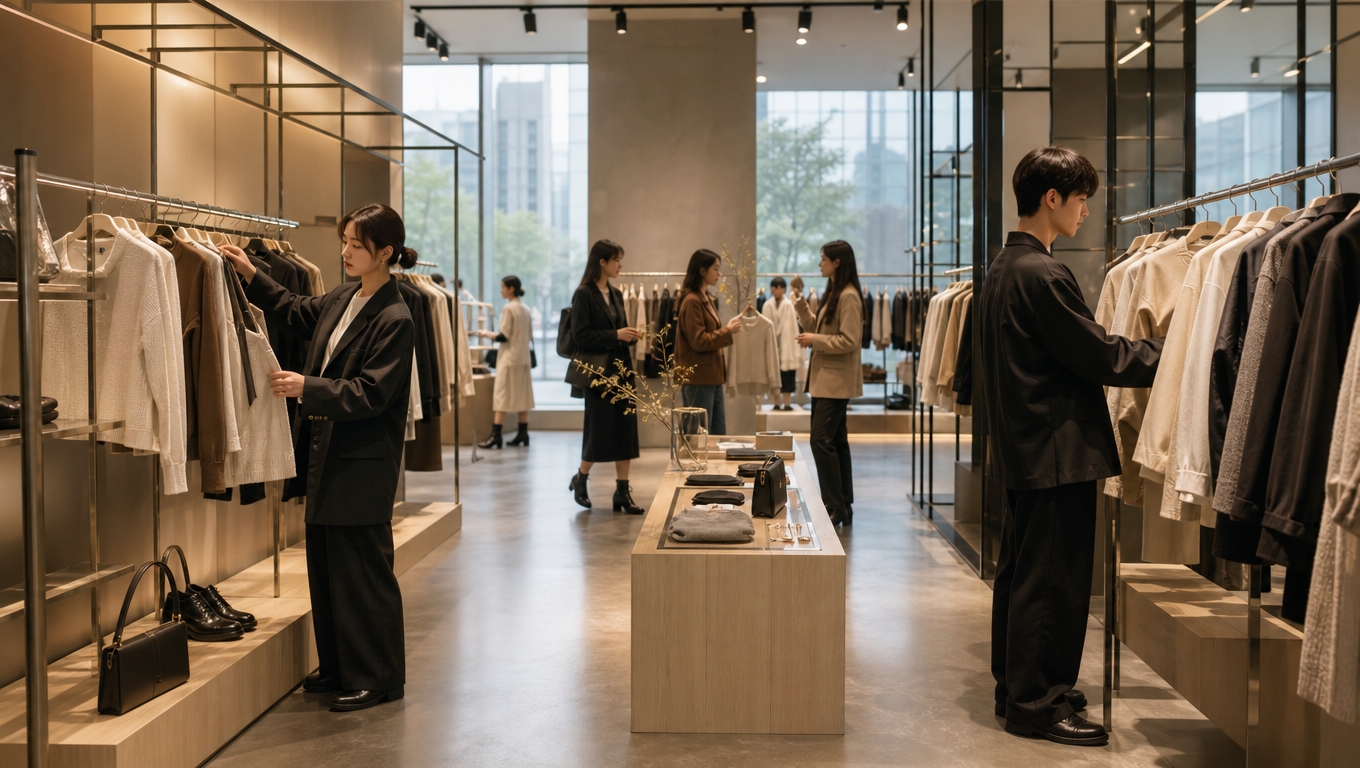
The stage for this is Nanjing Xi Lu, one of Shanghai’s premier shopping districts. The ‘Musinsa Shanghai Pop-up Store 2026’ has been running at the Jing An Kerry Centre since August 21 and will continue until November 30. It features 15 domestic fashion brands, including Lookast, Reva, and Till I Die, carefully selected based on local Chinese demand and preferences.
The Shanghai experiment that drew 10,000 visitors in just one month
According to Musinsa, the pop-up attracted over 10,000 cumulative visitors by September 21, marking its one-month anniversary. This number doesn’t automatically guarantee long-term success for each brand. However, it holds real value in giving 15 independent brands a direct touchpoint to present their goods to Chinese consumers and gauge authentic reactions in a short time frame.
The Jing An Kerry Centre, where the pop-up is hosted, is a major commercial complex on Nanjing Xi Lu. Running a store in a core commercial district where global brands compete offers smaller labels a chance to boost their awareness, but it also demands immense preparation: securing space, hiring local staff, importing inventory, and managing daily sales. For brands that have grown primarily through online sales back home, building this infrastructure from scratch in China is a daunting task.
This project was driven by support from the Ministry of Trade, Industry and Energy and KOTRA’s ‘Retail Enterprise Overseas Expansion Support Project’. It operates on a collaborative structure: the public sector backs the foundation for overseas expansion, Musinsa provides the local distribution infrastructure and operational expertise, and the participating brands present their products and identities. What matters just as much as the foot traffic is whether this collaborative model translates into actual, sustainable sales channels.

Why the platform steps in to handle product certification and distribution
To officially sell clothing in the Chinese market, items must clear strict product certification and labeling procedures tailored to local standards. Securing a retail space is an entirely separate hurdle. Because every brand differs in its product lineup and level of preparedness, they must navigate specific paperwork and protocols, negotiate with local distribution partners, and manage physical store operations. For smaller brands with limited capital and dedicated staff, each of these steps can be a massive burden.
Musinsa shared that it is supporting the entire process for this pop-up, from early preparation like product certification to actual offline sales. By having the platform bundle and manage the expansion logistics for multiple brands simultaneously, it significantly lowers the pressure on individual companies to design the process themselves. This illustrates that breaking into China takes more than catching the eye of local consumers. Brands also have to meet strict requirements before they can actually distribute goods there.
The platform’s role extends beyond administrative support. Musinsa plans to help participating companies refine their future Chinese business strategies using the data gathered from the pop-up. By analyzing which brands and products resonated with shoppers and whether the on-site interest led to actual purchases, brands can fine-tune their product offerings and sales tactics well before making a full-scale market entry.
The pop-up as both a storefront and a testing ground for market reactions
While short-term pop-ups have a more limited run than permanent stores, they offer distinct advantages for testing new waters. Brands can observe how local shoppers react to their designs, pricing, and brand narratives before committing to large-scale fixed investments. It also serves as a great opportunity for consumers to browse and compare various independent Korean brands all in one curated space.
This particular event deliberately steps away from spotlighting just one brand, choosing instead to introduce 15 labels together. Even if individual brand recognition is still low, grouping them under the broader umbrella of ‘K-fashion’ significantly increases their chances of discovery. Musinsa’s note that they selected these brands based on Chinese demand and preferences highlights that this isn’t just a blind export of domestic hits, but a thoughtful curation tailored to local tastes.
The early milestone of 10,000 visitors shows that this collective pop-up format successfully grabs consumer attention. Still, whether these visits will translate into repeat purchases and stable distribution is a separate question. The next real challenge will be seeing if these brands can maintain their sales channels after the pop-up closes and consistently supply the products that proved popular on the ground.
The next step bridged by the Anfu Lu permanent store
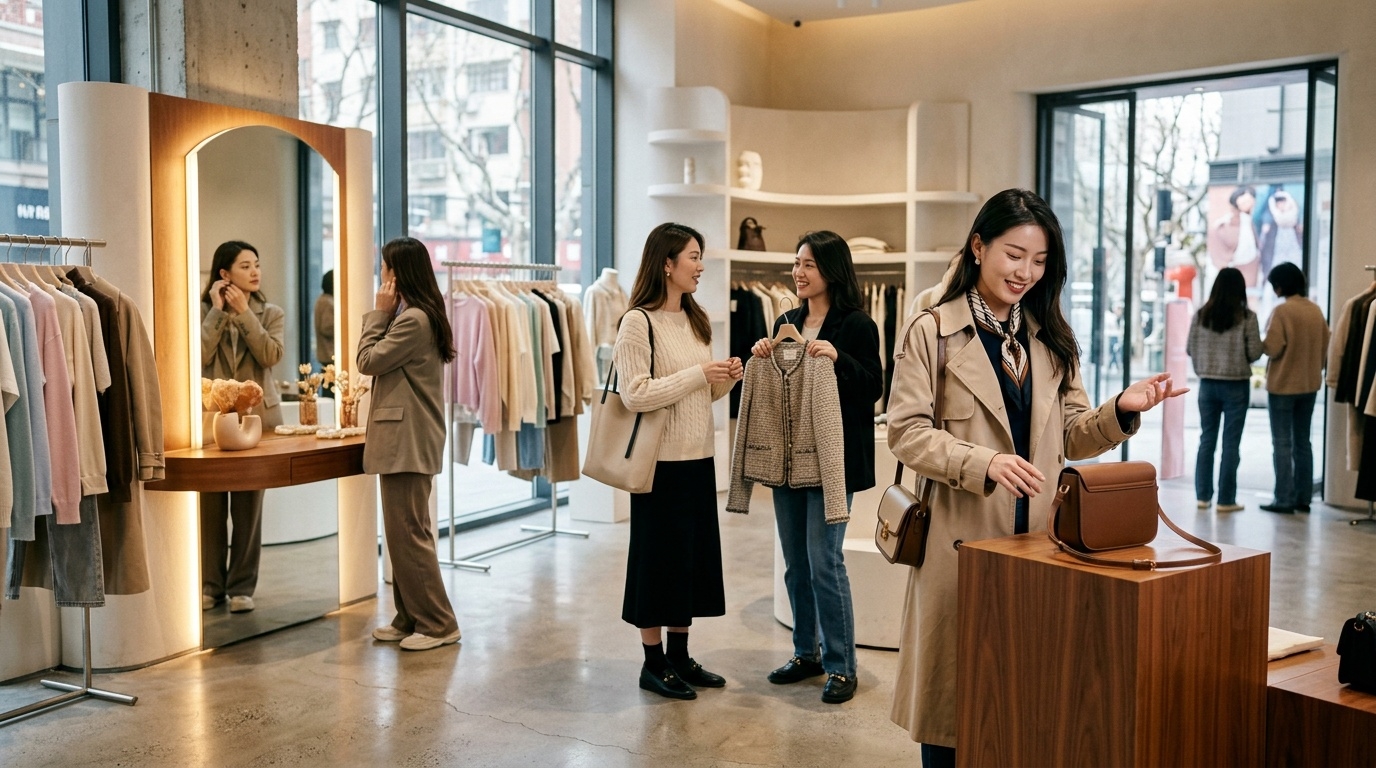
Alongside the pop-up events, Musinsa operates the ‘Musinsa Store Shanghai Anfu Lu’. This permanent space acts as a testing stage where domestic brands can build awareness and gauge genuine market reactions from Chinese consumers. While the Jing An Kerry Centre event is a collaborative pop-up introducing multiple brands at once, the Anfu Lu store provides a foundation to dive deeper into a specific brand’s unique identity and product lineup.
The Anfu Lu location has already hosted pop-ups for labels like Ronron, Sculptor, and Stand Oil. Starting October 30, Find Kapoor is set to run a month-long pop-up. Introducing different brands in rotation keeps the store feeling fresh and dynamic, while giving each company a dedicated window to test the waters with Shanghai shoppers on an individual level.
The joint pop-up at the Jing An Kerry Centre and the permanent store on Anfu Lu serve different purposes, but they flow together naturally. The former acts as a wide entryway for various independent brands to make their first contact with the Chinese market, while the latter provides the space to continue those experiments on a brand-by-brand basis. Leaning on an established local distribution hub rather than relying on one-off events adds a layer of concrete practicality to this market expansion support.
The pivot point where K-fashion’s push into China becomes platform-centric
Even if small Korean fashion brands gain international interest, it’s incredibly difficult for them to independently handle product certification, logistics, leasing contracts, and on-site retail. This recent case highlights the expanding footprint of what a platform can manage during the market entry phase, even as brands still need to focus on design and product. It’s a model that shares the early risks by blending the creative power of the brands, the distribution capabilities of the platform, and the backing of public institutions.
Musinsa has stated its goal to lower the barriers to entry in China and open up tangible sales channels by pairing its local infrastructure and operational know-how with support from the Ministry of Trade, Industry and Energy and KOTRA. The metrics to watch going forward go well beyond visitor counts. When the pop-up wraps up on November 30, the true test of this model’s sustainability will be whether the participating brands can maintain their local sales momentum and how effectively they weave the data gathered from the event into their future product and distribution strategies.
Source: Musinsa Press Release, Yonhap News, Smart Today, September 28, 2026.