
Table of Contents
Five Cases Caught at Test Centers Nationwide in Just Two Months
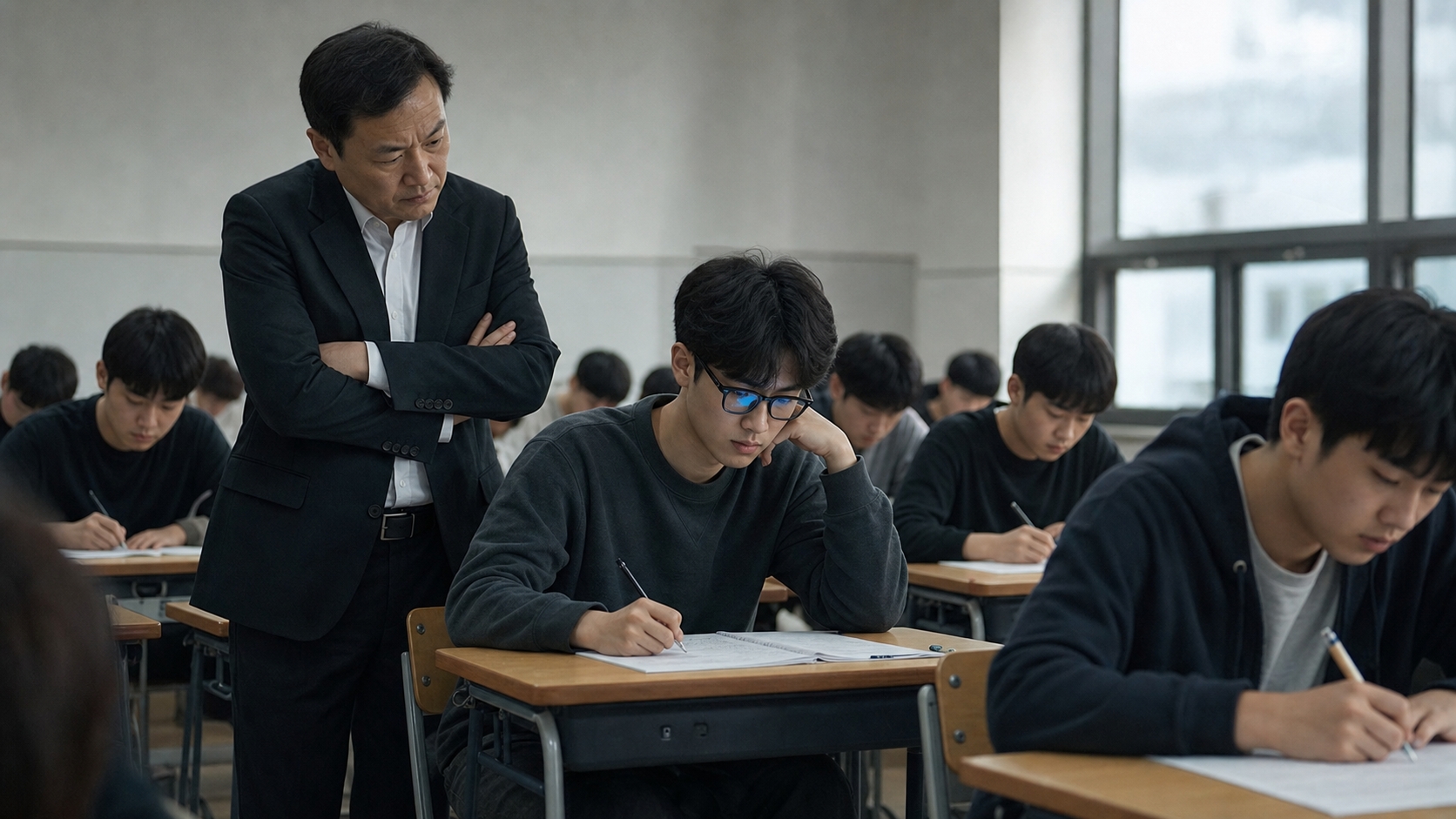
Between May and June 2026, five instances of test-takers using AI-equipped smart glasses were uncovered during South Korea’s national technical qualification exams. These cases surfaced in Gwangju, Seoul, and Mokpo in May, followed by Daegu and Ulsan in June. The individuals were sitting for various certifications, including fire protection equipment, information processing, electrical industry, and gas technician exams. All offenders had their test results invalidated and were officially penalized for cheating, with three of them being handed over to prosecutors.
The scale of the issue came to light when Representative Kim So-hee of the National Assembly’s Environment and Labor Committee released data obtained from the Human Resources Development Service of Korea. In response, the Ministry of Employment and Labor plans to revise the enforcement rules of the National Technical Qualifications Act to comprehensively regulate smart glasses and other emerging tech devices. The goal is to announce the legislation around September and finalize the revision by the end of the year. Policymakers realized that simply adding new device names to a banned list is no longer a viable way to keep pace with rapid technological advancements.
Lights, Beeps, and Blue Screens: The Clues That Gave Them Away
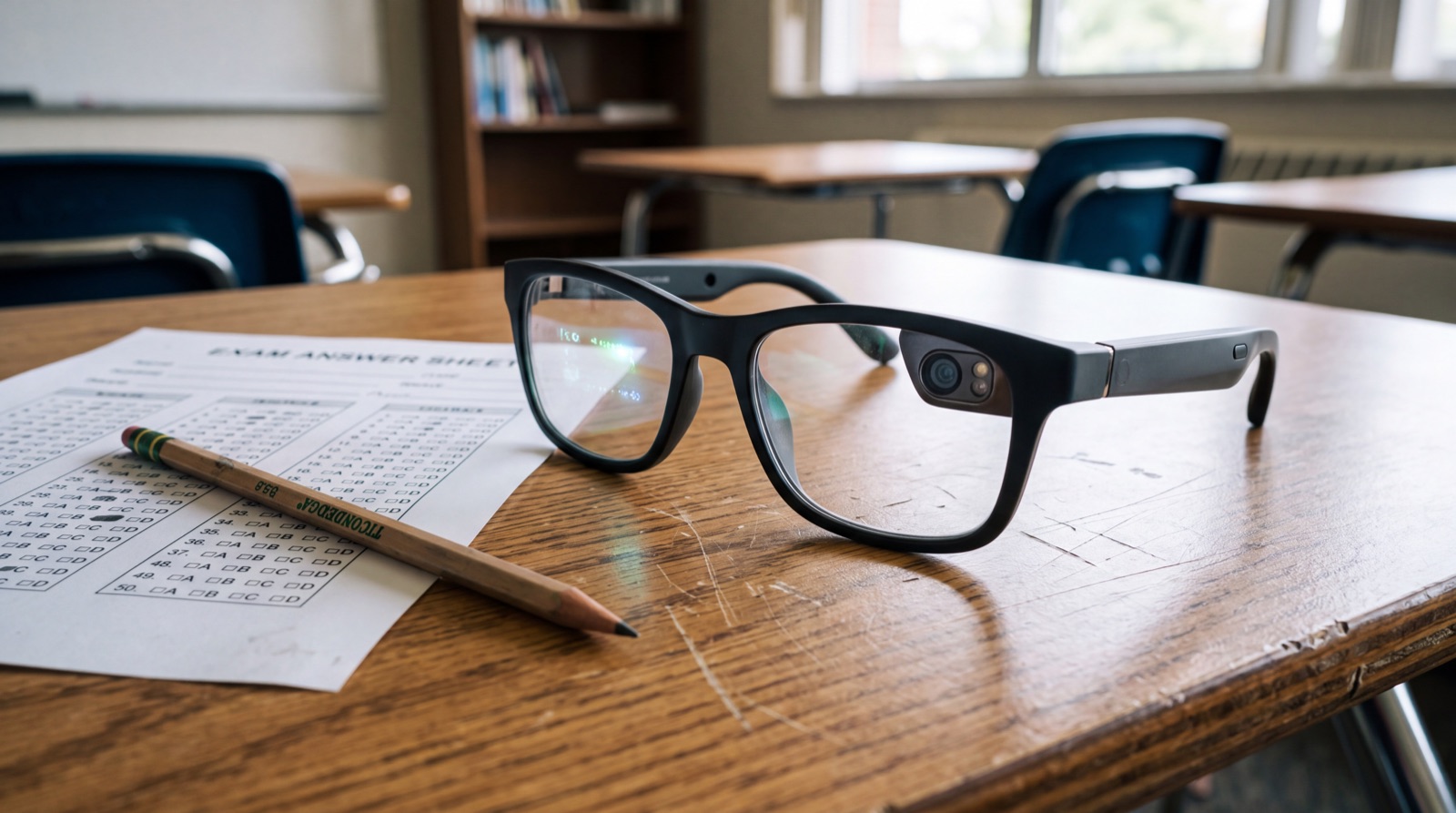
It wasn’t sophisticated detection equipment that caught these smart glasses, but rather the sharp eyes of proctors picking up on subtle anomalies. At the Gwangju test center, a proctor noticed a strange light emitting from a candidate’s lenses. During an information processing exam in Seoul, a camera lens was spotted seamlessly embedded into a glasses frame. Although they look just like regular eyewear, these devices can hide cameras, displays, and wireless communication capabilities within their frames and lenses, making them much harder to police than smartphones or tablets.
In Mokpo, a blue screen flickered to life on a lens when a test-taker pressed a button on the side of their frames. An electronic beep echoing from the glasses was the downfall of a candidate in Daegu, while in Ulsan, proctors successfully identified both the lens and the internal display. In all five cases, the critical giveaways were the lights, sounds, and physical handling of the devices rather than their outward appearance. Had the proctors missed these subtle behavioral cues, the covert functions of these seemingly ordinary glasses might have gone completely unnoticed during the exam.
Smart glasses operate by capturing the wearer’s exact field of view with a camera, processing that visual data through an external device or AI service, and then feeding information back via a lens display or earpiece. This means users can photograph test questions and receive answers without ever placing a suspicious device on their desk. While handheld electronics like smartphones are easily spotted by proctors, wearable technology disguised as everyday vision aids makes it incredibly difficult to definitively identify cheating based purely on sight.
Since many candidates genuinely rely on prescription glasses, adopting a blanket ban or treating all eyewear with suspicion isn’t a realistic solution. Immediately penalizing someone just for having thick frames or what looks like a button could easily infringe on the rights of honest test-takers. On the flip side, lax screening means devices equipped with cameras, communicators, and screens will slip right through. Test administrators desperately need nuanced guidelines that evaluate not just a device’s physical appearance, but its functions and the wearer’s behavior.
The Gwangju Case Leads to the First Criminal Prosecution
A man in his 40s caught in Gwangju was summarily indicted for violating the National Technical Qualifications Act, marking the very first time AI smart glasses cheating has led to criminal proceedings in South Korea. The consequences went far beyond administrative penalties like being escorted out of the room or having the test invalidated; he was held legally accountable for breaking the law. This case firmly establishes that using technology to cheat is not just a simple violation of test rules, but a serious offense that damages the integrity of the entire certification system.
National technical qualifications serve as a state-backed guarantee that an individual possesses specific expertise and skills. When someone fraudulently passes exams in critical fields like information processing, electricity, gas, and fire safety, the fallout goes well beyond an unearned personal score. Companies and public institutions heavily rely on these credentials for hiring and task assignment, trusting that certified professionals are genuinely capable. Even a single instance of cheating fundamentally shakes the fairness of the testing process and public confidence in these professional licenses.
The Limits of Whack-a-Mole Device Regulations
Current enforcement rules explicitly ban the use of communication and electronic devices—such as mobile phones, digital cameras, and camera-equipped pens—to draft answers or share them with other candidates. When the shape and function of these gadgets were distinct, the rules were easy for both test-takers and proctors to understand. However, devices like smart glasses, which blur the line between everyday accessories and advanced computers, can cause confusion at test centers simply because their specific names aren’t on the prohibited list.
In May, the Human Resources Development Service of Korea officially added smart glasses to the roster of electronic and communication devices banned from national technical qualification test centers. Anyone found in possession of them during an exam is immediately removed and their test invalidated, while those caught actively using them are officially classified as cheaters. Even though the term “smart glasses” wasn’t explicitly written in the previous enforcement rules, sanctions were still legally possible. The upcoming revision is a proactive follow-up measure to solidify the legal grounds for these penalties and ensure consistent standards are applied to any similar new devices that hit the market.
Rather than perpetually updating a list with specific product names, the Ministry of Employment and Labor is considering phrasing the rules to broadly encompass any items or functions that could be exploited for cheating. The idea is to tackle capabilities like filming, communicating, and displaying information directly, so the rules won’t need to be rewritten every time a new wearable device launches. While the exact legal wording is still being hammered out, the focus of the regulation is clearly shifting away from what a product is called or looks like, and toward the actions and functions that compromise the fairness of an exam.
Cheating Spills Over into TOEIC and TOPIK
The threat of smart glasses isn’t confined to technical qualification exams. According to Newsis, two instances of cheating using smart glasses were caught during regular domestic TOEIC sessions in May. Similarly, the Test of Proficiency in Korean (TOPIK), which evaluates the language skills of non-native speakers, recorded three smart glasses-related incidents in 2025. Although the types of exams and the goals of the candidates vary wildly, the underlying reality remains the same: glasses-shaped wearables are perfectly positioned to exploit the blind spots of traditional proctoring methods.
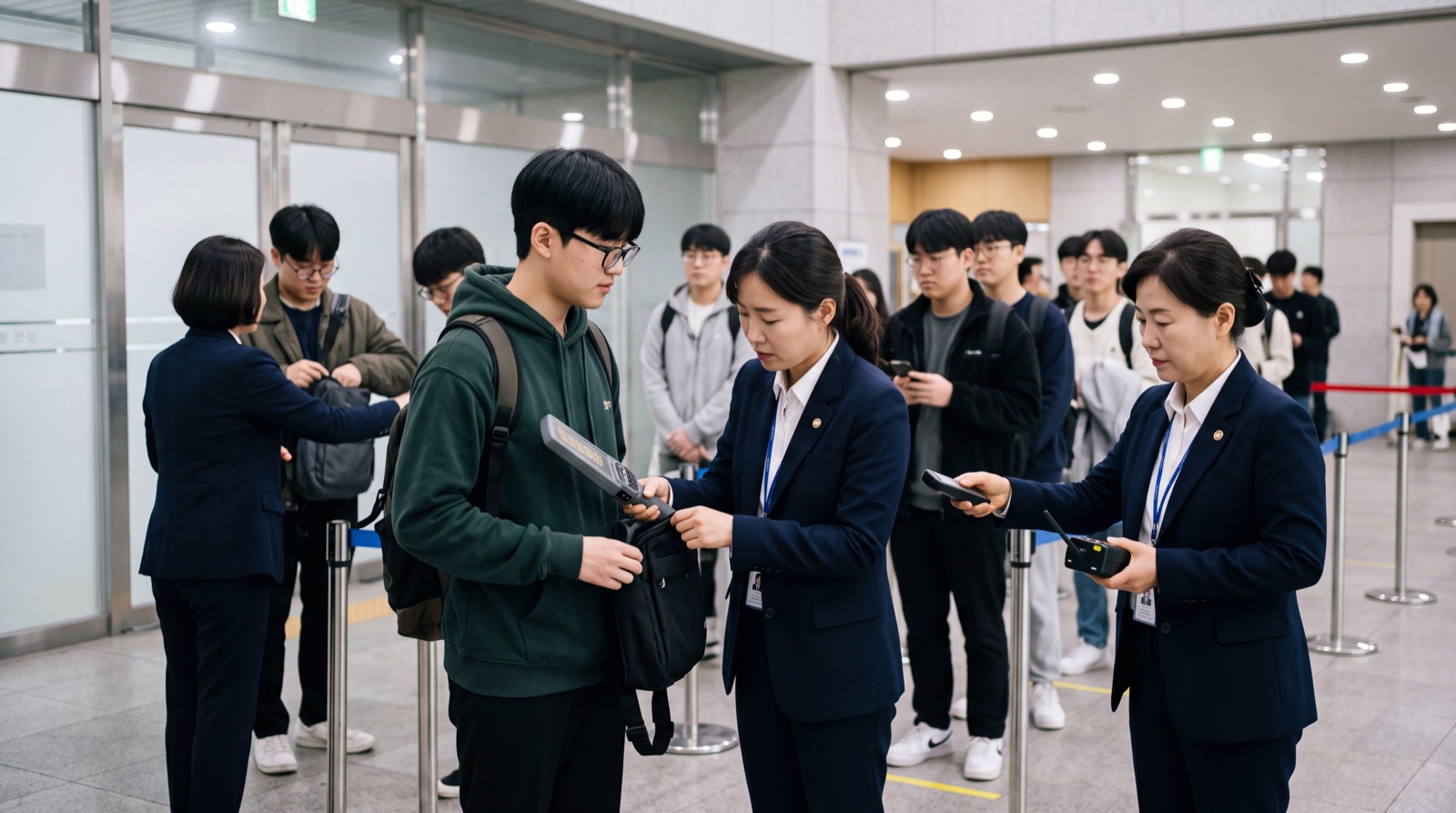
The National Institute for International Education, which administers TOPIK, installed radio frequency scanners and metal detectors at test centers starting this year. The RF scanners check for unauthorized communication signals bouncing around the testing room, while metal detectors help locate electronic components hidden inside glasses or personal belongings. Yet, detection equipment alone cannot prevent all cheating. If a device operates offline or its metal components are incredibly small, the vigilant observation and on-the-spot verification of proctors remain absolutely crucial.
The Warning Behind Solving 30 Math Problems in 18 Minutes
An IT YouTuber’s recent demonstration has only heightened anxieties surrounding test security. In June, the creator used AI smart glasses to breeze through 30 questions from a mock CSAT math exam. By pointing the camera at the test paper and reading the answers provided by the AI, they finished the entire exam in just 18 minutes and scored a 96 out of 100. While this wasn’t conducted under real exam conditions, the stunt vividly illustrated just how fast and stealthy wearable AI can be when used maliciously.
Smart glasses were fundamentally developed to provide accessible information and assist with everyday tasks. The real danger lies in how their integrated cameras, wireless communication, AI analysis, and hidden displays can be instantly weaponized to quietly fetch answers during an exam. Balancing the preservation of fairness without indiscriminately rejecting helpful technology requires highly nuanced standards. The regulatory revisions set for September won’t just address the smart glasses we have today; they will lay the groundwork for how the testing system responds to the next generation of wearables that don’t even have a name yet.
Source: Data submitted by Rep. Kim So-hee’s office and the Human Resources Development Service of Korea, alongside reports from Newsis and The Korea Herald, August 24, 2026; Yonhap News, July 14, 2026.