
Table of Contents
Franchise burgers for dinner at a recruit training battalion
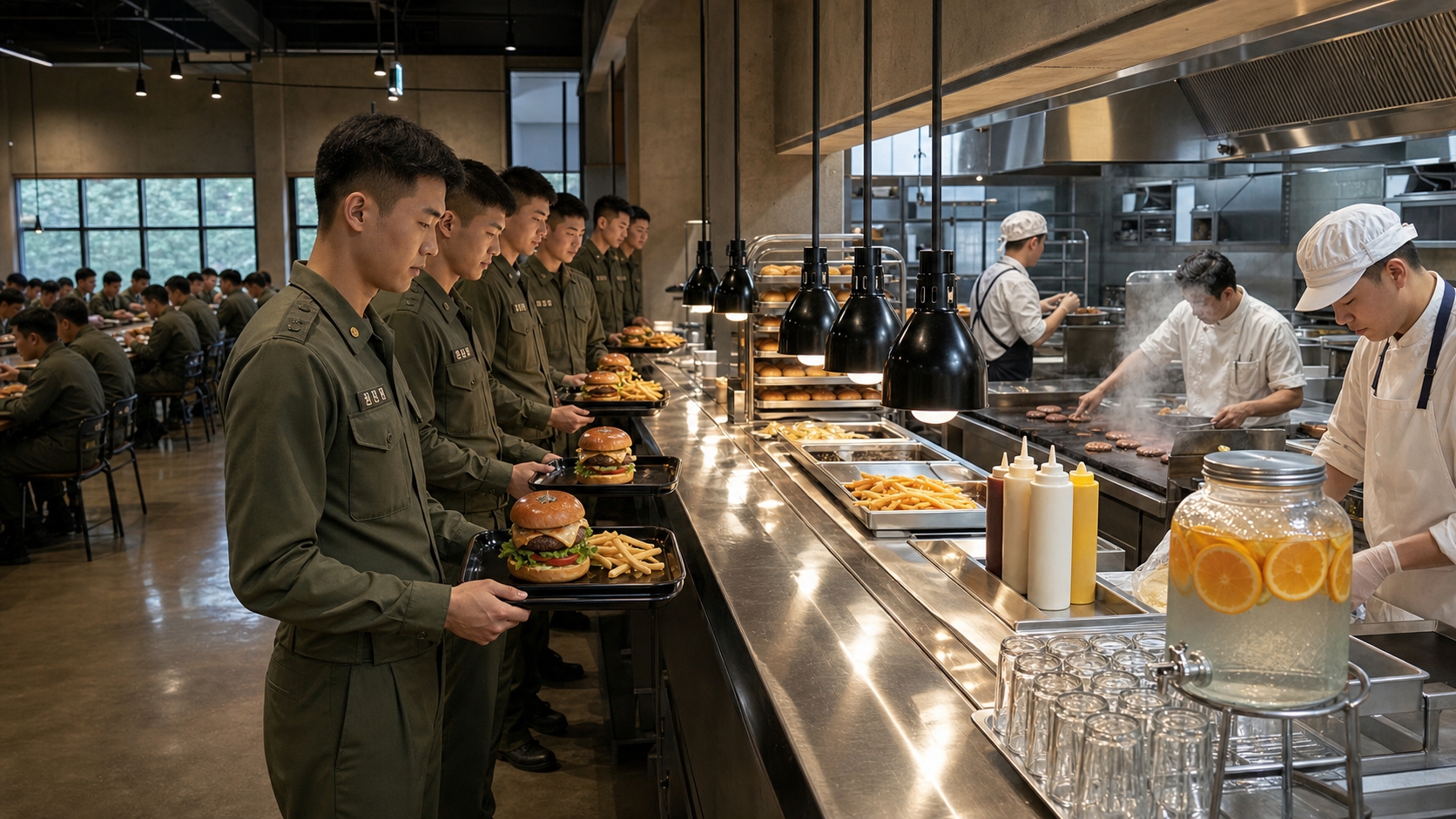
At dinner time in the recruit training battalion of the Army’s 35th Infantry Division in Imsil County, North Jeolla Province, soldiers pick up No Brand Burgers. Anyone who signs up in advance gets one, and a single mess hall serves up to 250 burger meals a day. A franchise burger, once something you ate on leave, is now on the regular menu inside the base.
Shinsegae Food’s No Brand Burger started operating in this mess hall recently, together with Pulmuone Food & Culture. This is not a matter of shipping finished burgers from a factory to the base. Pulmuone Food & Culture runs the military catering site, and No Brand Burger’s cooking and supply system was brought into it.
Shinsegae Food calls it the first case of a major franchise burger brand operating as regular food service inside a military unit. Well-known brand products have been served before as one-off special meals; here, the brand’s own way of preparing and supplying food is part of daily mess hall operations. Shinsegae Food plans to look at the results at the 35th Division before expanding No Brand Burger into new channels, including other military units.
From “jjambap” to choosing what you eat
The scene sums up a change in what Koreans have long called “jjambap,” a slang word for military food. The word carries a slightly dismissive tone: you eat what is put on your tray at a set time, and there is no choosing. Eating at a popular restaurant chain was something that happened outside the gate, on leave.
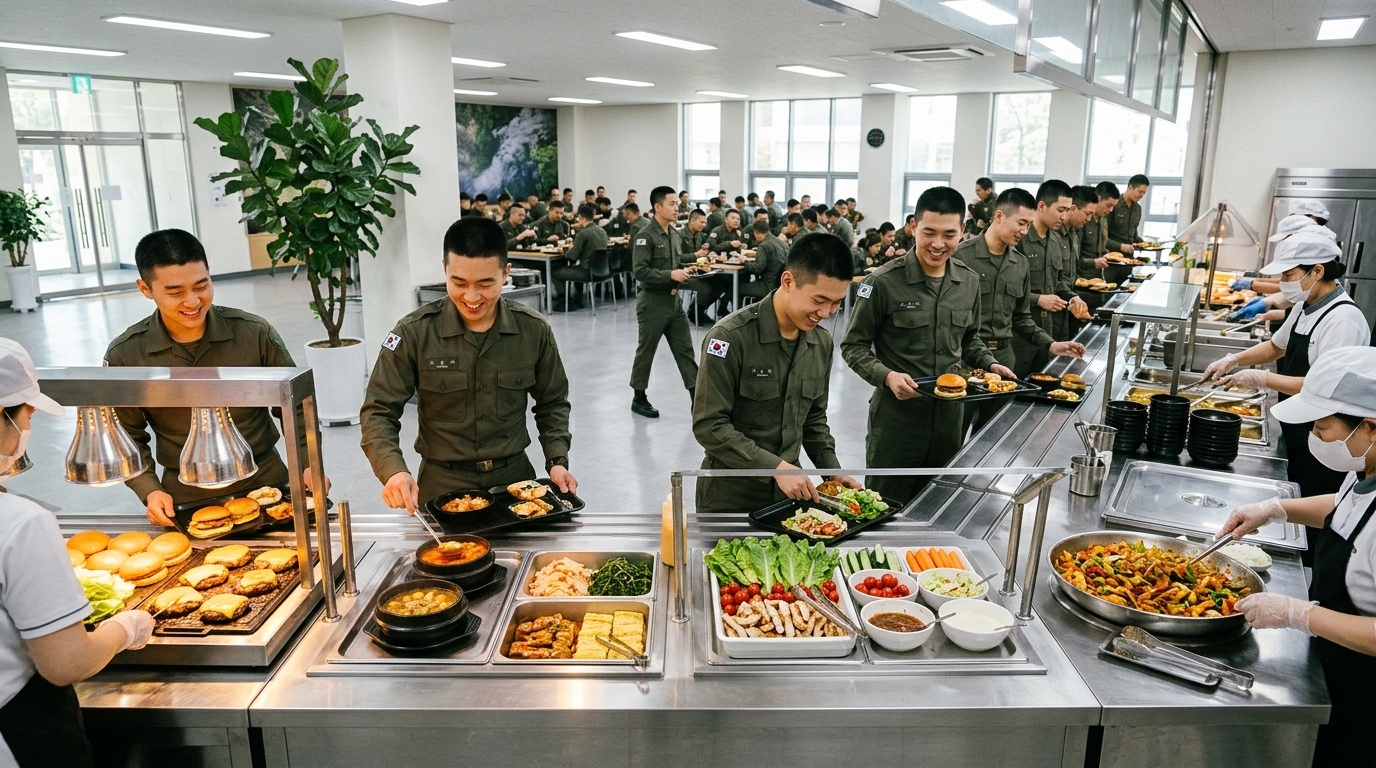
Now consumer food brands and private caterers are moving into base mess halls. Recruits at the 35th Division decide ahead of time whether they want the burger. One burger meal may look like a small thing, but putting a real choice in front of conscripts is a break from decades of everyone eating the same food.
Behind the change are a shrinking pool of conscripts and a shortage of military cooks. The Ministry of National Defense has been expanding private outsourcing step by step in response, and to improve meal quality. At the same time, the food system is moving away from serving one identical meal to everyone and toward buffet lines, multiple menu options, brunch and convenience-style meals. That policy shift opened the door for restaurant brands and catering companies.
A 2 trillion won market and more than 50 bases
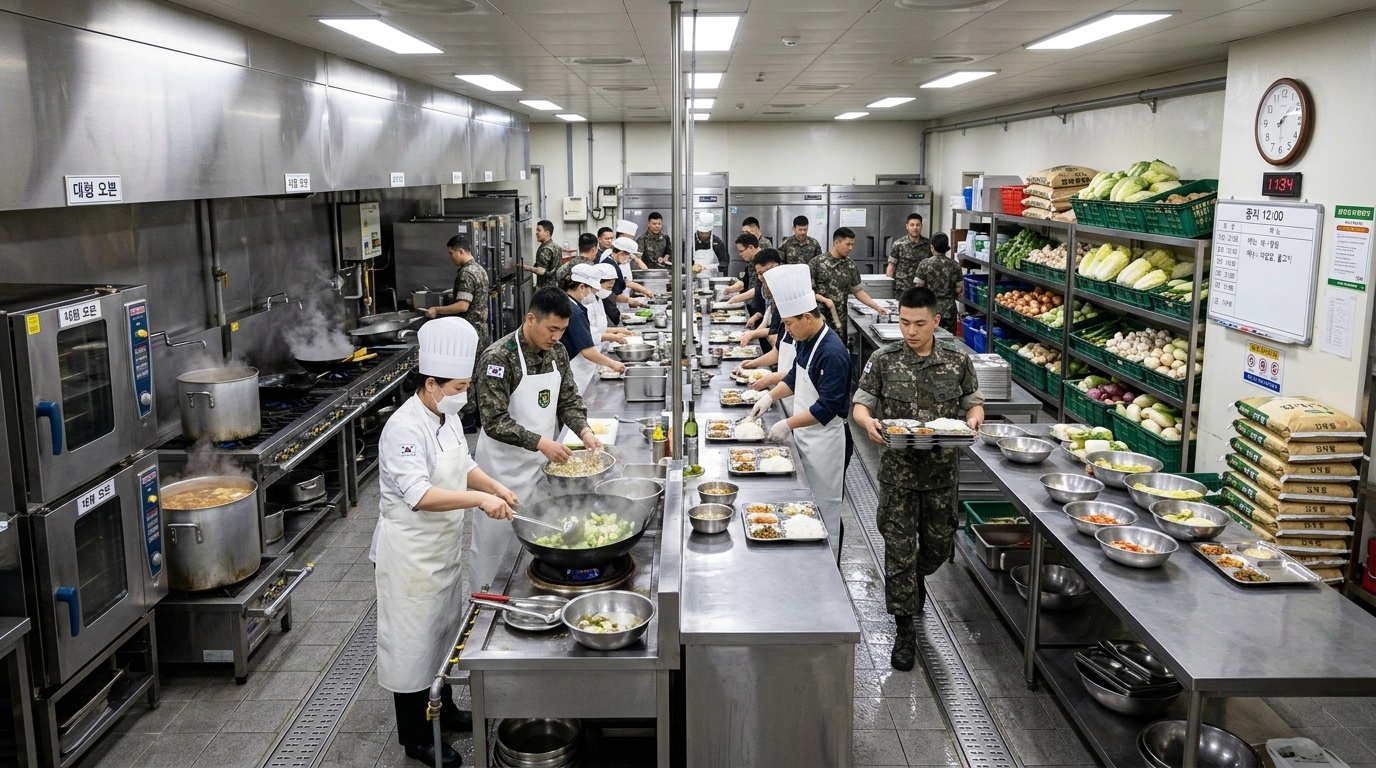
Private companies now run mess halls at more than 50 military units, and the industry estimates the market for military food service at about 2 trillion won. With fewer conscripts to assign to kitchens, private caterers are taking on more of the work: buying ingredients, cooking, managing hygiene, planning menus and running the serving lines.
The market includes Samsung Welstory, Pulmuone Food & Culture, Ourhome, Dongwon Home Food, Sajo Foodist, Hyundai Green Food and CJ Freshway. Companies that built their businesses on corporate cafeterias are now competing to offer menus and supply chains tailored to military routines. CJ Freshway is also expanding its wholesale supply of food ingredients to military units.
In institutional catering, the old test was whether a company could feed a large number of people reliably within a fixed budget. That still matters on a base, but it is no longer the only measure. Soldier satisfaction now feeds into contractor evaluations and future bids. Mess halls are judged on whether they serve what young soldiers actually want to eat, how much variety they offer and how close they come to the eating-out experience.
From Sungsimdang bread to “brand days” on base
Ourhome, part of Hanwha M&S’s Life division, has run the mess hall at the Air Force’s 20th Fighter Wing since April 2024 and has offered special meals made with well-known outside brands. Among them was bread from Sungsimdang, the famous bakery in Daejeon. The idea was to link a regional brand that soldiers already knew to the mess hall menu, so they got something familiar but different from the usual fare.
Ourhome says meal satisfaction went up after it took over and that the share of soldiers skipping meals went down. It later won contracts for three more Air Force units, a sign that soldier feedback has become a performance measure that opens the door to more business.
Pulmuone Food & Culture runs 14 military food service sites across the Army, Navy, Air Force and Marine Corps. It offers meals soldiers choose themselves, multiple menu lines and seasonal specials, plus “brand days” built around outside restaurant brands. Those events bring the menus and feel of familiar chains into an ordinary lunch.
Evaluations and satisfaction scores drive the next bid
Privately run military dining is subject to formal evaluations alongside satisfaction surveys. Pulmuone Food & Culture’s site at the Air Force’s 3rd Flying Training Wing won the top award in the 2026 Air Force Headquarters evaluation of outsourced food service. The 39th Infantry Division’s recruit training battalion, also run by Pulmuone, received an excellence award from Army Headquarters, with an average soldier satisfaction score of 4.8 out of 5.
Samsung Welstory entered military food service in 2024 at the Korea Military Academy. The Korea Army Academy at Yeongcheon, which it runs now, ranked first in a 2026 Army Headquarters evaluation of 19 outsourced units. The company was credited for high-protein menus suited to cadets with heavy physical training, dishes that follow current restaurant trends and seasonal promotions.
Those results show that military food service is no longer measured only by volume. Providers have to feed hundreds at once while keeping food safety and nutrition in order and keep rolling out menus that young soldiers like. A recognizable brand name draws attention, but keeping a contract depends on delivering that experience day after day under mess hall conditions.
Bringing in the cooking system, not just the finished product
Restaurant companies are doing more than dropping off finished dishes. In 2024, Theborn Korea, led by Paik Jong-won, signed an agreement with the Ministry of National Defense and sent professional staff to pilot units such as the 758th Battalion of the Army’s 7th Artillery Brigade. They looked at how mess halls actually run and taught military cooks recipes they could make easily, along with better ways to use their kitchen equipment.
Theborn Korea also served special meals such as galbitang (beef short rib soup), hamburg steak and tteokbokki, and sent Paik’s Coffee trucks to the base. The point was not just to attach a famous name. It was to pass on know-how for making food that soldiers like, within the staffing and equipment limits of a military kitchen. What the private sector is expected to provide has widened from menus to cooking methods and kitchen operations.
No Brand Burger’s arrival at the 35th Division follows the same pattern. Instead of delivering factory-made burgers, the program adapted the brand’s cooking and supply system to the existing military catering site. Combining one company’s consumer brand with another’s institutional food service expertise sets it apart from an ordinary vendor contract. Along with the burger came a commercial kitchen system and a supply chain.
Back in the mess hall, a new standard
A recruit at the 35th Division picking up a burger he requested in advance shows how the center of military food is moving from “being served” to “choosing.” The No Brand Burger name draws the eye, but the bigger change is in the structure: soldiers pick what they eat, and specialized companies run the kitchen to deliver it.
An industry official put it this way: for a long time military food was summed up in one word, jjambap, which meant eating whatever you were given. Now, the official said, an era is opening in which soldiers choose their menu and meet familiar restaurant brands inside the base.
The axis of competition among these companies is also shifting, from “how cheaply and in what quantity can you cook” to “what do soldiers want to eat.” In a 2 trillion won market, a brand is a way to get attention and lift morale, but turning that attention into lasting business means delivering choice and quality every day. The 250 burgers served daily in Imsil are an early test of whether branded military dining stays a novelty or becomes the norm across Korea’s armed forces.
Sources: Shinsegae Food press release and EBN, September 16, 2026; Pulmuone Food & Culture press releases, May 26 and July 23, 2026; Yonhap News, June 26, 2025.