
Table of Contents
$935 million in six months, and a record year within reach
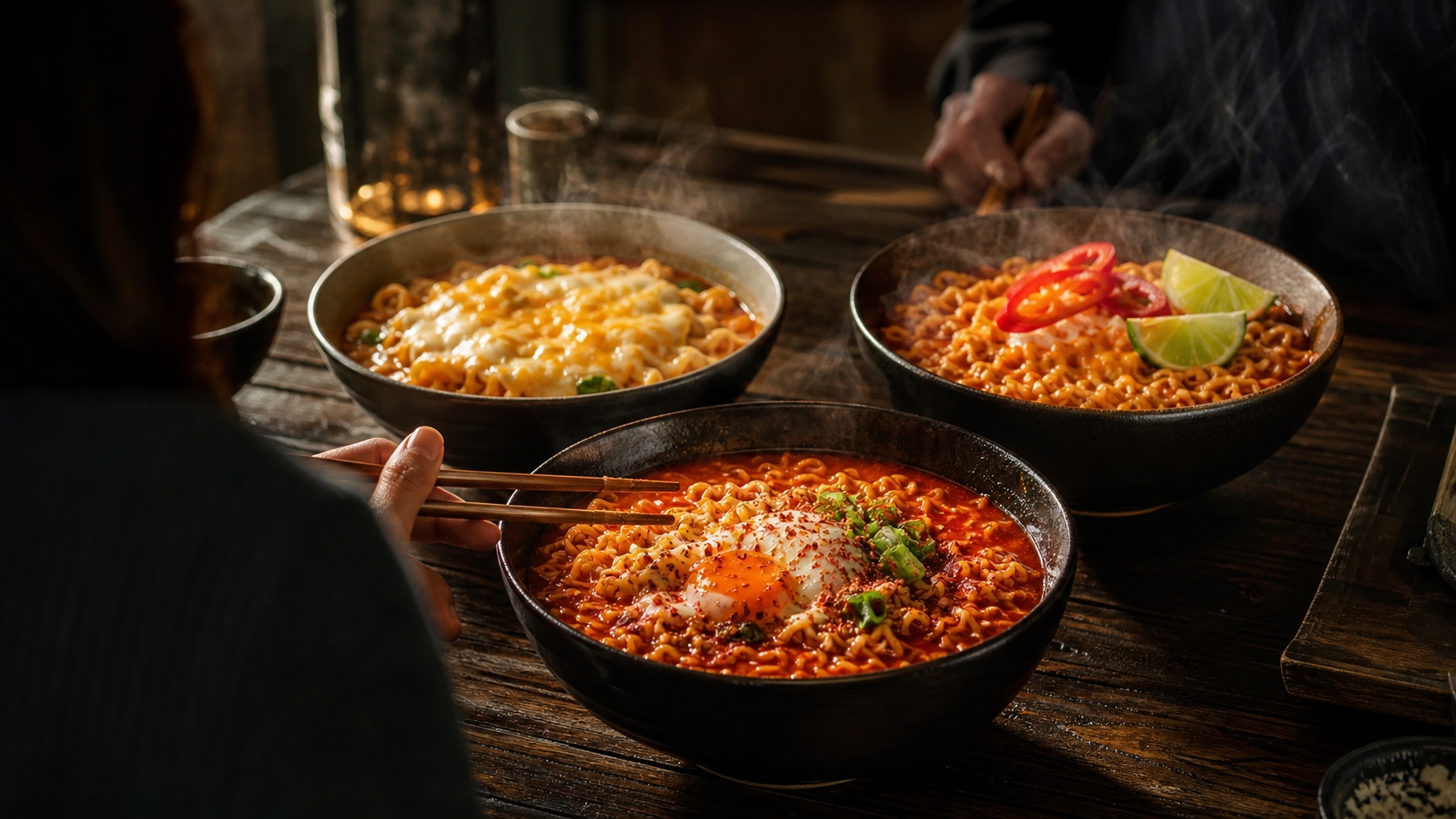
Korean instant noodle exports could pass $2 billion in a single year for the first time. According to the Korea Agro-Fisheries & Food Trade Corporation (aT), ramyeon exports in the first half of this year reached $935.4 million, up 27.9% from a year earlier and the highest on record. That is about 62% of last year’s full-year total of $1.52 billion, reached in six months. The growth is also no longer just about Samyang Foods’ Buldak. Spicy noodles from Nongshim, Ottogi, Paldo and other makers are now part of the story.
The momentum continued after June. In aT’s export tally released on September 14, ramyeon exports stood at $1.3076 billion, up 27.2% from the same period last year. That came as Korea’s total agri-food and fisheries exports crossed $10 billion in 253 days, 19 days faster than last year. The $2 billion mark has not been reached yet. It is a projection based on how exports have been running.
The story is not simply about shipping more of what sells in Korea. Makers are breaking spiciness into levels and pairing it with flavors local shoppers already know, such as cheese and lime. The products share a Korean identity but are built for different markets. As export volumes grow, flavor differentiation, local distribution and production capacity all matter at once.
From Buldak to a wider shelf
Buldak was the product that introduced many overseas eaters to Korean spicy noodles. Since then, long-time Korean bestsellers such as Nongshim’s Shin Ramyun, Ottogi’s Jin Ramen and Paldo’s Bibimmen have also found buyers abroad. The Korea JoongAng Daily reported that consumers who first tried Korean spicy ramyeon through Buldak are now looking at other brands. One product’s fame has become a reason to try several makers’ noodles.
Last year’s export figures by country and region show how wide demand has become. According to the Ministry of Agriculture, Food and Rural Affairs, exports to China reached $385.4 million, up 47.9%. Exports to the United States rose 18.2% to $254.7 million, and those to Southeast Asia’s ASEAN countries rose 12.4% to $223.2 million. Central Asia grew 38.7% to $82.4 million. China had both the largest value and the fastest growth among these markets, but the U.S., Southeast Asia and Central Asia all grew by double digits. With the U.S. and ASEAN each above $200 million, Korean ramyeon now has a solid sales base in regions with very different food cultures and retail systems.
Exports to Japan rose 23.6% to $77.3 million, and exports to the Middle East rose 22% to $47.5 million. An aT official said most Korean ramyeon that sells well abroad is spicy, so rather than competing with Japanese ramen, which tends to be milder and sweeter, it is creating demand of its own. Spiciness here is more than a measure of heat. It is what makes overseas shoppers see Korean ramyeon as a separate category. The figures for Japan and the Middle East also show that export growth is not limited to China and the U.S., and makers now have to keep up with large established markets and smaller growing ones at the same time.
Seven heat levels in Vietnam, cheese in America
Each company localizes in its own way. Paldo created Koreno, a brand made only for Vietnam, and split its spiciness into seven levels so that shoppers can pick the heat that suits them within one brand. It also varied the ingredients, with beef and seafood versions. Instead of offering Korean spiciness at one fixed level, Paldo gave local consumers several ways in.
According to the Korea JoongAng Daily, Paldo’s Vietnamese subsidiary posted sales of 139.9 billion won last year. The case shows that Korean ramyeon makers expand abroad in two different ways: by exporting their domestic hits and by running brands built for a single market. A shopper in Vietnam can pick up Koreno without knowing which noodles are famous in Korea, because the brand and its lineup were designed for that market.
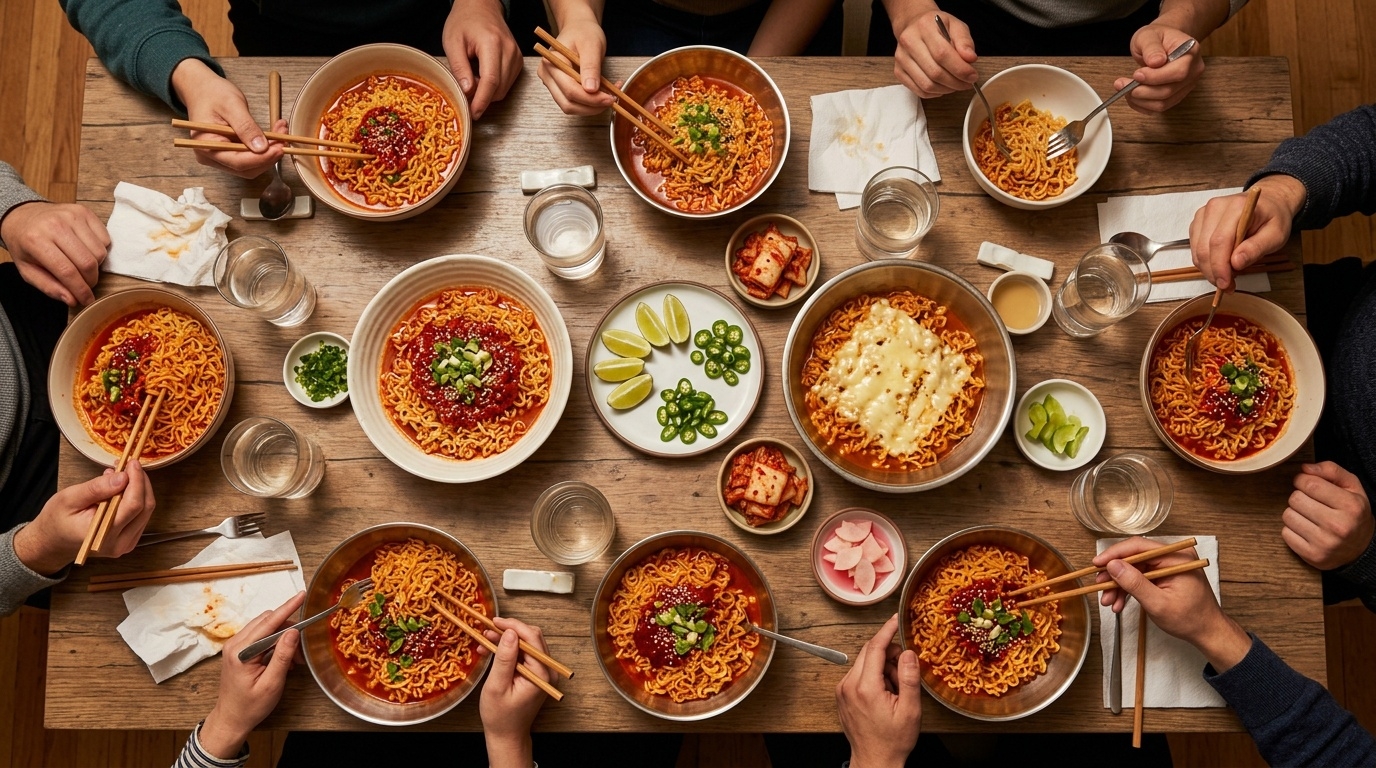
Ottogi focused on cheese, a flavor American consumers already know well. It expanded its cheese ramyeon for the U.S. market to eight products, applying flavors such as cheddar and mascarpone to both soup and stir-fried versions. The heat stays, and a familiar ingredient is added to it. Where Paldo lets eaters choose how spicy they want it, Ottogi widens the experience through types of cheese and ways of cooking.
From habanero lime to mac and cheese
In 2022, Samyang Foods launched Habanero Lime Buldak for the Americas. It pairs the heat of habanero peppers with the sourness of lime, flavors familiar to local consumers who like spicy food. According to an October 26 report by Insight Korea, Samyang now sells 15 varieties of Buldak in the Americas. Rather than pushing one flagship product over and over, the company keeps adding choices under the Buldak name.
Buldak Mac & Cheese, launched in the U.S. in April and sold through Walmart, goes further and changes the dish itself. It takes macaroni and cheese, a familiar American food, and adds Buldak’s heat. Instead of exporting a Korean noodle dish as it is, Samyang attached its brand’s signature to a dish people already know. Alongside Paldo’s heat levels in Vietnam and Ottogi’s cheese ramyeon in the U.S., it shows that localizing does not have to mean making things less spicy.
Distribution is what turns products into sales. In the same report, Samyang said its products are now in about 40,000 stores in the U.S. and that it is expanding distribution in Latin America, centered on Mexico and Brazil. Its sales in the Americas reached 203.6 billion won in the second quarter, up 54% from a year earlier. The company is taking the sales base and product experience it built in the U.S. into neighboring markets.
More demand needs more factories
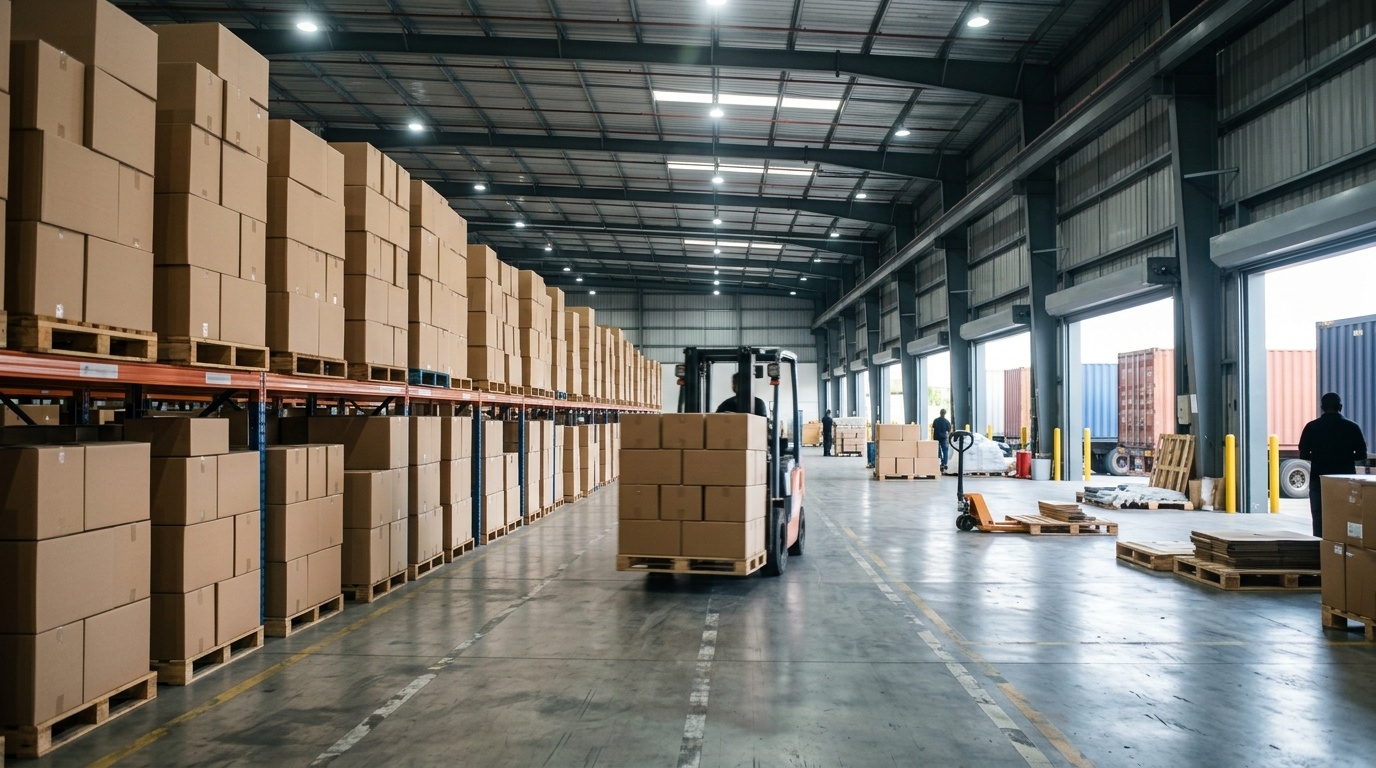
Higher overseas sales are leading to factory investment. Nongshim is building its first export-only plant in Busan. In the Korea JoongAng Daily’s October 11 report, it was described as scheduled for completion in November, starting with three production lines that can make 500 million packs of ramyeon a year. Until now, the company has balanced domestic and export volumes across the same plants, and the new site will be dedicated to exports. The 500 million figure is the plant’s planned capacity. Export value also depends on product mix and prices, but the investment gives Nongshim more room to meet rising orders.
Samyang Foods is building its first overseas plant in Zhejiang, China, and Ottogi plans to open an export-only factory in Gumi, North Gyeongsang Province, by 2029. The locations and timelines differ, but all three companies are adding production capacity for overseas demand. Developing products for local tastes and supplying enough of them reliably are happening at the same time. Samyang is putting production in China while Nongshim and Ottogi are building export plants in Korea, so growing abroad does not lead every company to the same kind of factory.
Whether exports reach $2 billion this year depends on the months that remain. One change is already clear: the paths to growth have multiplied. Several brands are using spiciness as a shared asset while adjusting its strength, ingredients and even the form of the dish for each country. What to watch next is whether these wider lineups turn into repeat purchases in each market, and whether the new plants and distribution networks can keep up. As important as the next export record is whether shoppers in many countries can pick Korean ramyeon off the shelf as an everyday choice.
Sources: Korea JoongAng Daily, October 11, 2026; Insight Korea, October 26, 2026; Yonhap News Agency, September 14, 2026.


