
Table of Contents
Fewer at home, more quality control abroad
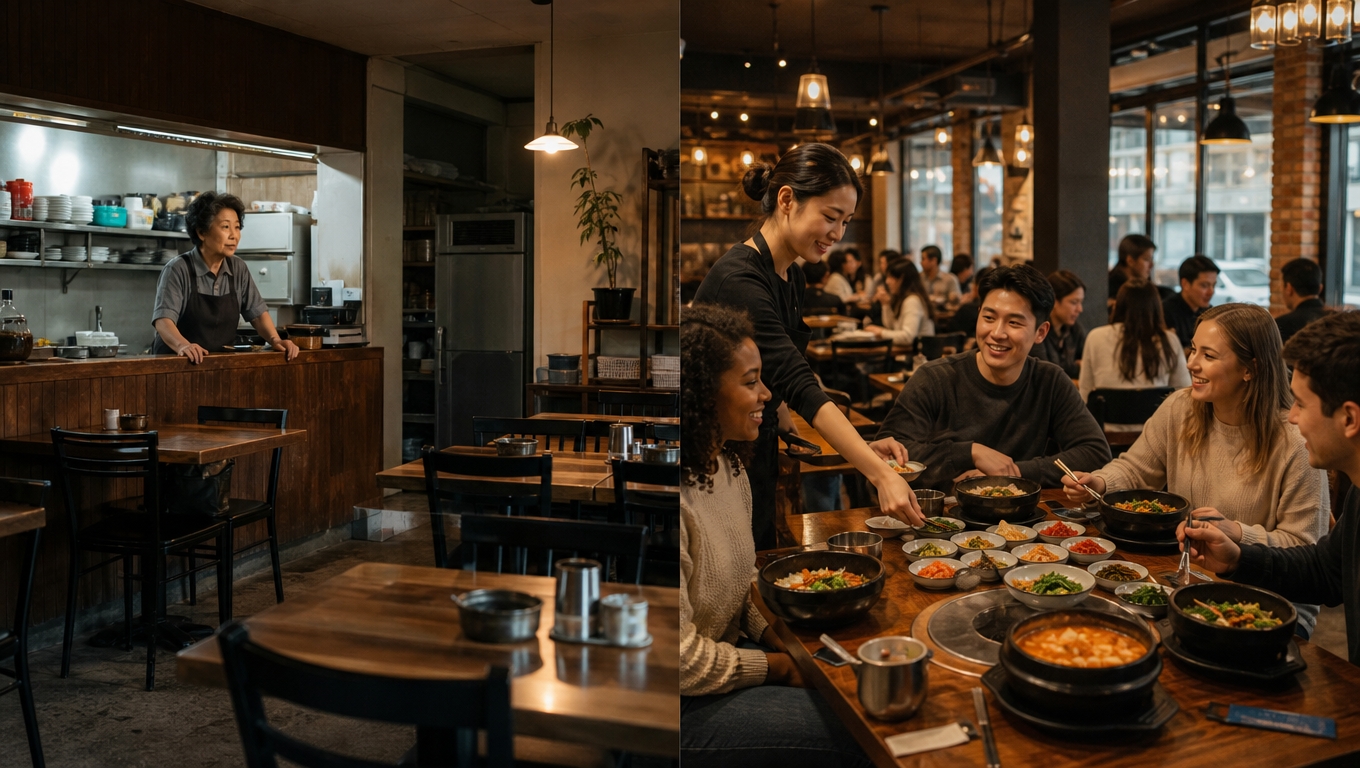
Korea has 6,001 fewer Korean restaurant businesses than it did a year ago. Citing National Tax Service data, The Korea Herald reported that the number of Korean restaurant operators stood at 403,299 in July 2026, down 1.46 percent from 409,300 in the same month last year. Over the same stretch, the government announced it would widen its program for rating Korean restaurants overseas and designate 1,000 of them within five years. The business base is shrinking at home while policy abroad focuses on making the Korean meal more reliable.
The overhaul, announced by the Ministry of Agriculture, Food and Rural Affairs on October 20, opens a program once aimed at high-end restaurants to everyday ones. Restaurants will be graded on hygiene and service, and the system ties in training, ingredient sourcing and staffing support. The idea is that someone trying Korean food for the first time in their own city should get a consistent experience. So two things are happening at once: fewer restaurants for travelers to visit in Korea, and more oversight of the Korean restaurants people find where they live.
Both trends carry the name “Korean food,” but they measure different things. The domestic figure counts registered businesses, while the overseas policy deals with which restaurants get designated and how they are managed. A drop of 6,001 registered operators is not the same as 6,001 restaurant closures. What the two sets of numbers do make clear is that raising Korean food’s profile abroad and keeping a Korean restaurant running in Korea depend on very different conditions.
A rise that held through COVID has turned
The number of Korean restaurant operators kept growing even while COVID-19 spread. The yearly figures reported by The Korea Herald were 386,161 in 2019, 397,465 in 2020, 404,871 in 2021 and 408,019 in 2022. The count kept climbing to 410,323 in 2023 and 411,145 in 2024. The business climate was shaken during the pandemic, yet the number of operators still went up. That is why the recent decline stands out.
The 2025 figure fell to 406,075, and the year-on-year comparison for July this year showed another drop. The annual series and the single-month comparison point the same way: a number that used to rise is now falling. Comparing this July’s figure directly with last year’s annual number would mix two kinds of data, so the like-for-like July comparison, a decline of 6,001, is the clearest measure of the recent change.
Japanese restaurant operators moved the other way during the same period, rising 1.07 percent from 23,201 to 23,451. Within the broad restaurant sector, different cuisines are heading in different directions. That comparison suggests Korean food’s popularity abroad cannot explain what is happening to Korean restaurants at home. To see why the domestic and overseas trends diverge, cultural interest in Korean food has to be read alongside the conditions individual restaurants face in staying open.
Closer to home: owners and running costs
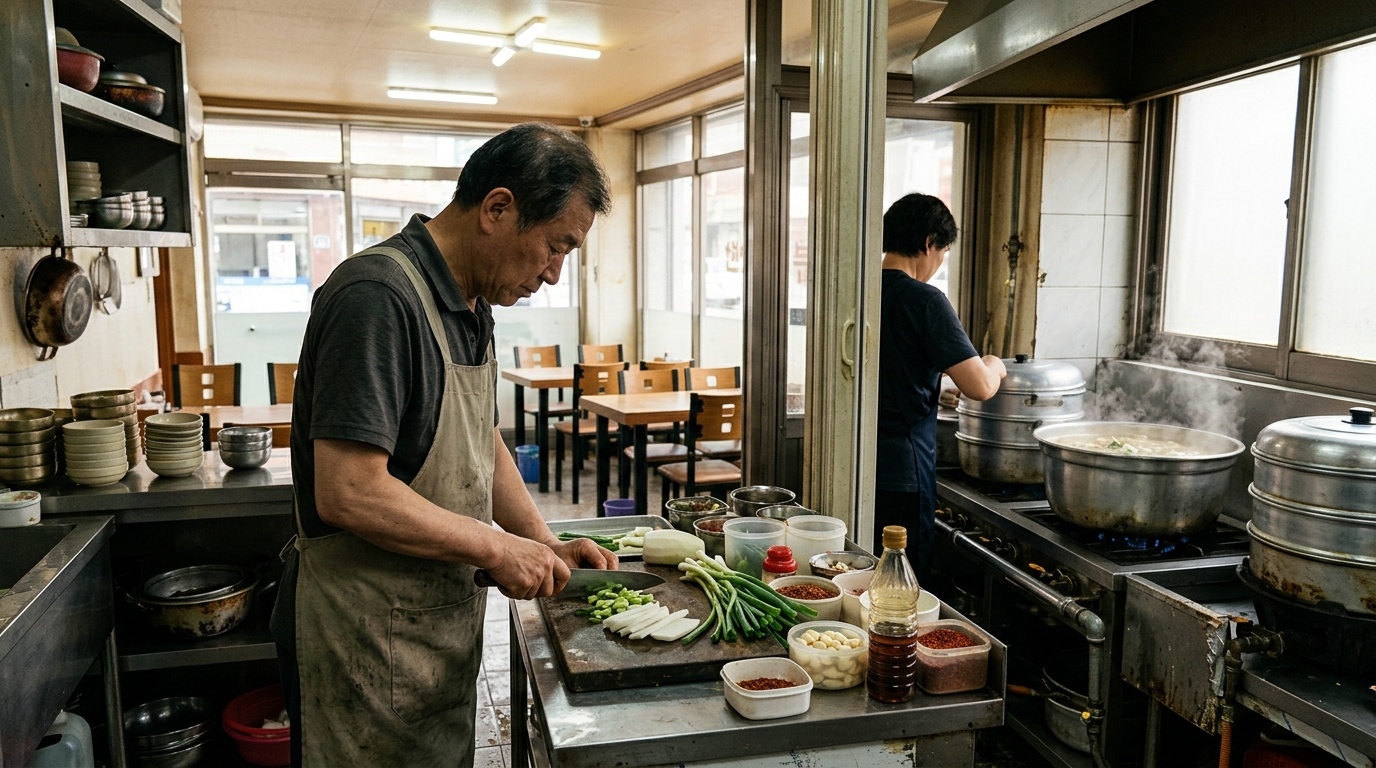
The restaurant industry pointed to three causes for the decline: aging owners, relatively low use of delivery services, and rising ingredient and labor costs. The Korea Herald relayed that diagnosis. None of these factors is about whether customers know Korean food. They are about who runs the restaurant, how it takes orders, and whether it can cover its costs. However well known Korean food becomes overseas, the burden of running a restaurant in Korea stays with the owner.
Aging is a question of who will keep the kitchen going. Delivery is a question of whether a restaurant reaches customers beyond its own tables. Ingredient and labor costs are what it takes to cook and serve the food. These are different kinds of pressure, and they are landing on the same type of business at the same time. The industry’s explanation is less about Korean food losing its appeal and more about what it takes to keep selling it.
For overseas readers, a Korean restaurant in Korea is often where they taste the cuisine on a trip. A traveler sees a cultural experience; the owner sees a business. What is one meal choice for a customer is, for the person behind the counter, a constant balancing of cooking, service, staff and costs. The falling number of operators puts that day-to-day reality next to the global awareness figures.
Overseas designations move from fine dining to everyday spots
The overseas policy starts from growing interest. In the ministry’s survey of overseas consumers, awareness of Korean food rose from 60 percent in 2023 to 68.6 percent in 2025. The government said it wants to address uneven food quality and service as Korean food spreads quickly. The goal has shifted from getting more people to say they know Korean food to what they actually experience when they walk into a Korean restaurant.
Under the new system, restaurants that meet basic hygiene and service standards receive a “Recommended” rating, and those that also meet higher standards and additional criteria, such as using Korean ingredients, can earn an “Excellent” rating. According to The Korea Herald, the minimum time a restaurant must have been operating to apply will drop from three years to one. The bar for entry gets lower, and the grade shows the level reached. The change brings the Korean restaurants people visit every day into the program, not only the upscale ones.
Evaluations will be handled by local bodies, including the overseas offices of the Korea Agro-Fisheries & Food Trade Corp. (aT). A designation lasts three years, with yearly checks on whether the restaurant is still operating and whether it has broken local hygiene rules, plus a renewal review. Designations can be revoked for serious violations or for falling below the standard. The plan pairs a target for the number of designated restaurants with a way to keep standards up after designation.
Beyond the rating: linking cooking and staff
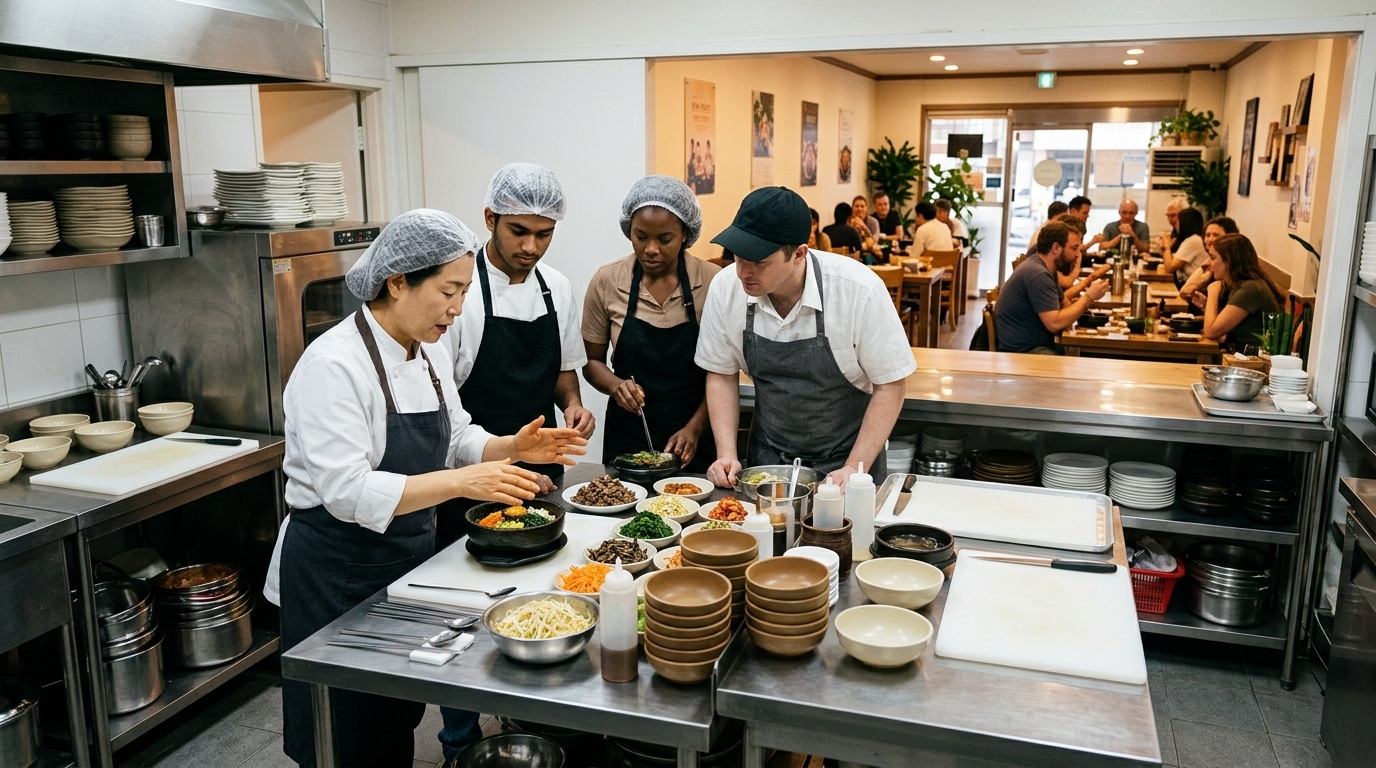
Training is the other pillar. The ministry plans to build a digital Korean cuisine library of multilingual cooking manuals and instructional videos by the second half of 2027. A mobile-based Global Korean Restaurant Academy will offer courses on cooking, hygiene and ingredient management. Training records will count toward designation, renewal and rating upgrades, so preparing for an evaluation also builds a restaurant’s operating skills.
The ministry will strengthen ties with culinary schools such as the Culinary Institute of America and Italy’s ALMA, and connect graduates of Surah School, its Korean cuisine training program, with overseas restaurants that are hiring. For diners, a Global Korean Restaurant Map will show designated restaurants with their locations, ratings and signature dishes. A Korean Restaurant Week involving multiple restaurants is also planned. The plan covers training the cooks, connecting them with jobs and helping customers find the restaurants.
In this policy, an overseas Korean restaurant is both where people meet the cuisine and a buyer of Korean ingredients. The government plans to identify demand for joint purchasing and link Korean exporters with local importers, distributors and restaurants. That explains why sourcing and training are bundled into a quality rating system. Whether the program works will depend on more than the rating on the door. It will depend on whether restaurants use the support to secure ingredients and staff.
Export growth and restaurant survival are separate problems
The expanding overseas market also shows up in exports. According to The Asia Business Daily, Korea’s agri-food exports passed $10 billion on September 29 this year, 18 days earlier than last year’s October 17 milestone, with a full-year target of $12.2 billion. The figure is a supporting sign that the overseas consumer base is growing. Food sold across borders and the number of restaurant operators in Korea measure different activities.
Jeong Kyung-seok, the ministry’s director general for food industry policy, said that turning global enthusiasm for Korean food into lasting growth depends on strong overseas restaurants. Rather than simply adding designations, the reform bundles training, ingredients and skilled staff. The thinking is that expanding Korean food abroad still comes down to individual restaurants having what they need to operate steadily. That approach also brings the domestic industry’s concerns about owners and costs back into view.
The numbers to watch are how many restaurants abroad get designated, whether the oversight holds up over time, and whether the domestic count keeps falling. Policies that help overseas diners find restaurants they can trust and the conditions that let restaurants in Korea keep their doors open both shape the cuisine’s foundation, from different places. Exports and awareness surveys tell part of the story of Korean food’s global spread. The rest is where the restaurants that actually cook it can survive, and on what terms.
Sources: The Korea Herald, October 15 and October 20, 2026; Ministry of Agriculture, Food and Rural Affairs press release, October 20, 2026; The Asia Business Daily, October 26, 2026.