
Table of Contents
The Shift Starting from a Hong Kong Department Store and a Tokyo Pop-up
This September, HAZZYS opened its very first Hong Kong location inside the Sogo Department Store in Causeway Bay. Around the same time over in Tokyo, XLIM launched its debut Japanese pop-up at Shibuya Parco. Both brands call South Korea home, but they took completely different routes to meet their international customers. HAZZYS chose to establish a long-term retail foundation by securing a permanent spot in a major department store. XLIM, on the other hand, focused on conveying its brand vibe through a time-limited pop-up space. It shows how a brand’s first step into a new market is carefully tailored to its size, global experience, and the specific audience it wants to capture.
These different approaches highlight a broader shift for Korean fashion companies: moving past merely shipping products abroad to embracing true, market-specific localization. Brands are no longer content with just handing goods over to foreign distributors. They are actively creating physical spaces where local shoppers can touch, try on, and buy their collections. Depending on the market, the playbook now includes department store residencies, pop-ups, collaborations with local celebrities, anchoring multi-use commercial complexes, or even leveraging character IPs. Building international sales now means taking charge of the entire experience, from choosing the retail location and marketing strategy to directly shaping the relationship with the local consumer.
HAZZYS Enters Hong Kong Backed by Chinese Market Experience
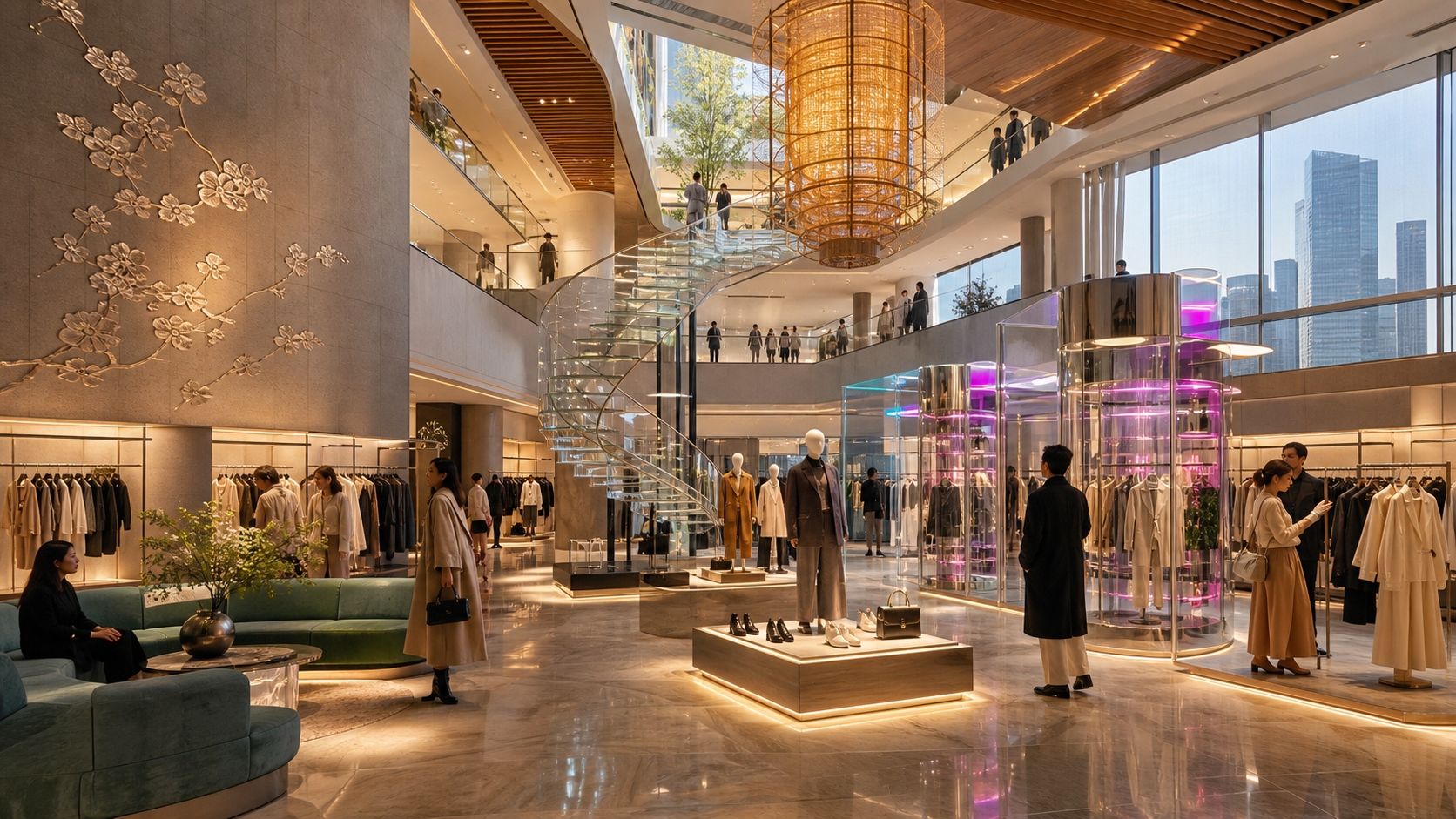
On September 14, LF’s premium casual brand HAZZYS opened a roughly 66-square-meter boutique on the third floor of Causeway Bay’s Sogo Department Store. This marks its first permanent location in Hong Kong. HAZZYS is targeting the “accessible premium” space, the middle ground between everyday casual wear and high-end luxury, sharing territory with names like Ralph Lauren and Tommy Hilfiger. The strategy here is to deliver on premium materials, quality, and design while remaining more approachable than ultra-luxury houses. By placing itself within a category of global casual brands that local shoppers already know well, HAZZYS can more easily highlight what makes its own aesthetic unique.
This launch isn’t a blind leap into international waters. Since entering mainland China in 2007, HAZZYS has steadily expanded its brick-and-mortar presence there. The brand currently operates around 600 stores in China alone, bringing its total global store count to about 880. Leveraging years of retail and brand management experience gathered in China, HAZZYS is now establishing a distinct foothold in the neighboring Hong Kong market. How Hong Kong shoppers respond will be the real test of whether this deeply accumulated operational playbook can successfully adapt to a new city.
Looking ahead, HAZZYS plans to open up to six stores in Hong Kong over the next three years. Instead of testing the waters with a fleeting pop-up, the brand is playing the long game, aiming to carve out a permanent fixture in the local retail scene through department stores. What happens next is what matters: how Hong Kong shoppers respond to the brand’s image and pricing, and whether the momentum from this first location fuels further expansion. Operating a multi-store network demands more than just opening-day hype; it requires repeat customers and steady foot traffic, making this a true test of the brand’s long-term staying power.
XLIM and XEXYMIX Test the Waters with Pop-ups
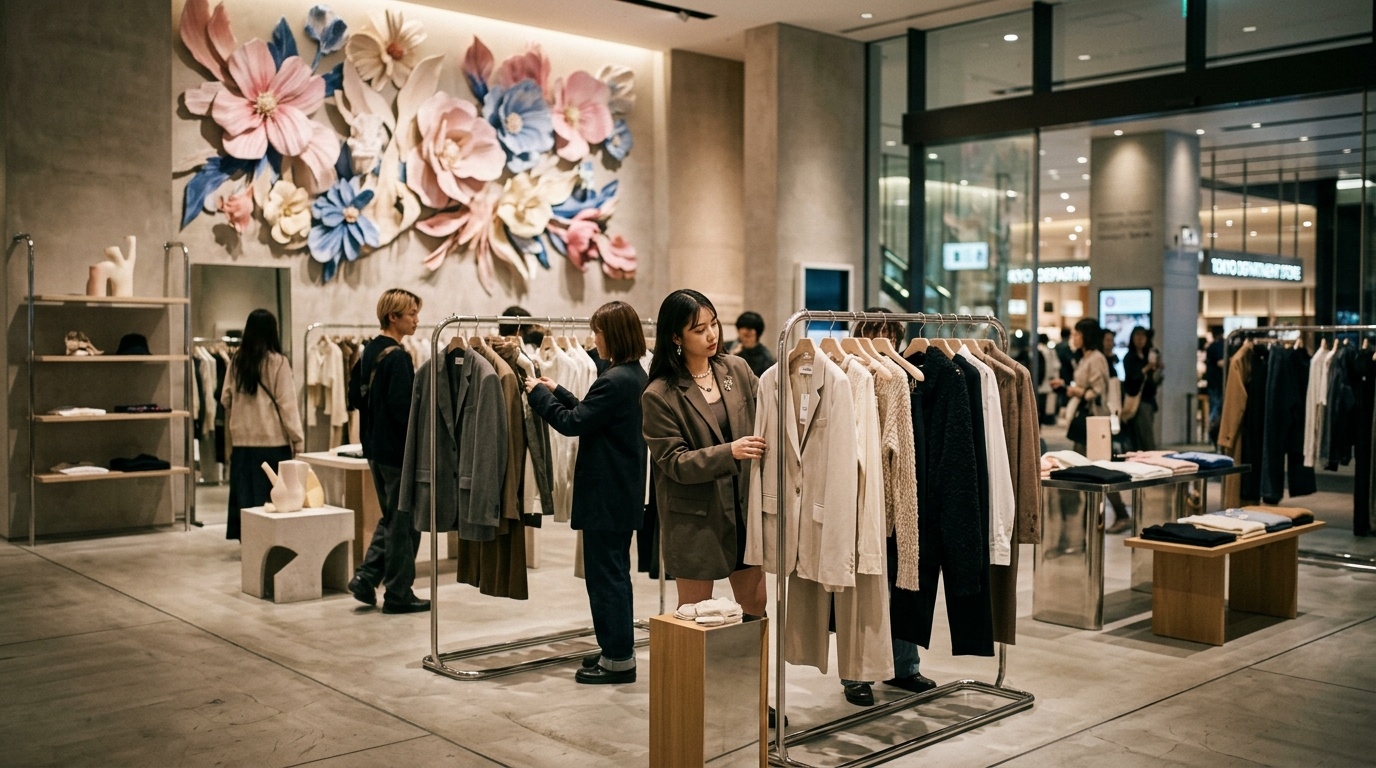
Emerging label XLIM ran its first-ever Japanese pop-up from September 18 to 24 at “Crack,” a dedicated pop-up space on the second floor of Tokyo’s Shibuya Parco. Alongside its latest “Episode 10” collection, the brand dropped a limited-edition graphic tee that creatively reinterpreted the Mugunghwa (Korea’s national flower) as a Japanese cherry blossom. By pairing its newest runway pieces with an exclusive local item in a tight timeframe, XLIM managed to condense its entire design language into a single, punchy experience. For a young brand without a permanent retail network, a pop-up acts as a curated exhibition, offering Japanese customers an immersive first look into its creative universe.
Setting up shop in an iconic local retail hub like Shibuya Parco lets a brand gauge the market with far less risk than signing a long-term lease. Plus, the scarcity of a time-limited pop-up and exclusive merchandise naturally drives foot traffic. XLIM’s approach is a textbook example of product-level localization. Rather than simply copy-pasting a Korean motif, they fused it with a familiar local symbol to create an entirely fresh graphic. The sales data and hype surrounding these exclusive items will undoubtedly guide the brand on which design directions to double down on in Japan moving forward.
Meanwhile, the athleisure brand XEXYMIX is currently running a pop-up at the Sogo Hsinchu store in Taiwan. On September 12, they hosted a “store manager for a day” event featuring members of the local girl group W!nky, drawing an energetic crowd of over 150 to 200 visitors in a single day. The space will remain open through November 30. It’s a smart play that blends the star power of local celebrities with hands-on offline experiences to drive immediate foot traffic. With a relatively long residency like this, the real task is channeling the initial buzz of a one-off event into sustained product engagement and actual sales over the coming months.
Connecting Performances with Luxury Distribution in Thailand
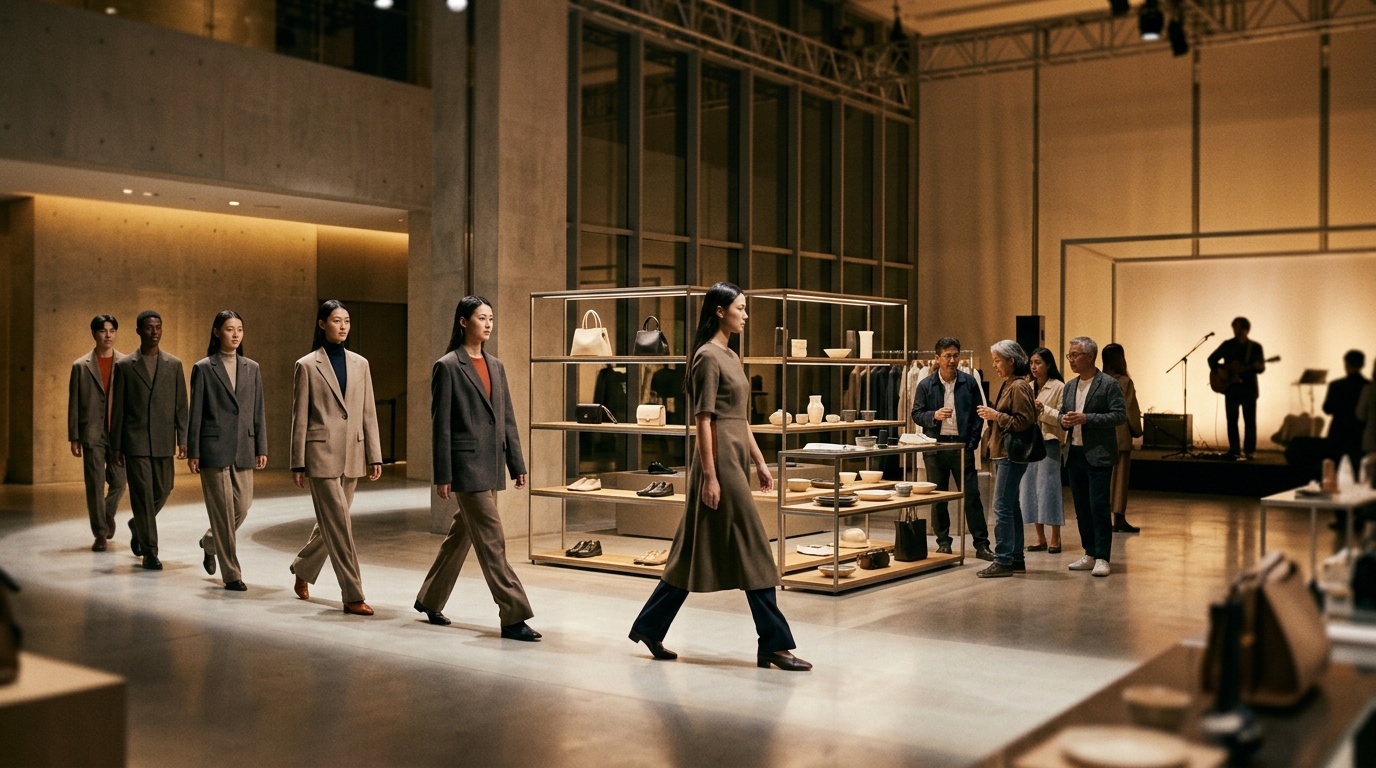
Over in Thailand, designer brand EENK was invited to the “Mint Awards” to unveil its Spring 2027 collection. During the runway show, prominent Thai actor and singer Jaylerr debuted his newest song live on stage. By marrying a Korean designer’s runway presentation with a high-energy performance by a local pop culture icon, what could have been a standard industry event was turned it into cultural content local fans could enjoy too. Anchoring the clothes to a live performance and a familiar face, rather than just putting them on mannequins, makes the collection memorable.
Capitalizing on this momentum, EENK also secured a spot in Club 21, a premier luxury select shop in Thailand. Rather than riding the wave of a one-off viral moment, the brand immediately locked down a high-end retail channel where local shoppers could buy the garments. Using celebrities and major events to spike brand awareness, and then smoothly funneling that attention into a tangible sales channel, is a masterclass in converting cultural clout into a solid business foundation. Unlike marketing stunts that fade after the music stops, EENK ensured that their products remain easily accessible in the city long after the runway is packed up.
Musinsa and N.CAT Expand Their Offline Footprints
On October 31, Musinsa is set to simultaneously open a Musinsa Store and a Musinsa Standard at One Avenue, a massive commercial complex in Shenzhen, China. This marks a major milestone: it expands the company’s Chinese operations, which had been focused on Shanghai and Hangzhou, down into the southern region. By planting both a multi-brand platform store and its own private-label flagship in a fresh commercial district, Musinsa is tackling different layers of consumer demand at the same time. Stepping into Shenzhen illustrates a sophisticated strategy of breaking down the massive Chinese market into distinct, regional consumer zones rather than treating it as a monolith.
The new Musinsa Store will debut with a curated lineup of around 30 Korean fashion brands. This isn’t a solo act; it’s a platform-driven expansion that introduces an entire ecosystem of Korean style under one roof. The brands get to tap into Musinsa’s powerful retail infrastructure to reach local shoppers, while Musinsa acts as the ultimate curator of modern Korean fashion. More than just a retail floor, the Shenzhen location is a testing ground for how South Chinese consumers respond to various labels. For smaller indie brands, it is an invaluable pipeline to physically reach international shoppers without shouldering the steep costs of opening an independent boutique.
N.CAT, the company behind the popular accessory brand, opened its first direct-operated U.S. store at the Del Amo Fashion Center in Torrance, California, this past August. They kept the momentum going by launching a second location at the Brea Mall on September 19. N.CAT is treating these two outposts as critical testing grounds for a broader American expansion. By gathering localized sales data and observing real-time consumer habits, the company is weighing a nationwide rollout using a franchise model. The lessons learned in these two California malls will ultimately dictate how N.CAT designs its stores and curates its merchandise for the wider U.S. market.
The Culmination of Localization Extending to Character IPs
Character IP brand ConCon is currently running a solo pop-up store dubbed “Glasses Dumpling Town” at Taipei’s Songshan Cultural and Creative Park from September 1 to 29. The space offers around 70 different products, ranging from plush toys and apparel to stationery. The initial inventory flew off the shelves much faster than anticipated, forcing the brand to rush in emergency restocks. It is a textbook example of transforming digital, online-native character fame into tangible offline sales. By building a diverse merchandise lineup around a beloved character rather than sticking strictly to apparel, ConCon allows fans to engage with the brand at various price points and practical uses.
Permanent department store boutiques in Hong Kong, buzzy pop-ups in Japan and Taiwan, runway-meets-concert spectacles in Thailand, and robust offline hubs in China and the U.S. might look like totally disparate strategies on paper. However, they all share a core philosophy: these brands are no longer just exporting boxes of clothes. They are meticulously designing physical spaces and compelling narratives for local shoppers to experience the brand firsthand. Everything from the product mix and event formats to the choice of collaborators and retail channels is being hyper-tailored to the target market. The golden rule for global expansion today is recognizing that even the strongest brand needs to change its approach depending on the specific country and neighborhood it enters.
Some veteran players, like HAZZYS, are taking years of international retail experience and applying it to new territories, while rising labels like XLIM are relying on high-impact pop-ups to test the waters. Musinsa is acting as a sweeping platform to export the collective energy of multiple Korean designers, while brands like ConCon are leading the charge with character IPs and lifestyle goods. Moving forward, the global success of K-fashion won’t just be measured by sheer export volume or the number of dots on a map. Instead, the real winners will be those who can create and sustain meaningful, culturally relevant touchpoints in every unique market they enter.
Source: Market Economy Newspaper, “K-Fashion’s Global Formula Changes… Moving Beyond ‘Exports’ to Localization Competition,” September 19, 2026.