
Table of Contents
Local History Carried by the Lanterns of the Namgang River
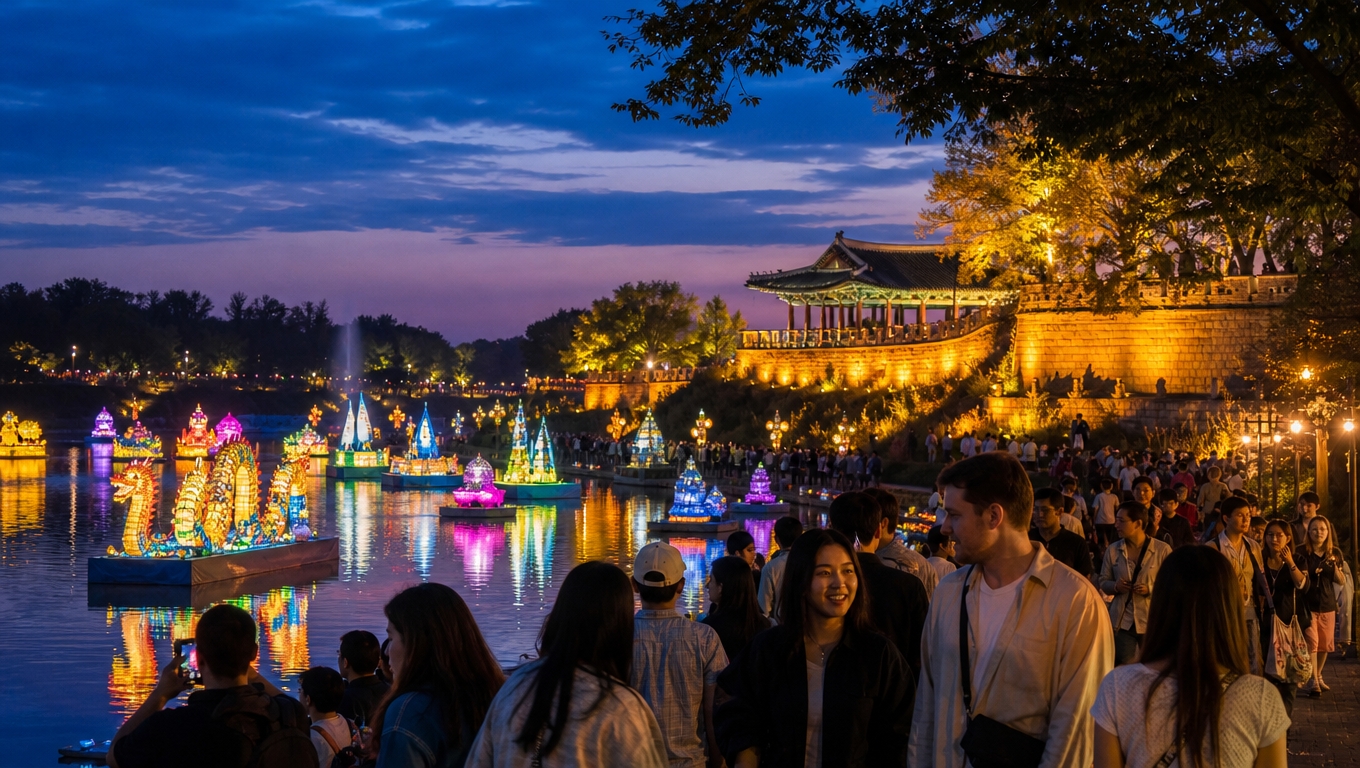
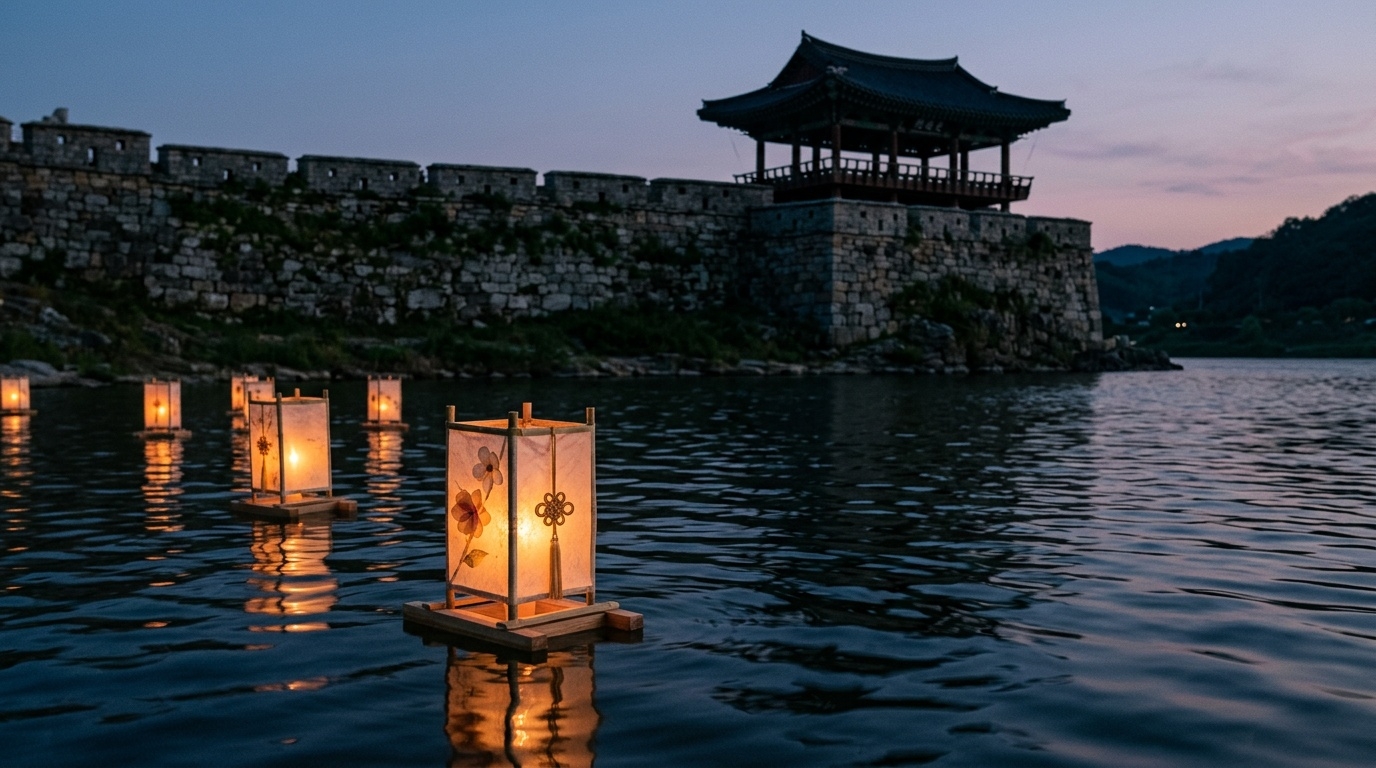
The Jinju Namgang Yudeung Festival lights up the Namgang River and Jinjuseong Fortress in South Gyeongsang Province from October 3rd to the 18th. The tradition of floating lanterns on this river runs much deeper than today’s tourist event, tracing back to the region’s wartime past. During the Siege of Jinju in the Imjin War, those inside the fortress used river lanterns to communicate with righteous armies positioned outside. The term “yudeung” literally means floating lantern, and back then, it was used as a military signal and a way to communicate.
For international readers, the Imjin War was a conflict sparked by the Japanese invasion of the Korean peninsula in the late 16th century, and Jinjuseong Fortress was the site of a pivotal battle. The lanterns at the festival today aren’t recreating their old tactical function. Instead, they carry a remembered historical experience into a shared cultural celebration. The river and the fortress hold their significance precisely because they’re tied to this history.
What’s changing in this year’s festival isn’t the story behind the lanterns, but how the event welcomes its guests. Organizers can no longer assume every visitor speaks Korean or knows the local transit and travel landscape. The city of Jinju has mapped out a strategy to help international tourists find event details, navigate the grounds, and explore the surrounding areas. This shift was shaped directly by last year’s attendance numbers.
Just 5,000 International Guests Among 1.6 Million Visitors
According to city data reported by the Gyeongnam Shinmun, the 2025 festival drew around 1.6 million visitors, yet only about 5,000 were from overseas. A large crowd overall doesn’t necessarily mean the infrastructure is ready for international tourism. Even an event beloved by locals and domestic travelers can be hard for foreign tourists to discover or fit into their itineraries. The gap between those two numbers is the exact challenge Jinju is trying to solve.
For 2026, the city has set its sights on 10,000 international visitors. That’s double last year’s figure, but it remains a goal rather than a guarantee. Large crowds during the event alone won’t tell us whether this target was met. The most important part of this year’s strategy is that growing the overall visitor count and reaching more foreign visitors are treated as two separate tasks. To tackle the latter, organizers are overhauling both their guidance systems and sales channels.
This new direction gained official momentum in March when the Ministry of Culture, Sports and Tourism designated the event a “Global Festival.” Rather than recognizing fame the festival already has, the designation works as a support program meant to help festivals attract foreign tourists and build better visitor infrastructure. With that backing, Jinju can turn its local history into a broader travel draw, covering both promotion and practical fixes for visitors.
Expanding the Journey Beyond the Festival Grounds
A March 12 report from the Gyeongnam Ilbo noted that Jinju will receive 800 million won annually from 2026 to 2028, totaling 2.4 billion won in national funding. The target of 80,000 international tourists mentioned in that same announcement is set for 2028, not this year. Keeping this year’s 10,000-visitor goal separate from the medium-term target matters for fairly judging the festival’s progress as these initiatives roll out.
The funding is aimed at turning a brief stopover into a longer stay that explores the surrounding region. Stay-type tourism combines accommodations and multiple attractions, rather than just a quick drop-in visit. Because the lantern festival is a nighttime event, it pairs naturally with daytime excursions. But having nearby tourist spots doesn’t automatically create a viable travel package; it takes real work to link transportation and booking systems together.
In late April, Jinju signed a joint agreement with neighboring municipalities to boost regional tourism. Following that, a global expansion strategy unveiled in May proposed a tourism belt connecting the festival with other cultural events in the Gyeongsang area, such as the Sancheong Medicinal Herb Festival and Haman Nakhwanori. This lays out a network of potential pairings, though it doesn’t mean all these events happen on the exact same dates. For travelers, what matters is whether these names can be bundled into practical packages where the dates line up and the transit makes sense.
From Spring Plans to a Multilingual System by September
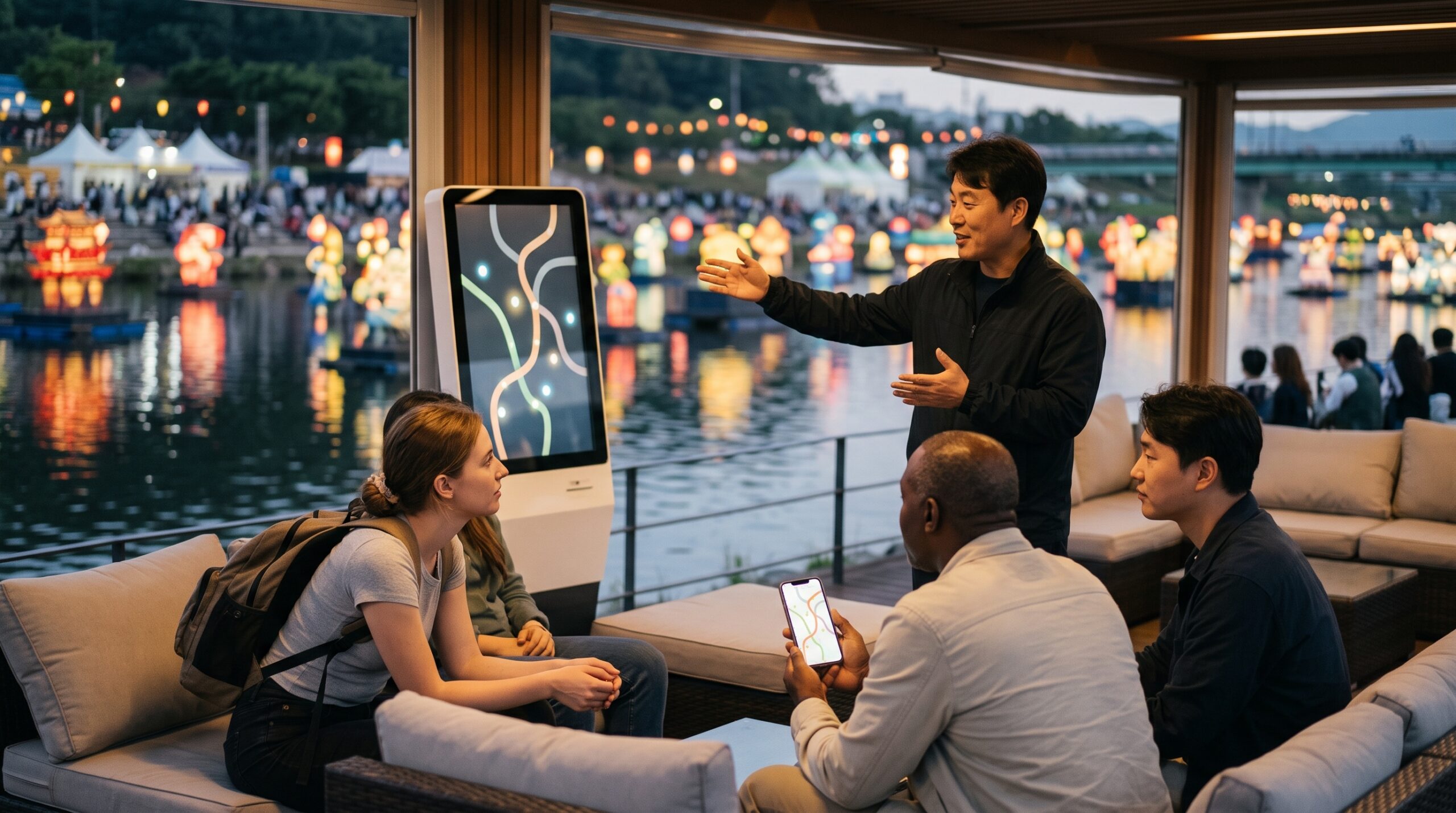
The core of the May strategy was taking down the language barrier. The city announced plans to upgrade its Korean-centric festival app into an integrated multilingual platform, using GPS to offer real-time event updates. Linking this system with multilingual on-site kiosks was also part of the plan. These interactive terminals let visitors tap through to the information they need, connecting the online planning to actual help on the ground.
That same announcement introduced dedicated lounges for international visitors and an accompanied guide service. The lounge offers a place to rest and pick up maps and advice, while the walking guides provide direct, in-person help throughout the grounds. Translating signs is one thing; having a person on hand to help in person is another, harder thing to set up. Still, an announcement doesn’t guarantee smooth execution, so it’s worth separating the original plans from the systems that were actually ready before opening night.
A September 28 report from Daehan Kyungje confirmed that the multilingual platform had taken shape. Jinju said it would run its first GPS-based system for real-time festival mapping this year, turning the spring plan into a working guide system in time for the opening. For foreign visitors, reading about an event isn’t enough; they need information that connects where they are to where they want to go. This shift toward location-based guidance addresses both needs at once.
Beyond the Buzz: What the Visitor Experience Leaves Behind
Organizers also reworked how international tourists discover the festival. Jinju detailed plans to work with inbound travel agencies, companies that build trips for foreigners visiting Korea, and to connect with overseas online booking platforms. Tour groups rely on agencies to slot the festival into their itineraries, while independent travelers need information they can act on themselves. For the same event, the path to get there looks different depending on how someone travels.
Pre-festival marketing included familiarization, or “fam,” tours that invited international influencers to preview the site so they could share it with their audiences. Setting those plans in May didn’t mean the promotional work was finished right away. The festival’s official global portal is live now and lists this year’s dates, so visitors have a working information source regardless of how the influencer campaign played out.
Running through October 18th, the festival is doing more than retelling an old tradition. It’s rebuilding how information, transportation, and travel packages connect an existing local story to a global audience. Whether Jinju hits that 10,000-visitor mark won’t be clear until the lanterns are packed away. The real test will be whether the multilingual upgrades actually improved the experience, and whether a single night on the river convinced travelers to linger in the region a little longer.
Sources: Gyeongnam Ilbo, March 12, 2026, https://www.gnnews.co.kr/news/articleView.html?idxno=632421; Gyeongnam Shinmun, May 20, 2026, https://www.knnews.co.kr/news/articleView.php?idxno=1542098; Daehan Kyungje, September 28, 2026, https://www.dnews.co.kr/uhtml/view.jsp?idxno=202609271110080770418; Jinju Namgang Yudeung Festival Official Global Portal, date unpublished, accessed October 9, 2026, https://yudeung.com/.


