Table of Contents
The K-Beauty Store That Became a Travel Destination
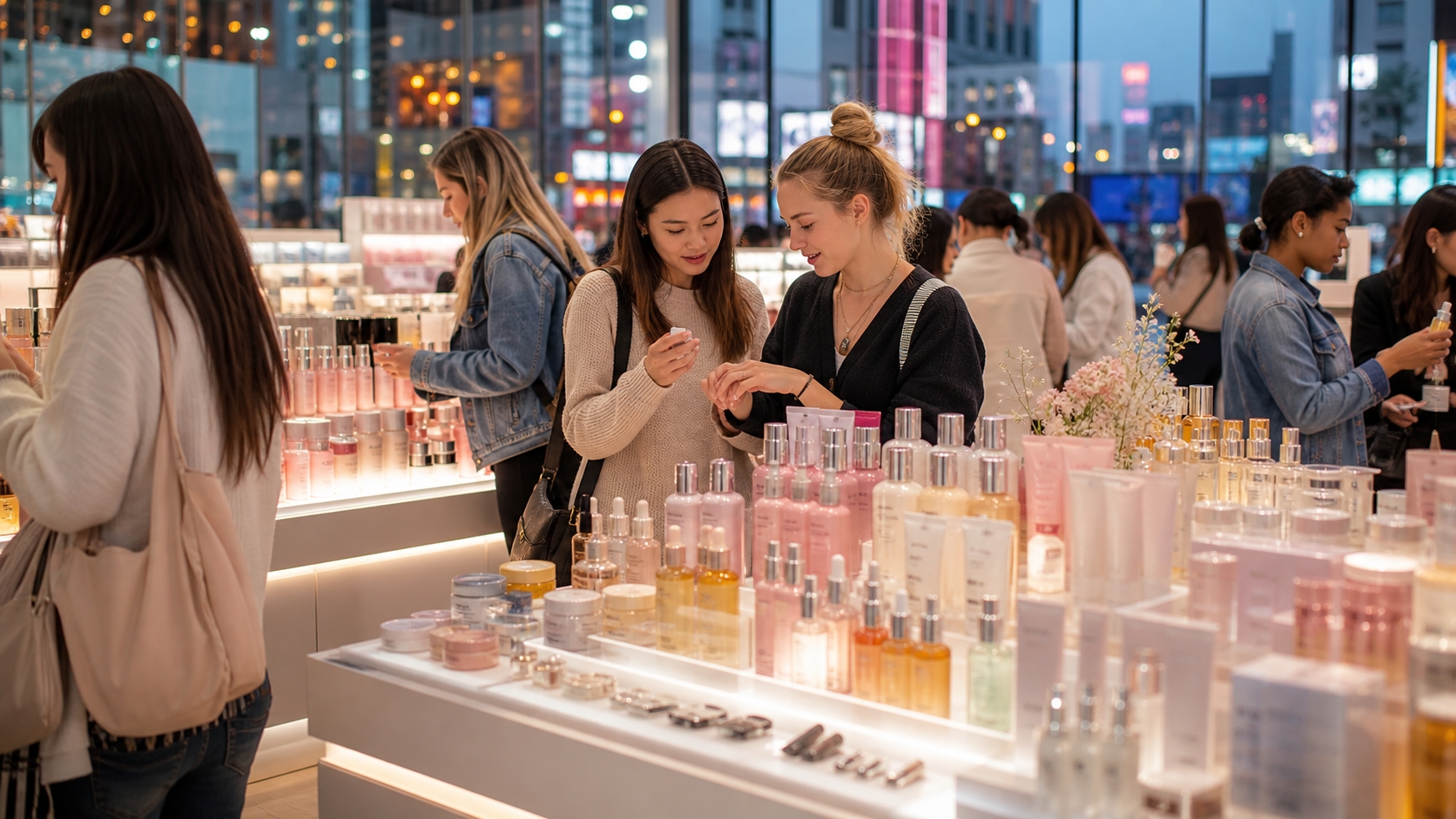
At CJ Olive Young stores in downtown Seoul, it’s not hard to spot foreign tourists browsing the cosmetics aisles. For many of them, Olive Young isn’t just a place to pick up everyday essentials. It’s become known as a ‘K-beauty tourism mecca,’ a single destination for Korean skincare, wellness, and beauty products. It’s the moment when interest in Korea sparked by K-pop and dramas turns into a plane ticket, and then a card swipe at a store back home in Seoul.
For foreign tourists, a Korean cosmetics store is where they get to check out, in person, the beauty routines and products they first encountered through content. Browsing and buying becomes part of the travel experience itself. As department stores and health-and-beauty shops become fixtures on tourist itineraries, K-culture’s reach is expanding well beyond streaming a show or watching a concert. It’s translating directly into revenue for Korea’s retail industry.
This isn’t just a vibe felt in a handful of popular shopping districts; the numbers back it up. Foreign tourists’ cumulative card spending in the first half of 2026 came to 10.0389 trillion won. That’s a 50.8% jump from the same period last year, and the first time first-half card spending has crossed the 10 trillion won mark.
10 Million Visitors in a Half-Year, a First
According to the Ministry of Culture, Sports and Tourism, roughly 1.99 million foreign tourists visited Korea in June 2026, up 23.1% from the same month a year earlier. That brought the cumulative total for January through June to 10.71 million, the first time in Korea’s tourism statistics that first-half visitors have topped 10 million.
Crossing 10 million visitors in a single half rather than waiting for the full year shows that large-scale tourism demand has already taken hold. As visitor numbers climb quickly, so does spending inside Korea, not just on lodging and transportation but on shopping, dining, and cultural experiences. What matters most is that these arrival records are translating directly into actual domestic spending.
By country, Chinese tourists led the way in June with about 650,000 visitors, also posting the highest growth rate. Japan followed with 350,000 and Taiwan with 220,000. Visitors from the Americas and Europe numbered 220,000 and 120,000 respectively, and Southeast Asia’s six major markets, Vietnam, the Philippines, Indonesia, Thailand, Malaysia, and Singapore, together brought in 230,000 visitors.
Traditional core markets like China and Japan are driving growth, while demand from Taiwan, the Americas, Europe, and Southeast Asia is expanding at the same time. Rather than relying on group-tour demand from any single country, tourists are arriving from a broader mix of regions, a sign that the foundation of Korea’s tourism market is widening. It also means the market can better absorb shocks if any one country’s economy or currency shifts.
Spending Is Growing Faster Than Visitor Numbers
The first half’s card spending of 10.0389 trillion won arrived roughly three months earlier than when Korea first crossed the 10 trillion won mark last year. It reflects not just more tourists but more spending opportunities during their stay. That spending is recovering faster than visitor numbers are growing is one of the most notable points in this year’s tourism data.
Visitor numbers show the size of the market, but understanding the effect on the domestic economy requires looking at spending too. The same number of tourists has a very different economic impact depending on whether they spend only on lodging and meals or also on shopping, beauty, and cultural experiences. A 50.8% jump in first-half spending shows that foreign tourism is translating into revenue across more sectors of the domestic economy, faster than before.
Monthly figures tell the same story. In May alone, 1,945,809 foreign visitors came to Korea, and their domestic card spending, including online purchases, was estimated at about 2.1222 trillion won. Foreign travelers are spending on cosmetics, fashion, food, and various services well beyond the basics of lodging and transportation, a sign that tourism demand is converting into domestic consumption.
The fact that online spending is included shows that foreign tourists’ spending isn’t confined to physical stores. Digital payments made while preparing for the trip or during a stay in Korea also count as part of tourism spending. Card data doesn’t capture every cash transaction, but it’s a useful gauge for comparing the scale and pace of spending growth.
Tourist Spending Moves Into Department Stores and Olive Young
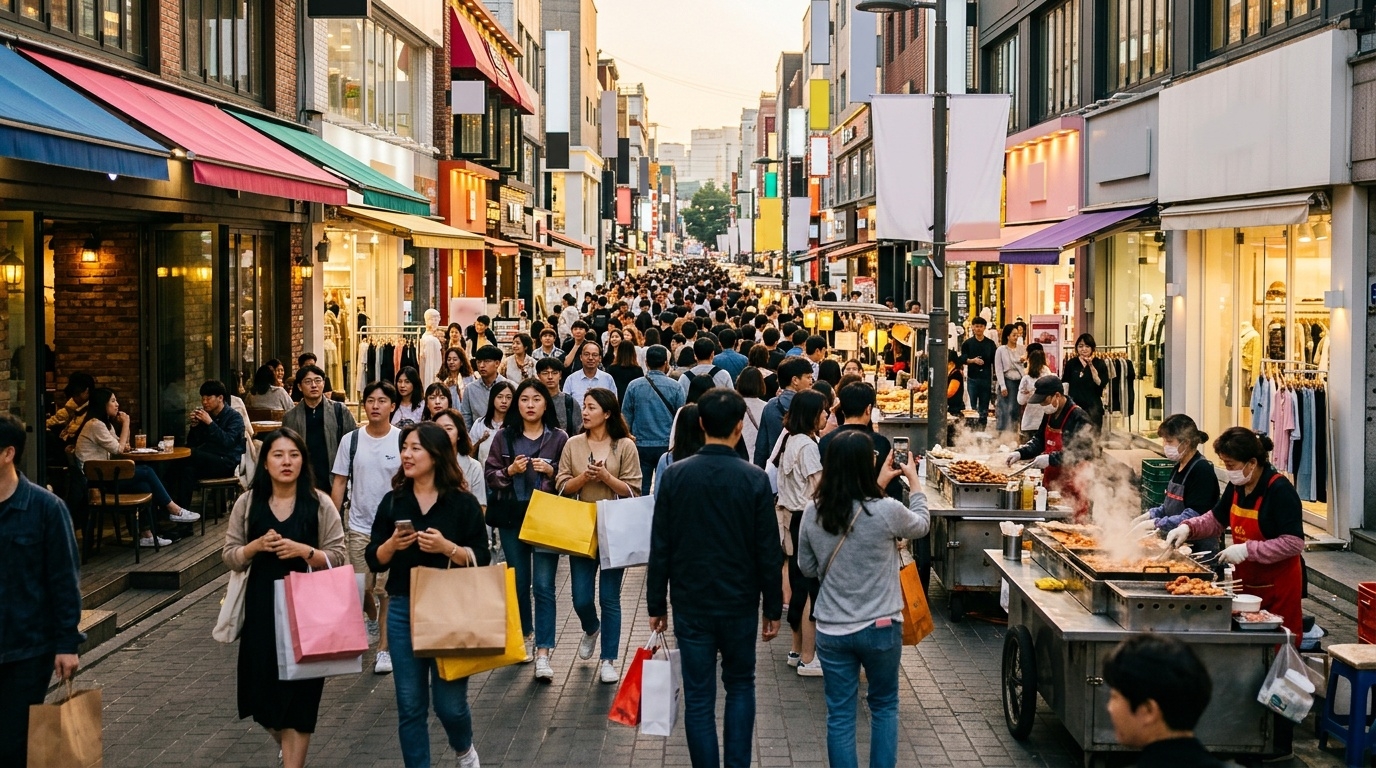
The effects of this spending boom are showing up directly on the ground in Korean retail. Foreign sales at the country’s three major department store chains hit an all-time high in the first half of 2026. Where foreign shopping used to concentrate around duty-free stores and a handful of tourist districts, it’s now spreading into department stores’ K-fashion and K-beauty sections and health-and-beauty shops across the city.
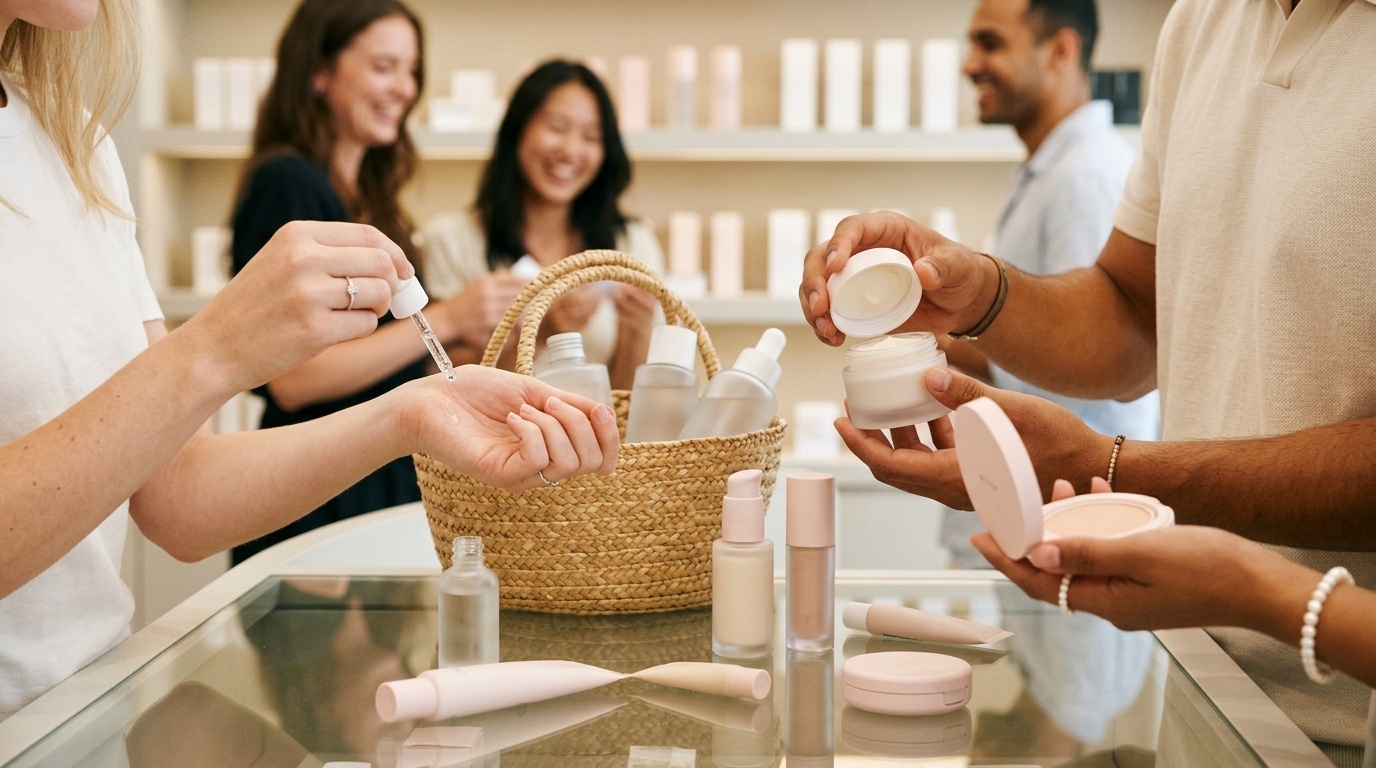
CJ Olive Young being seen by foreign tourists as a K-beauty tourism spot symbolizes this shift. Comparing and buying products in person that are otherwise sold back home has become part of the travel itinerary itself. Interest in beauty routines and products first discovered through content is translating into actual store visits, forming a pathway where K-culture drives revenue for the retail industry.
Department stores, too, are no longer just spaces for selling high-end goods. Being able to browse multiple Korean fashion and beauty brands in one place, alongside dining options, makes them a destination for independent foreign travelers. The fact that all three major department store chains hit record foreign sales at the same time suggests the effect of tourist spending isn’t confined to any single brand, but is spreading across major retail channels broadly.
This shift shows that what’s changing isn’t just why tourists come to Korea, but where they spend their money once they’re here. As interest in K-culture turns into trust in and curiosity about products made and sold in Korea, tourism spending spreads beyond airlines and hotels into retail and everyday services. For industries dealing with sluggish domestic demand, foreign spending can serve as a new customer base.
How K-Culture and the Exchange Rate Shaped the Spending Boom
Underpinning the demand to visit Korea is the spread of K-culture across music, dramas, film, food, and beauty. People who consume Korean content abroad go on to visit Korea in person, experience the places and lifestyles they saw in that content, and buy related products. Tourism, content, and retail aren’t separate industries here; they’re connected through a single consumption pathway.
K-culture’s role doesn’t stop at putting Korea on the map as a destination. It also shapes what tourists eat, which stores they seek out, and which products they buy once they’ve arrived. The more interest people have in the culture and everyday life they saw on screen, the more naturally their spending expands while traveling. Understanding this connection matters when looking at why spending has grown faster than visitor numbers.
Exchange rates played a role in the spending boom as well. A weaker won lowered the perceived cost of traveling and shopping in Korea for some foreign tourists, including those from the U.S. and Europe. When Korean goods and services become relatively cheaper once converted into a traveler’s home currency, the same travel budget stretches further.
Currency conditions vary by country, though. Some markets, such as Japan with its own weak yen, are harder to explain through won weakness alone. It’s more accurate to say that price competitiveness from exchange rates and the pull of K-culture itself worked together. The fact that tourists are arriving not just from China but from Japan, Taiwan, the Americas, Europe, and Southeast Asia also shows that no single factor fully explains this growth.
What It Would Take to Reach 23 Million
If growth from the first half continues, some project an era of 23 million annual foreign visitors, the upper end of the government’s stated target range of 22 to 23 million. But visitor projections alone don’t capture how well the tourism industry is performing. Length of stay, spending per visitor, and where and in which industries that spending lands all need to be weighed to understand the real economic effect of tourism growth.
If more tourists arrive but their spending stays concentrated in a few regions or major retailers, the ripple effect will be limited. If spending instead spreads across department stores, health-and-beauty shops, fashion, and dining, the warmth of tourism growth can reach a wider range of businesses. Crossing 10 trillion won in first-half card spending is a starting point that shows this kind of broader reach is possible.
Policy variables remain in play, too. How long the won stays weak will affect foreign travelers’ costs and purchasing power, and government regulation, such as a recent revision to the Tourism Promotion Act raising the cap on the tourism development fund levy for foreign-only casino operators from 10% to 15% of revenue, could affect investment and profitability for parts of the tourism industry. For tourist growth to translate into stable growth across retail and services, Korea will need to keep building content and experiences that don’t rely on the exchange rate alone.
The image of a foreign tourist picking out products at Olive Young captures the point where first-half numbers turn into real domestic activity. As striking as the record of 10.71 million visitors is, the more noteworthy figure is the 10.0389 trillion won in spending. What remains to be seen is whether that spending outlasts a temporary exchange-rate effect and leaves a broad, lasting mark on Korean brands, retailers, and local commercial districts.
Sources: Ministry of Culture, Sports and Tourism press release, July 28, 2026; Korea Report, September 23, 2026.