
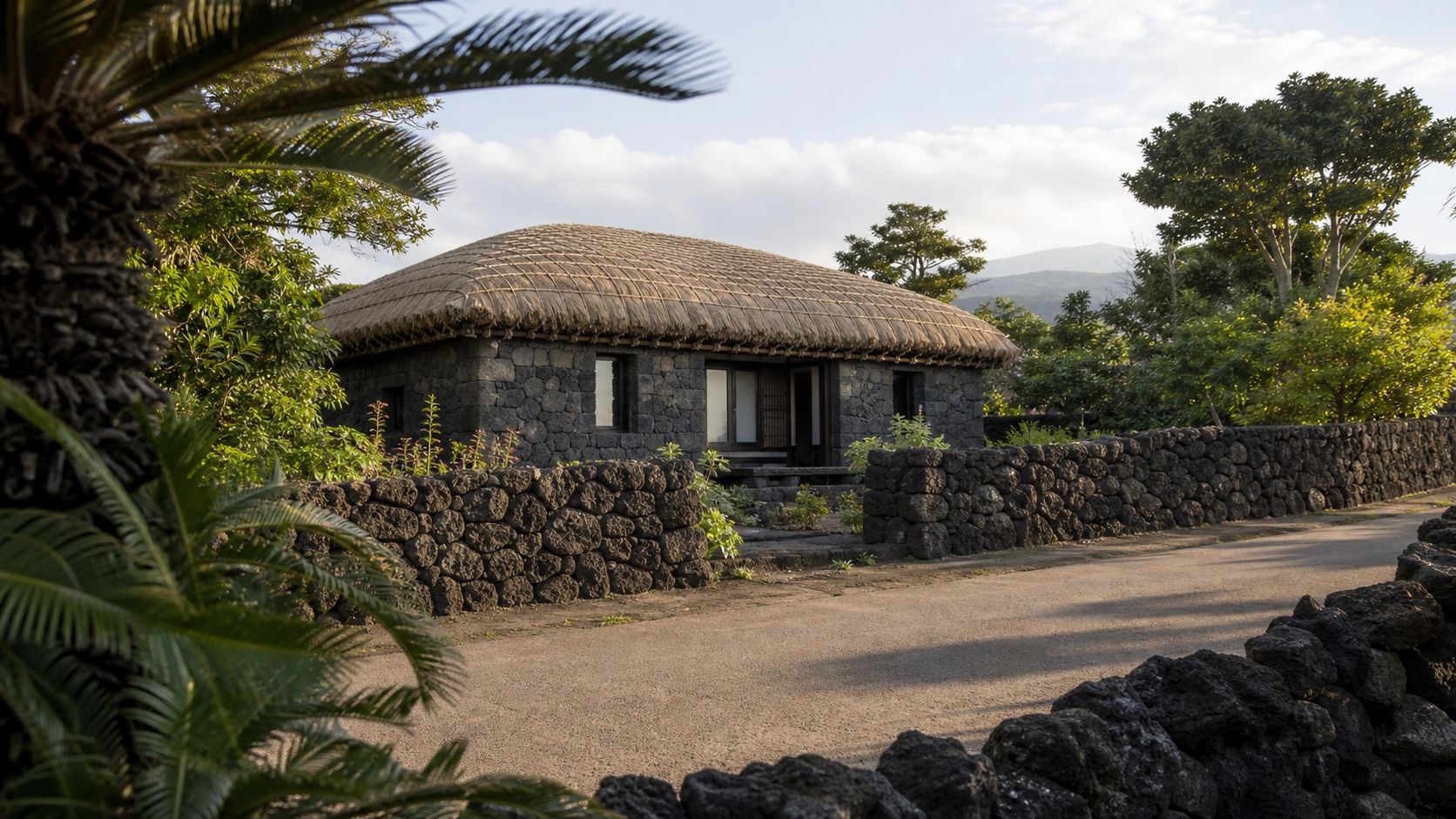
Table of Contents
A Pretty House Goes Public, and Visitors Show Up Before the Doorbell Does
Picture a finished second home in Jeju, and the first scene that usually comes to mind is a quiet morning — wind moving through the yard, scenery beyond a stone wall, the kind of rest you’ve been putting off for years. But something a little different happened at the Jeju “Ssuk House” that comedian Kim Sook revealed through tvN’s “Unpredictable House.” Kim Sook has said her home is now being treated like one of the island’s tourist attractions. People who came to see the house started standing at the door, asking whether it was all right to go inside.
It’s worth getting the numbers exactly right here. Unlike the version that circulated online — that “ten tour groups show up a day” — the actual story Kim Sook told was about the day actress Ra Mi-ran visited. According to Kim Sook, in the short window Ra Mi-ran was there, somewhere around five to ten minutes, roughly ten tour groups showed up asking, “Can we come in?” That’s not a daily visitor count; it’s a personal anecdote about visit requests piling up in a very short stretch of time. But that scene alone says plenty about how fast a broadcast can turn one person’s living space into somewhere people feel they should visit.
‘Unpredictable House’ Was About More Than Interior Design
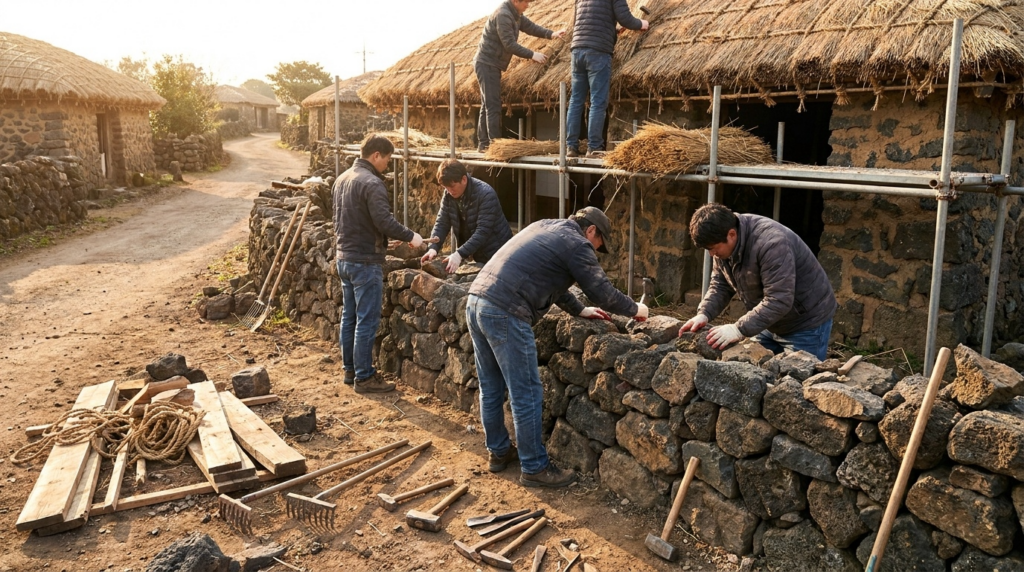
“Unpredictable House” aired on tvN from March to May 2026. The show followed the process of renovating Kim Sook’s Jeju home, which had sat abandoned for roughly a decade. Kim Sook, Song Eun-yi, Lee Cheon-hee, Baekga, and Jang Woo-young all pitched in on construction and getting the household in order, and the core of the show was watching a collapsed space slowly take on the shape of an actual home. Viewers followed along as the cast repaired walls, put up a thatched roof, tidied the yard, and prepared for a completion party.
It’s easy to understand why home renovation variety shows like this one connect with audiences. An old house turning new is a transformation you can verify with your own eyes, and when the cast does the labor themselves, the payoff at the end feels bigger. Jeju in particular has stayed, for a lot of people, both a travel destination and a place they’d love to live someday. On screen, Ssuk House wasn’t just a filming set — it was a real house that someone actually owns and will actually live in. That’s exactly the point where a viewer’s “I love this” and a visitor’s “I want to go see this” start to blur into each other.
A House Without an On-Screen Address Is Still Someone’s Home
Variety shows turn places into stories. Have the cast sit down at a specific restaurant, and the line outside gets longer the next day. Let a neighborhood alley linger on screen long enough, and a new pin drops on someone’s travel map. That can be genuinely good news for local businesses and tourism. But a private home isn’t a restaurant or a public attraction. When to let people in, how to prepare for guests, how to protect your own privacy — those are calls the homeowner is supposed to get to make. Appearing on a broadcast doesn’t automatically turn a house into somewhere anyone can walk up to.
In the case Kim Sook described, the visitors at least asked whether it was okay to come in — and that shouldn’t get exaggerated into a story about unauthorized trespassing that hasn’t been confirmed. Still, even the act of repeatedly having to field that question can wear on a homeowner. For a visitor, it might be a passing bit of curiosity or a stop on a Jeju trip. For the person who actually lives there, it can mean the day’s rhythm and rest getting interrupted again and again. “We’ll just take a quick look” doesn’t always stay quick for the person on the other side of that door.
Renovating Ssuk House Meant Meeting Jeju Seongeup Village’s Own Timeline
Part of what makes the Ssuk House story more complicated is that the property sits within Jeju’s Seongeup Folk Village, a designated zone tied to a National Folklore Cultural Heritage. Kim Sook learned during the planning stage that the site fell inside the designated zone, which meant going through a “change of current state” permit process rather than an ordinary renovation. Conditions came with it, too — the exterior had to preserve elements like Jeju-style basalt stone walls and a thatched roof. The show framed this as a tough variety-show mission, but it was really an administrative process where a historic streetscape and private property rights had to meet in the middle.
During construction, an exploratory archaeological survey was also required to check for buried cultural heritage — a situation where finding an artifact could have halted work entirely, and the show captured Kim Sook and the cast visibly on edge about it. Word later came out that the Korea Heritage Service’s proposed adjustment to Seongeup Village’s designated zone and allowed-use standards would include the house’s plot among the sites being released from restriction. But a proposed adjustment and a final public notice aren’t the same thing. Ssuk House’s construction moved through design, permitting, and groundbreaking under whatever standards applied at the time, and where any future regulatory change actually lands should be confirmed against the relevant agency’s official notice, not the adjustment proposal alone.
The More You Love a House on Screen, the More Distance You Should Keep Off It
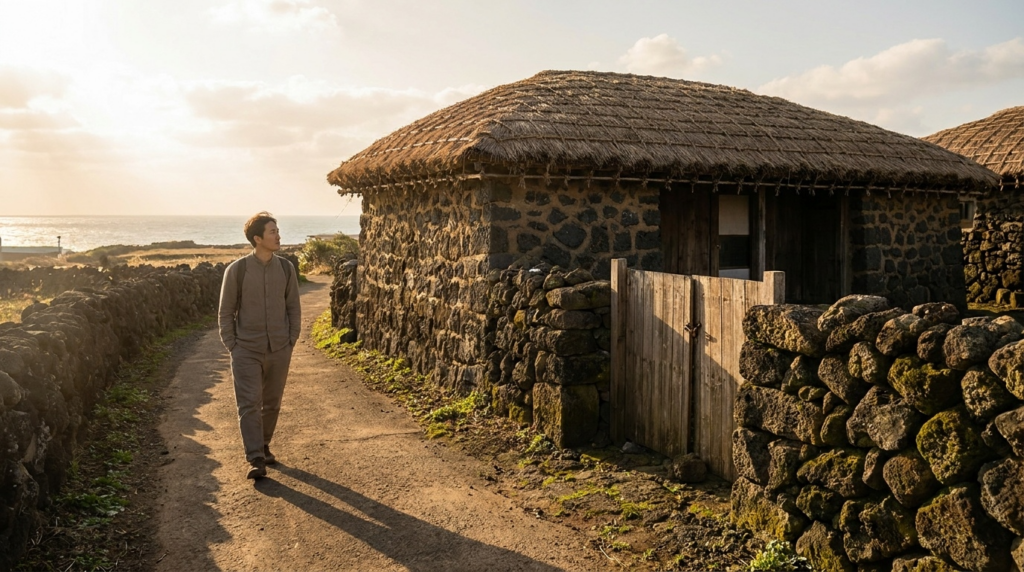
None of this is an argument against Jeju tourism, and it’s not a case that shows shouldn’t feature real homes at all. If anything, watching a long-neglected house get restored in a way that respects the island’s own building traditions was genuinely worthwhile viewing for a lot of people — it also helped spread awareness of Jeju thatched-roof materials, stone walls, and the texture of village life. What’s worth remembering alongside all that is that a place you admired on screen might, in reality, sit right up against someone’s actual front door. The pleasure of discovering a beautiful space and the practice of respecting someone’s privacy can coexist just fine.
If you’re traveling in Jeju and happen to come across a place that looks like something from the show, it’s worth pausing before sharing the exact location online or filming past someone’s fence. If it’s private property, the safest move is not to go in, not to knock, and — unless the homeowner has explicitly opened up a way to visit — to simply walk past from a distance. The real question Ssuk House leaves behind isn’t “where is it.” It’s how carefully we can step back into reality after watching someone else’s home as content.
Source: tvN “Unpredictable House” official site and broadcast previews, March–May 2026; The Kyunghyang Shinmun, April 21, 2026; Star Today, June 12, 2026.