Table of Contents
Daiso’s First Beauty-Specialized Store
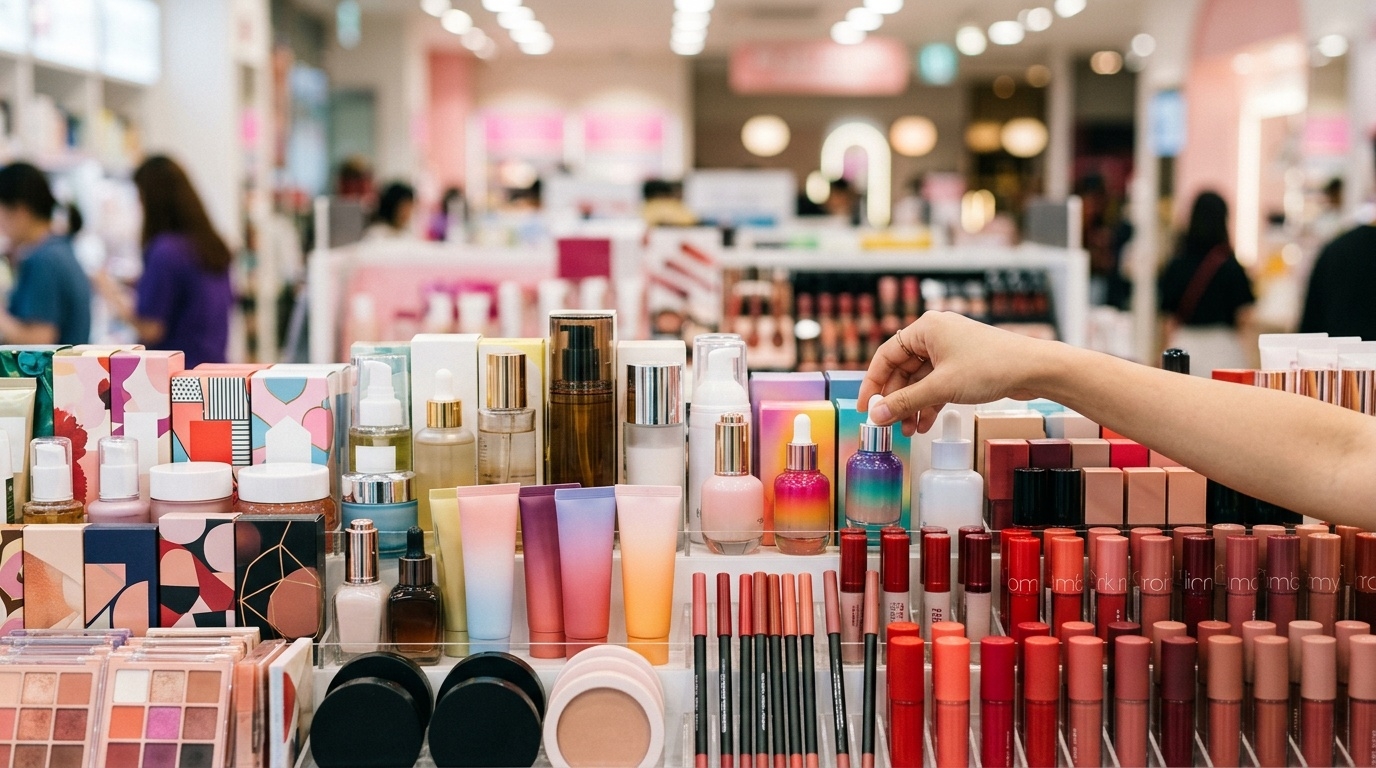
Daiso’s first beauty-centric store, which opened its doors in early September, shows where the competition in Korea’s cosmetics retail is heading. The fact that Daiso, a brand known for household goods and budget-friendly items, has carved out beauty as a specialized category shows that cosmetics are no longer exclusive to traditional beauty select shops. Shoppers can now compare and pick up beauty products in the familiar aisles where they buy their everyday essentials. Making a dedicated trip to a specialty store for makeup is now directly competing with casually adding it to a routine shopping basket.
The real takeaway from this opening isn’t just the addition of cosmetics to the inventory. The “beauty-specialized store” format signals a clear intent to put beauty at the heart of both the product lineup and the in-store experience. As Daiso’s signature affordability and high accessibility are applied to beauty shopping, the competitive baseline in the domestic K-beauty retail market is broadening from brand recognition to include sheer convenience and price. Because it brings the retailer’s existing identity and strengths directly into the beauty space, this approach feels distinctly different from the typical expansion of traditional cosmetics stores.
A Dip in Store Counts for Traditional Powerhouses
Interestingly, right around the time Daiso opened its specialized beauty store, the total number of Olive Young locations in Korea actually dipped. Olive Young stores decreased from 1,394 in the third quarter of 2025 to 1,367 in the second quarter of 2026. While a snapshot between two quarters doesn’t determine the ultimate winner of domestic beauty retail, it does indicate that the era of relentless physical expansion for specialty select shops, long considered the default destination for cosmetics, might be cooling off. At a time when new retail formats are emerging, this figure is a useful benchmark for the shifting retail terrain.
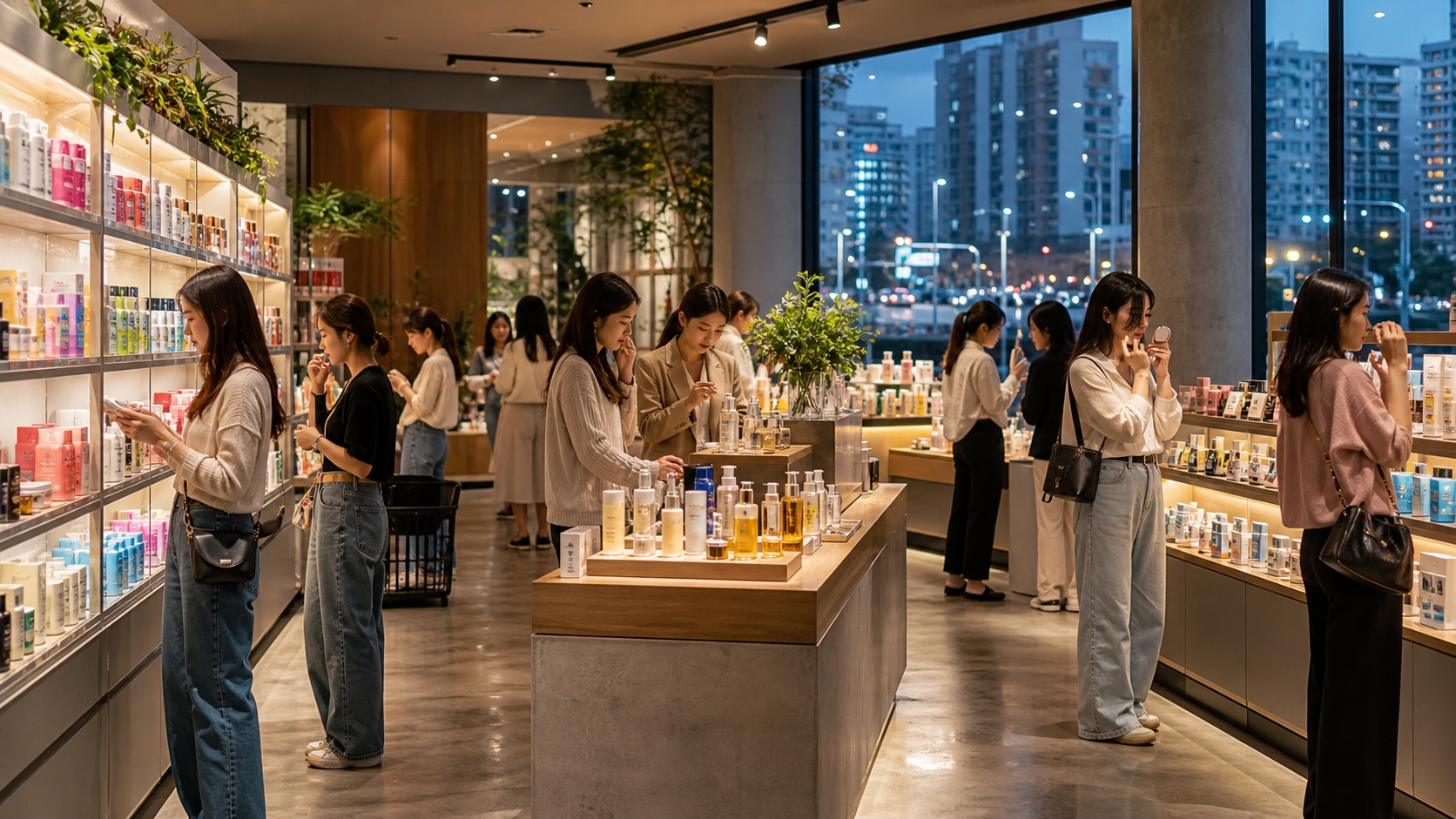
Olive Young has built its reputation as Korea’s premier beauty select shop by offering a curated space to compare various cosmetic brands under one roof. However, as non-traditional channels like Daiso step up their beauty game, the absolute necessity for consumers to visit a specialized shop is fading. Whether it’s a dollar store, a fashion platform’s brick-and-mortar space, or a local convenience store, shoppers now have alternatives tailored to their exact budgets and needs. The consumer’s choice has expanded beyond simply comparing brands to comparing where and how they actually want to shop.
It is important to be careful not to equate a drop in store numbers directly with a loss of influence. This metric only tracks the physical footprint; it doesn’t account for changes in revenue, foot traffic, or the scale of individual stores. Still, the fact that specialized channels are shrinking their footprint just as new players are expanding their beauty spaces confirms that the competitive landscape is getting much more complex. Moving forward, the battle won’t just be about who has the most doors, but about the specific products, prices, and experiences each store brings to the table.
Musinsa Enters the Scene with Massive Standalone Stores
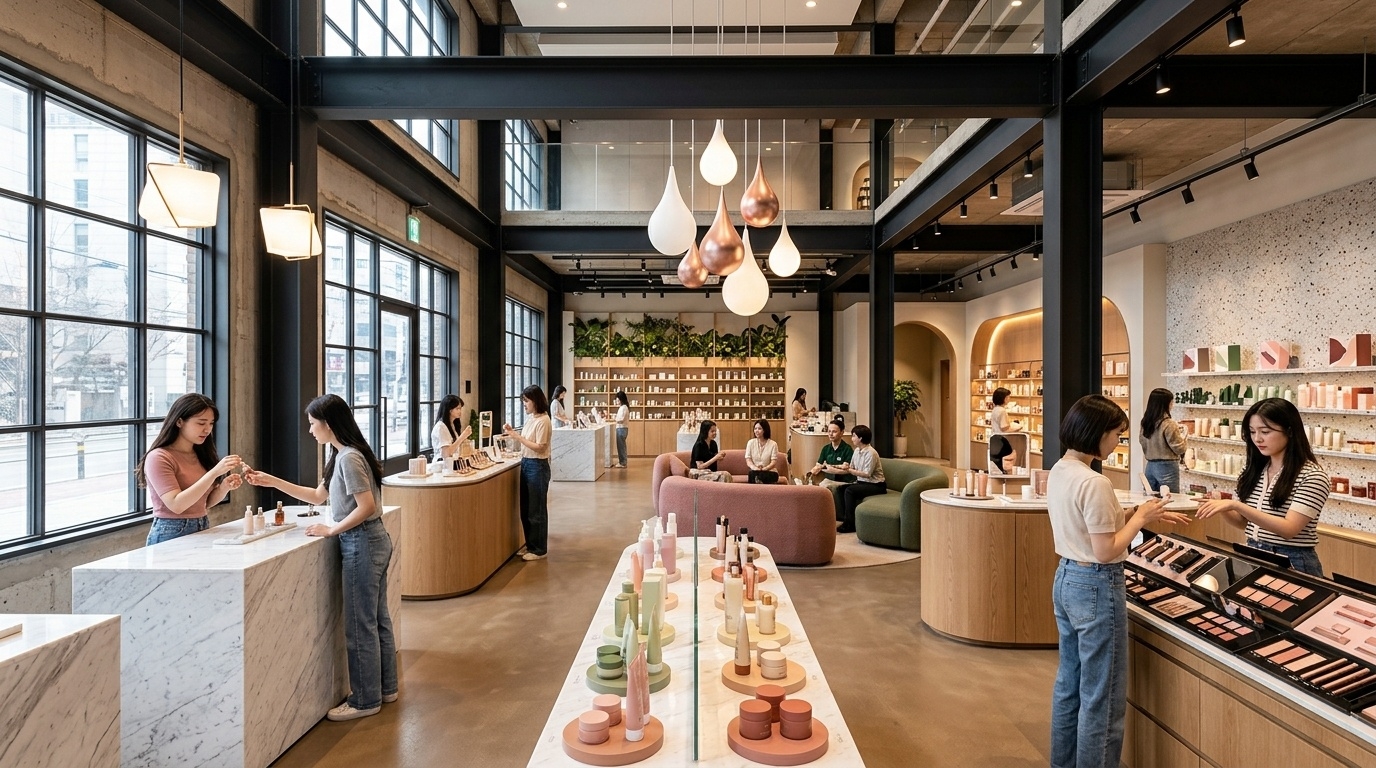
Musinsa, widely known as a dominant fashion platform, is also setting its sights on the offline beauty market. In September, the company opened a massive 14,000-square-foot (400 pyeong) “Musinsa Beauty” flagship in Hongdae, Seoul, and is prepping a second standalone store of the same size in Seongsu for November. It is a calculated move to create sprawling retail spaces with beauty front and center, not just a small cosmetics corner tucked into a clothing store. The massive scale of both locations shows a clear intention to treat beauty not as a side hustle, but as an independent brick-and-mortar business.
With both the Hongdae and Seongsu stores slated for such large footprints, Musinsa is teasing a competitive strategy entirely different from Daiso’s focus on low prices and quick access. While Daiso weaves beauty into everyday shopping routines, Musinsa aims to elevate the browsing experience itself through expansive spaces dedicated solely to cosmetics. Though they start from different places, both companies share a common goal: as players that grew outside the traditional beauty bubble, they are now vying for dominance in cosmetics retail. Even among non-traditional channels, the store formats and value propositions shift dramatically based on their underlying strengths.
Musinsa’s entry also highlights how the boundaries between fashion and beauty consumption are blurring on the retail floor. Consumers no longer view clothes and makeup as strictly separate categories. For Musinsa, this is a natural extension of its fashion-centric customer touchpoints into beauty, giving domestic cosmetics brands a chance to meet consumers in spaces totally different from traditional specialty stores. The timeline of expanding from Hongdae to Seongsu also proves this is a sustained rollout of independent storefronts, rather than a one-off experimental pop-up.
The Competition Widens to Chicor and CU
Daiso and Musinsa aren’t the only ones joining the fray. Chicor, the Shinsegae-affiliated beauty select shop, and the convenience store chain CU are also throwing their hats into a beauty retail war driven by price and accessibility. While Chicor sits closer to the traditional beauty select shop model, CU operates as an everyday neighborhood stop, making the nature of their retail spaces entirely different. A landscape is forming where specialized select shops, household goods stores, fashion-based retailers, and convenience stores are all fighting for a slice of the same consumer’s beauty budget.
The trend of convenience stores beefing up their beauty aisles dramatically lowers the barrier to purchase. Instead of trekking to a large mall or specialty shop, consumers can just grab what they need right in their immediate neighborhood. The accessibility that Daiso and CU offer turns buying makeup from a planned shopping trip into a casual, everyday action. Giving consumers the ability to discover products right where they are, exactly when they need them, is a powerful competitive edge independent of the product itself.
With players like Chicor getting involved in the price-driven competition, even established select shops are forced to navigate a market that has grown highly price-sensitive. Consumers are now presented with varying criteria: expert product curation, low prices, ultra-close locations, or expansive experiential spaces. Rather than everyone fighting with the same tactics, a multi-layered competition is forming where each company applies its unique retail foundation to the beauty sector. Some channels lead with price, while others lean on accessibility or spatial scale, making it impossible to reduce the competition to a single factor.
Shifting Dynamics on the Domestic Retail Front, Not Just Exports
Conversations about K-beauty often revolve around global expansion and export numbers, but these recent changes are all about how products are actually sold within Korea. Even for the exact same cosmetic item, a consumer’s decision-making process changes depending on the store environment and the price point they encounter. This shift in domestic retail channels is a trend distinct from product development or overseas launches, and it matters because it completely reshapes the touchpoints where brands connect with shoppers. Separate from how well K-beauty sells abroad, the environment where local consumers discover and test products forms a foundational pillar of the industry.
At the heart of this rivalry is the rise of non-traditional beauty retail channels. As Daiso the dollar store, Musinsa the fashion platform, and CU the convenience store all double down on beauty, the very definition of a “cosmetics specialty store” is blurring. When sellers from various industries enter a structure once dominated by select shops like Chicor and Olive Young, brands get more physical spaces to stock their goods, and consumers get more pathways to discover them. Because people visit these different channels for completely different reasons, beauty products can now catch the consumer’s eye in far more diverse situations than before.
Low prices and easy access can be massive deciding factors, especially for consumers looking to casually test out a new product. On the flip side, sprawling stores with specialized curation cater to those who want to compare multiple options in depth. Daiso’s first beauty-centric store and Musinsa’s 14,000-square-foot standalone plans show that there isn’t one right answer; instead, wildly different retail formats are now going head-to-head. A shopper might choose a store based purely on price today, and weigh product variety, convenience, or the vibe of the space tomorrow.
Back to Daiso’s Store
Daiso’s first specialized beauty store is a microcosm of the fundamental shifts happening in Korea’s cosmetics retail. What consumers encounter there isn’t just a shelf of individual products; it’s a glimpse into a new retail terrain where a household goods store flaunts beauty expertise, a fashion giant builds massive standalone cosmetics hubs, and convenience stores jump into the makeup race. As the places selling cosmetics diversify, the way shoppers experience K-beauty will naturally scatter from a few specialized hubs into various corners of everyday life.
While Olive Young’s store count slipped from 1,394 to 1,367, the types of competitors in the market actually multiplied. The key moving forward isn’t just the sheer number of physical doors, but what price points, product mixes, and shopping experiences each channel uses to hook consumers. Daiso’s budget-friendly image, Musinsa’s fashion credibility, Chicor’s curated select-shop feel, and CU’s neighborhood convenience are each a different kind of advantage. The players aren’t clashing under identical rules; they’re expanding their slice of the beauty market by leaning into their existing customer bases and store identities.
This trend isn’t simply new players replacing the old guard. The definition of where you can buy K-beauty has broadened. The Daiso store that opened in early September made this shift tangible, and the Musinsa Beauty stores rolling out from Hongdae to Seongsu are set to push the competition into its next phase. Factoring in Olive Young’s footprint adjustments and the aggressive entry of Chicor and CU, the next chapter of domestic beauty retail won’t be won simply by opening more doors, but by finding the perfect formula of price, accessibility, and expertise.
Source: Daiso Beauty Specialized Store Launch Data, September 2026; Olive Young Domestic Store Count, Q2 2026; Musinsa Beauty Store Launch Data, September 2026.