
Table of Contents
The Lost Kingdom Returns First Through Place Names
The three names—Gongju, Buyeo, Iksan—each hold a different present, yet beneath them runs the long river of Baekje’s time. Baekje (백제) was an ancient state that flourished in the southwestern part of the Korean Peninsula from 18 BCE to 660 CE. To call its nearly seven hundred years simply “an old kingdom” would be to ignore how vast and deep are the traces of its cities, its Buddhist art, and its memories of foreign exchange.
The 2026 Baekje Cultural Heritage Week was held from July 6 to 12 in Gongju, Buyeo, and Iksan. It may seem short for a summer week, but this period was a time to read the meaning of the Baekje Historic Areas’ UNESCO World Heritage designation in today’s language. The performances, guided tours, hands-on activities, and museum programs were not merely about splendidly recreating the past. They were also devices to ask what relationship an old heritage can have with the present-day region.
Baekje’s Heritage Is Not a Heap of Stones but a City’s Memory
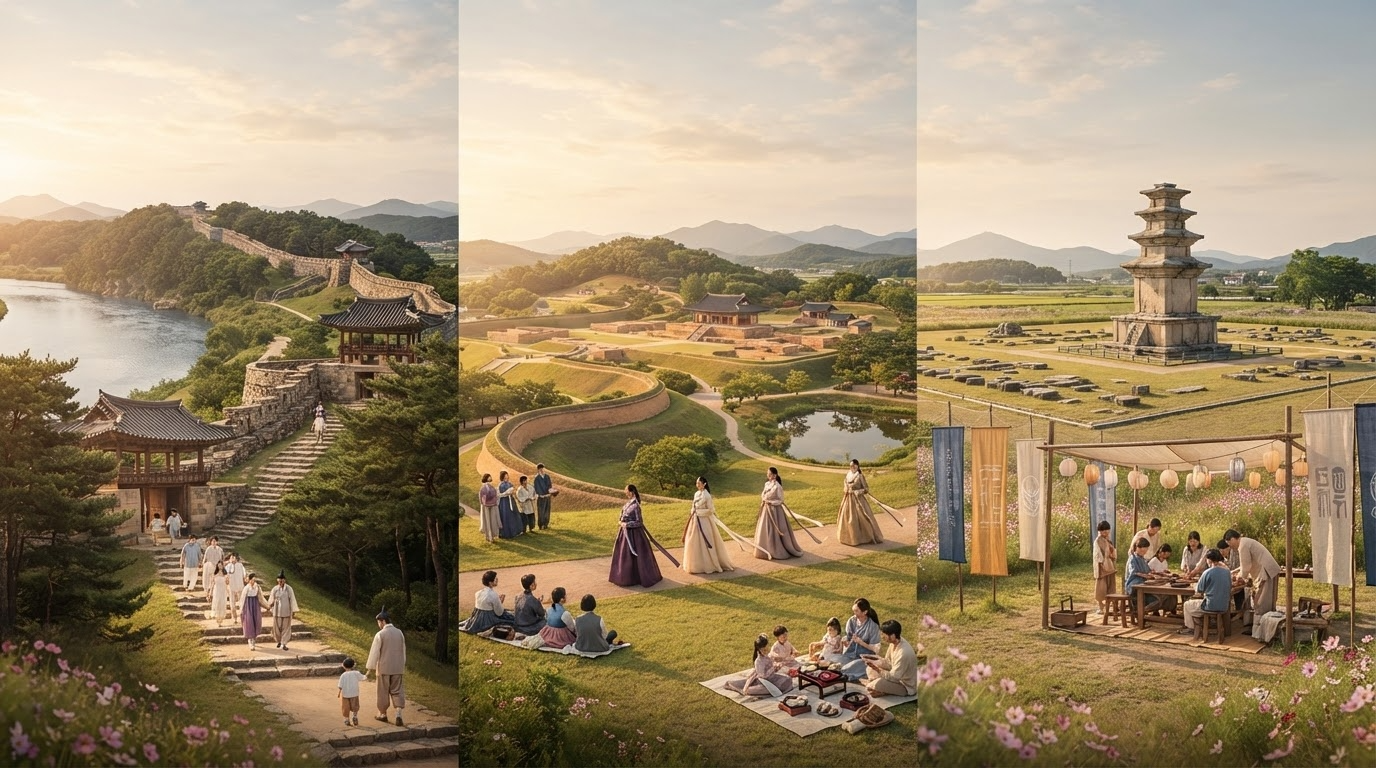
The Baekje Historic Areas, inscribed as a World Heritage site, include Gongju’s Gongsanseong Fortress and Songsan-ri Tombs, Buyeo’s Gwanbuk-ri site and Busosanseong Fortress, Jeongnimsa Temple site, Neungsan-ri Tombs, Iksan’s Wanggung-ri site and Mireuksa Temple site. Each place does not stand alone. The sites of the royal palace, the fortress built for defense, the tombs for the dead, the Buddhist temples, and the traces of administration and daily life are linked together, forming a single ancient urban zone.
When looking at Baekje’s heritage, the first misconception to discard is the idea that antiquity is completely cut off from the present. The fortress walls and temple sites are silent, but the choices of the people who built roads there, managed water, and exchanged goods and ideas with foreign lands remain. The exchanges with Japan, the Southern Dynasties of China, and other states on the Korean Peninsula show Baekje not as an isolated kingdom but as part of a maritime cultural sphere.
The temple sites in Buyeo and Iksan, in particular, reveal that Buddhism was not merely a religion but was connected to architecture, technology, statecraft, and international relations. The vast space of Mireuksa Temple site hints at the scale of the ideal city dreamed of in late Baekje. To see the ruins is not to check the age of the stones, but to imagine the desires of the society that needed those stones.
UNESCO Inscription Is Not a Commemorative Badge but a Promise
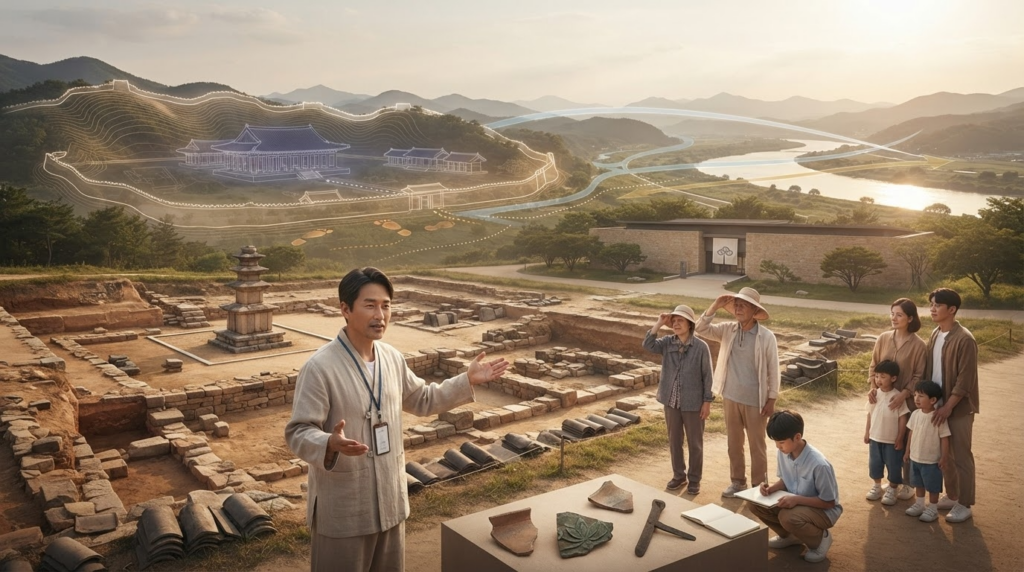
World Heritage inscription gives a region clear pride. Tourists increase, the region’s name becomes known abroad, and budgets and attention for preservation can grow. But inscription is not something that ends with the moment of applause. Rather, a more demanding promise begins then. The heritage must be accessible to citizens and travelers without being damaged, it must benefit the local economy without turning living spaces into mere tourist products.
Heritage preservation always involves tension. Keep it too far away, and people feel it’s something in a glass case unrelated to their own lives. Keep it too close, and excessive visitation and commercialization can erase the heritage’s context. Events like Baekje Cultural Heritage Week exist precisely to find a meeting point between these two dangers. Expert commentary, children’s activities, and nighttime programs can make heritage more approachable, but they must not reduce facts to mere decorative backdrops.
There is also a trap that historical festivals often fall into. Emphasizing only kings, wars, and splendid costumes erases the labor and lives of ordinary people who lived in ancient society. To connect Baekje’s heritage to today, we need stories that imagine not just the palace but also the market, the workshop, agriculture, transportation, and the lives of women and children.
A Summer Festival Slows Down the Pace of Travel
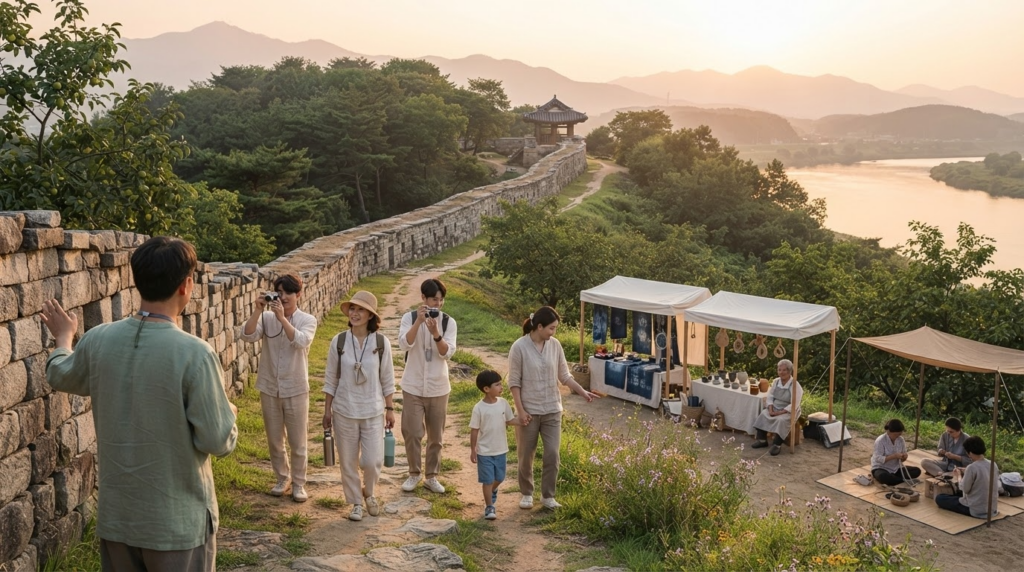
A trip that tries to cover Gongju, Buyeo, and Iksan in one day might be possible, but it is probably too fast to understand Baekje. Heritage reveals more when you linger in one place than when you consume it as a single photo. You need time to look at the city’s orientation from the fortress wall, examine excavated artifacts in the museum, and connect place names with topography through a guide’s explanation.
For international visitors, Korea’s ancient history may feel like a string of dynasty names and dates. But when you walk in the wind of Gongsanseong Fortress, the river of Buyeo, and the vast site of Iksan’s Mireuksa Temple, history approaches with a different sense. Baekje is a vanished nation, but the spaces it left behind still demand human footsteps and gaze.
Summer heat and crowds are practical considerations. At outdoor sites, you need water, a parasol, and comfortable shoes; it’s best to check operating hours and whether guided tours require reservations in advance. Heritage travel is not a test of enduring discomfort, but an experience of adjusting your pace to the rhythm of the place.
Six Hundred Years Is Not a Finished Time but an Ongoing Question
The most important meaning that Baekje Cultural Heritage Week leaves behind is not to reiterate past glory. It is to confirm what a city and its culture can say to people of other ages, even after a state has disappeared. The Buddha statues called Baekje’s smile, the technologies that crossed the sea, the collapsed temple sites—all seem not like completed answers but like long-standing questions.
What should we preserve? With whom and how should we share what is preserved? What is needed for an old regional space to remain a part of residents’ lives even as it becomes a tourist attraction? Baekje’s six hundred years brings out those questions again for one summer week. Even after the festival ends, the heritage of Gongju, Buyeo, and Iksan will remain in place, waiting for the next visitor. Perhaps the best way to meet the past is not to consume it hastily, but to listen long.
Source: Seoul Economic Daily, “Baekje Cultural Heritage Week Runs July 6-12 in Gongju, Buyeo, Iksan”, July 6, 2026; National Heritage Administration, Baekje Historic Areas World Heritage materials, 2026.